
Post Date: June 4, 2019 |
Last Edited: March 10, 2026
This article is an outcome of our enormous interaction with government officials in the infrastructure sector. Principally, they are civil engineers and architects engrossed in policy making and implementation. Their key issues have been weather, water, fire, scratches, insulation, natural light ventilation, etc. The analytical approach w i t h due reference to the National Building Code (NBC) and relevant specifications has revealed a factual position. Apparently, Aluminium Composite Panel (ACP) can be used for various exterior and interior applications, either as a substitute or complimentary product.
 Aluminium Composite Panel (ACP) can be used for Various Exterior and Interior Applications

The overall findings are like two sides of a coin. One side stands for the dominance of ACP over other panel products. The other side restricts the use of ACP due to its opaque character, its lower thickness, despite its availability in FR grade. There is a paradigm shift taking place with respect to ACP use.
Apart from the façade of a building, there are other exterior and many interior applications of the ACP, either exclusively or in conjunction with other products. Nonetheless, this trend that has started now, will grow with time – a pledge of ACP on its golden jubilee year (1969 to 2019). The present article disseminates particulars that relate to ACP as an exterior cladding material in India.
ACP – THE MOST PREFERRED CLADDING MATERIAL
There has been a continuous search for the perfect exterior cladding material, and many different products have been devised. Among these, ACP is at the helm of exterior cladding. Engineers and architects follow very high standards in the construction of exterior cladding in view of the rigorous conditions experienced on high elevations, especially the ever-changing climate conditions, direct exposure to wind, high humidity and relatively low ventilation. With these considerations, they select large quantities of ACP. Such a high choice for ACP can become a critical factor. Along these lines, the key issues can be:
- Product Application: The product (ACP) has to have certain properties to meet the demand of a specific application (exterior cladding). As a cladding product, ACP is a thin, flat, aluminium sheet bonded to a non-aluminium core. Exterior cladding is a protective layer or application of one material over another. In construction, cladding provides a degree of thermal insulation, weather resistance, and improves the appearance of buildings. Basically, cladding is an assembly of materials in which each material has its own importance. Generally, ACP is combustible. ACP with a non-combustible core is called FR Grade.

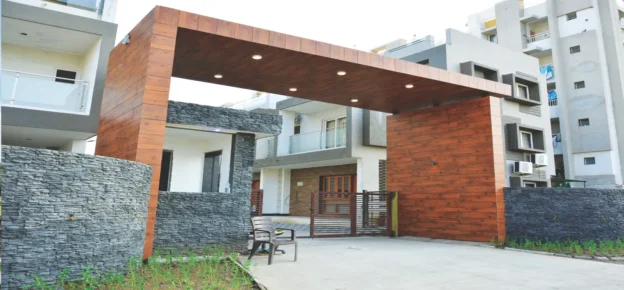
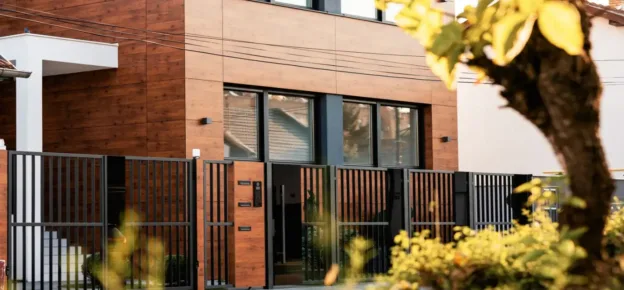
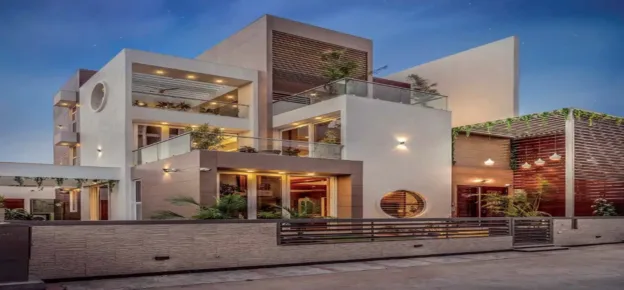
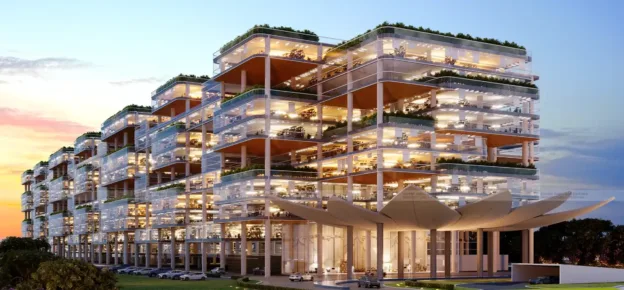
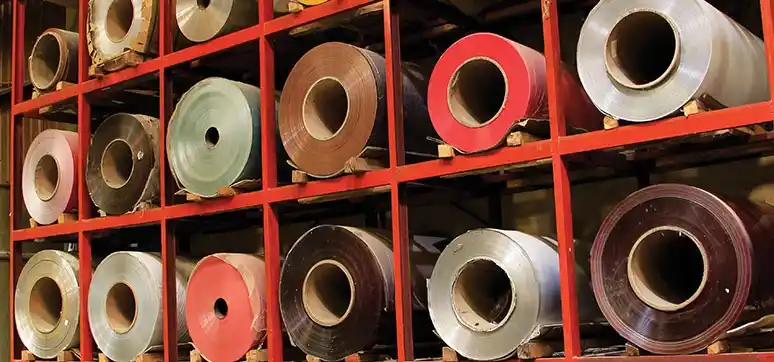
With Unlimited Varieties, ACP is at the Helm of Exterior Cladding
 Multiple Brands: Since numerous producers and brand names are emerging in the ACP industry, the essence of ACP cladding is also changing. The characteristics of the different ACP-branded products can be different from one another, depending on their composition. The difference in composition leads to a deficiency in quality, thereby resulting in customer complaints such as distortion, tearing, delamination, untidy folding & joinery, and colour fading, blooming & flashing, etc.
Perhaps, every product has its own advantage, disadvantage, and the balance between the two governs the price and drive on commercial success or failure of that product. In the ACP market, there are many small-time players as ACP stockholders with a brand name, but without a manufacturing plant.- Trust the Price: It is good to trust the price and understand the product differentiation. Otherwise, more commitment (which figures out as if the customer is getting a good deal) and less delivery will prevail. In such a gimmick, buyers keep sacrificing the quality to fetch a lower price. Ultimately, it is the user’s satisfaction/dissatisfaction due to the nature of the buying process that works in winning/losing deals in the ABC (architect, builder, contractor) segment. To overcome the situation, many architects and engineers are listing out their choices and then eliminating choices by setting standards. They can avail the end-to-end services so that the specified ACP is used, followed by proper certification for tractability purposes.

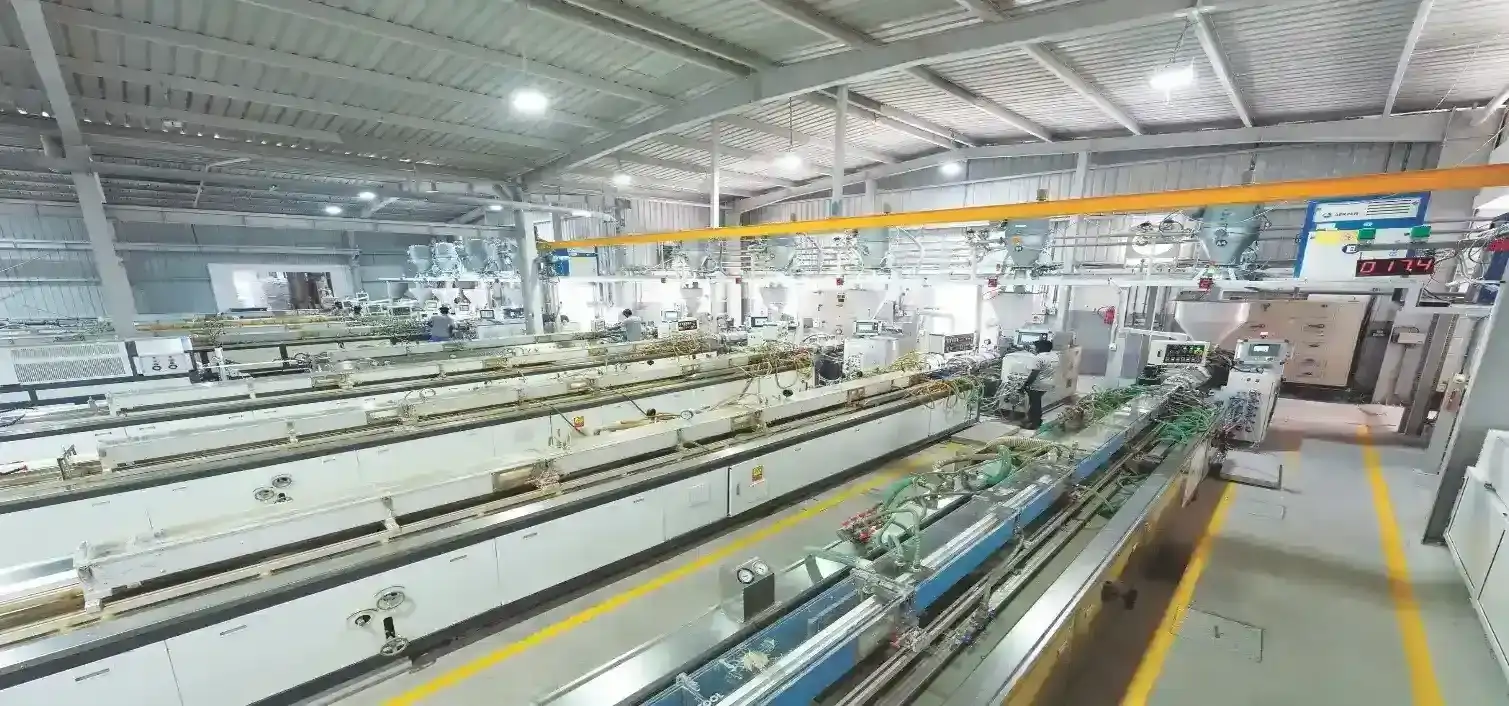
It is good to trust the price and understand the product differentiation - Product Edge: ACP is manufactured in a continuous single-line dry process, and later, no alterations/ modifications are required. Apart from a lighter weight and high insulation value, ACP has flexibility and the capability to replace heavy steel. With lower thickness, it offers higher insulation, which is crucial for building structures. ACP exterior cladding tends to be better at sealing the building from air and water, offering great structural value with high performance and durability.
 ACP is Manufactured in a Continuous Single Line Dry Process
- Sources of Fire: Fires involving exterior cladding systems can ignite from nearby electrical equipment, yard storage, vehicle fires and fires in neighbouring buildings. Many fires inside the building spread to the exterior by means of a flash-over or continuity of combustibles. Common causes of fire from inside the building are cooking equipment, heating equipment, electrical and lighting equipment, smoking materials, electrical short-circuits and intentional fire setting, and then fire spreads by virtue of nearby materials like file papers, upholstery, furniture and furnishings.
- Non-Combustibility: ACP was developed in 1969 and intended for signage use. The technological development produced an exciting panel product with apparently unlimited potential. Later, ACP was used for exterior cladding. It is available in two broad categories, combustible and noncombustible. Any fire risk can be minimised with Fire Retardant (FR) grade ACP. There should be extensive use of FR Grade along with proper fire protection and barriers to control the fire spread. NBC compliance is vital for buildings. To minimise risk to life and property from fire, ensure fire-safe design and construction of buildings.




BUILDING REGULATIONS:
The design of the building and ACP installation shall be as per the NBC. Any use of ACP with a non-combustible core and class shall be properly documented for traceability. Inadvertently mounted cladding of ACP (PE core) in high-rise buildings shall be replaced with ACP FR Grade. Implementation of comprehensive loss control in line with the guidelines of respective fire authorities is ultimate.
TECHNICAL ASSESSMENT:
The height of the building and prevailing wind speed are the important parameters that determine the use of facade materials. Wind speed and climate have a noticeable influence on fire spread. Selection of ACP thickness, grade, framework, shade and colour shall be appropriate. Consider the inclusion of active inclusion of automatic smoke vent, fire stopping systems and testing of materials. The latest safety norms recommended by the National Building Code 2016 of BIS (Bureau of Indian Standards) shall be adopted.
END TO END:
ACP cladding is a modern-day requirement. An extensive awareness program for the use of FR ACP and the National Building Code (NBC) is essential so that these norms are followed in building plans.
(References: National Building Code of India 2016 Volume 1 & 2; CPWD specifications for ACP exterior cladding)