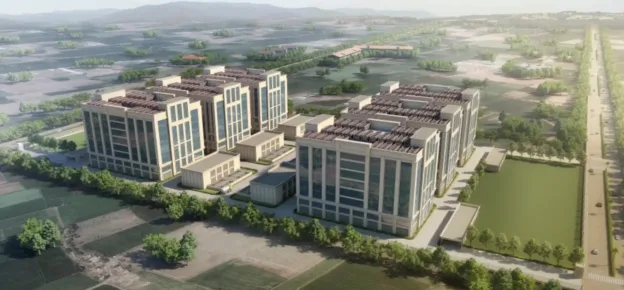
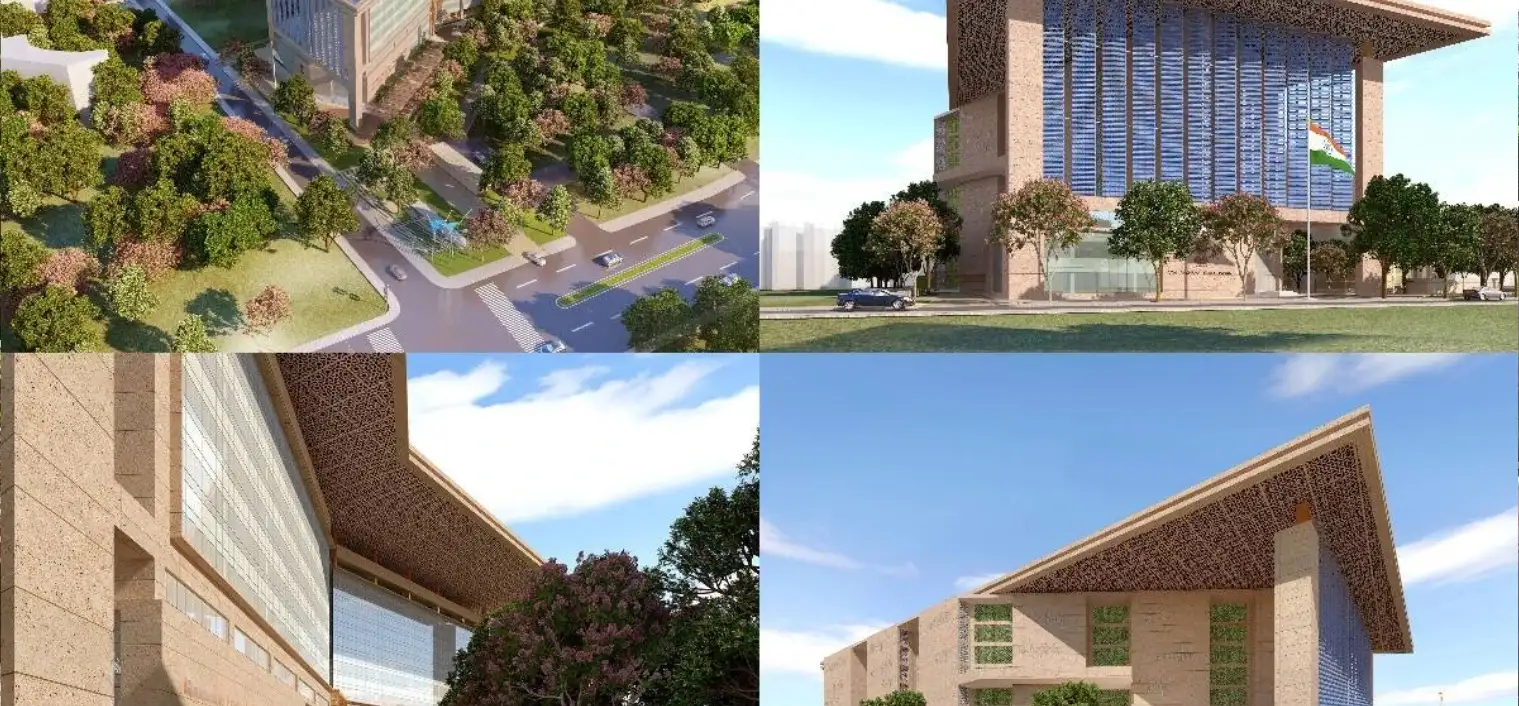

Atal Akshay Urja Bhawan, the headquarters of the Union Ministry of New and Renewable Energy (MNRE), Government of India, would be a net-positive energy campus by integrating renewable energy systems and passive strategies. The aim is not only reduce the carbon footprint but also make such strategies accessible and educational to the general public. The complex is located on a 2.7-acre site in the Lodhi Road area of New Delhi. Bengaluru-headquartered Edifice Consultants is the design and civil consultant for the project.
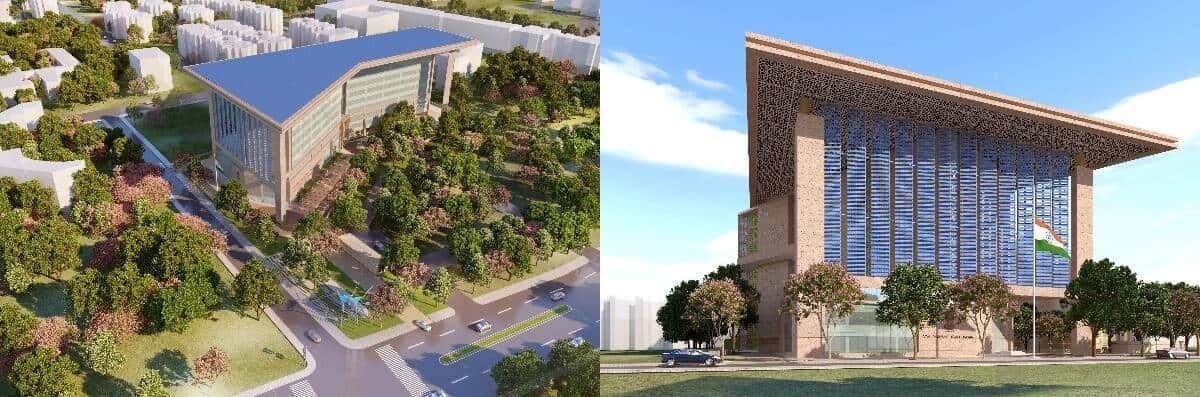
The design of Atal Akshay Urja Bhawan incorporates several strategic interventions combined with alternate sources of energy, which will make it a net-positive campus. Strategies like building orientation, fenestrations, jaalis, energy-conscious building envelopes and shading devices will help reduce passive heat gain. Photovoltaic panels on the roof and southern wall produce electricity to the tune of 1100 kWp with a generation potential of 19 lakh energy units per annum. Water-cooled screw-chilling machines have been used to create a radiant cooling system, and they uniformly lower the surface temperature. Additionally, the reduction of the building’s air conditioning footprint and energy efficiency has further brought down the building’s power consumption. The project also aims to conserve water by harvesting its rainwater and treating its wastewater, reusing it in the cooling tower, flushing and horticulture.

The facades of Atal Akshay Urja Bhawan are built with Dholpur sandstone as the primary facade material. The east and northern faces have a continuous double-glazed unit (DGU) glazed facade to allow daylight into interior spaces while insulating them from heat.
The eastern facade is thermally insulated with double walls built using ACC masonry with a glass wool infill of 200 mm thickness. The western facade covers the service cores and features solid walls and GFRC jaalis that allow creepers to grow on them and bring cooling breezes into the building for cross ventilation.