
Tucked into a subtle yet prominent corner of Sankey Road — one of Bangalore’s most exclusive residential precincts — the site of the former Le Meridien Hotel enjoys a rare urban vantage point. It offers uninterrupted views of the Bangalore Golf Course and is just minutes from MG Road, the historic heart of the city. Over time, this location became an unofficial gateway to central Bangalore — a bridge between old and new, the convergence of heritage and modernity, green and urban.
It was here that Embassy Group envisioned its next development. While the original brief called for a high-end residential offering, the vision soon evolved: the team pivoted towards creating a landmark commercial address. But this was never to be another anonymous glass box. In a city dominated by sprawling tech campuses and repetitive office towers, this relatively compact yet prime site demanded a different kind of response — one that would deliver presence, identity and long-term visual impact.
Façade Design Concept
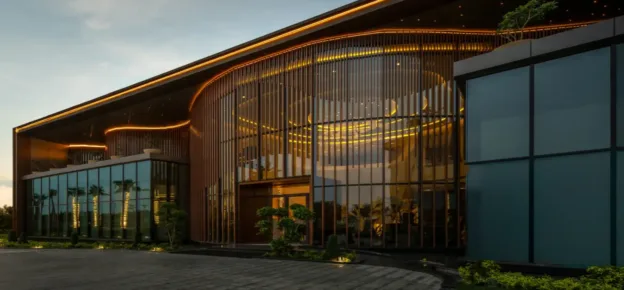
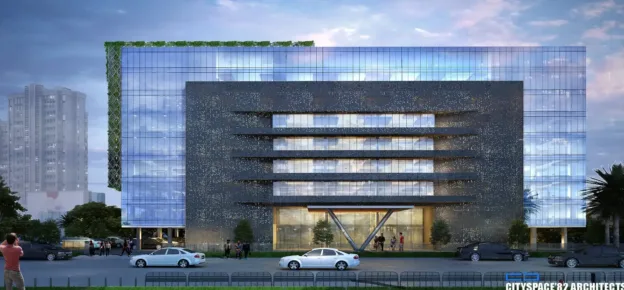
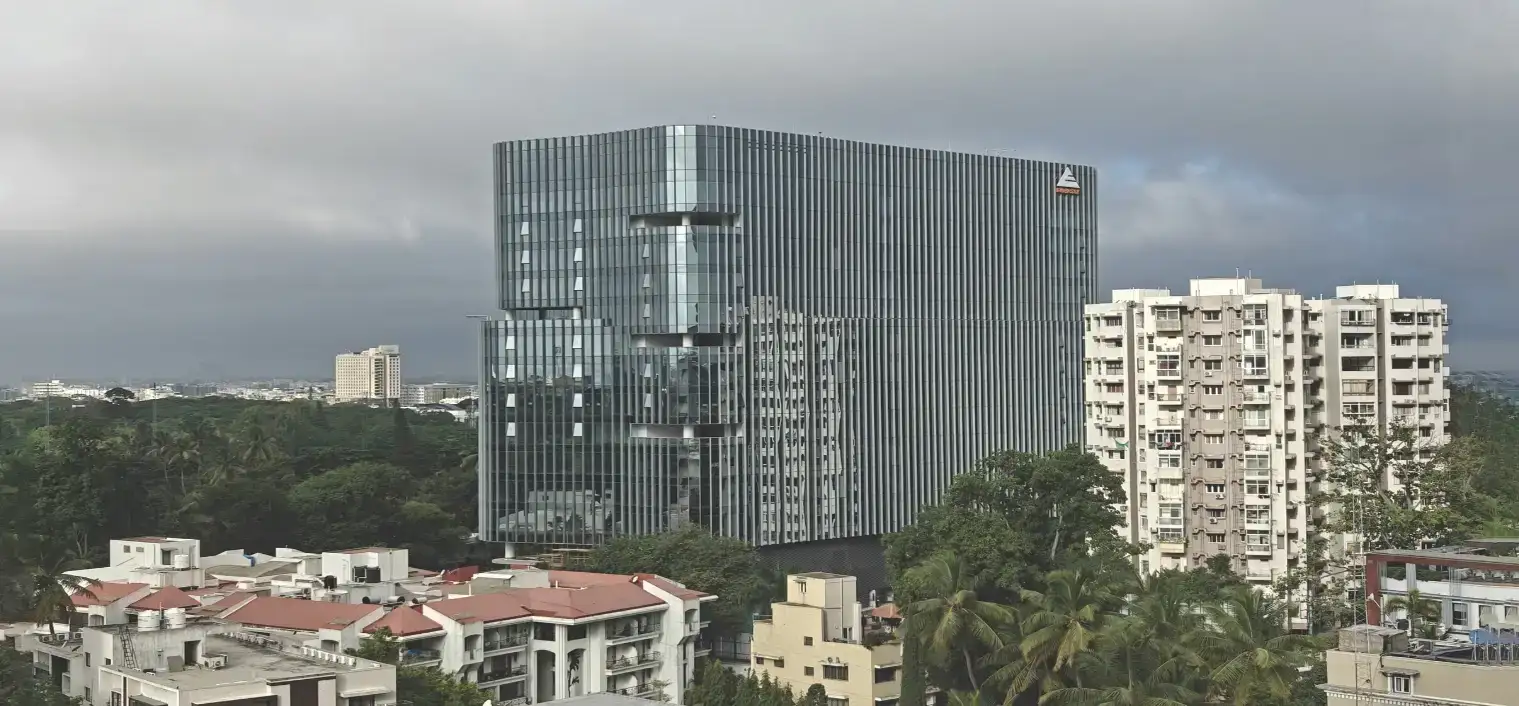
The design of Embassy Zenith focused on delivering maximum clarity, elegance and sophistication through restraint and meticulous detailing. The approach was to create a unified glass volume — a seamless, monolithic form that quietly asserts itself through the careful balance of proportion, modulation and material craftsmanship.
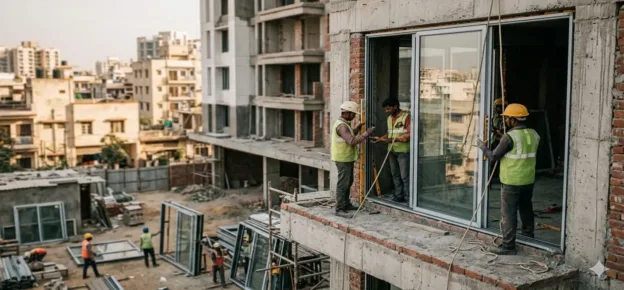
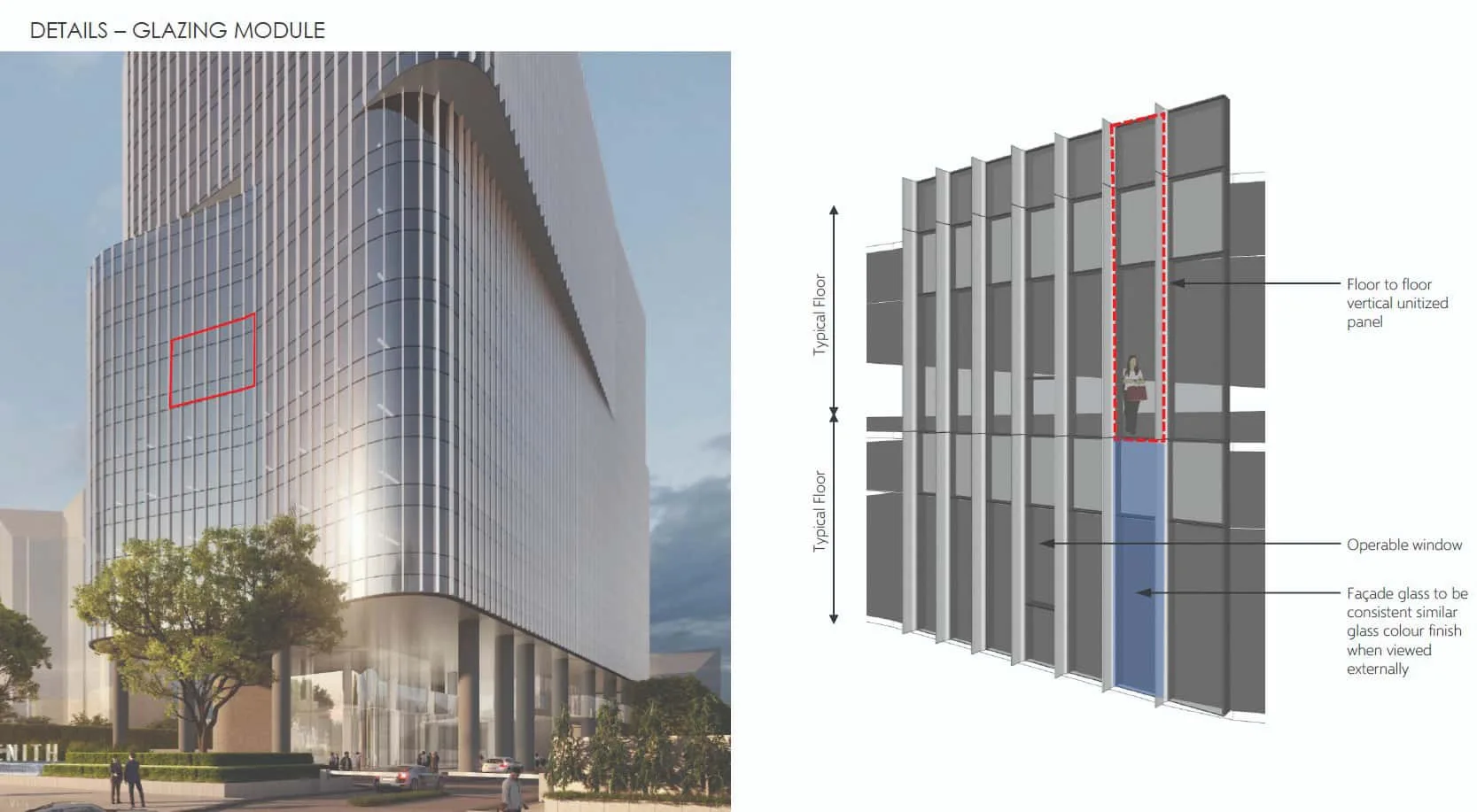
A fully unitised curtain wall system was deployed for the tower façades, ensuring quality control, speed of installation and long-term performance. All façades follow a strict modular rhythm based on a 1.5-metre planning grid, ensuring clean alignment between architectural and interior planning. This modularity is expressed externally through slender vertical mullions, minimised horizontal breaks and controlled panel repetition.
To soften the otherwise rectilinear geometry of the tower, all four corners are elegantly rounded with a gentle five-metre radius curve — a technically ambitious move that required custom-bent glass and curved unitised panels. These corners not only visually unify the building mass but also emphasise bold geometry, creating a sculptural quality rarely seen in Indian commercial façades.
Material Palette And Fenestration Strategy
The primary façade comprises a high-performance building envelope: low-E vision glass panels combined with fritted spandrels and operable window units for natural ventilation. Vertical aluminium fins, applied to alternating mullions, are carefully orchestrated to delineate the building’s verticality, reduce solar gain and create a subtle texture across the elevation. This move was calibrated to balance shading effectiveness with construction efficiency.
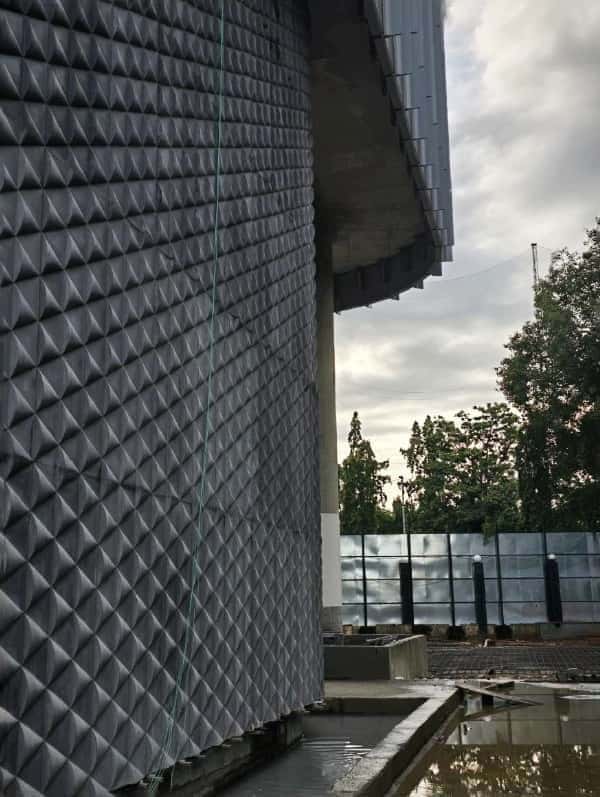
On the lower podium levels, the design introduces a distinct material shift. Here, glass is replaced with textured GRC panels, drawing inspiration from the intricate woven patterns of Ilkal sarees — a subtle but deliberate nod to Karnataka’s regional craft heritage. These panels introduce tactile warmth while creating a sense of materiality that anchors the base of the building, ensuring the podium is perceived as a grounded architectural element, firmly rooted in the site’s context and cultural memory.
Integration And Impact
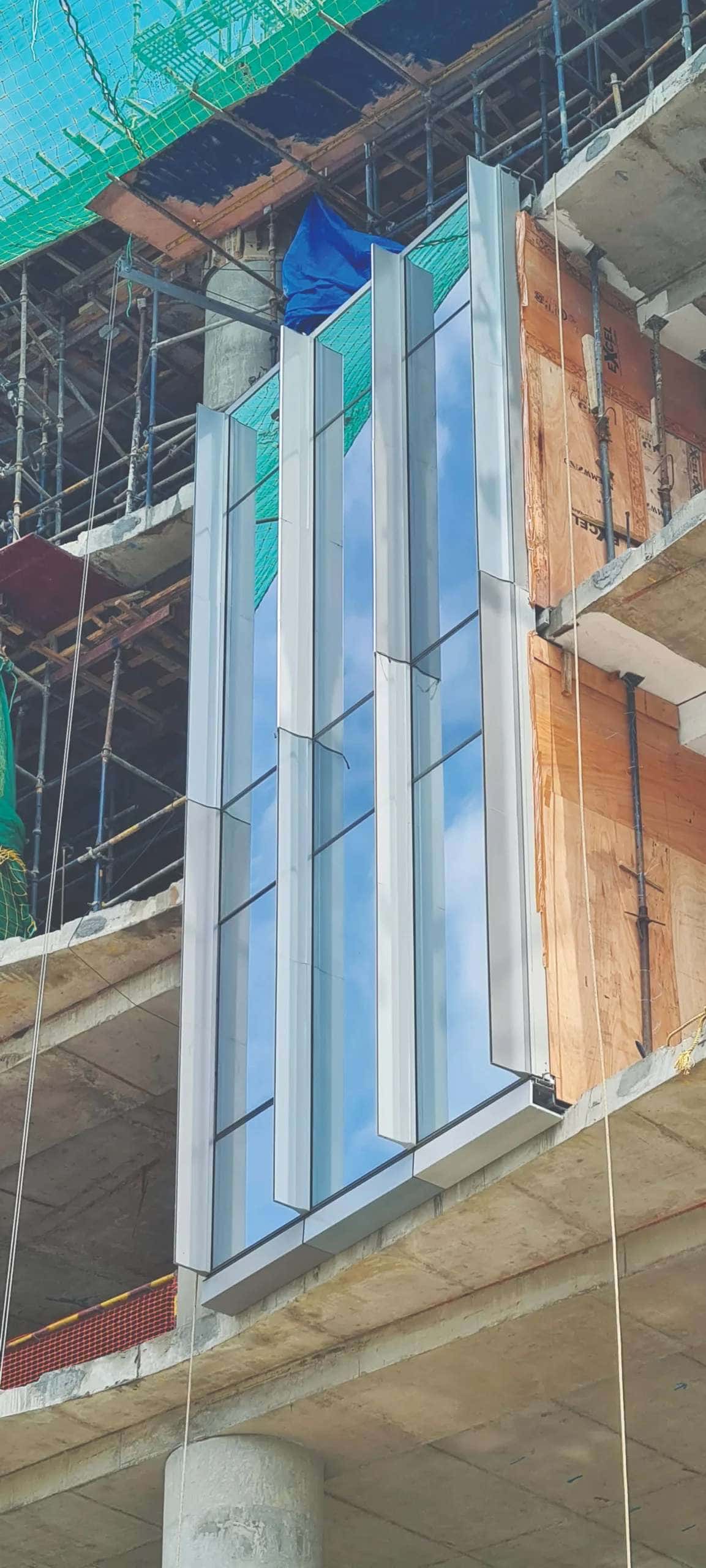
Every element of the façade was designed to reinforce the idea of architectural continuity — a single, seamless expression that harmonises transparency with performance. The unitised curtain wall system utilizes advanced prefabrication technology, enabling precise factory-controlled fabrication, minimising on-site tolerances and ensuring an impeccable finish. Operable panels are seamlessly integrated, while recessed mullions at the spandrels enhance the perception of the building’s vertical bays.
Beyond its aesthetic qualities, the façade also delivers tangible environmental benefits. The use of low-E glazing and external shading devices significantly improves thermal comfort, while operable windows support passive ventilation strategies. The restrained material palette — limited to glass, aluminium and GRC — reduces embodied carbon while enhancing durability.
Driven by a strong environmental ethos, the façade of Embassy Zenith exemplifies how thoughtful design and a well-executed, integrated system can create a distinctive identity within dense urban environments. It establishes a new benchmark for commercial developments in India, demonstrating that innovation stems not from novelty, but from clarity, craftsmanship and consistency.
Quick Facts:
|