


WFM: Kindly brief on how the façade and fenestration designs could help build “net energy gainers” or “zero-energy” buildings?
Nitin Bhatia (NB): Today’s façade is a result of the aspirations of the end consumer, buoyed by developers and designers. That said, due to sheer economics, such consumers are a tiny minority; hence, projects propagating the growth and evolution of façades remain relatively few and far between. It is not that the technology of advanced/energy-efficient façades does not exist today, but it is other considerations that do not promote its widespread utilization.
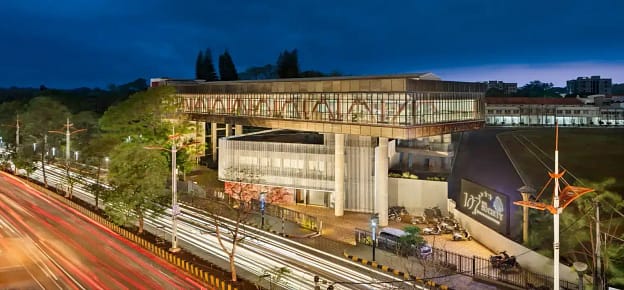
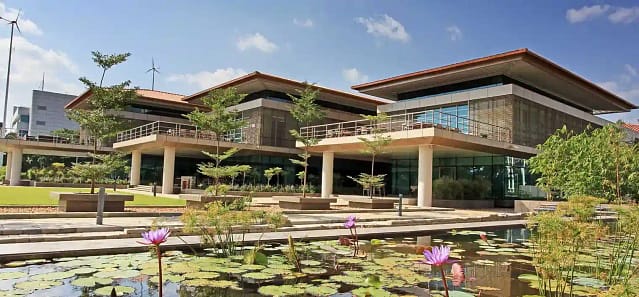
An energy-efficient façade is a costly proposition and is therefore dependent upon Brigade World Trade Centre, Bangalore, and the developer’s appetite to procure it. The costs involved include all or a combination of thermal isolation of the framing system, high-performing glazing, shading systems, double skin, light shelves, photovoltaics, and finally, orientation and geometry. If all these are considered and incorporated in the façade design, the façade could contribute towards an energy-efficient building and may perhaps be a net energy-positive building when other factors are included.
With every passing year, costs for materials and technologies enabling “energy-efficient facades” are reducing as a result of technological advancements, hardware and software development, and ease of availability, as well as economies of scale, thereby making energy-efficient facade components economically feasible to use.
WFM: What are the design factors that could optimize daylighting?
NB: There are many design factors that must be used to achieve the means to the end; the most important of them would be the “logic” that ties them all. In all likelihood, no two projects would
have the same solution. Dissimilar geographies,
orientations, municipal guidelines, etc., shall require
dissimilar solutions.
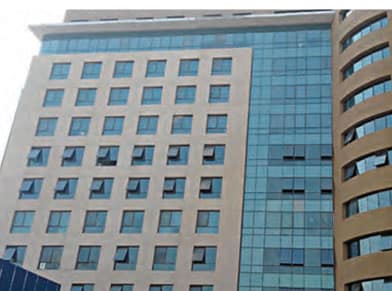
Typically, the façade orientation, geometry, visible light transmittance, shading, and light shelves should be considered when designing optimum daylighting. So, one has to ensure that natural light is allowed to reach the far interior of a room, yet not allow too much light to cause discomfort due to glare. At the same time, depending on the geographical location, solar light hitting the fenestration directly should be restricted to avoid heat accumulation in the room if that is the case. Intelligent use of performance coatings, shading systems, etc., may be utilized to achieve this goal.
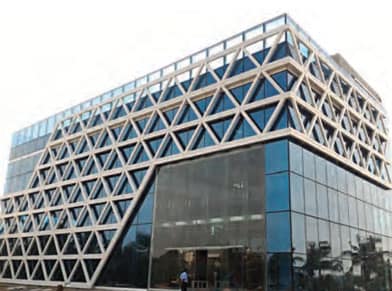
Unfortunately, the combination of all the above has been considered on limited projects, effectively leading to projects utilizing expansive extents of blinds; this so largely due to the costs involved and, in some cases, the capability limitations of developers and designers.
WFM: Improving the insulating value of window glazing has been the subject of research since the 1980s. Could you please tell us about the latest developments in this area?
NB: Insulation of a window can be done in many ways. Obvious methods are the utilization of high-performance glazing and thermally broken framing systems. However, other methods such as exterior blinds/louvers, sun shades, etc., also contribute extensively to improving the insulation performance of a window. Glass coating technologies (very high-performing low-e coatings) and fritting technologies play a great role today in achieving the objective.
WFM: How would U-value and highly insulating window technologies affect energy conservation?
NB: Shading coefficient (SC) is a measure of heat transfer due to direct solar radiation (direct sunlight). U-value is a measure of heat transfer due to radiation from surrounding materials/local environment. Therefore, SC is a more critical value than the U-value of a fenestration. That said, and depending upon the geography where the framing is to be installed, thermal conductivity analysis of the framing should be carried out to determine heat transmission through the system.
WFM: Please tell us briefly about the challenges involved in designing integrated façades for both energy conservation and optimal daylighting at the same time?
NB: The biggest challenge when dealing with daylighting is to arrive at a balance between external reflectivity, light transmittance and distribution, and glare. Too much light leads to glare, and too little leads to the requirement of artificial lighting. Add the lower slab to the slab height, and you have a further restriction of reflective natural daylighting.
WFM: What are future Window & Façade technologies that could save significant energy in buildings?
NB: Other than the evolution of material technologies and economies of scale, parametric simulation software is and will play an exceedingly critical role in the future of façade design. All parameters can be modelled and designed for optimal orientation, geometry, shading, light shelving & daylighting, radiation & thermal insulation. In addition, and perhaps the most critical, shall be the evolving, discerning occupant, the ultimate driver of improvement in performance.