
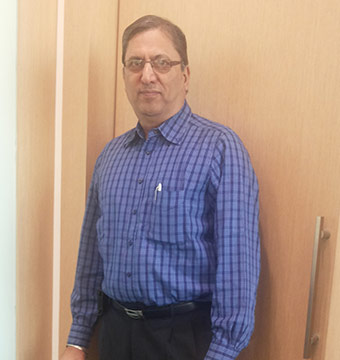
Er. Cyrus Pithawalla
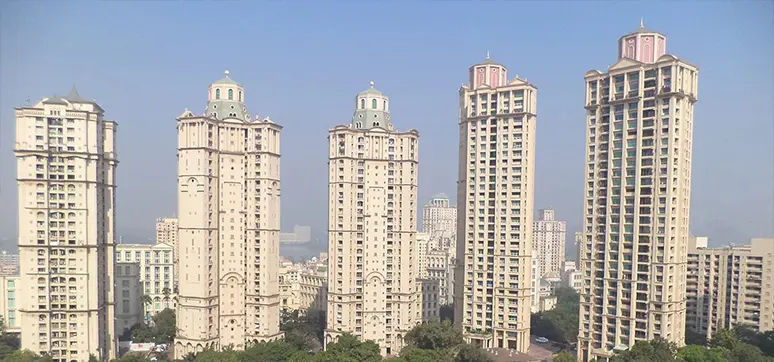
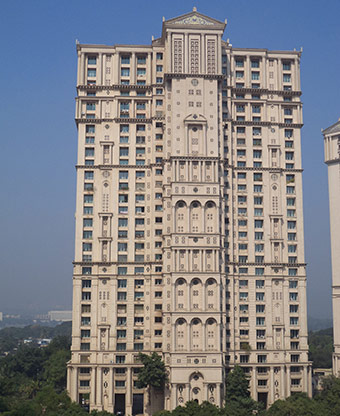
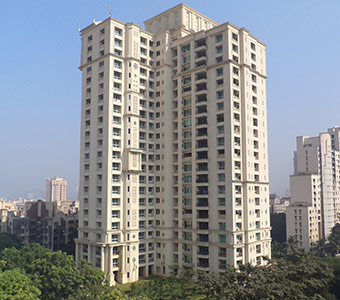
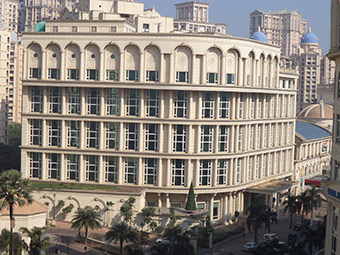
Enter the most upmarket locale of a suburban neighbourhood in north-eastern Mumbai – Powai. Amidst the upscale hotels and commercial buildings, the place is marked by a distinct neo-classical styled architecture – Hiranandani Gardens. After 1985, Hiranandani Developers purchased large tracts of land between Vikhroli Hill and Powai Lake and set up the present-day township. Besides Powai, Hiranandani Developers have a prominent presence in Thane, another suburban township near Mumbai.
Hiranandani group – focused on a larger goal of the happiness of people and raising global lifestyle, has grown from strength to strength. Hiranandani Group is synonymous with quality, commitment, reliability and excellence in architecture.
WFM brings you the edited excerpts from a candid tête-à-tête with Er. Cyrus K Pithawalla – Director, Engineering of Hiranandani Constructions Pvt. Ltd.
In conversation with Er. Pithawalla, a force to reckon with in the construction world, a rock-solid personality who doesn’t fear calling a spade a spade and who has been part of the phenomenal journey of Hiranandani Constructions since their early days till now. Presenting a tactile, non-sugar-coated version of the hard realities of the fenestration world, success, failure and life in general.
WFM: For the benefit of the readers, please shed some light on your background. Since when have you been associated with Hiranandani Constructions?
Cyrus K Pithawalla – If I go into my background, then nothing else will be covered.
WFM: Still…
Cyrus K Pithawalla: I graduated in civil engineering from Bombay University in 1975. I entered engineering with a lot of resistance as I was apoor performer in school, and chances of getting out of college also seemed bleak. But challenges are what drive me. And that’s the reason I am sitting in front of you.
The worst part of the engineering curriculum in India isunfortunately Civil Engineering is given the last preference. Maybe because it calls for a lot of hard work and people in today’s world prefer being lazy and sitting in front of ca omputer rather than sweating it on site. I am 60 years old, and I enjoy being at the site.
WFM: You look much younger and energetic. What’s the secret?
Cyrus K Pithawalla: If you learn to enjoy the work, then the sky is the limit; if you don’t, then you are gone. I don’t look at the watch when I work. My day starts as soon as I wake up and keeps going till late at night. I work till the last ounce of energy left in my body. This doesn’t mean I don’t have a family life. I do have. I talk to my wife, daughters, I sing, I dance, I party and all that. But amidst that, my work doesn’t stop. I multitask. Advancements in communication systems in this era hasmade multitasking very easy. I can keep a tab on my work with the help of e-mails, messages, phone calls, whatsApp etc. All these facilities are available in smartphones.
WFM: But more often than not, all this advancement in technology is considered a bane rather than a boon. How do you make sure the communication system works in line with your requirements?
Cyrus K Pithawalla: All this so-called management information system(MIS) is the key to enhanced and enabled communication. And that’s what I dwell on. You need to have a great communication system. I get somewhere around 400-450 emails. I try to read all of them. But I have made out a system – I have made folders like communication on top priority, approval of CKP, then name folders, etc., so total segregation of mails happens. My last email went just 2 minutes before going to sleep. I drain myself completely, so that I get a good satisfied sleep.
WFM: In your career of 38 years, what have you seen changing in the construction sector in India/Mumbai?
Cyrus K Pithawalla: The most important thing is that the quality of life is changing. And not just in buildings but in everything. The first phone in my life came in 1995, which was a land line tringtring version. Before that, I wonder how we were working. It was all on assumptions. No one knew exactly what the other person was doing. And now everything is in black and white. The customer also wants a high-quality lifestyle. Initially, only requirements were considered while building. Now, quality and comfort are the key considerations.
The construction industry was in a terrible situation when I completed my engineering in 1975. I went to gulf, came back and then joined a string of developers in the quest for quality. But it was hard to find. I too want progress of work, but I don’t want quality to suffer. Even in real life, I am a quality fanatic. I work and strive for perfection. And that’s revealed in all the projects that we have completed.
WFM: How does a window contribute to the high-quality and sustainable living culture of today?
Cyrus K Pithawalla: A window is a filter between the outside and inside world. If this filter goes wrong, it will be hell. A window contributes on various levels –
- Aesthetics
- Air and water tightness – Shouldn’t leak
- Soundproofing – Double-glazed units are used to improve the acoustic performance of the windows.
WFM: How has fenestration evolved? What makes you choose a particular fenestration material and not others, and how has the selection process evolved over the years?
Cyrus K Pithawalla: Oh! It’s a long story. In the beginning, we used all wooden doors and windows. But stopped using wood for a number of reasons –
- It is difficult to procure
- Degenerates very fast
- It expands with seasonal variations, compromising the integrity of the windows
- Requires regular maintenance
- Expensive to get and doesn’t give value for the money spent
We have been using aluminium since 1992. In the interim, we also used uPVC windows. But they have their own shortfalls. Customers didn’t approve it. There is a limitation on the sizes and sections in uPVC. We faced issues like – this section can go up to this height, and this cannot, if accidentally someone puts a cigarette stub on it, it burns, etc. But this is not the case with aluminium. Nothing will happen to aluminium windows.
So we returned to aluminium and continued with it. I have full faith in aluminium. Aluminium can be extruded in any profile you want. You can custom-design sections as per requirements.
Coming to glass – the most important component: Initially, we used green-tinted glass. But the issue with tinted glass was that only two suppliers sold it, and both had a slight variation in colour. So I am dependent and sometimes stuck in order to complete the project with same type of glass. So we started using clear glass following the international trend. And to get better thermal values, we use low-E clear glass. In all our premium segment developments in Powai and Thane, we are using double-glazed windows.
WFM: What kind of functionality do you expect from your windows, and how do you select hardware for them?
Cyrus K Pithawalla: For residential, we predominantly have sliding windows. We tried a tilt and turn window, but it didn’t give any additional value. The customers used to say – “mazanahiaya”. Only sometimes for kitchen windows or in the bathrooms, we use casement windows. Earlier, we used a particular make of hardware for a long time. But our constant strive for innovation and improvisation led us to explore other avenues, and we realised that a lot can be achieved by using the correct hardware.
Bad hardware companies spoil the market. We stopped using one brand and switched to another for quality and performance reasons. This irked our previous supplier, and he sent me an email asking who I am to change the specification. I asked them calmly to come and discuss. I explained to them all the fine points and the advantages of my new choice over their product. I get custom-made solutions for windows from my current vendor. They couldn’t defy my decision.
WFM: What systems do you use for Windows in your projects?
Cyrus K Pithawalla: We used system windows for some projects. But it’s a huge hassle. Import is a problem, supply is a problem, lead times are very high, and even after that, one or another thing goes missing. We had a bad experience with them. So we design our own systems. We are capable of doing that.
WFM: But now most of the system companies are procuring extrusions locally. That is, they get their designs as per their specifications, extruded by Indian extrusion companies. This should solve import-related problems?
Cyrus K Pithawalla: Only a few sections are locally extruded. To complete the whole project, even if you require, say, 2 profiles from abroad, then the whole timeline of the project goes for a toss. So it makes no difference.
WFM: Do you engage any consultants to design systems for your projects?
Cyrus K Pithawalla: For indigenous systems, forget consultants. Our Systems are time-tested. My Guru – Engineer AP Remedios taught me – forget the consultant, forget the engineer, if it is time-tested, it will work. There is no bigger teacher than time.
WFM: Do you think that the window designs and specifications will bear an impact from the new amendments in DCR (Development control rules) passed by the Municipal Commissioner Subodh Kumar?
Cyrus K Pithawalla: Of course. Now it’s going to be very tough. With the new Fungible FSI rule, poor windows will face more problems. As of now, in all the old buildings, there is a chajja over each window (overhang). But now, balconies, flower beds, terraces, voids and niches would be counted in the Floor Space Index (FSI). And to save on the FSI, the building envelope will be a flat surface, and windows will be flush to the outside envelope. There would be minimal niches. So the leakage issues will be there, as well as insulation issues. Water will enter from the sliding windows. So now, we need to appoint consultants to design something new to combat the new problems. Since this is not an old problem, there is no time-tested solution to it. Therefore, all the consultants are going to get a lot of jobs. (laughs).
WFM: Talking about flushed envelopes, what’s your take on all glass façade buildings?
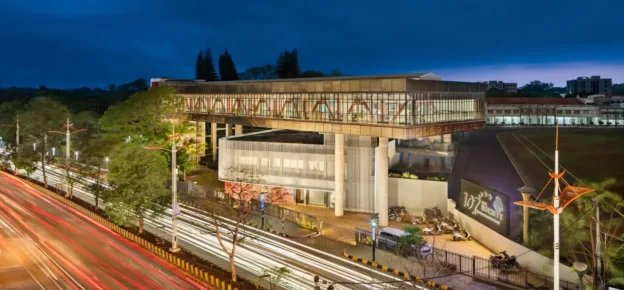
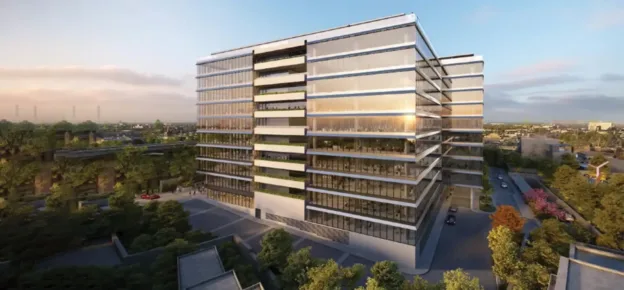
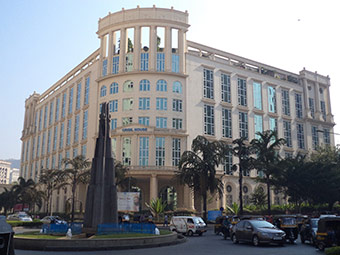
Cyrus K Pithawalla: We have done only three buildings with curtain walls. At Hiranandani, we try to stay away from glass façades. Why? There is no available system for cleaning them. They build up bigfaçades and, barring a few, no one uses cleaning systems. Even if the BMUs are installed, they are not used. All the dirty glass buildings look like a black spot. The other day in BKC, I saw a building that was using bamboo scaffolding to clean the façade. What’s the use then? Fortunately for us, the Chief Fire Officer is also now discouraging the use of glass for the façade of buildings. I am very happy with this.
Ofcourse there will be issues like leakages if the CFO persists on converting fixed panels to openable ones in already constructed buildings with a glass façade.
WFM: What measures do you take to ensure the proper performance of glass facades in your buildings?
Cyrus K Pithawalla: We have installed proper BMU Systems and Façade testing is carried out.
At the fulcrum, façade testing was done twice. The openable panel in the façade has to have a good locking system in place in order to pass the façade test.
We go leaps and bounds to ensure impeccable performance of façades and windows in our projects.
WFM: What are the major challenges you face when it comes to executing façade and fenestration for your projects?
Cyrus K Pithawalla: My major problem is that in India, people are not at all quality-conscious. In aluminium windows, the suppliers and fabricators are very, very poor. Their style is like“andho me kaana raja”. Perfection is not there. Although there are some good ones who strive hard to provide quality, it’s a long and hard journey. We have yet to evaluate them. Now, at least wind pressure and water seepage is tested, and they are taking care of it.
Secondly, not a single powder coater in Mumbai can give a proper quality finish. The industry is taking it very lightly. No one knows about the thickness of powder coating. My own contemporaries don’t know. We at Hiranandani test powder coating thickness at the site. We get coating thickness readings like 120/100/150 microns instead of the specified range of 60 to 80 microns. Then they ask – “What’s your problem? We are giving extra”. I don’t care if you are spending more and wasting powder. What’s the use if it peels off?
Thirdly, bad hardware spoils the whole window. That’s why we go the extra mile in specifying and selecting just the right make.
WFM: Why don’t you opt for anodising then?
Cyrus K Pithawalla: I prefer powder coating. Anodising is all dark colours that no one likes. After using anodised profiles for a while, we shifted to powder coating and remained with it. You can’t get pastel colours in anodising. Imagine how it will go with our theme colour of whites and creams. White windows give a good effect which you can never get with anodising. And then there is the universal problem of degenerative oxidation pitting in anodised aluminium, which no coater in India is equipped to deal with yet.
WFM: In the current market scenario, how do you strike a balance between productivity and profit?
Cyrus K Pithawalla: Productivity is the combination of quality, progress and cost. The market is very tough these days. Everyone is trying to cut corners. And I hate the word cost-cutting. I believe there is nothing like cost-cutting. You have to use your brains to save money. You can’t lower your standards and your values in the name of cost-cutting. And the worst part is that if something goes wrong, people take advantage of this word to save face.
We try to add value to the measures we take. Measures that will save money as well as improve performance.
Quality doesn’t come by fluke. Quality is achieved by grit and determination and by unwavering focus. And above all, you must enjoy the work. The day I stop enjoying the work will be the last day of my life.
WFM: Do you think standardisation will help?
Cyrus K Pithawalla: Ofcourse! Now we have a system called SOS – standard opening sizes. As there is SOS for ships, our SOS is also a soul-saving measure that my Managing Director has now directed to implement for all our projects. That’s how you can improve productivity. So standardisation is a must. An absolute must.
WFM: What Advice would you give to the window and façade manufacturers and the industry in general, and how should the industry tread for betterment?
Cyrus K Pithawalla: I would say the fabricator should be very cooperative. “Jitnachadarutna hi paonfailanachahiye”. They take more jobs than they are able to fulfil. Such a situation should not arise.
There is a dearth of good fabricators. They keep on taking so many jobs, they don’t grow. They could do better if they focus on the jobs in hand. Not that all of them are bad. Some are trying. But just wishing for quality will not work. You have to have a proper system in place.
And the same is true for suppliers as well – glass, profile system and hardware.