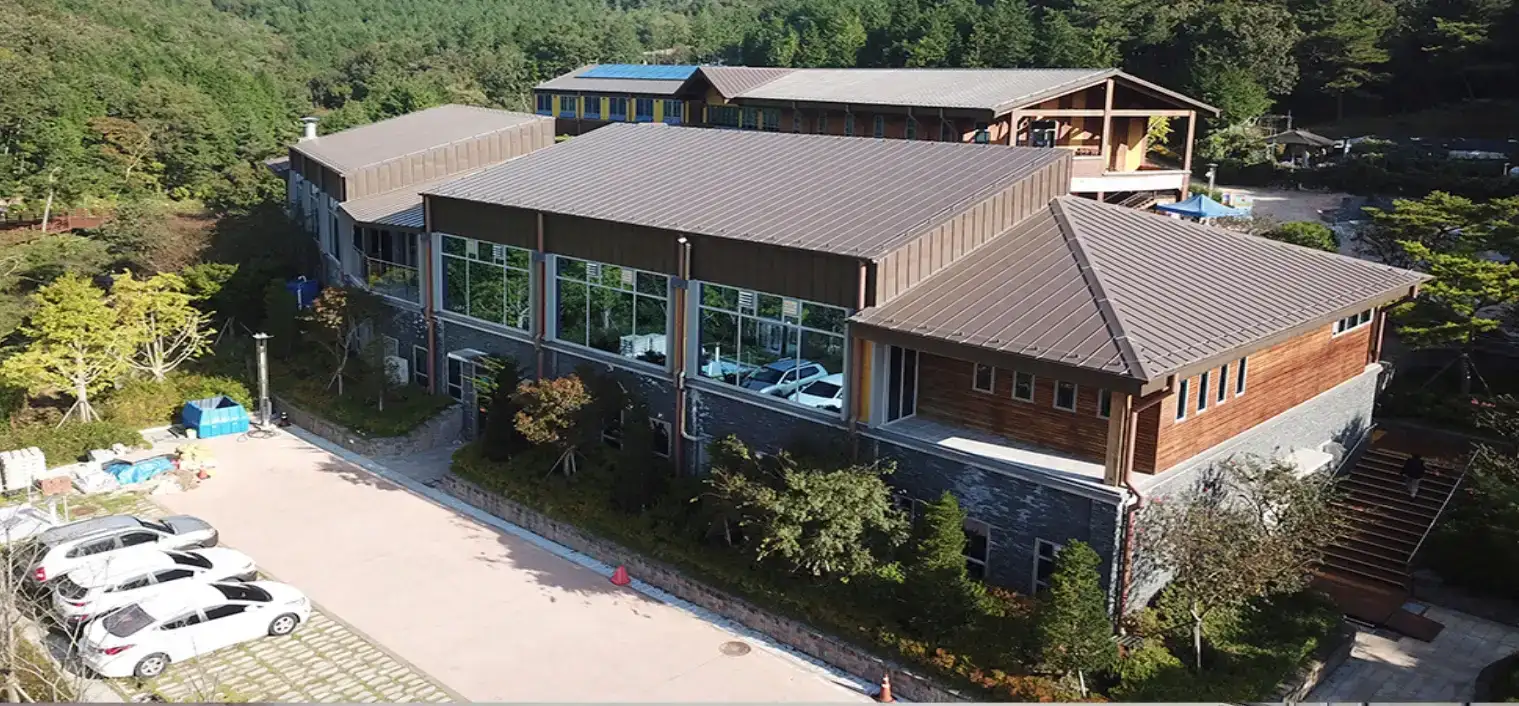

Aluminium and zinc-titanium standing seam roofing systems offer various benefits, including durability, low maintenance, and a modern aesthetic. However, they differ in some key aspects. Aluminium is lightweight, resistant to corrosion, and easily available in India. However, getting it coated and profiled remains a challenge, similar to zinc. Its easy availability allows for faster completion of work. Zinc-titanium, while also durable and corrosion-resistant, is known for its self-healing properties and long lifespan. Zinc has better malleability than aluminium.
Here’s A More Detailed Comparison:
Aluminium Standing Seam Roofing
- Lightweight: Aluminium is one of the lightest roofing materials, reducing stress on the building’s structure. However, in roofing, the complete build-up weight is more or less the same as that of zinc
- Corrosion Resistance: Resistant to rust and corrosion in comparison with GI and Galvalume.
- Life: Can last up to 10–15 years.
- Formability: Easily shaped and formed, allowing for oval designs and installations compared with GI or Galvalume.
- Durability: Offers good longevity and resistance to weather conditions.
- Cost: Can be more expensive than steel but often provides better long-term value due to its durability and low maintenance.
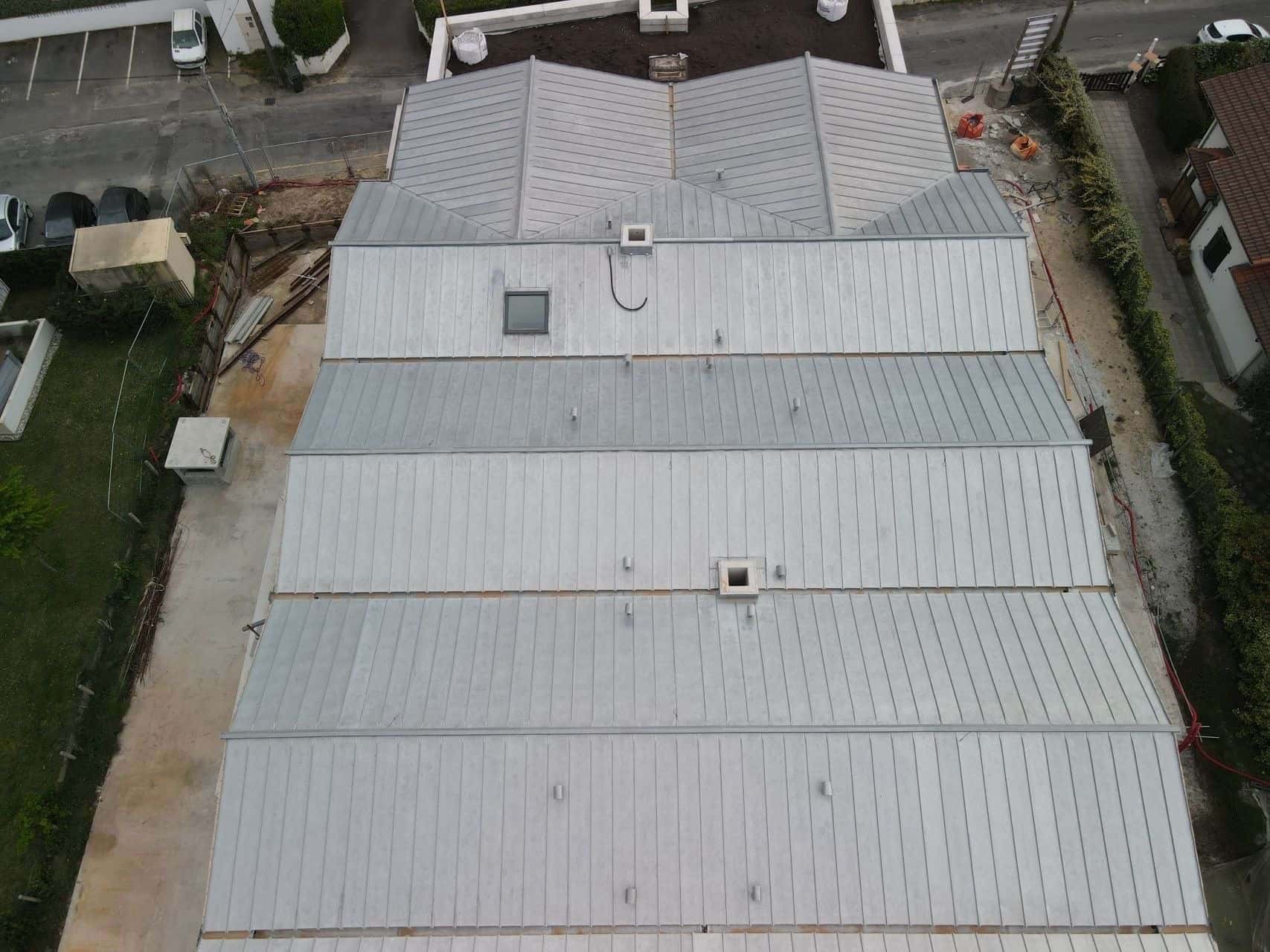
Zinc-Titanium Standing Seam Roofing
- Self-Healing: Zinc can form a protective layer that repairs minor damage, thereby extending its lifespan.
- Corrosion Resistance: Known for its excellent corrosion resistance, zinc forms a protective oxide layer.
- Longevity: Can last for 75–100 years with minimal maintenance.
- Sustainability: Highly recyclable and can be produced from recycled materials.
- Aesthetics: Offers a natural and durable appearance, with a variety of finishes available.
- Cost: May be more expensive initially, but provides long-term savings due to its durability and low maintenance requirements.
Key Differences And Considerations
- Cost: Zinc is slightly more premium than aluminium; aluminium is generally preferred, especially for basic projects.
- Weight: Aluminium’s lightness is a significant advantage, particularly for buildings with structural limitations, especially in the façade.
- Self-Healing: Zinc-titanium’s self-healing ability is a unique benefit that reduces the need for repairs.
- Sustainability: Both materials are recyclable, but zinc-titanium often contains a higher proportion of recycled content.
- Aesthetics: Both materials offer a range of finishes, but zinc-titanium’s natural patina can be particularly attractive for some applications.
- Maintenance: Zinc roofs are easy to maintain and do not stain easily. Zinc is a non-coated product; hence, the absorption of dust and residues is lower than in coated aluminium.
In conclusion, the best choice between aluminium and zinc-titanium depends on the specific project requirements, budget, and desired aesthetic. Aluminium is an excellent option for its lightweight nature and formability in smaller-run projects, while zinc-titanium offers exceptional durability and self-healing properties for infrastructure projects requiring a longer lifespan.
For More Details On The Company And Its Products:
ElZinc
Website: www.elzincindia.com
Email: nikhil.joshi@elzincindia.com
Phone: +91 98200 09553