
Post Date: August 11, 2026 |
Last Edited: August 11, 2026
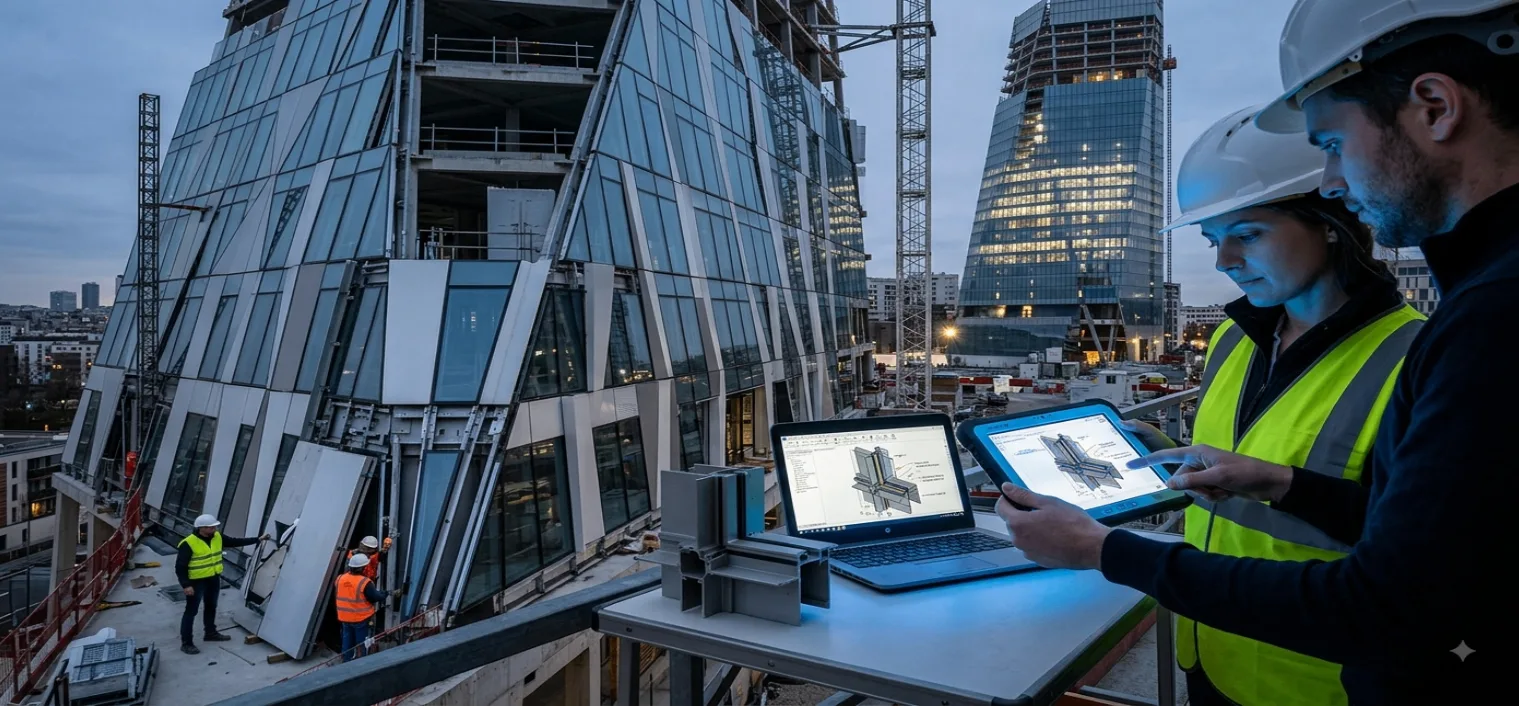
The construction industry is currently undergoing a major digital transformation, and adapting to this shift has become increasingly important, especially for professionals working in architecture, engineering, and façade systems. Today, projects are no longer developed solely through traditional drawing methods. Instead, they are shaped by integrated digital workflows where design, engineering, production, and installation processes progress simultaneously and in a coordinated manner.
Key Highlights
|
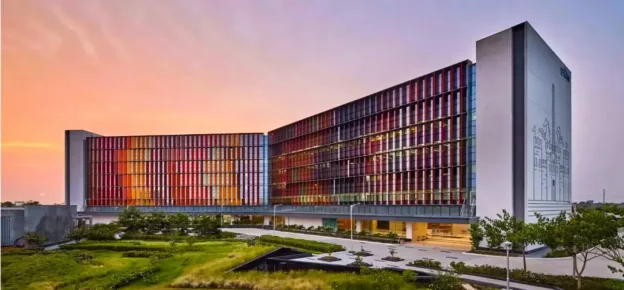
With architectural geometries becoming more complex and building technologies continuously evolving, façade engineering has also undergone a significant transformation. Contemporary façade systems are no longer evaluated only in terms of aesthetics or visual identity. Constructability, coordination accuracy, installation methodology, long-term maintenance, and lifecycle performance have become equally critical components of the design process.
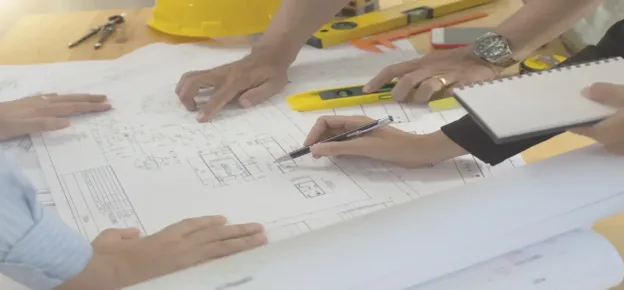
In the past, many façade systems were coordinated mainly through 2D technical drawings. Whilst this approach was sufficient for simpler projects, today’s complex geometries have revealed the limitations of traditional coordination methods. Especially in high-rise buildings, inclined façades, curved geometries, and irregular panel systems, many issues that appear technically resolved in 2D drawings only become visible when the system is fully integrated into a 3D BIM environment.

For this reason, BIM-based workflows have become one of the most essential tools in contemporary façade engineering. BIM should no longer be seen merely as a modelling platform. Instead, it functions as a coordinated digital ecosystem where architects, façade engineers, structural consultants, fabrication teams, and installation teams can evaluate the same system simultaneously.
One of the greatest advantages of digital coordination is the ability to detect potential problems at early project stages. Clashing anchors, non-manufacturable profile connections, unbendable sheet metal details, installation access issues, and tolerance conflicts can all be identified before they turn into costly on-site problems. This significantly reduces production risks, revisions, and installation delays whilst improving overall project control.
At the same time, digital workflows also contribute significantly to sustainability. Mock-ups, prototype evaluations, and system optimisation processes can now be analysed digitally before physical production begins. This reduces unnecessary material waste and enables the development of more efficient façade systems.
From my perspective, façade engineering is no longer just about designing a building envelope. It has evolved into a multidisciplinary digital coordination process where architecture, engineering, production logic, installation planning, and long-term system performance work together within a single integrated workflow.
Beyond Aesthetics: Why Constructability And Production Logic Matter
In contemporary architecture, façade systems are often primarily evaluated based on their visual impact. Dynamic geometries, inclined surfaces, and unconventional forms are becoming increasingly common in modern projects. However, in my opinion, façade engineering should not focus solely on aesthetics. A façade system must also be realistic in terms of production, installation, maintenance, and long-term performance.
In my approach, one of the primary priorities in any façade project is constructability. No matter how visually impressive a façade may appear, if it cannot be realistically manufactured, installed, or maintained, it remains not an engineered solution but merely a conceptual visual. For this reason, production logic is one of the most critical parts of the coordination process. Profile bending limits, cutting tolerances, drilling operations, CNC capabilities, and installation details directly determine whether a system can function under real production conditions. In some cases, even geometrically simple-looking façade systems can lead to serious fabrication issues if production constraints are not considered early enough.
Installation methodology must also be integrated into the engineering process from the very beginning. Whilst coordinating façade systems, installation access, sealant application zones, equipment movement areas, and maintenance operations must be continuously evaluated.
These factors become even more critical in complex projects involving inclined façades, curved geometries, and narrow panel zones. In such cases, façade engineering is not only about creating geometry but also ensuring that the geometry remains feasible under real site conditions.
Long-term maintenance and lifecycle performance also play a major role in successful façade systems. Glass units, gaskets, or damaged panels should be replaceable without dismantling the entire system. At the same time, façade systems must properly manage air, water, and thermal performance whilst accommodating structural movements and expansion.
In my view, successful façade systems are those that can balance aesthetics, engineering logic, manufacturability, and operational performance simultaneously.
BIM As A Coordination Ecosystem: From 2d Drawings To Integrated Digital Installation
One of the most significant transformations in façade engineering is the shift from independent 2D drawing workflows to integrated BIM coordination environments. In traditional workflows, façade systems were mainly developed through plans, sections, and technical detail drawings. Whilst this approach may be sufficient for simpler projects, it is not adequate for complex geometrical façade systems.
Based on my experience, one of the most common problems in façade projects is continuing coordination through fragmented 2D processes whilst working with low-level-of-detail models. Even when systems appear technically resolved in drawings, many critical issues only emerge once the system is fully assembled in a BIM environment.
BIM-based coordination is crucial because it allows façade components to be evaluated not as independent elements, but as a unified system working in coordination with architectural, structural, and fabrication disciplines.
Common issues that arise in digital installation processes include:
- Clashing Profiles
- Incompatible Panel Geometries
- Non-Manufacturable Bends
- Anchor Conflicts With Concrete Or Steel Structures
- Installation Access Problems
- Tolerance Mismatches
Especially in inclined façades and curved geometries, anchor coordination becomes highly sensitive. In some cases, anchor points may directly conflict with columns or structural steel systems.
One of the greatest advantages of BIM ecosystems is improved interdisciplinary coordination. Architects, façade engineers, structural teams, fabrication teams, and installation teams can work in a synchronised digital environment.
In my opinion, BIM is not just a modelling tool. It is a comprehensive coordination system that integrates design intent, manufacturing logic, and installation methodology within a single digital workflow.

Production-Oriented BIM Workflows: Coordination Between Design, Manufacturing, And Installation
In façade engineering, creating a visually successful system is only one part of the process. The real engineering challenge begins when that system becomes manufacturable, installable, and sustainable.
For this reason, BIM workflows should be developed not only for visualisation but also in alignment with production and installation logic.
One of the most important stages in this process is panelisation strategy. Panel dimensions, transportation limits, profile combinations, glass sizes, and installation tolerances must be carefully coordinated at early design stages.
During BIM coordination, systems should be evaluated not only geometrically but also according to real production capacity. Some profile connections may create impossible cutting angles, whilst certain sheet metal details may exceed bending limits.
This is why production-oriented digital coordination becomes critical. With CNC-supported manufacturing systems and digital fabrication logic, many problems can be identified and optimized before production begins. Another important aspect is anchor coordination. The interface between façade systems and the primary structural system must be continuously checked. In complex geometries, anchor points may conflict with columns or steel structures.
One of the key advantages of BIM workflows is quantity take-off and production management. Panels, profiles, and connection elements can be directly extracted from the BIM model and integrated into manufacturing processes.
In my view, production-oriented BIM workflows transform digital coordination from a simple modelling process into a comprehensive engineering methodology that connects design, production, and execution.
Case Study: Tour Triangle: Managing Complex Geometries Through Digital Coordination
One of the most technically challenging projects I have worked on was the Tour Triangle project. The project was complex not only because of its scale but also due to the varying geometric and production challenges across each façade direction. Especially narrow corner panel zones and continuously changing façade angles required highly detailed coordination in both production and installation processes.
In the early coordination stages, many façade components were developed using 2D technical drawings and cross-reference systems. However, once the system was consolidated in a BIM environment, several issues that were not visible in 2D became apparent.
During digital installation, several problems were identified:
- Clashing Profiles
- Non-Manufacturable Sheet Metal Bends
- Difficult Profile Cutting Conditions
- Anchor Conflicts
Some sheet metal components exceeded machine limitations, whilst certain profile connections created serious fabrication challenges.
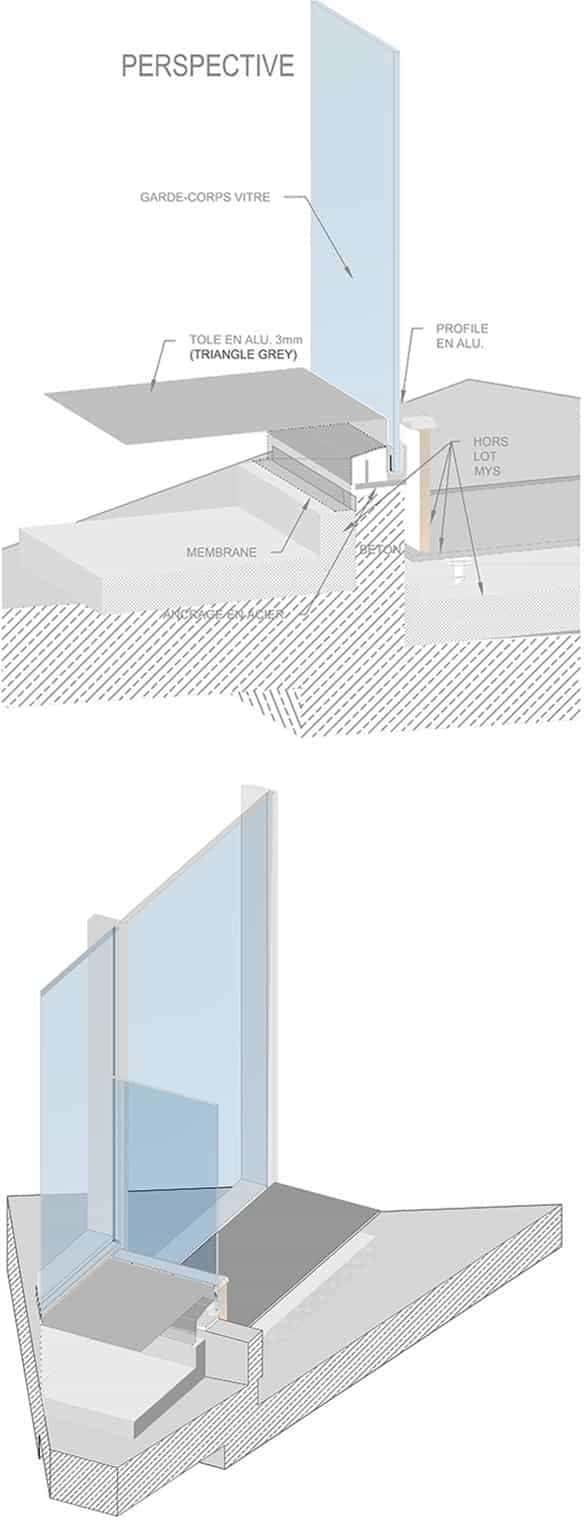
Anchor coordination became one of the most critical aspects of the project. Due to curved and inclined façade geometries, some anchor points directly conflicted with structural columns and steel systems, requiring continuous optimisation of the system. One of the key advantages of BIM coordination in this process was the ability to evaluate the system not just as a drawing package, but as a real installation system.
Continuous questions had to be addressed:
- Can This Panel Actually Be Installed?
- Can The Equipment Reach This Area?
- Can Sealant Application Be Performed?
- Is Future Glass Replacement Possible?
This project demonstrated that BIM in complex geometries is not just a modelling tool, but a comprehensive engineering environment that evaluates production, installation, maintenance, and performance simultaneously.
Digital Validation and the Future of Façade Engineering: Parametric Systems, Artificial Intelligence, and Smart Coordination
Today, BIM workflows are extending beyond office environments and integrating into active site processes. With tablet-based coordination systems and digital validation tools, installation teams can directly compare real site conditions with BIM models.
This improves installation accuracy and significantly reduces on-site revisions. At the same time, parametric design systems and AI-assisted processes are beginning to advance façade engineering further. Parametric systems provide major advantages in repetitive façade elements, adaptive geometries, and complex surface coordination.
However, in my opinion, parametric freedom must always be considered together with real manufacturability. No matter how dynamic a geometry is, production limits, installation logic, and maintenance requirements must remain integral parts of the engineering process.
I believe artificial intelligence will play an increasingly important role in future façade engineering workflows. However, rather than replacing engineers, AI should be seen as a supportive tool for technical analysis and coordination. In the future, AI-supported BIM systems may be able to automatically analyse and optimise:
- Fabrication Issues
- Impossible Bends
- Tolerance Risks
- Installation Access Problems
Despite these technological advancements, engineering judgement and field experience will remain critical.
Conclusion: Towards A Smarter And More Integrated Façade Industry
The façade industry is steadily evolving into a more integrated, digital, and production-oriented structure. Today, façade engineering is no longer just a drawing or visual design process. Successful façade systems now require comprehensive engineering workflows where BIM coordination, production logic, installation methodology, maintenance planning, and long-term performance work together.
As projects become more complex, digital coordination systems will become even more important for reducing error rates, improving constructability, and strengthening interdisciplinary communication.
In my view, the future of façade engineering will be defined not only by more advanced digital tools, but by how effectively design, engineering, production, and construction processes can work in coordination with each other.