
Post Date: February 24, 2026 |
Last Edited: April 10, 2026
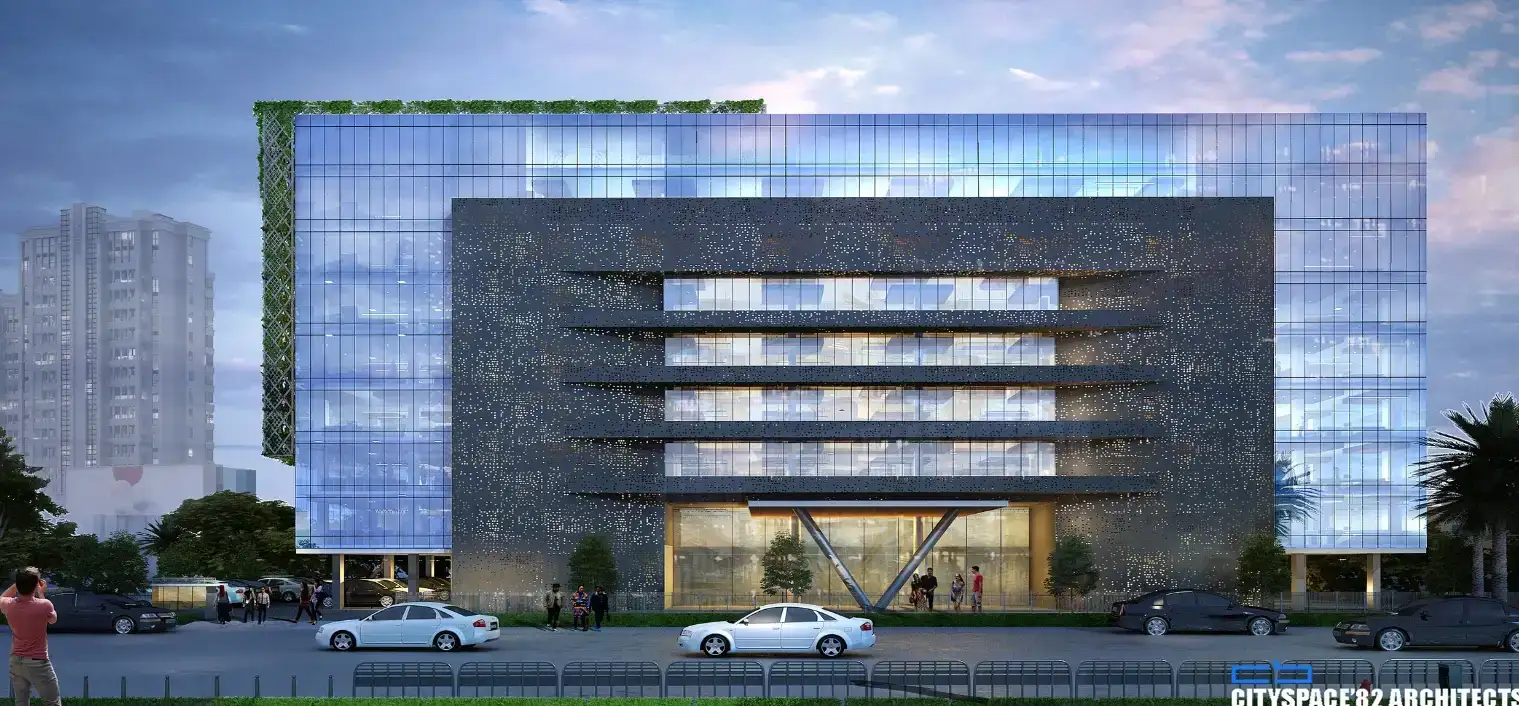
Architecture today is in the midst of a fascinating evolution that surpasses form and ornamentation to encompass performance, precision, and purpose. This is nowhere more visible than in facade and fenestration design. What was once seen as the decorative “face” of the building, the façade has now been revolutionised into a high-performance system: an intelligent skin mediating between the indoors and the environment.
In a time when sustainability, resilience, and identity dominate architectural discourse, design efficiency has become the new aesthetic. It is not about how a building looks but about how it works — how it breathes, shields, and responds. Within this context, material synergy is key to allowing architects to achieve optimal thermal comfort, daylight balance, and structural performance while maintaining expressive design freedom.
The Façade As A High-Performance Interface
The façade is the most powerful medium to share stories — the fusing of material science and architectural narrative.
The façade is no longer an afterthought or a decorative layer. It is an engineered system, one that has to perform along several fronts: climatic, structural, acoustic, and aesthetic.
Everywhere, from the humid coastal belts of Bangladesh and the western Indian coastline to the arid interiors, façades continuously battle it out with solar gain, dust accumulation, and fluctuating humidity levels. Such diversity demands design sensitivity, not only from the aesthetic point of view but also from an analytical approach rooted in performance data.

Material Synergy: The Foundation Of Efficiency
The design process begins with an understanding of how these different materials behave in concert. Each material offers its unique strength: glass provides transparency and daylight, stone provides thermal mass, metal ensures precision and lightness, while engineered composites allow flexibility and resistance to weather.
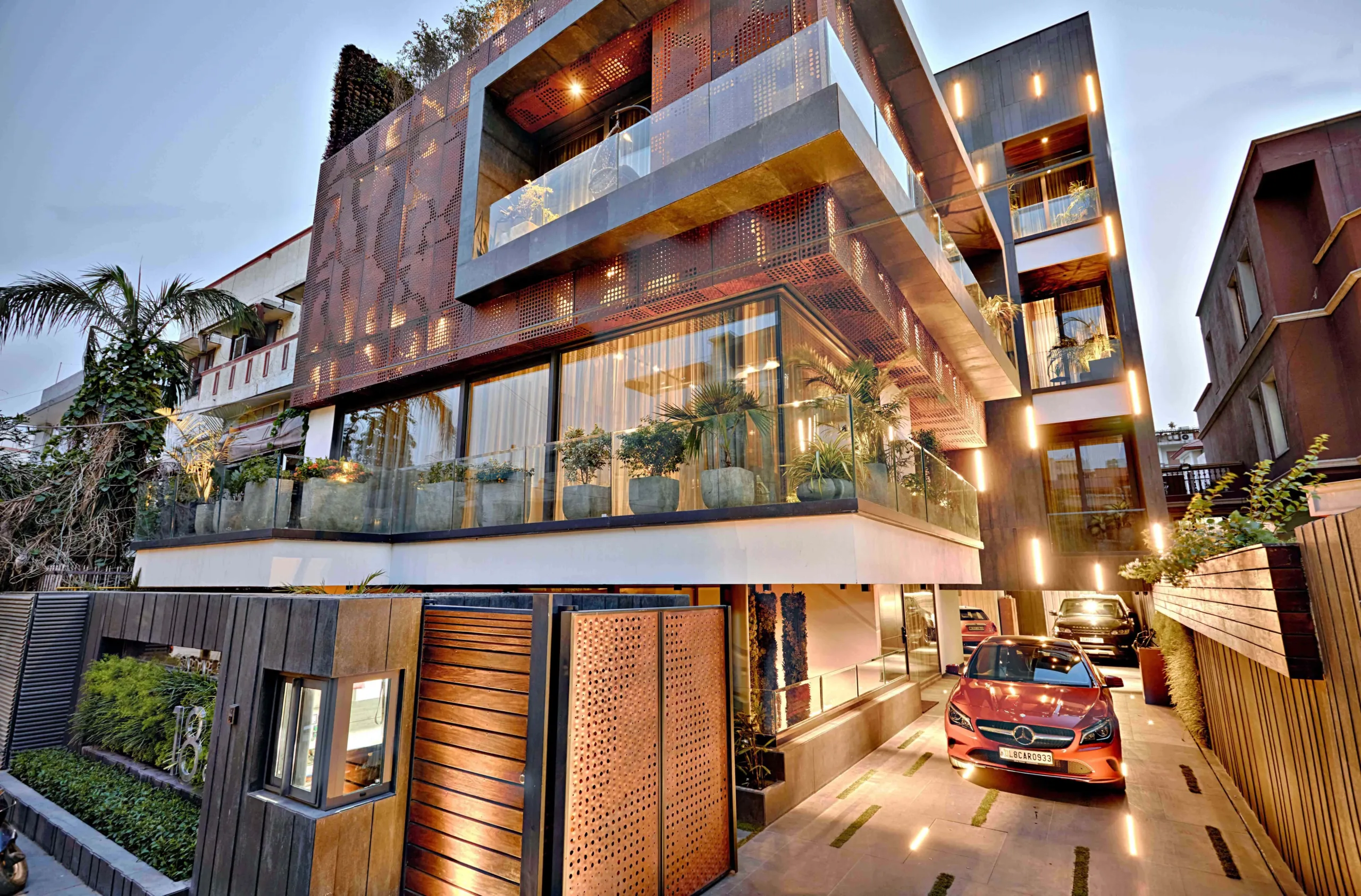
A façade that intelligently combines these materials can modulate heat gain and diffuse daylight, reducing the demand for artificial cooling and lighting. For instance, a combination of low-emissivity double-glazed glass with perforated aluminium screens allows dynamic control of light and heat: the metal screen functions as a shading device, while the glazing provides thermal insulation to achieve interior comfort with minimal energy load.
In luxury residences, this balance becomes an extraordinary challenge, as the façade frequently plays the role of an identity marker. “The goal is always to make the façade perform without appearing mechanical,” elaborates. “Every joint, mullion, and junction must be designed for a purpose. Efficiency lies in precision detailing — not in adding more systems, but in making fewer elements perform more functions.”
The Role Of Fenestrations In Performance Architecture
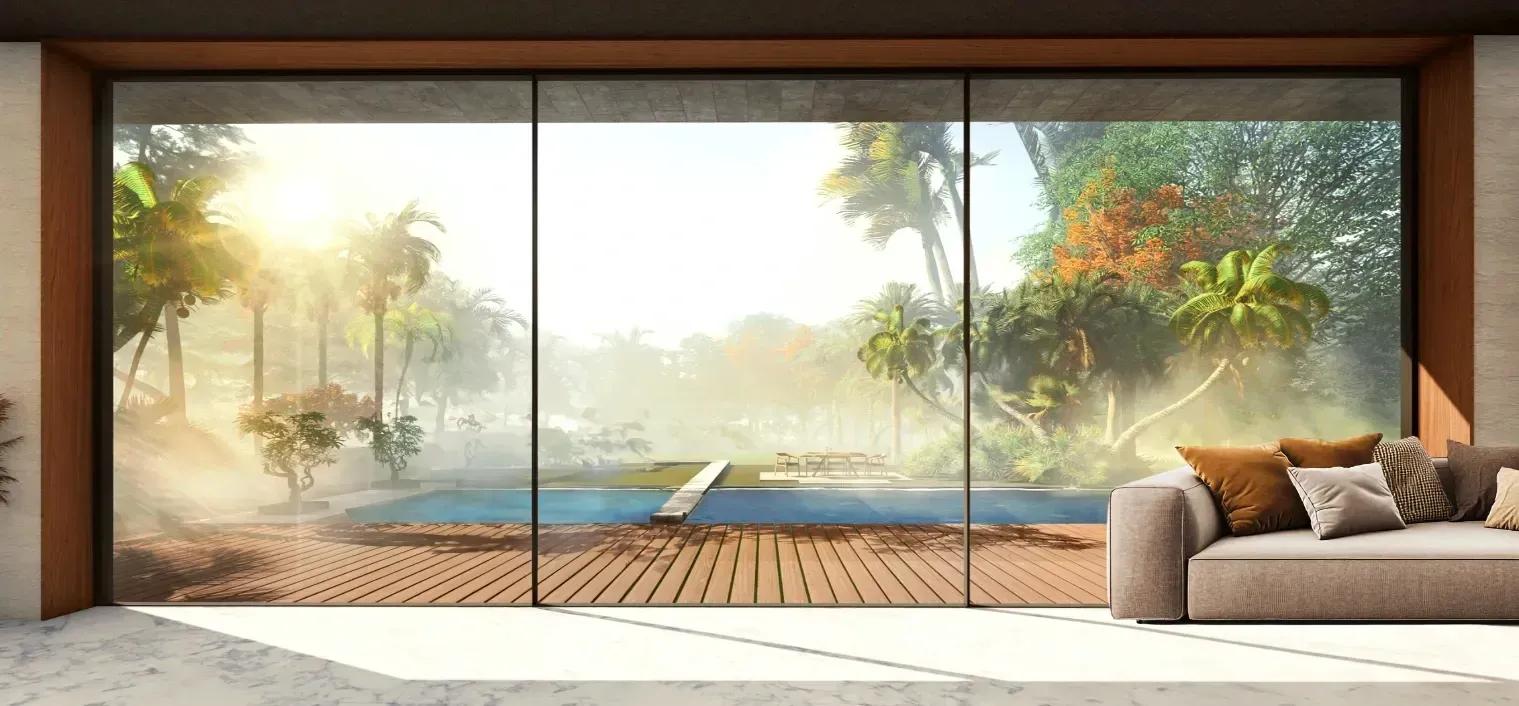
While façades define a building’s external persona, fenestrations form the tactile interface between the user and the environment. Efficient fenestration design can substantially affect energy performance, acoustic quality, and indoor comfort.
In residential typologies, usually thermally broken aluminium frames, argon-filled glass units, and strategic placement of openings to optimise cross-ventilation are adopted. This ensures that interiors are well-lit yet shielded from harsh glare, thus creating a visual dialogue between indoors and outdoors.
Fenestrations are not designed in isolation but as an extension of the façade system. Every window, every skylight, or every pivot door is contributing to the environmental performance of the building. They are looked at as part of a holistic envelope rather than as independent fixtures.
By integrating these perspectives, the firm can design homes that are visually cohesive and environmentally responsible, where material selection and detailing are driven by measurable performance goals.
Technology Meets Craft: The New Era Of Façade Engineering
Contemporary façade design is inextricably linked with technology. Computational tools, environmental simulation software, and Building Information Modelling (BIM) have changed the way in which architects analyse performance outcomes. Technology gives the data, but craftsmanship gives the soul. A façade must be engineered to perfection, but it must also feel human. Humanistic, indeed, which in his projects materialises through multi-layered articulation of materials and fine detailing into living surfaces — dynamic, responsive, and expressive.

Sustainability Through Material Innovation
Design efficiency also extends to the realm of sustainability: façades and fenestrations are some of the most energy-intensive parts of any building, but can minimise energy use significantly with smart material selection and detailing. The vocabulary also now includes newer materials such as high-performance glass, recycled metal panels, and solar-integrated façades. Dhawan and his team are keen on exploring hybrid assemblies that combine photovoltaic glazing with ventilated cladding systems to achieve energy generation without sacrificing aesthetics.
They have experimented with locally available materials such as sandstone fins and terracotta jaalis to make shading devices in a number of recent projects. They have both cultural resonance and climatic appropriateness. This contextual sustainability is central to the firm’s design philosophy: modern performance rooted in local sensibility.
Expressive Minimalism: Balancing Identity And Efficiency
Designing efficient façades does not have to mean giving up on visual identity. In fact, the performance and aesthetics can coexist in harmony when materials are orchestrated intelligently. The façades often exhibit a restrained elegance — defined by strong geometries, clear alignments, and contrasting textures.
True efficiency lies in clarity. When each material has a purpose, the façade becomes inherently beautiful.
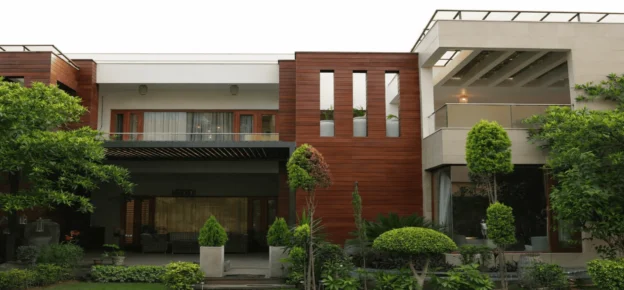
This is manifested, for instance, in the façades of Yuvraj Singh and Gautam Gambhir’s homes, which use layered planes of glass, stone, and metal to articulate depth and dynamism while maintaining optimal shading and insulation. These projects reflect the firm’s ethos: design as a synthesis of art and engineering, emotion and efficiency.
The Future Of The Building Envelope
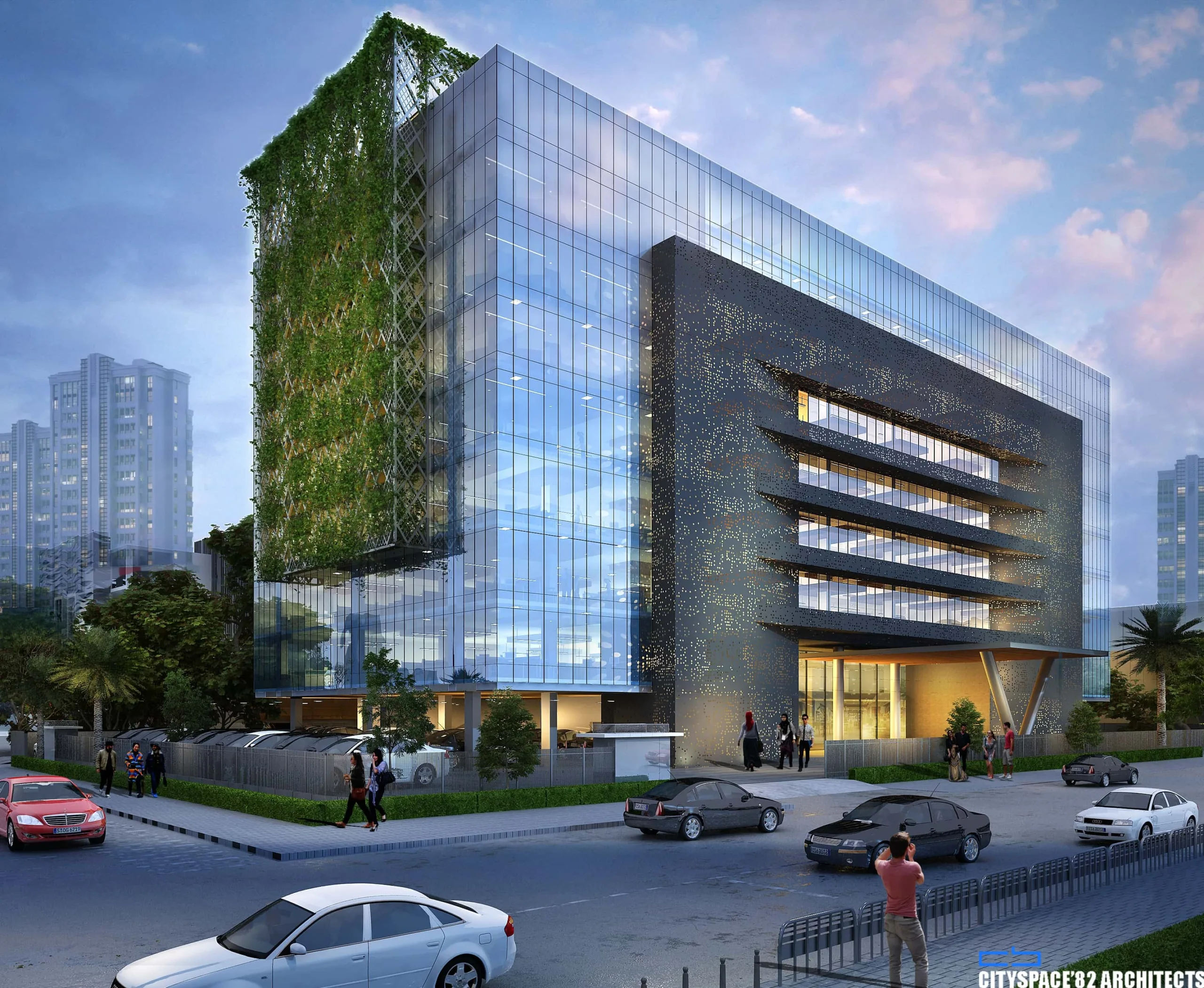
The façades of the future will be adaptive systems that respond to climate, occupancy, and data. Emerging technologies in electrochromic glass, kinetic shading panels, and AI-driven environmental controls are the pathways to “living façades” that will self-adjust according to changing conditions. However, he says that technology must serve design, not vice versa. “We must design façades that are intelligent, not just smart,” he says. “The future is about integrating innovation seamlessly — so that buildings adapt naturally, efficiently, and beautifully.”
Conclusion: Efficiency As Identity
In today’s architectural world, façades and fenestrations define far more than the mere exterior of a building: they articulate its environmental conscience, workmanship, and cultural relevance. Design efficiency is not a limitation but a motivating spark. Every façade tells a story. The architect’s role is to make that story meaningful — where design serves both the eye and the environment.