
Post Date: April 15, 2026 |
Last Edited: April 15, 2026
Fenestrations today are largely treated as neutral apertures, reduced to performance values and visual transparency. Windows are expected to disappear, letting light in without altering it, and comfort is measured almost exclusively through thermal and acoustic metrics. In this process, the cultural, sensory and temporal roles of façades have steadily faded from architectural practice.
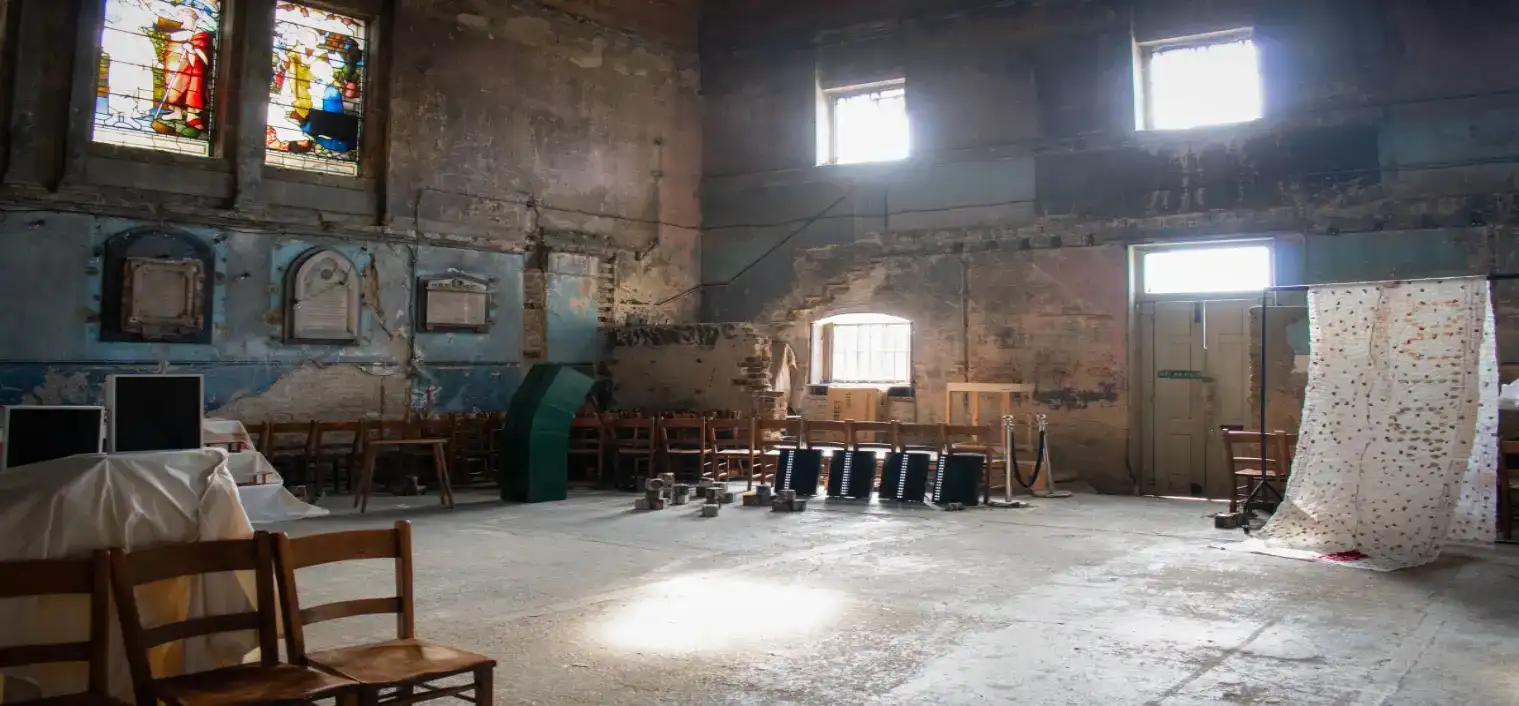
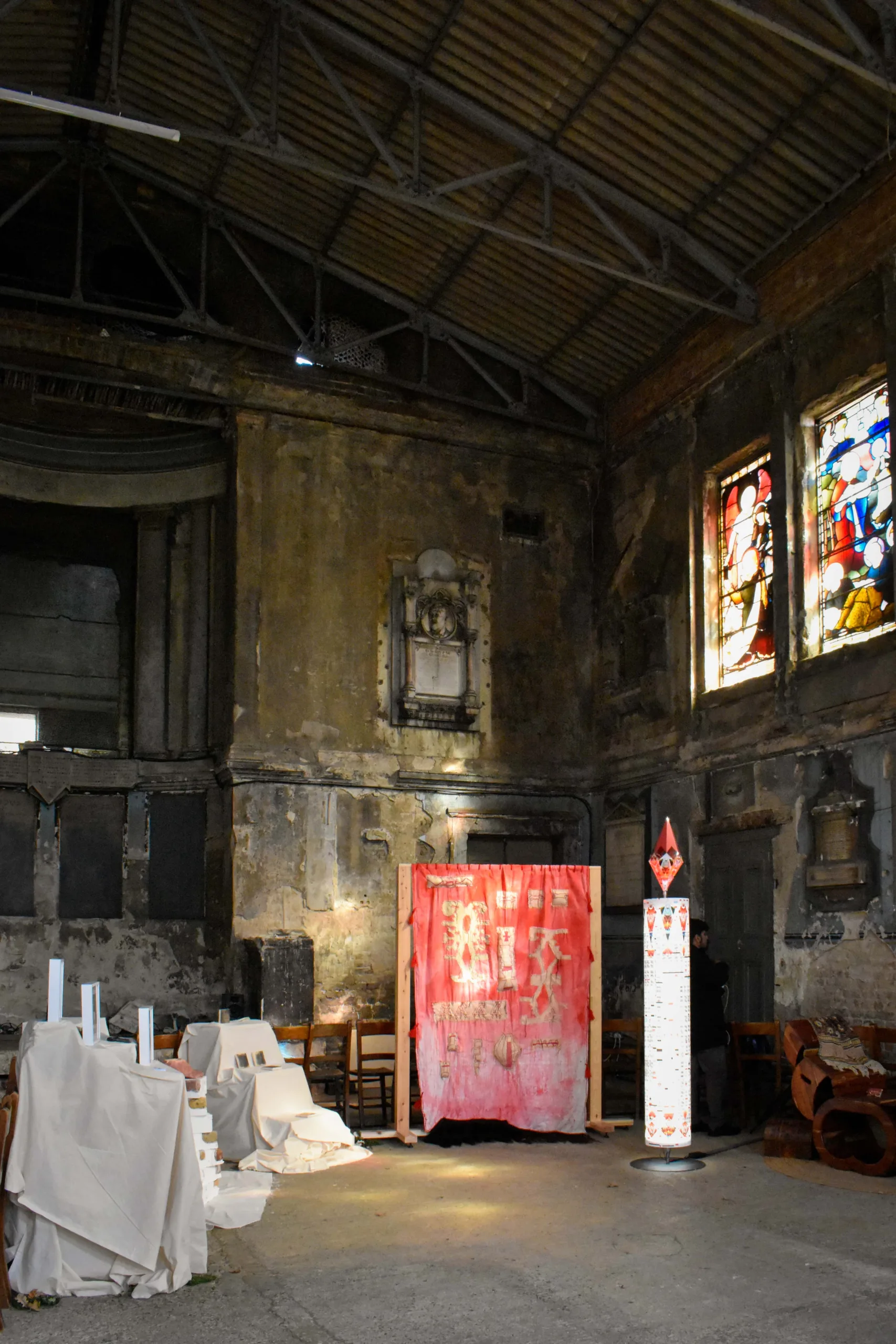
This reduction becomes evident when contrasted with Kaalchakra, an exhibition designed by OSA Studio and presented at the Asylum Chapel during London Design Festival 2025. The spatial design treated architecture, light and material decay as active collaborators rather than neutral backdrops.
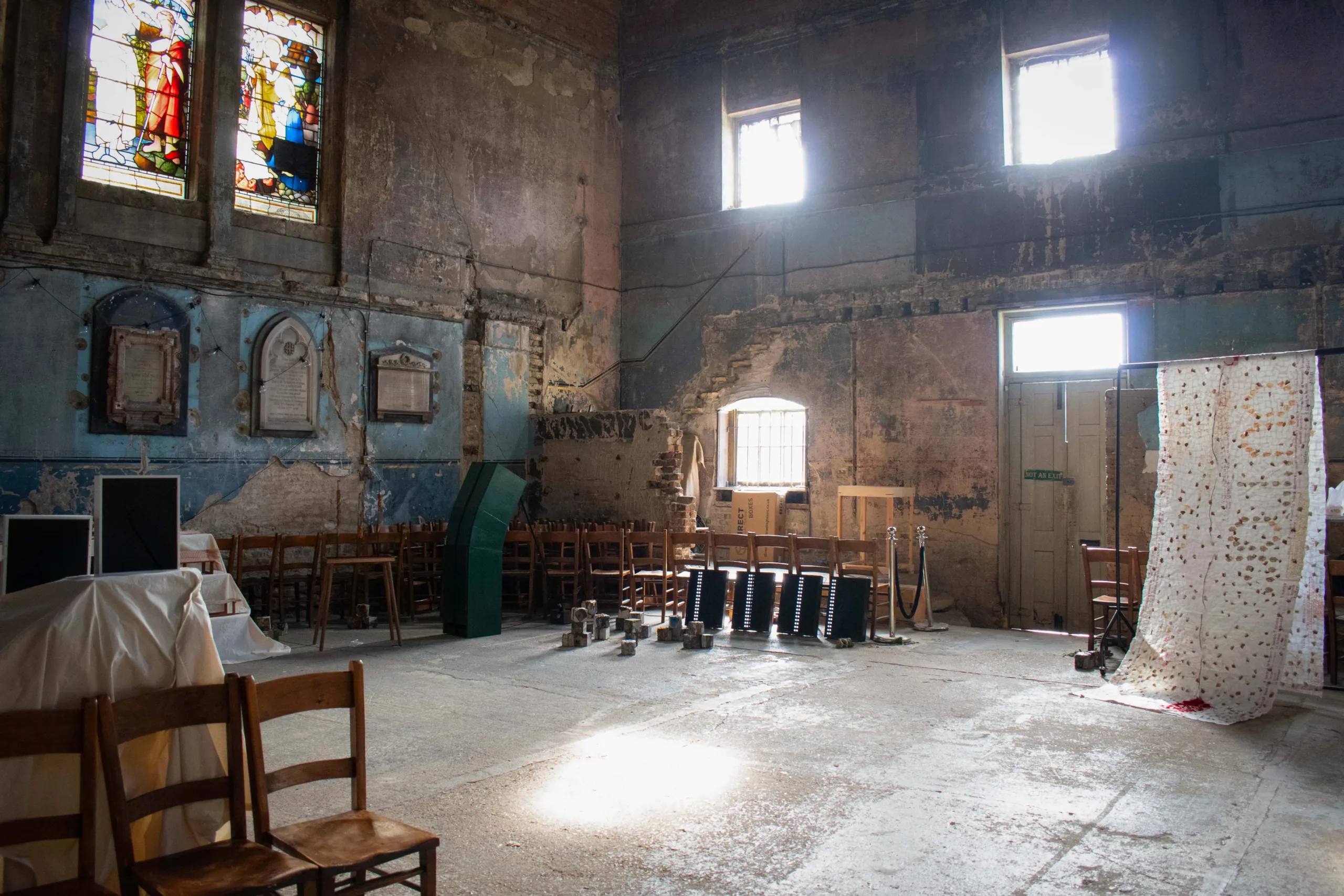
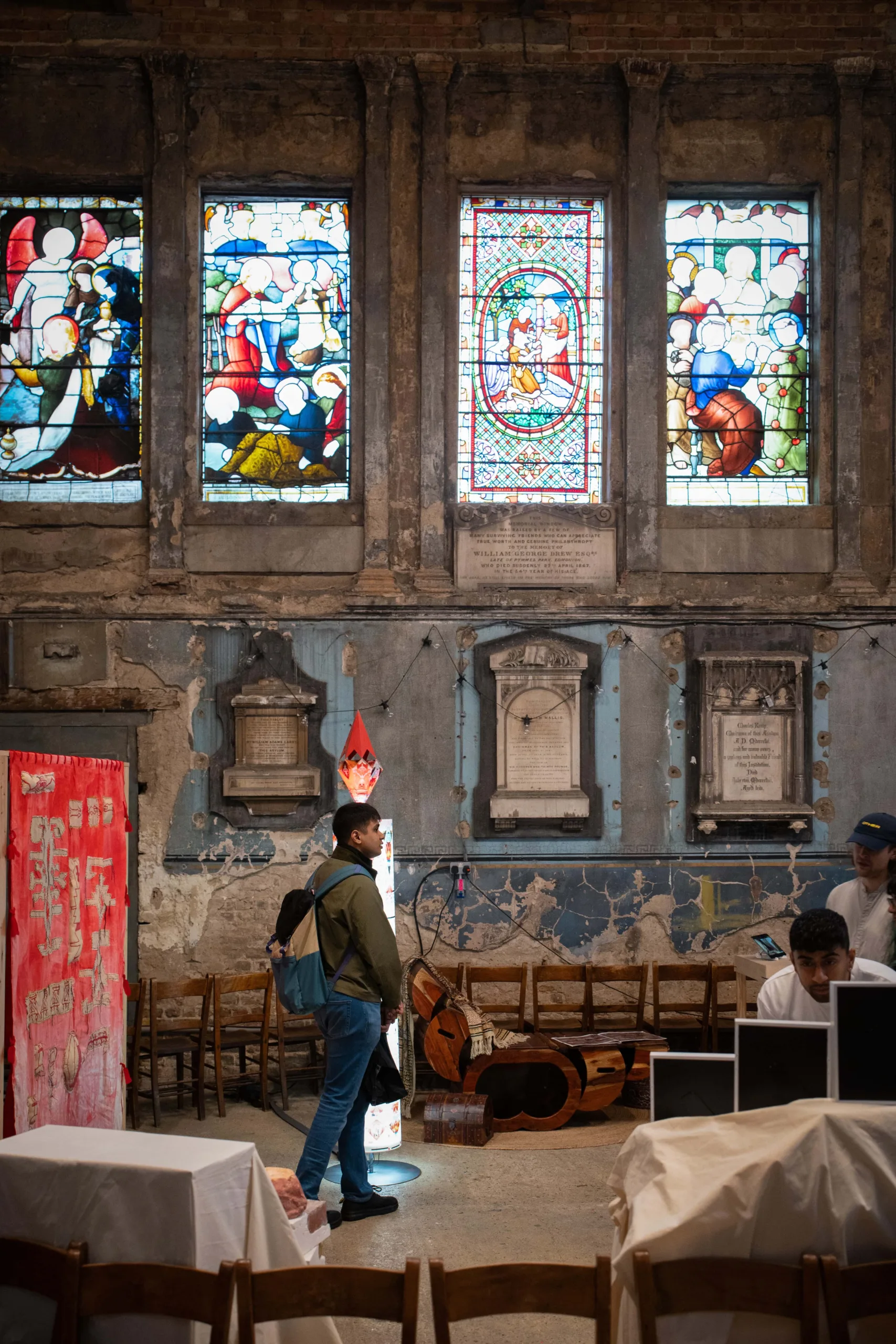
Housed within a nineteenth-century chapel built between 1826 and 1833, Kaalchakra used stained-glass fragments and fractured window openings as primary spatial instruments. Recycled coloured glass inspired by eighteenth-century palettes was introduced into broken bays, allowing light to enter the space unevenly and shift across the day. These chromatic projections fell across floors, walls and artworks, continuously changing and functioning as artworks in themselves. Larger openings admitted direct sunlight that grazed cracked plaster and eroded masonry, revealing the passage of time embedded within the building fabric.
Historically, fenestrations have always shaped more than illumination. Across South Asian and vernacular traditions, windows filtered, tinted and patterned light to moderate heat, reduce glare and align interiors with daily rhythms. From the coloured glass panels of Jaipur’s havelis to perforated stone screens and deep reveals, these systems embedded environmental intelligence within craft and culture. Light was never raw. It was composed.
Contemporary facade design, however, has largely prioritised quantifiable efficiency. Clear glazing, uniform daylight distribution and sealed envelopes dominate specifications. While these systems perform well in simulations, they often produce visually harsh interiors that rely heavily on mechanical conditioning. Comfort becomes a technical output rather than a lived, sensory condition. In many cases, buildings are over-designed to maintain uniform conditions regardless of actual patterns of use.
Kaalchakra offers an alternative framework. By reintroducing coloured fenestration, the project demonstrated how light can be softened without being eliminated. Coloured glass moderated solar intensity while enriching spatial depth and visual comfort. Importantly, the chapel was not designed for continuous twenty-four-hour occupation. This allowed fenestration strategies to respond to moments of use rather than abstract standards, suggesting that efficiency should be calibrated rather than maximised.
The treatment of ageing surfaces further reinforced this thinking. Cracks, stains and irregularities were intentionally retained rather than concealed. As light interacted with these textures, decay became legible and meaningful. The façade did not attempt to erase age but collaborated with it. Time was not hidden behind finishes but made visible through light and shadow. This approach reframes weathering not as failure but as an architectural asset.
For architects, this highlights the importance of conceiving façades and fenestrations early as spatial and experiential devices. Windows should not be reduced to technical inserts resolved late in the process. Their size, depth, colour and orientation fundamentally shape how space is perceived and inhabited. Façade consultants, in turn, must expand performance criteria beyond energy metrics to include glare control, colour rendering, light distribution and temporal variation.
Builders and contractors play a crucial role in enabling such outcomes. Working with recycled glass, irregular openings and aged fabric requires precision and judgement. Efficiency in execution does not mean standardisation. It means understanding material behaviour, tolerances and the value of restraint. Knowing what to retain can be as important as knowing what to replace.
In the Indian context, the disappearance of coloured fenestration reflects a broader loss of climate-responsive craft. Contemporary construction often equates modernity with clear glass and sealed interiors, despite extreme heat and glare. Cities that once used colour, depth and shadow to temper the climate now rely heavily on mechanical systems. Reintroducing coloured glass, textured surfaces and layered openings does not imply nostalgia. It requires contemporary detailing, technical rigour and collaboration across disciplines.
Kaalchakra demonstrates that effective façades do not need to be visually silent to be efficient. When fenestrations are allowed to filter, stain and modulate light, they create environments that are calm, legible and deeply connected to time. Comfort extends beyond thermal neutrality into visual ease and emotional resonance. As architects, facade consultants, builders and contractors rethink performance in an era of climate urgency, façades must once again be understood as cultural and environmental instruments rather than neutral skins.
Quick Facts:
|