
Post Date: April 16, 2026 |
Last Edited: April 16, 2026
Climate change and escalating urban temperatures are forcing a fundamental rethink of how we design buildings. Intense heat and more frequent heatwaves are the new normal; with urban heat islands amplifying outdoor temperatures, occupant comfort and energy demand are under pressure. Conventional HVAC-centric responses are increasingly unsustainable. The International Energy Agency has identified building cooling as one of the fastest-growing energy demands globally, and India — with rapid urbanisation and rising incomes — faces a steep increase in cooling loads if design approaches remain unchanged.
A large share of cooling demand arises from solar heat gain through the building envelope. The façade is therefore the building’s primary climatic interface: no longer just an aesthetic or branding device, it must actively control solar exposure, manage thermal gain, enable airflow, and deliver daylight and views. In hot and humid contexts, fully glazed, hermetically sealed façades behave like greenhouses and become thermal liabilities. The imperative is to move from the “seal and cool” model to façades that behave more like living systems: they should shade, breathe, evaporate, and adapt.
Biomimicry supplies a rigorous, performance-driven framework. Rather than literal copying, biomimicry abstracts nature’s proven functional strategies — how organisms regulate temperature, modulate exposure, or change dynamically – and translates them into architectural systems. Janine Benyus’s triad — nature as model, measure and mentor — encourages designers to emulate efficient, adaptable mechanisms, assess solutions against ecological benchmarks, and favour long-term resilience over short-term optimisation. For façades, organism-and behaviour-scale analogues (cactus ribs, termite mounds, leaf orientation) are particularly instructive.
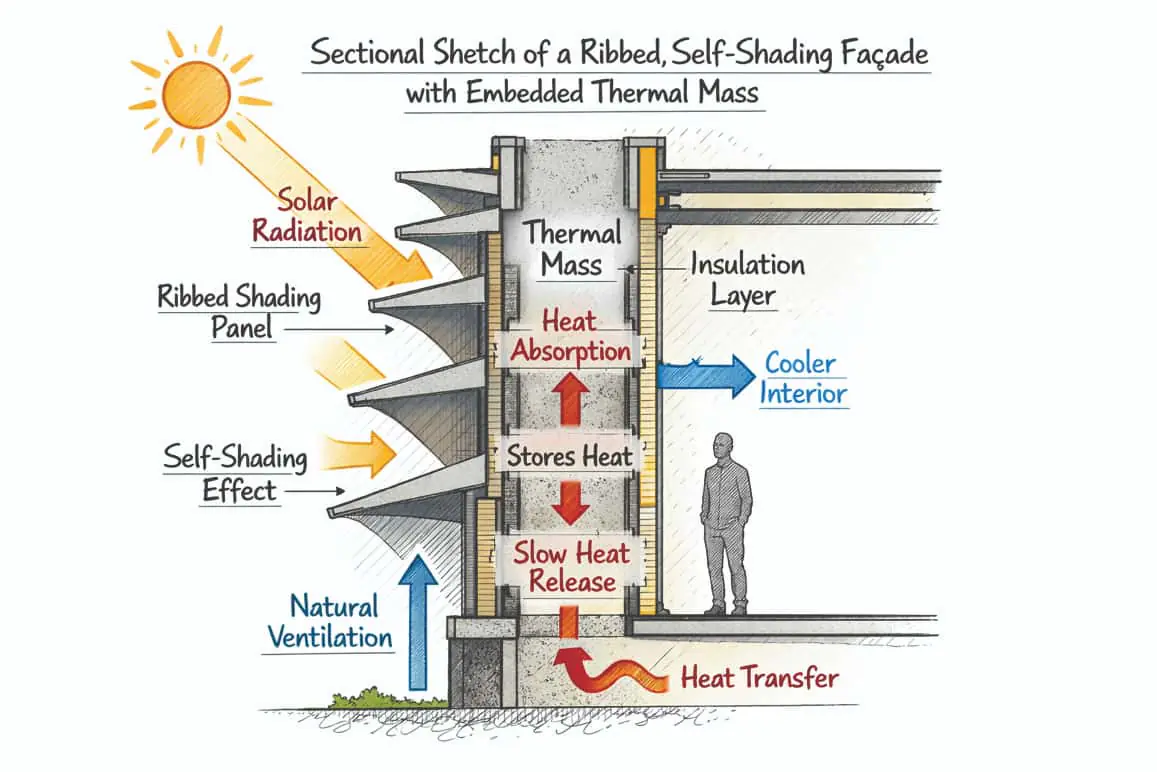
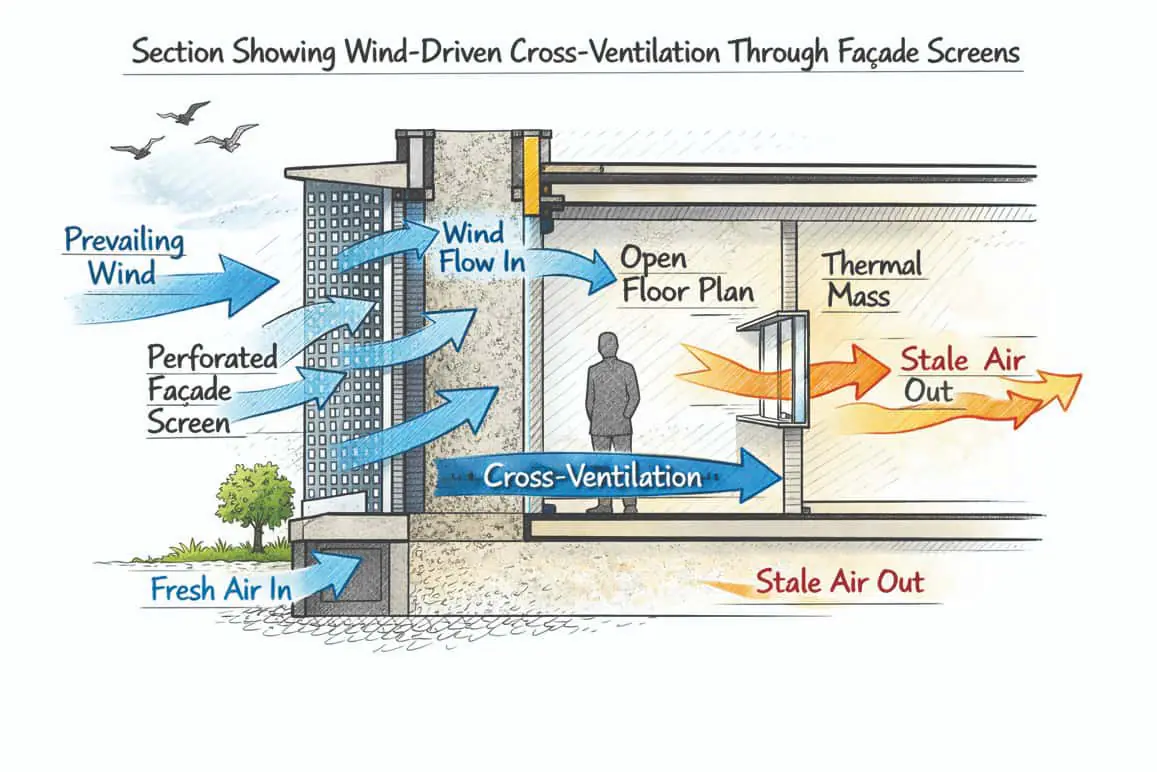
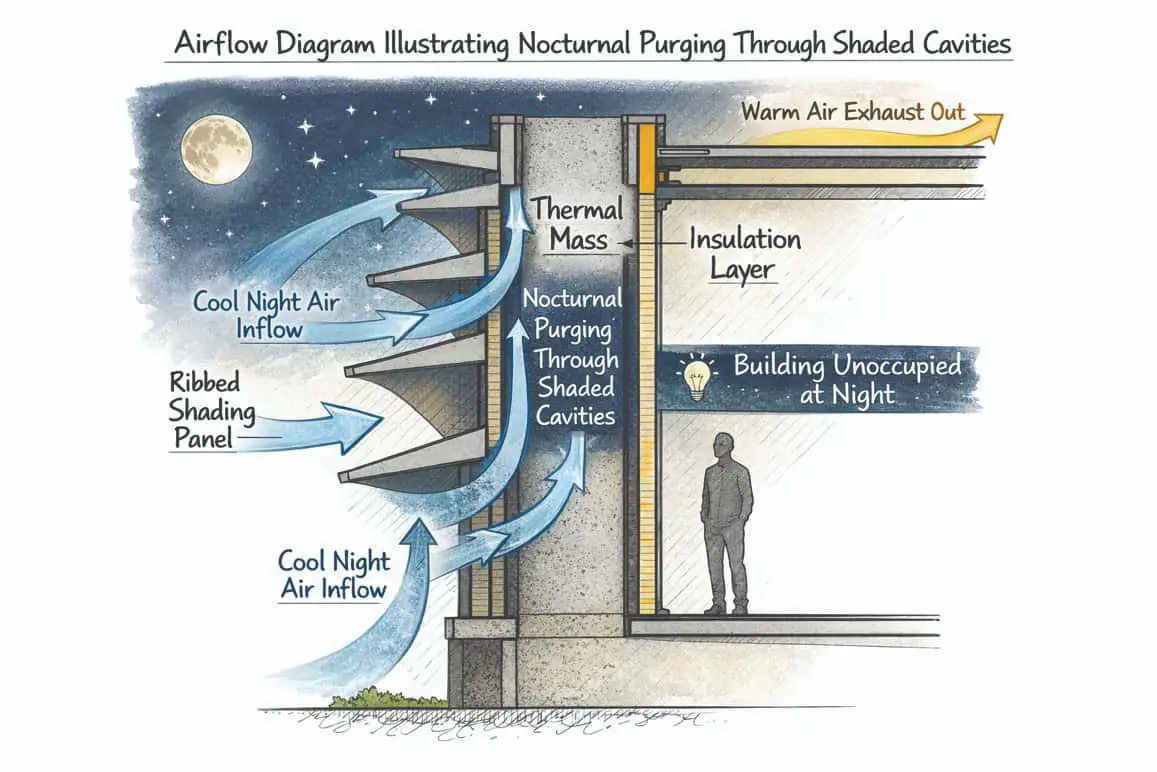
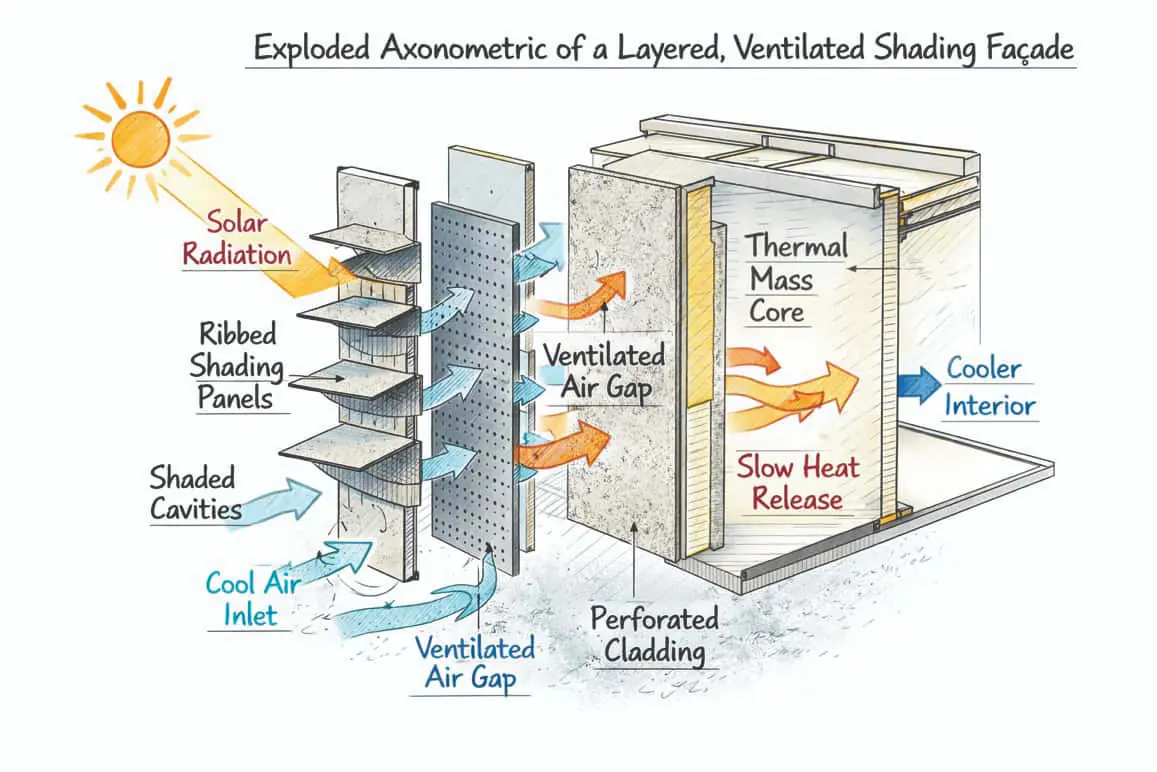
Several biological principles map directly to façade tactics. Surface modulation and texture — seen in elephant skin and desert beetles — fragment incident radiation, generate self-shading micro-geometries, and promote convective cooling. Layering and gradients — analogous to canopies or leaf strata — use screens, cavities, and buffer zones to attenuate direct solar penetration while preserving diffuse daylight and airflow. Articulated ribs, fins, and patterned screens keep glazing out of direct sun and admit daylight. Passive ventilation strategies — organised channels, thermal mass, and stack-driven movement — permit heat absorption and nocturnal purging without continuous mechanical intervention. Kinetic and adaptive mechanisms — movable fins, humidity-or temperature-responsive elements — allow façades to change performance in response to conditions. Finally, hybrid and bio-reactive skins (PV or algae modules) can combine shading with energy or biomass production, where lifecycle and maintenance trade-offs are well understood.
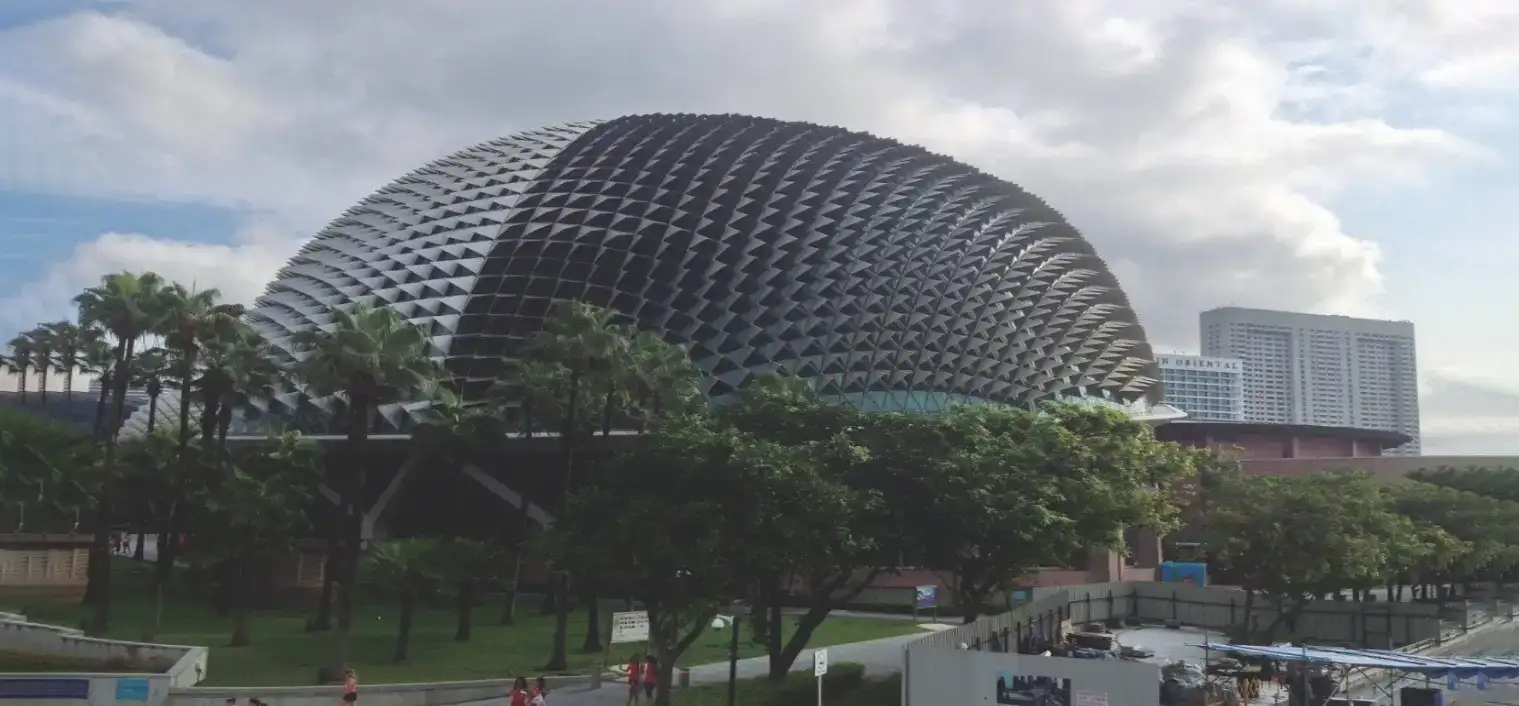
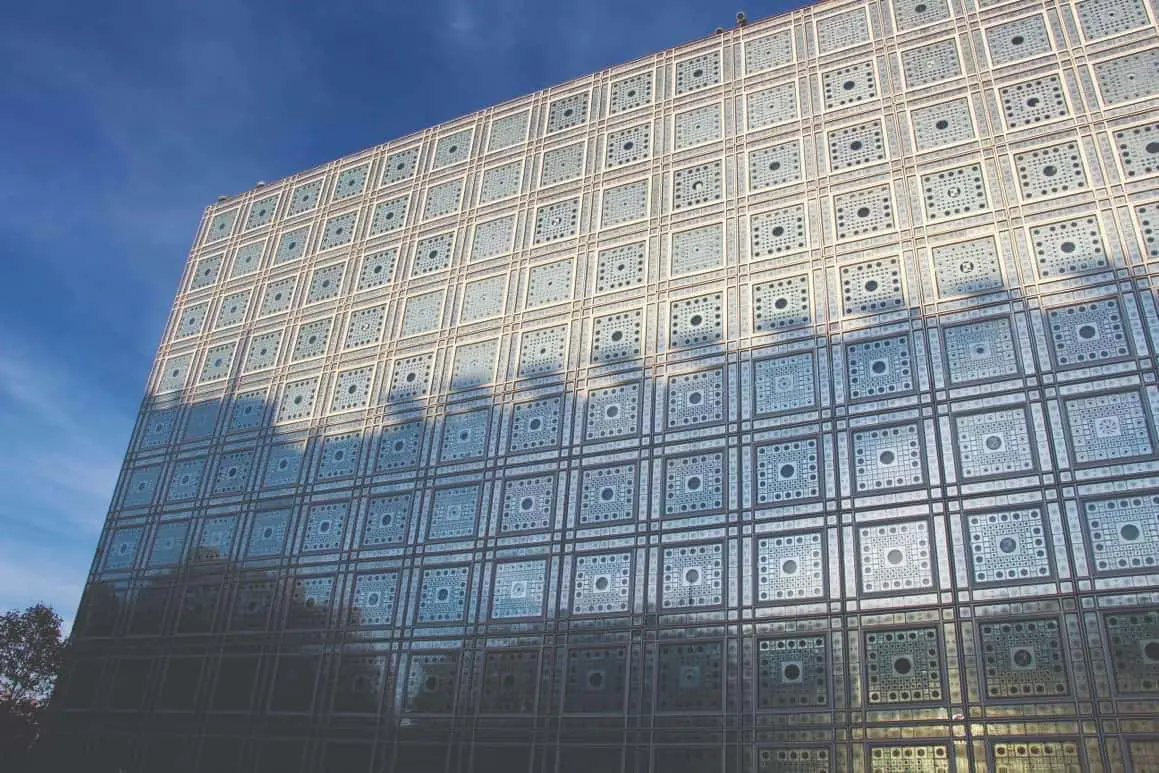
Built precedents validate these principles. Mick Pearce’s Eastgate Centre in Harare models passive ventilation on termite mounds, coupling thermal mass with ducting to achieve markedly reduced ventilation energy compared with conventional buildings. Singapore’s Esplanade uses durian-like aluminium “scales” to shield glazing from tropical insolation. Jean Nouvel’s Institut du Monde Arabe employed adaptive diaphragms to modulate daylight. These projects demonstrate that geometry, materiality, and control strategies — rather than exotic technologies — can deliver substantial thermal benefits.
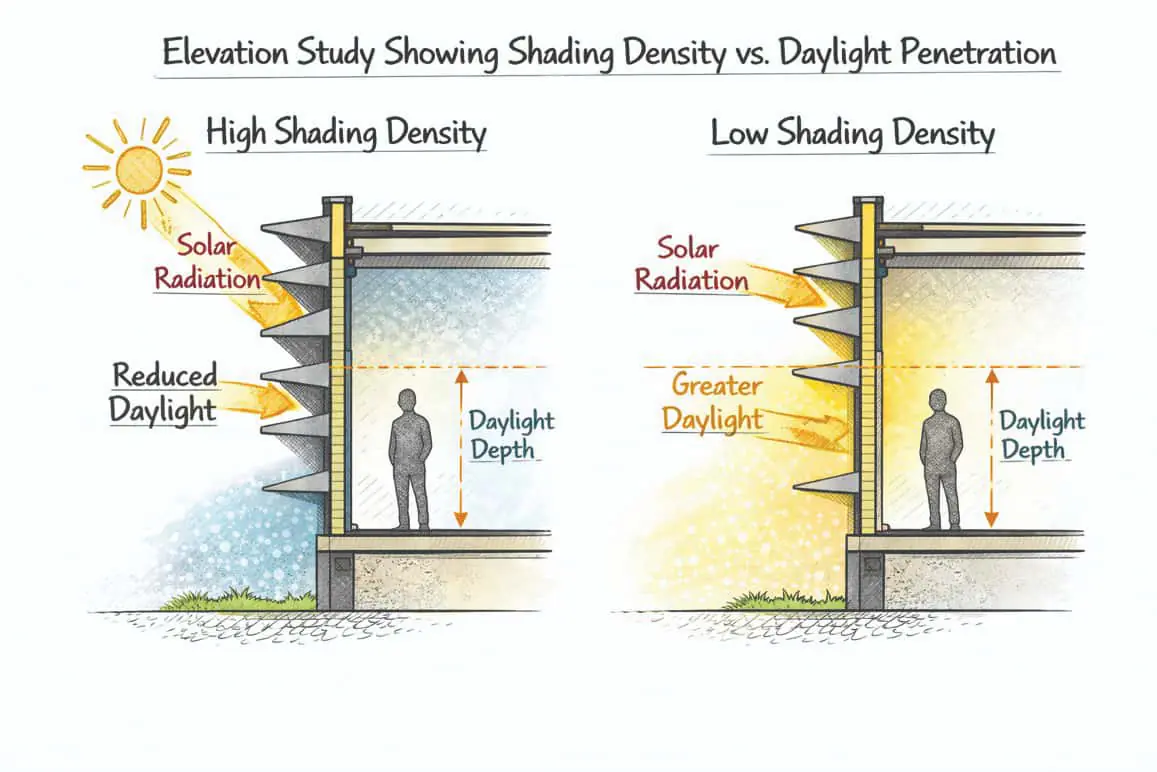
India’s climatic diversity — from hot-dry deserts and humid coasts to composite interiors, temperate plateaus, and cold mountains — requires climate-specific adaptations of biomimetic tactics.
The National Building Code’s climatic zones suggest strategies that can be readily translated into design prescriptions:
- Hot And Dry (Jodhpur, Ahmedabad): Deeply articulated, ribbed shading skins that produce alternating bands of sun and shade; high thermal-mass façades with shaded buffer cavities that absorb daytime heat and release it at night; perforated jaali screens that filter light while enabling cross-ventilation.
- Warm And Humid (Mumbai, Chennai, Kochi): Canopy-like overhangs and multi-layer screens that admit diffuse light while sustaining airflow; highly permeable shading systems that avoid sealed cavities; hydrophobic textured surfaces to shed monsoon rain.
- Composite Climates (Delhi, Lucknow): Variable shading density — deciduous-tree analogues — to block summer sun and admit winter gains; double-skin façades with operable shading to switch between insulating and ventilating modes; stack-driven chimneys for nocturnal purging.
- Temperate (Bengaluru, Pune): Fine-grained, orientation-tuned shading elements and adjustable louvres that mimic leaf orientation; textured surfaces to reduce glare and surface heat.
- Cold Climates (Shimla, Srinagar): Compact layered envelopes that trap heat; sun-admitting façades with retractable shading to maximise winter solar gain; adaptive elements that respond to temperature and moisture.
In technical terms, three tactics are typically combined: reduce incoming solar load, increase thermal storage where appropriate, and enable nocturnal heat rejection. Passive ventilation should be designed deliberately: orient channels to establish pressure gradients and coordinate inlet and outlet openings to encourage cross-flow or stack-driven movement. In low-humidity regions, evaporative strategies — wetted façades, porous terracotta membranes, or misting within cavities — can provide effective latent cooling, while in humid climates the emphasis shifts to preventing moisture entrapment and encouraging airflow.
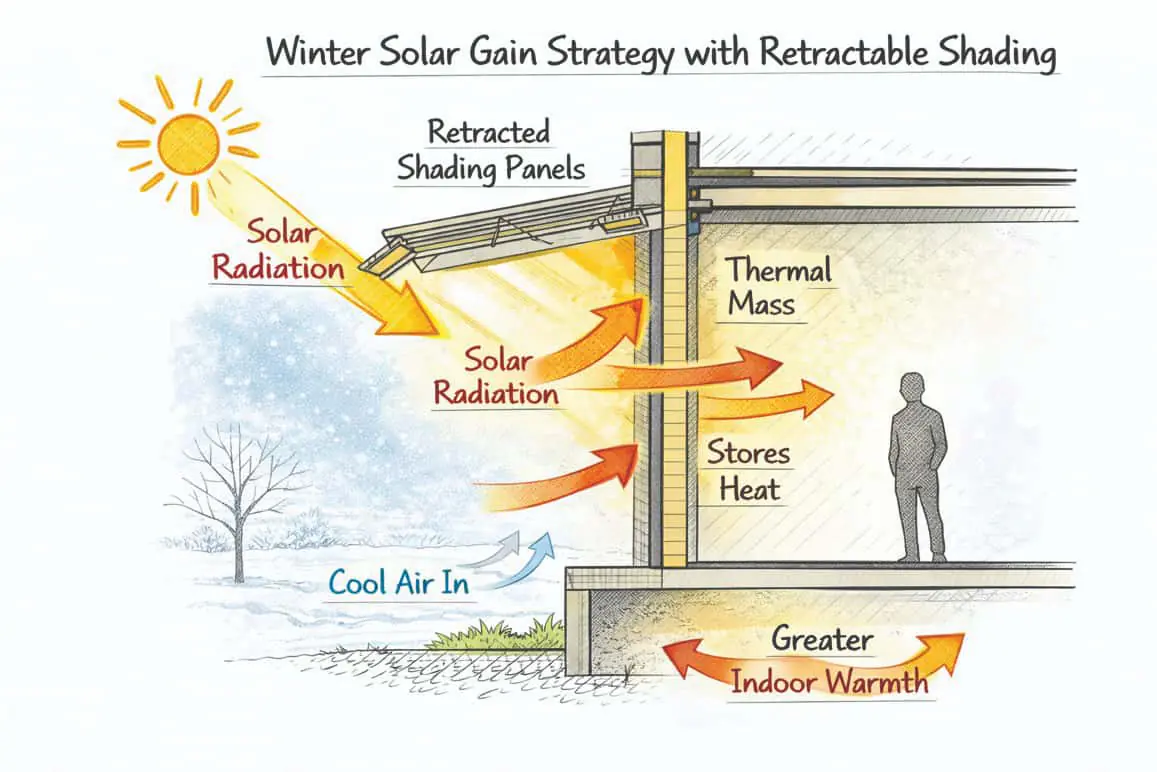
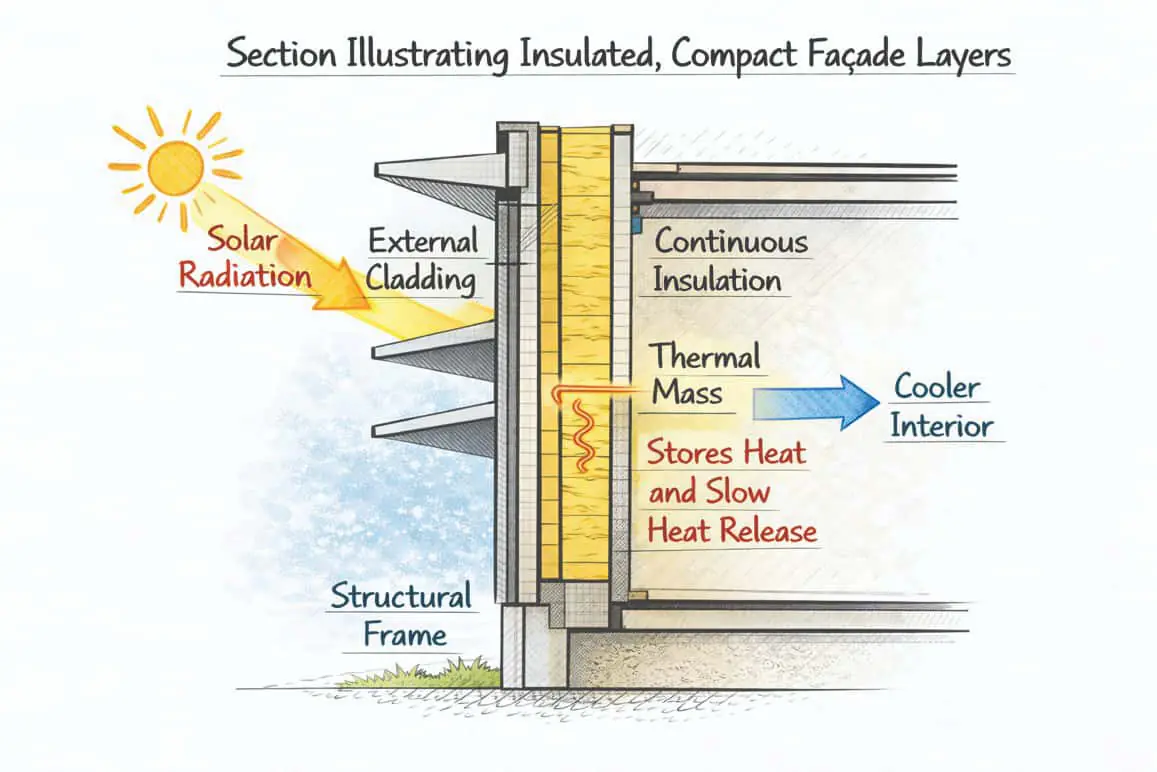
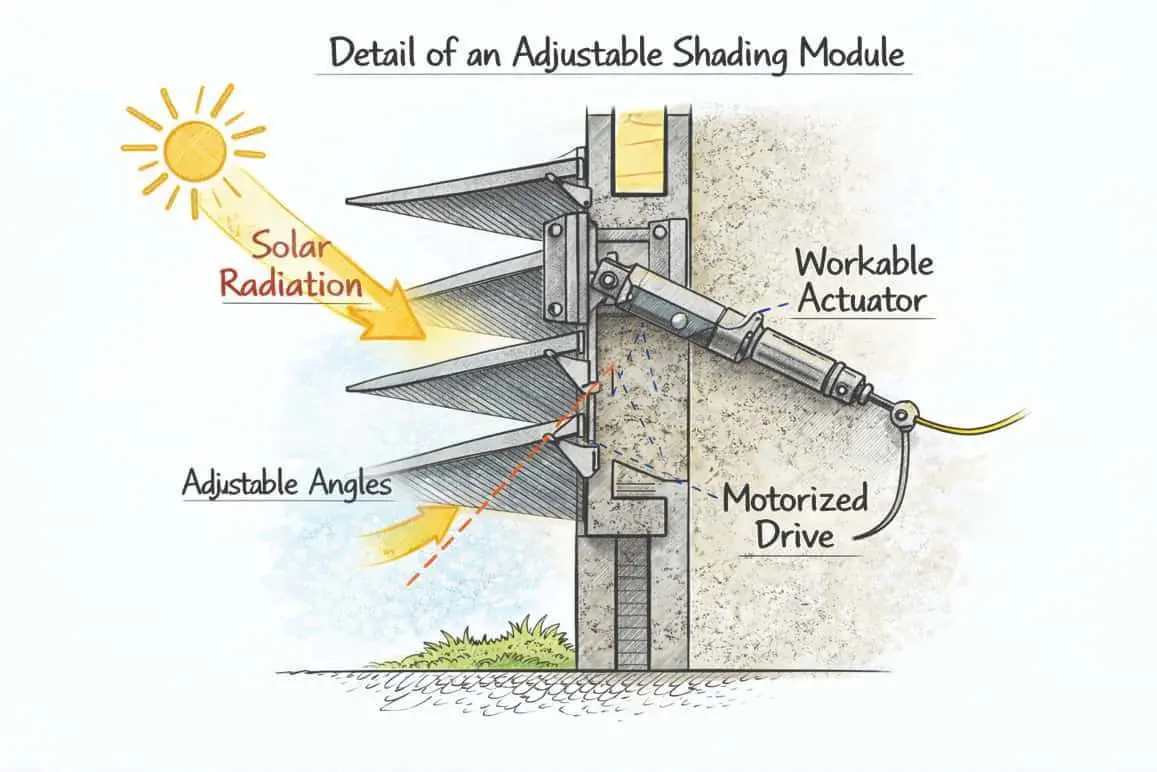
Kinetic and hybrid systems broaden design options. Motorised screens and tracking fins provide precision but increase maintenance obligations. Where feasible, passive actuation — bimetallic strips, hygroscopic or shape-memory materials — improves resilience. Hybrid modules that combine shading with photovoltaics or algae cultivation convert incident solar energy into useful services while simultaneously mitigating heat gain.
Practical implementation demands early, integrated design. Façade strategies must be developed during concept design, not appended after HVAC sizing. Use climate mapping, orientation-based modules, computational fluid dynamics, and parametric workflows to test geometries; build full-scale mock-ups; and monitor post-occupancy performance. Material selection and detailing must account for dust, monsoon exposure, and serviceability. Vernacular precedents — stone jaalis, deep verandahs, terracotta screens — offer time-tested tactics that can be reinterpreted with contemporary fabrication and simulation.
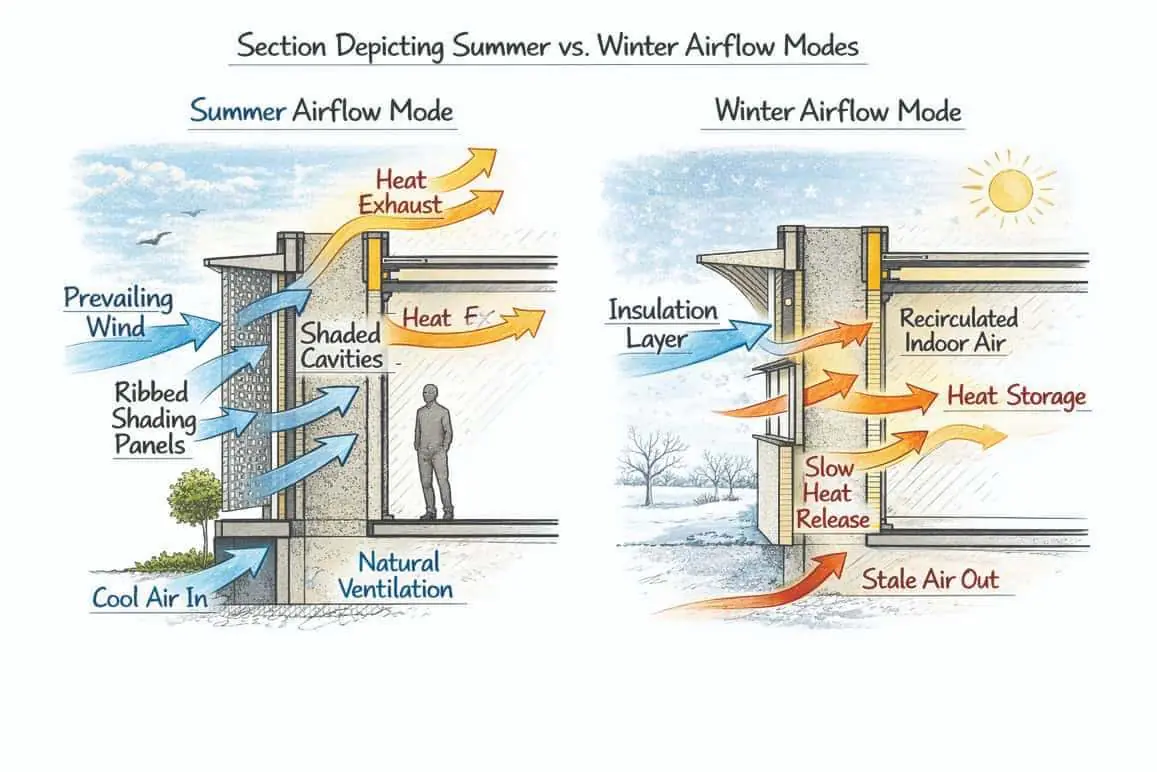
Economically, biomimetic façades can reduce lifecycle costs. Lower mechanical loads reduce operational expenditure and peak demand; early simulation reduces redesign costs; accessible voids and replaceable panels lower maintenance disruption. Policy levers — façade performance criteria in codes, incentives for passive cooling, and procurement that rewards long-term energy performance – will hasten adoption. Research partnerships and demonstration projects using locally available materials will provide scalable pathways.
Biomimicry is not a stylistic flourish but a disciplined, performance-first approach: observe natural systems, abstract functional strategies, and apply them with rigorous engineering and lifecycle thinking. In a hotter, more variable climate, façades that moderate their own microclimate, respond seasonally, and reduce dependence on continuous mechanical life support will be central to resilient, low-energy cities. The blueprints are abundant in nature’s inventions — termite mounds, peepal leaves, cactus ribs, and camel hides — and translating those lessons into robust, maintainable façades is an urgent design priority. Architects, engineers, and clients must act now — integrate biomimetic façade design as standard practice to secure comfort, economy, and climate resilience across India and beyond.
References
|