
Google’s First AI Hub In India To Rise In Visakhapatnam: A $15 Billion Boost To Architecture, Infrastructure And Sustainable Design
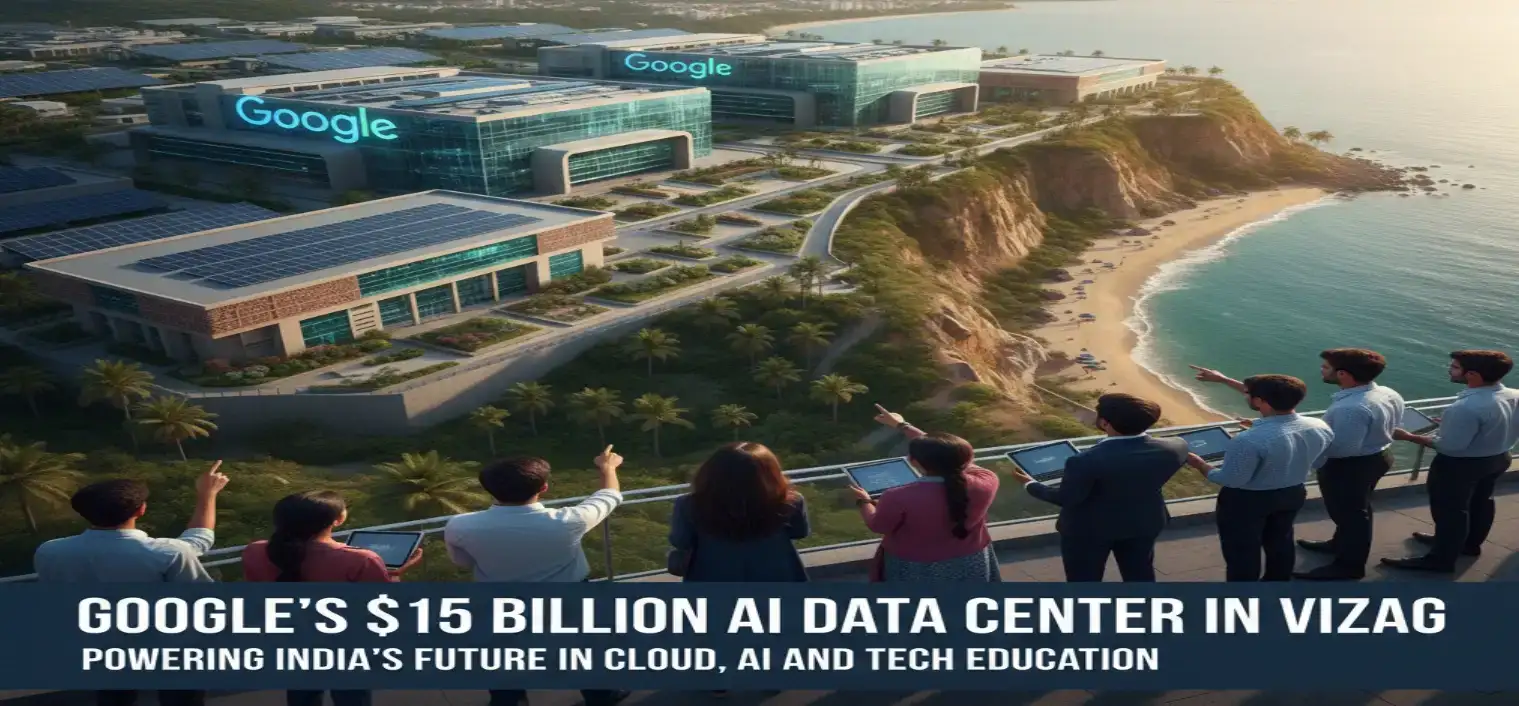
In a landmark development for India’s technology and built-environment ecosystem, Google has announced its first AI Hub in India, to be developed in Visakhapatnam (Vizag), Andhra Pradesh. The ambitious project, unveiled in late 2025, involves a massive investment of USD 15 billion over five years (2026–2030) and positions Vizag as a key global node in artificial intelligence, data infrastructure, and digital connectivity.
The AI Hub is being developed in partnership with the Adani Group, which will play a crucial role in creating the large-scale AI data centre campus, associated subsea cable landing stations, and green energy infrastructure required to power this next-generation facility. Once completed, the campus will house gigawatt-scale data centres, making it one of the largest AI infrastructure developments outside the United States.
A New Benchmark In Data Centre Architecture & Engineering
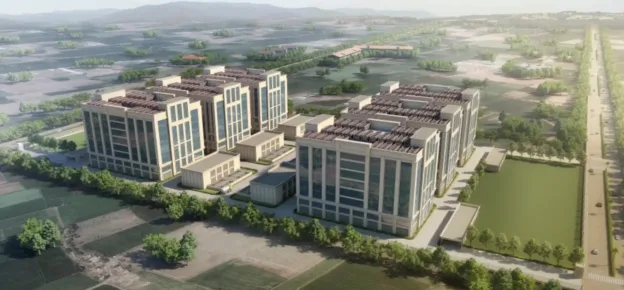
From an architectural and construction standpoint, Google’s AI Hub represents a new benchmark in hyperscale data centre design in India. The project is expected to involve leading global and Indian architects, master planners, EPC contractors, and specialist data-centre consultants, with a strong emphasis on robust structural systems, modular construction, and future-ready scalability.
Given Vizag’s coastal location, climate-responsive architecture, corrosion-resistant materials, and high-performance building envelopes will be critical. Facade and fenestration systems are likely to play a pivotal role in balancing thermal efficiency, durability, and maintenance, while addressing challenges such as humidity, saline air, and cyclonic wind loads.
Facade, Fenestration & Envelope Design In Focus
For the facade and fenestration industry, the Google AI Hub opens up exciting opportunities. Data centres demand highly engineered facades, incorporating low-U-value glazing, solar-control glass, insulated panels, and advanced shading systems to reduce heat gain and optimise energy consumption.
Fenestration solutions will need to meet stringent requirements for air-tightness, acoustic control, fire safety, and security, while enabling controlled daylighting in non-server zones. Expect increased adoption of high-performance aluminium systems, unitised facades, smart glass, and automated building management integration, setting new standards for mission-critical buildings in India.
Sustainability At The Core
Sustainability is a central pillar of Google’s Vizag AI Hub. The campus will be powered substantially by renewable and green energy, aligned with Google’s global commitment to operating on 24/7 carbon-free energy. Water stewardship, waste heat recovery, efficient cooling technologies, and low-embodied-carbon materials are expected to define the project’s sustainability strategy.
The development will also include subsea cable infrastructure, directly connecting India to global digital networks, further reinforcing Vizag’s emergence as a strategic technology and infrastructure hub.
Economic & Regional Impact
Beyond technology, the project is expected to create thousands of direct and indirect jobs, catalyse local skill development, and attract ancillary industries spanning construction, engineering, facade manufacturing, MEP services, and smart building technologies.
As India accelerates towards becoming a global AI powerhouse, Google’s first AI Hub in Visakhapatnam marks a defining moment—not just for technology, but for architecture, sustainable infrastructure, and advanced building design.
For the architecture, facade, and construction fraternity, this project signals unprecedented opportunities and a new era of high-performance, future-ready development—a space WFM Media will continue to track closely.