


Excerpts from an interesting interview with Ar. Ishan Grover and Ar. Karan Grover from Karan Grover & Associates (KGA) shares insights about their firm, accomplishments, and their mission and vision.
Please tell us about your practice and its growth in India over the years?
Ar. Karan Grover (KG):
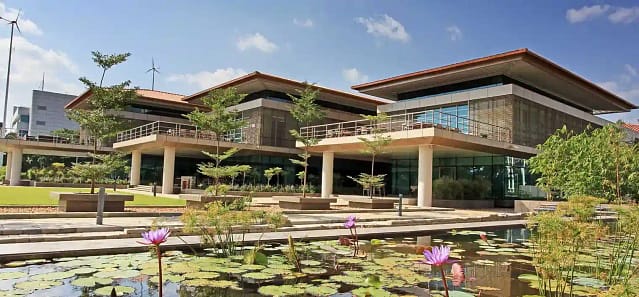
Karan Grover and Associates (KGA) was established in 1985 after dissolving a partnership with Ar. Manoj Patel, who started 10 years ago. KGA emerged as a multi-disciplinary organisation with the best associate consulting teams for all the services, which is seen as an integral part of architectural design activity. In 2004, KGA was the first architectural firm in the world to win the USGBC “Platinum” award for the greenest building in the world – The “CII–Sohrabji Godrej Green Business Centre”. Later, we also went on to win the second Platinum Award for the interior of ABN AMRO Bank in Ahmedabad.
Some more “Platinum” buildings are in the pipeline. Karan Grover and Associates (KGA) won the US GBC Gold Award for the Keendiam diamond factory at Navsari as the greenest factory in the world in 2008. Synthesis Business Park project at Kolkata has been awarded LEED CS Gold Certification by IGBC in October 2012. West Block 3 at L & T Knowledge City, Vadodara, was awarded ‘LEED INDIA GOLD’ Rating by the Indian Green Building Council in July 2013.
I consider myself so privileged to have been made the Permanent Honorary Fellow of the National Academy of Environment at the hands of former President Dr Abdul Kalam in Delhi. In my effort to bring the attention of youngsters to conservation, I was nominated as a “social entrepreneur” Fellow of the Ashoka Foundation, Washington, in 2004. Karan Grover and Associates (KGA) got selected as the winner of the Green Globe Award for Architect, Infrastructure Category from the Green Globe Foundation. The “CII–Sohrabji Godrej Green Business Centre,” the first LEED US Platinum Building in India, has been selected as the 2009 winner of the “Aspen Institute Energy and Environment Awards”, under the NGO Category in 2011.
In August 2009, I was given the Keys of the City of Birmingham by the Mayor of Birmingham at the Inaugural Address of the International Green Congress of the Green Building Focus. The World Economic Forum at Davos has named me as their member of the Panel for Sustainability for 2009.
I have been a founding member of ADaRSH (GRIHA) and have been nominated as a Member of the Confederation of Indian Industry Western Region Sub-Committee on Climate Change & Sustainability for the year 2010-11. Also became the Chairman of IGBC Vadodara Chapter on 28th March 2011. The other awards won by KGA are the ACE Award 2009 by Economic Times, Nirman Navratna Award 2009, and CNBC AWAZ Award 2009; Lifetime Achievement Award at the “Aces of Spaces” Architect & Interiors India Awards 2012, Kohler Bold Design Awards, 2018, etc.
As a speaker at many national & international public forums, I have addressed over 20000 professionals and students pro bono annually on Sustainability & Green Architecture – a personal commitment made to President Clinton at the Clinton Global Initiative, New York in 2006. Presently, Karan Grover and Associates (KGA) has been awarded with lots of new projects and is functioning very well in the field of architecture with the leadership of Ishan Grover, who is the Design Director and my younger son..
What inspired you to become an architect?
Ar. Ishan Grover (IG):
While growing up, I was surrounded by a mesmerising collection of paintings, artefacts, magical floor lights and carpets. Such an environment would inspire me to choose a career in some form of fine or applied arts. However, this choice was clear and made at the age of 19 during my undergraduate studies at Franklin & Marshall College, which was a liberal arts institute with a population of 2,200 students.
The flexibility to pick any subject allowed me to pursue a degree in art & architecture history and architectural studio. My course in architecture history opened my eyes to the world of architecture, which included key figures like Le Corbusier, Louis Kahn, Mies Van Der Rohe and the like. Their perseverance and dedication towards their ideas and goals within the architectural framework were mesmerising. These principles of architecture further inspired me to pursue an M.Arch. at the University of Illinois Urbana-Champaign.
Could you please talk about a few of your ongoing projects?
KG/IG:
Karan Grover & Associates is currently working on several different typologies of projects, ranging from private residential homes to large institutional campuses. We believe that the design of the building should go beyond fulfilling the programmatic requirements and strive to serve the users through a humanistic and sustainable approach.
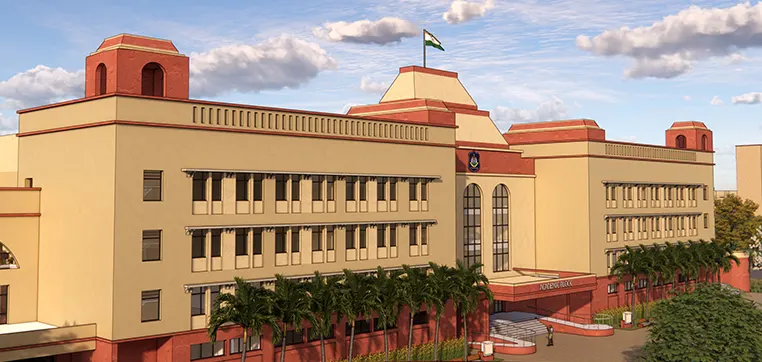
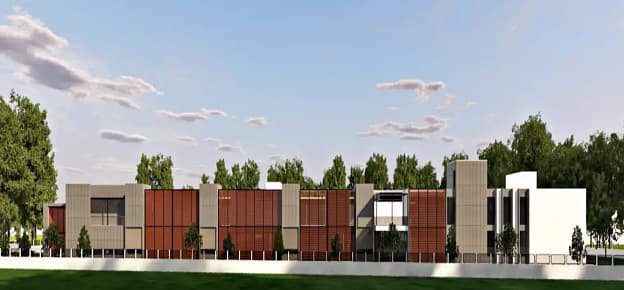
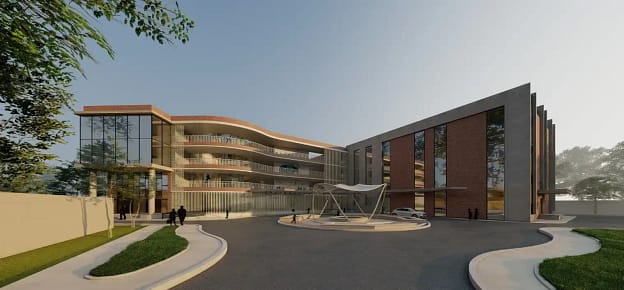
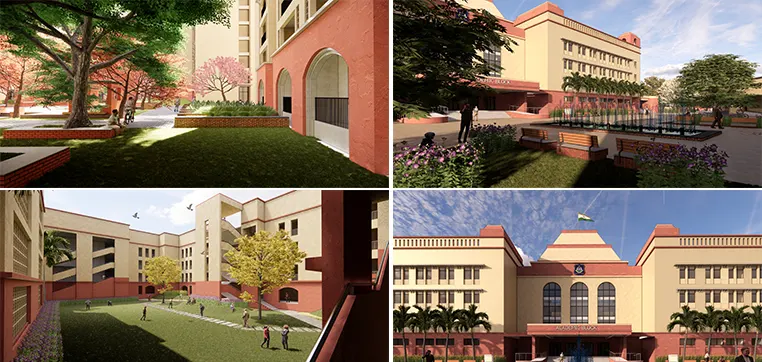
Gujarat State Police Housing Corporation, Police Training Centre Campus, Khalal, Gujarat: A nationwide architectural design competition was held last year in October, in which we were selected as the principal architects responsible for designing a state-of-the-art Police Training Centre for 2500 cadets and expandable to 5000 cadets in Gujarat. The campus sits on a 150–acre site with a natural undulated topography adjacent to a river.
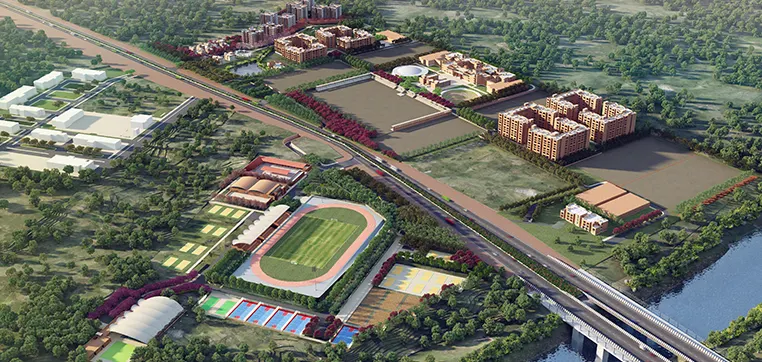
In a nationwide architectural design competition, KGA was selected to design a state-of-the-art Police Training Centre for 2500 cadets and expandable to 5000 cadets in Gujarat
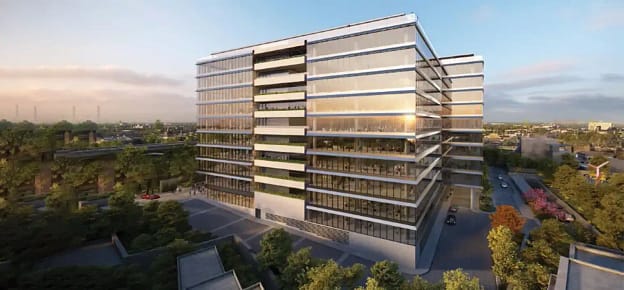
Larsen & Toubro Office and Residential Tower: We are in the design process of conceptualising two towers, office and residential, at the Knowledge City Campus in Baroda. Both towers are being designed to be certified as LEED Gold-rated.
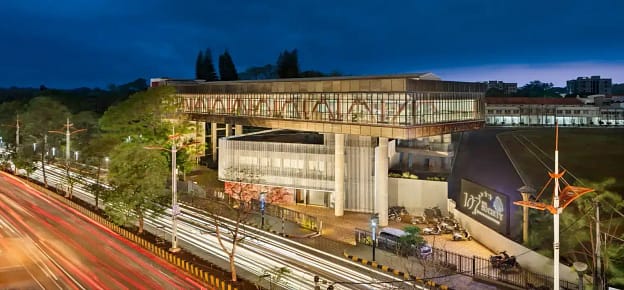
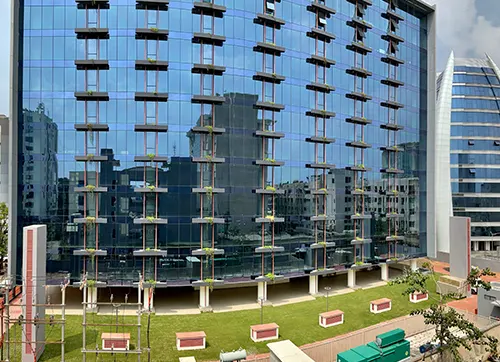
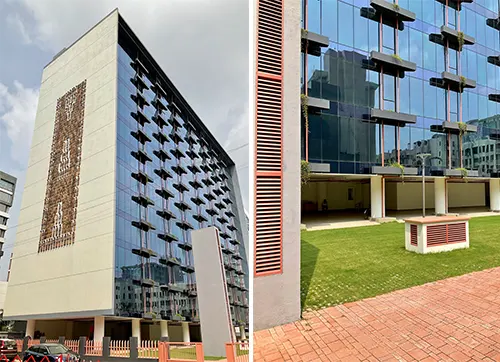
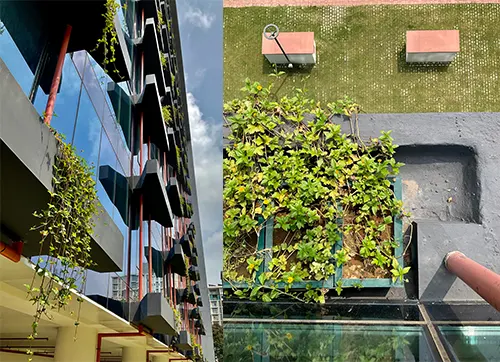
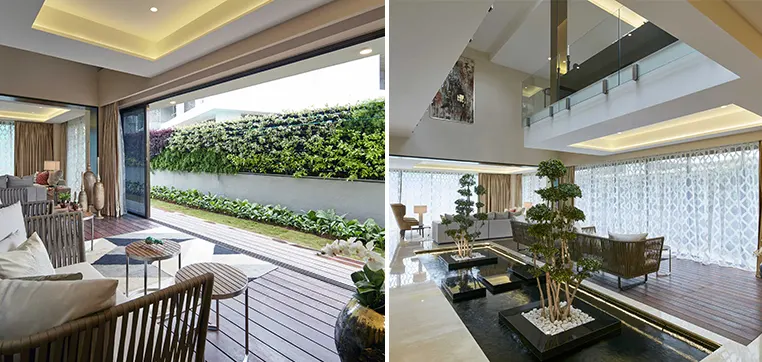
Monet Business Park: Recently completed office building in Baroda. It is spread across 12 storeys of premium open office space of 6,000 Sq ft per floor. The scale of the south elevation has been divided by using 84 planter beds with a combination of flowering and non-flowering plants. Particular attention was given to the drainage (exposed terracotta pipes) of these beds, which has lent itself to an interesting elevational detail.
There are many façades and cladding/glazing materials available in the market. How do you choose the apt one for your project? What are the criteria?
KG:
The selection of cladding/ glazing materials is mainly focused on per client’s requirements; aesthetics of the building and architectural design, which is finalised for a particular project with utmost study about all aspects of the project.
Tell us about glazing on a few of your completed projects and ongoing projects?
IG:
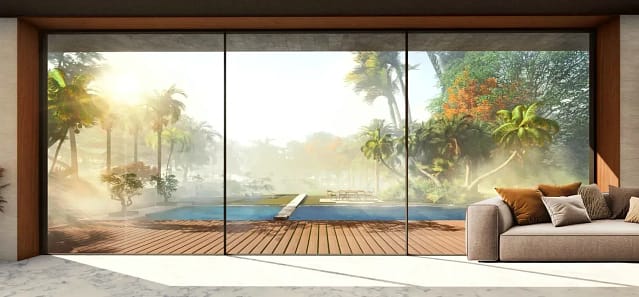
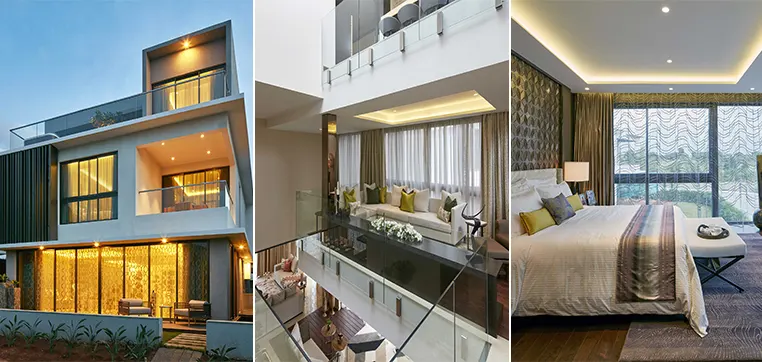
Glazing is an essential part of our architecture. The advantages of proper use of glazing are unmatched. The type of glazing is dependent on the typology of the building. We have recently finished installing 30,000 sq. ft of glazing for an office building with predominant south-facing windows. The main idea was to allow the right balance of light and heat. In addition, we decided not to have high reflectivity as it is a nuisance for people walking in close proximity to the building.
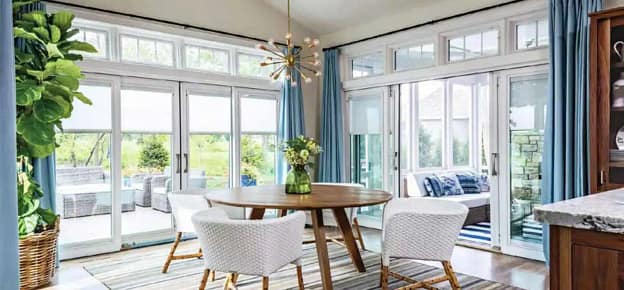
We also recently finished a private residence that makes use of a uPVC single pane frame. The main concept here was of keeping the sound from the outside to a minimum, but also having a sleek look with thinner frames.
What are the key factors to consider while designing and installing glass façades & fenestration?
IG:
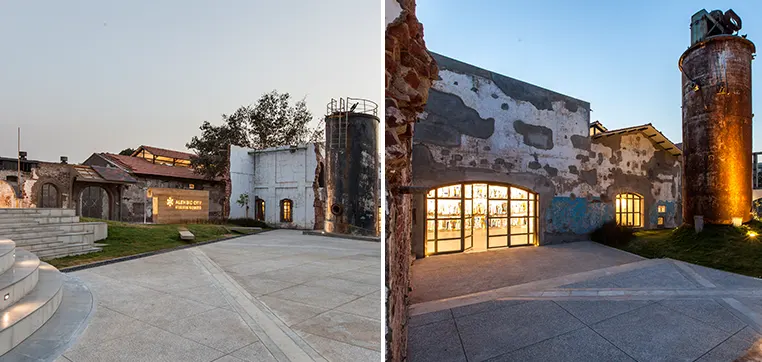
Using high-performance windows can drastically reduce heat gains and, in turn, reduce energy bills to cool the building. In addition, window systems with low-e and special coating can filter UV radiation. This, coupled with other passive techniques, can help build a building that is sensitive towards its environment. A few other important factors that influence our decisions are the visual requirements, shading, acoustic control and colour effects.
Please brief on the design and technical details of a safe glass façade, considering fire safety, and wind, rain and earthquake resistance?
IG:
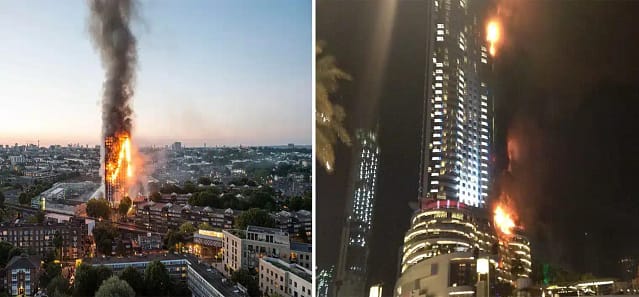
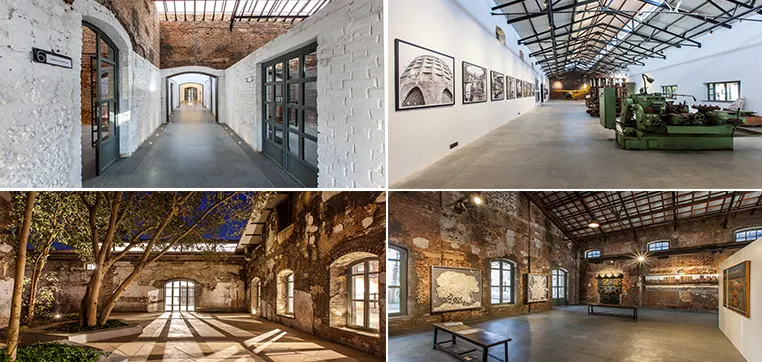
When we start with designing the fenestration, we work with experts who help us with all the design calculations that make the glass safe and secure from wind and fire. In one project, we found that by tilting the glass by a few degrees, we were able to reduce the direct heat in a particular room.
How would the façade design and other elements of the façade help the building to be energy efficient, at the same time providing a better interior environment? What about sustainability and environmental considerations when choosing the façade/cladding material?
KG:
The façade design and related elements of a project are designed such as it should give maximum energy efficiency and better interior environments in all our projects, which culminates in a particular project or a site that causes no harm to any environmental or sustainability problems in the project in any way.
What are your views on future façades & fenestration technologies, and materials?
KG & IG:
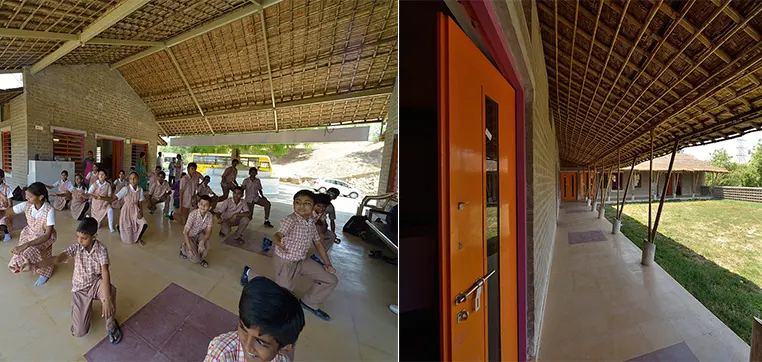
In the recent past, windows have undergone a tech revolution. A High-performance, energy-efficient window is now available that can dramatically cut energy consumption. Many studies also show how health and productivity are improved because of a well-ventilated room with ample natural light. The natural next step would be to create a glass that can harness the sun’s energy. There are solar panels available that are transparent, which can be applied to your glazing. However, this seems a long way in the future before it is available to the masses.
What is your advice to young, aspiring architects?
KG:
There is no doubt that we live in uncertain times; times that are made harder by the presence of a growing economic crisis and a dramatic increase in natural disasters and pandemics. The building industry has been hit very hard over the past few years, and at times, the light at the end of the tunnel seems to be growing dimmer and moving farther away. Our industry has adapted to accept new realities of how we must design, and a movement has ushered in a new era of energy and resource-saving techniques. We are at a climax in our history, a pressure point of our times, and as we begin to understand and accept the responsibilities of our actions, we are forced to change how we create our built environment. The changes we make today will help preserve our cities, our cultures, and our world for generations to come. We are at the crossroads of a major decision. We are faced with a choice, a chance to change.

Ar. Ishan Grover, Design Director and Senior Associate at Karan Grover & Associates (KGA), joined his father’s well-known firm after completing a Bachelor’s in Arts (Concentration in Art & Architecture History along with Architectural Studio) from Franklin & Marshall College and a Master’s of Architecture from the University of Illinois Urbana-Champaign. Over the past 5 years at KGA, as the Design Director, Ar. Ishan Grover has led numerous reputed projects. One of his first projects after returning from America was to restore and upgrade a 110–year–old factory shed into the ‘Alembic Museum at Alembic City Art District’. He is part of a team that is responsible for the design of a 200- bed in Pune, which is set to start construction. Today, he is leading a team of 20 members to design a 150-acre Police Training Campus in Gujarat, which was awarded to KGA during a nationwide competition held in 2020. Ar. Karan Grover, inarguably the most influential green architect, is an influencer among students and fellow architects in practising people-centric and eco-friendly designs, imparting knowledge on ecological and environmental concerns. The senior architect has won numerous awards and accolades in India and internationally. He is one of the most prominent voices spreading India’s rich culture and heritage, and is considered the messiah of Green architecture