Post Date: May 26, 2026 |
Last Edited: May 26, 2026
The Critical Role Of PA66 GF25 Compared To PVC
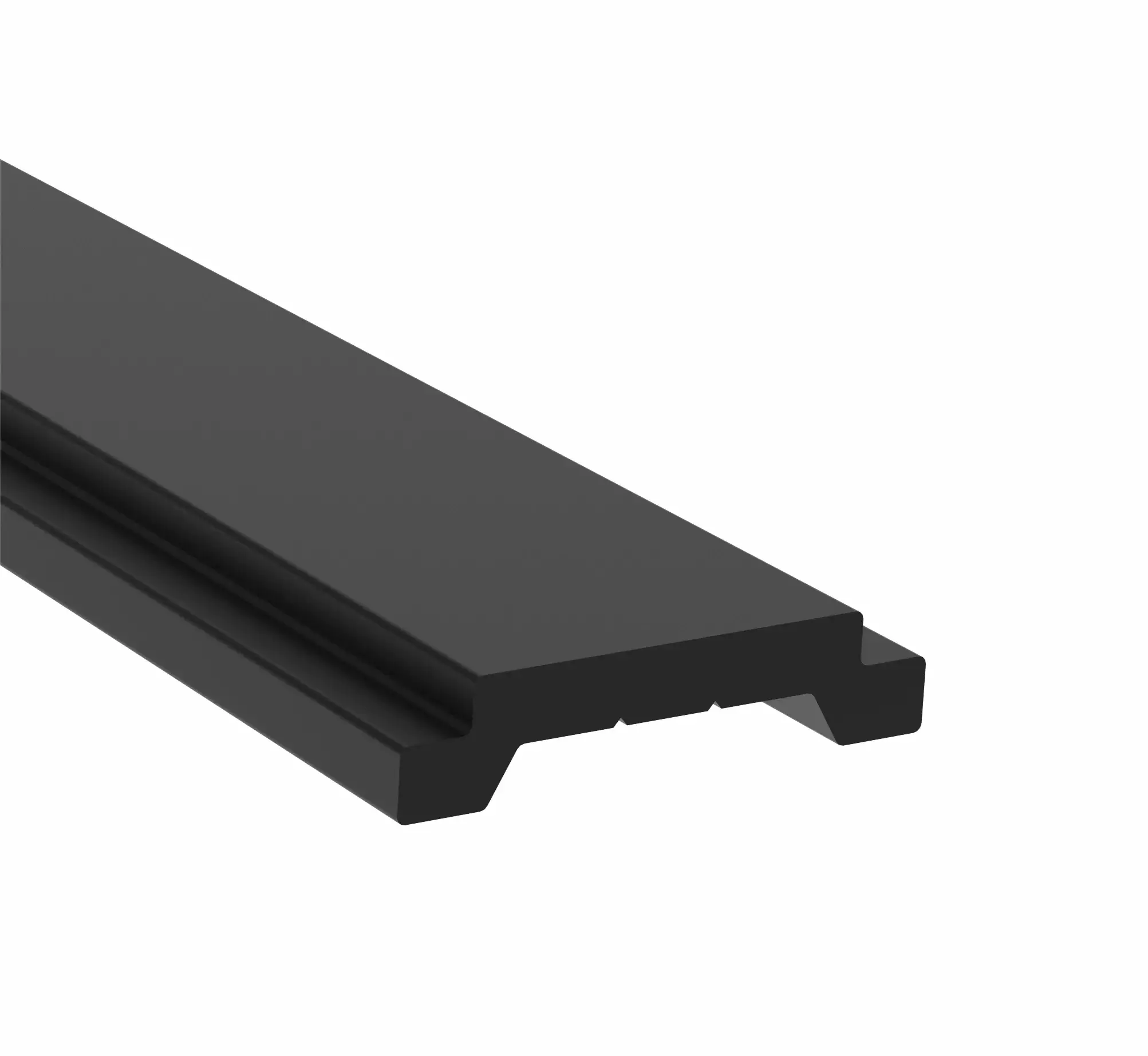
In mechanical systems where motion must be transferred with precision and consistency, transmission rods serve as critical components that directly influence alignment, friction behaviour, and long-term durability. Despite their importance, material selection in such applications is often underestimated. In some cases, inappropriate substitutions are made, most notably the use of PVC in place of glass fibre reinforced polyamide (PA66 GF25).
At a superficial level, these materials may appear interchangeable. In reality, their physical and mechanical behaviour under operating conditions differs significantly. One of the most decisive factors in this distinction is their response to temperature variations, particularly their coefficient of thermal expansion.
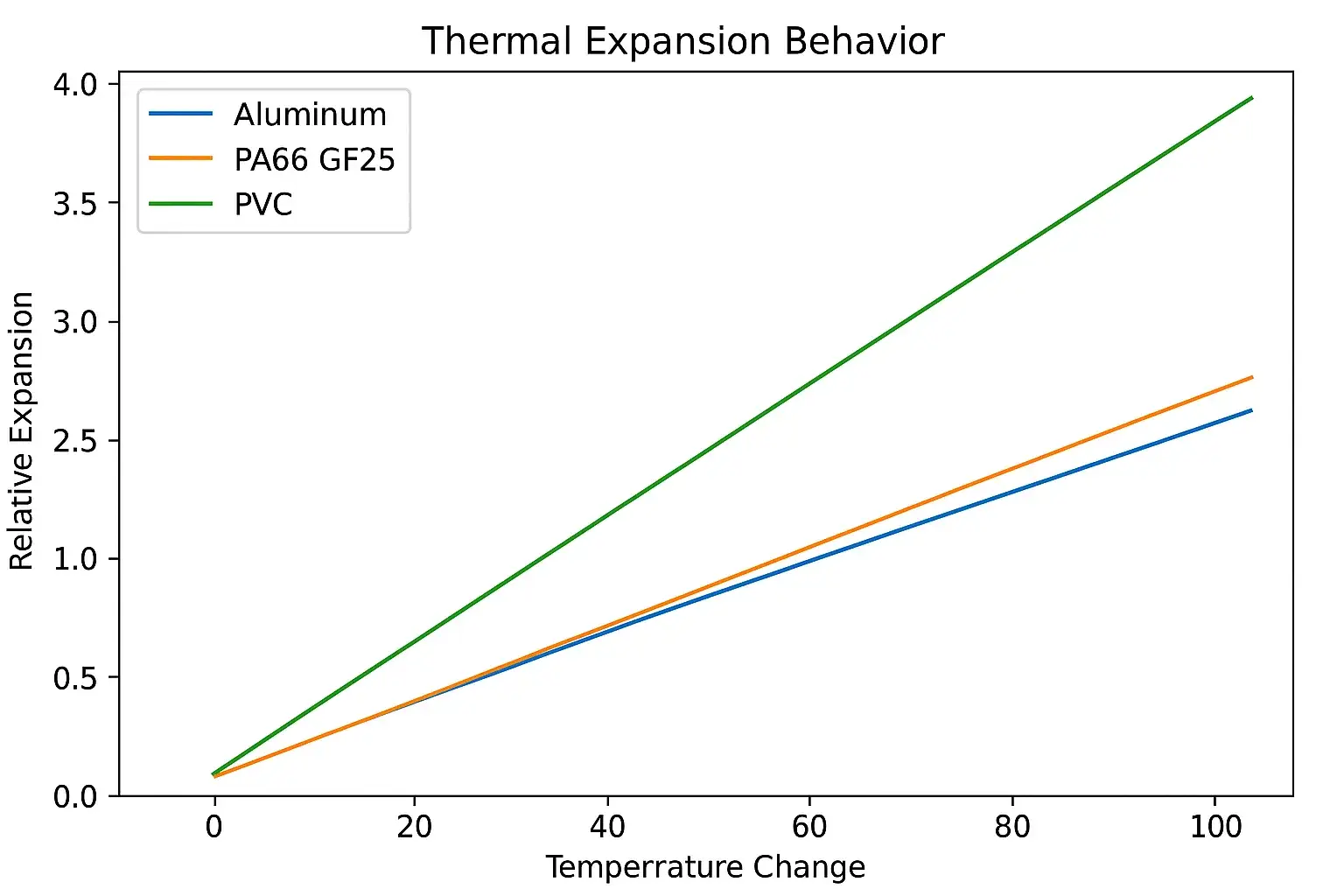
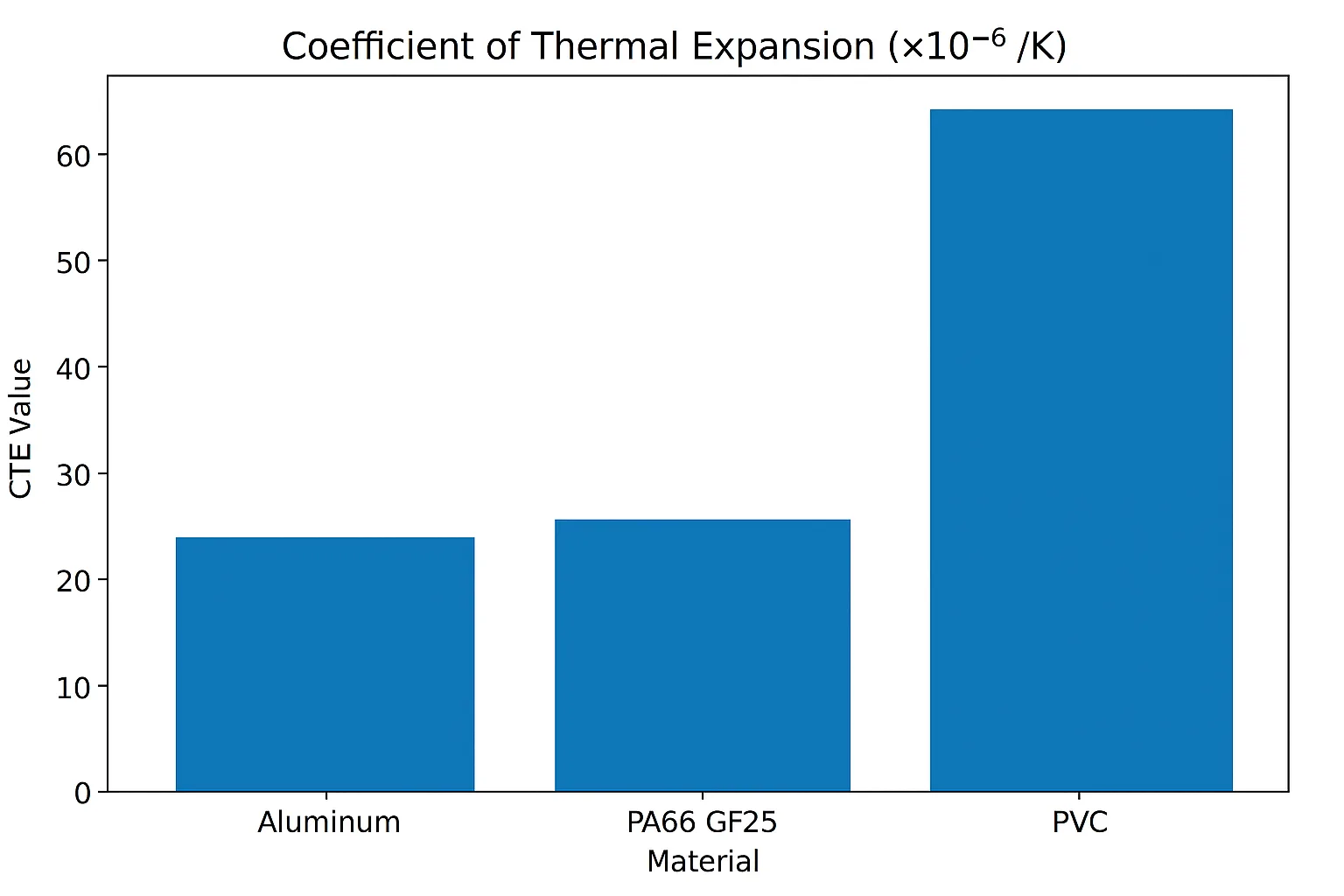
Aluminium, commonly used in surrounding structural systems, has a coefficient of thermal expansion of approximately 23 × 10−6 per Kelvin. Glass fibre reinforced polyamide, specifically PA66 GF25, exhibits a thermal expansion range between 20 and 30 × 10−6 per Kelvin. This close alignment results from the reinforcing effect of glass fibres within the polymer matrix. By restricting polymer chain mobility, glass fibres significantly reduce expansion behaviour, bringing the material into near compatibility with aluminium.
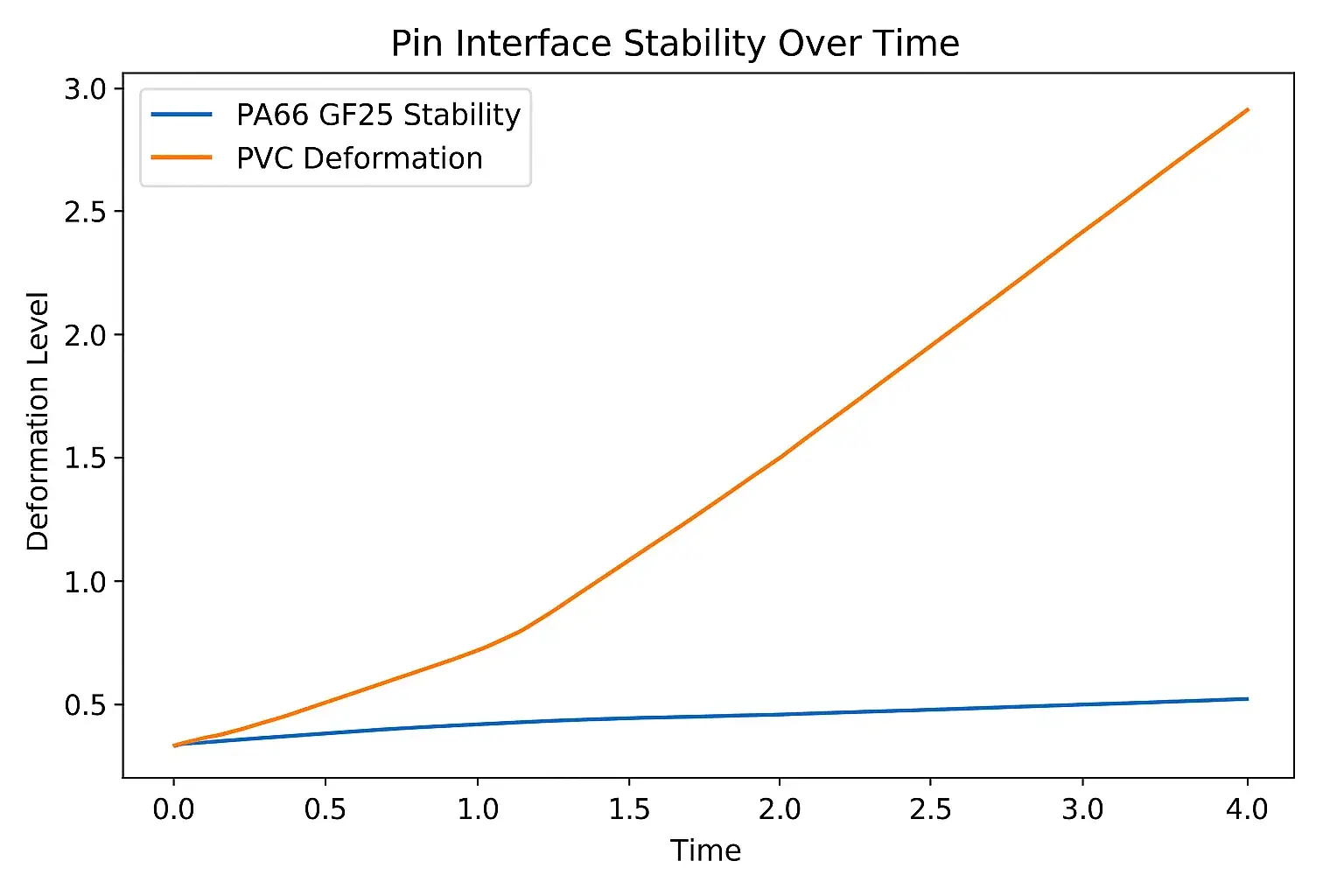
This compatibility has direct mechanical implications. When materials with similar thermal expansion coefficients are used together, they expand and contract synchronously under temperature variations, eliminating differential movement and preventing the build-up of internal stresses. In transmission rod systems-where precise alignment and smooth motion are essential—this synchronisation ensures long-term geometric stability, minimises friction, and preserves tolerances.
PVC, by contrast, exhibits a significantly higher coefficient of thermal expansion, typically ranging from 50 to 80 × 10−6 per Kelvin. Under identical conditions, PVC expands and contracts at a rate two to three times greater than aluminium. When combined with aluminium components, this mismatch generates internal stresses at contact interfaces. Over repeated thermal cycles, these stresses progressively distort system geometry.
The mechanical consequences are unavoidable. As PVC expands more than the surrounding aluminium, localised deformation and internal pressure develop. During cooling, uneven contraction leads to micro-gaps and positional shifts. Over time, this cyclic behaviour introduces instability into the transmission path and reduces the efficiency of motion transfer, turning minor inconsistencies into persistent mechanical issues.
Beyond thermal behaviour, the intrinsic mechanical properties of PVC further limit its suitability. PVC is a relatively soft material with a lower modulus of elasticity compared to PA66 GF25. This softness results in elastic deformation under load, meaning that part of the applied force is absorbed rather than transmitted. In transmission rod applications—where accurate and immediate force transfer is essential—this leads to energy loss, reduced responsiveness, and diminished mechanical precision. The softer surface of PVC also increases the real contact area under load, contributing to higher friction during operation.
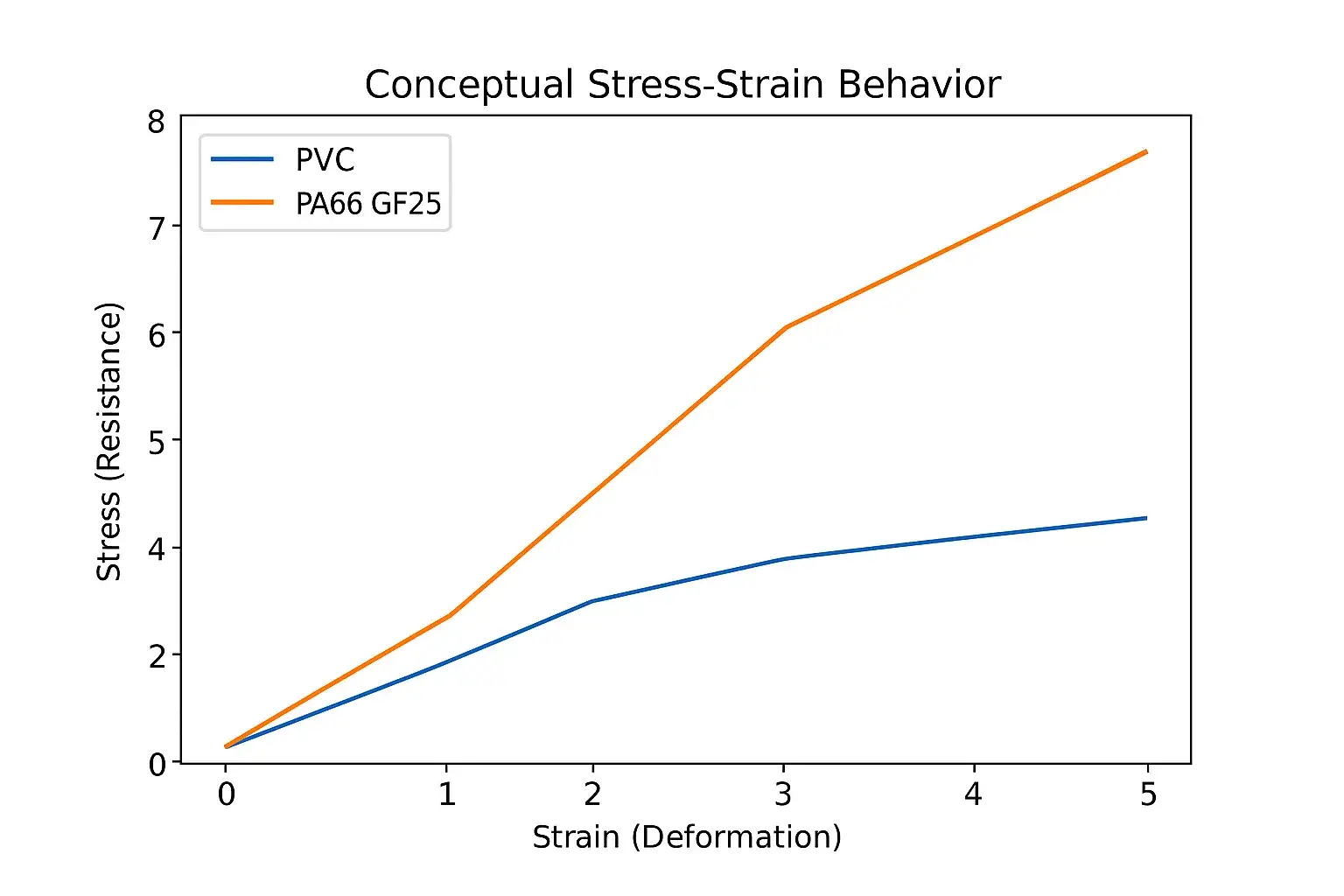
This difference becomes more evident when examining stress–strain behaviour. PVC exhibits higher elastic deformation under relatively low stress levels, meaning it bends and elongates rather than transmitting force directly. As a result, part of the input energy is dissipated within the material, reducing precision and delaying system response.
In contrast, PA66 GF25 demonstrates a steeper stress–strain curve, reflecting higher stiffness and resistance to deformation. The incorporation of glass fibres increases the material’s modulus, limiting elongation under load and enabling efficient force transmission. This distinction is fundamental: while PVC behaves as a partial energy absorber, PA66 GF25 functions as a true force transmitter.
Another critical consideration is material behaviour after being supplied in coil form. Transmission elements are often stored and transported as rolled strips, making shape recovery a key requirement. PVC exhibits a strong tendency towards residual deformation due to its viscoelastic nature. After uncoiling, it resists straightening and retains curvature, affecting alignment during installation.
In contrast, PA66 GF25 benefits from glass fibre reinforcement, enabling superior shape recovery and minimal residual deformation. This ensures that the transmission rod maintains its intended geometry, allowing proper alignment and smooth motion.