
Post Date: April 27, 2026 |
Last Edited: April 27, 2026

AI-Driven Facade Variation Workflows: From Concept To Feasible Alternatives
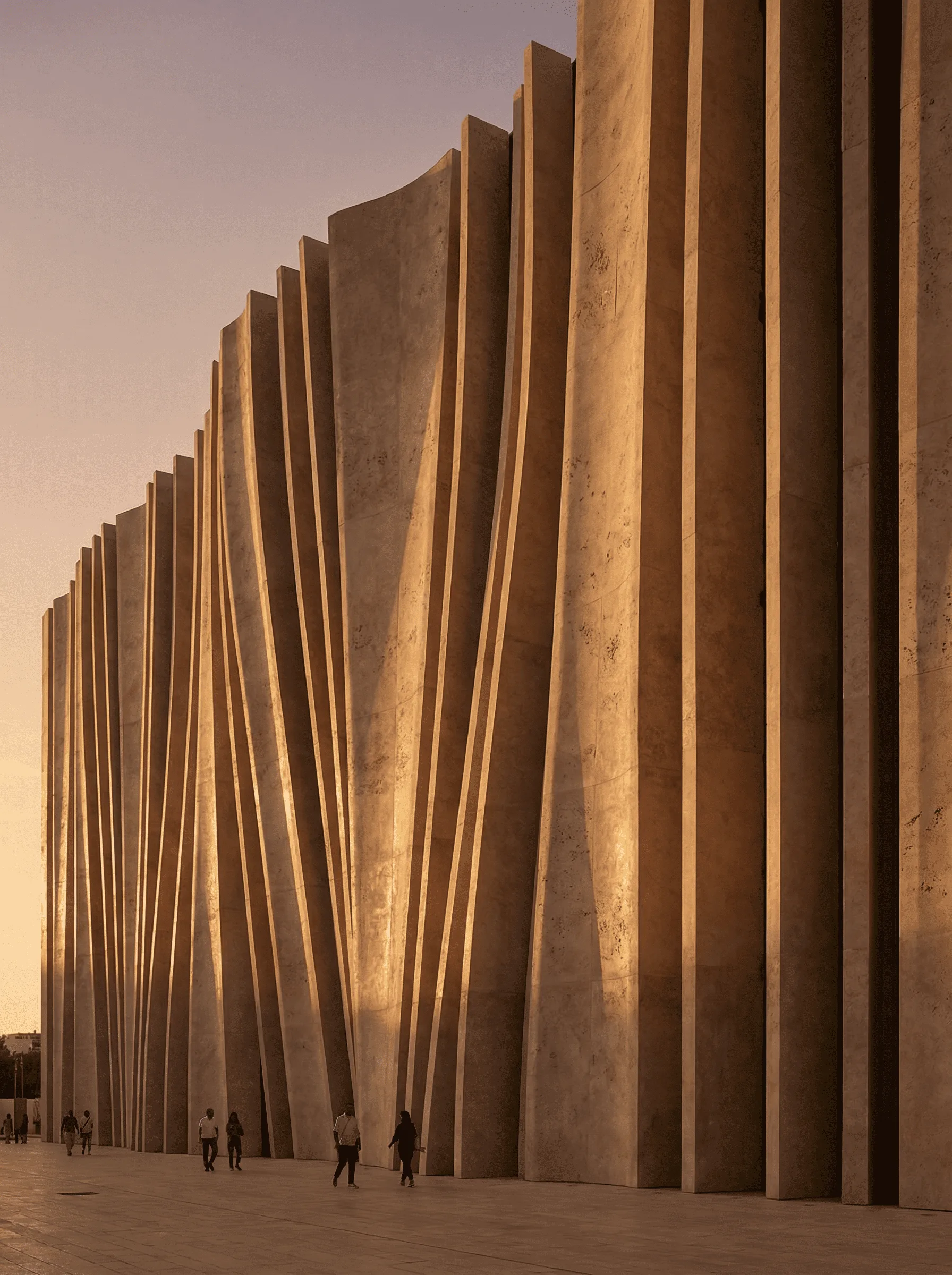
Façades are dynamic interfaces, shaped over time by weather, use, and material ageing. Rather than static surfaces, façades behave as adaptive systems shaped by environmental, material, and operational forces.
Facade design is shaped by the interaction of material behaviour, structural logic, environmental performance, proportion, and construction, and construction methodology must operate as a unified system rather than as parallel tracks. Façades achieve clarity when architectural intent is reinforced by technical and material intelligence, allowing depth, rhythm, and articulation to emerge from the logic of assembly, shading, ventilation, and long-term performance rather than from surface treatment alone.
Because these factors are tightly coupled, small shifts in one area can produce significant consequences elsewhere. This complexity makes façade design particularly sensitive to early assumptions and limited comparison. Artificial intelligence offers a way to engage this condition more deliberately. By enabling the rapid exploration of multiple systemic variations rather than isolated visual changes, AI allows designers to test how adjustments in proportion, depth, or material strategy propagate across an entire façade system. Used in this way, AI supports more informed decision-making, helping teams identify robust relationships between intent, performance, and constructability before a single approach is committed to development.
Why Façades Are Uniquely Suited To AI-Driven Exploration
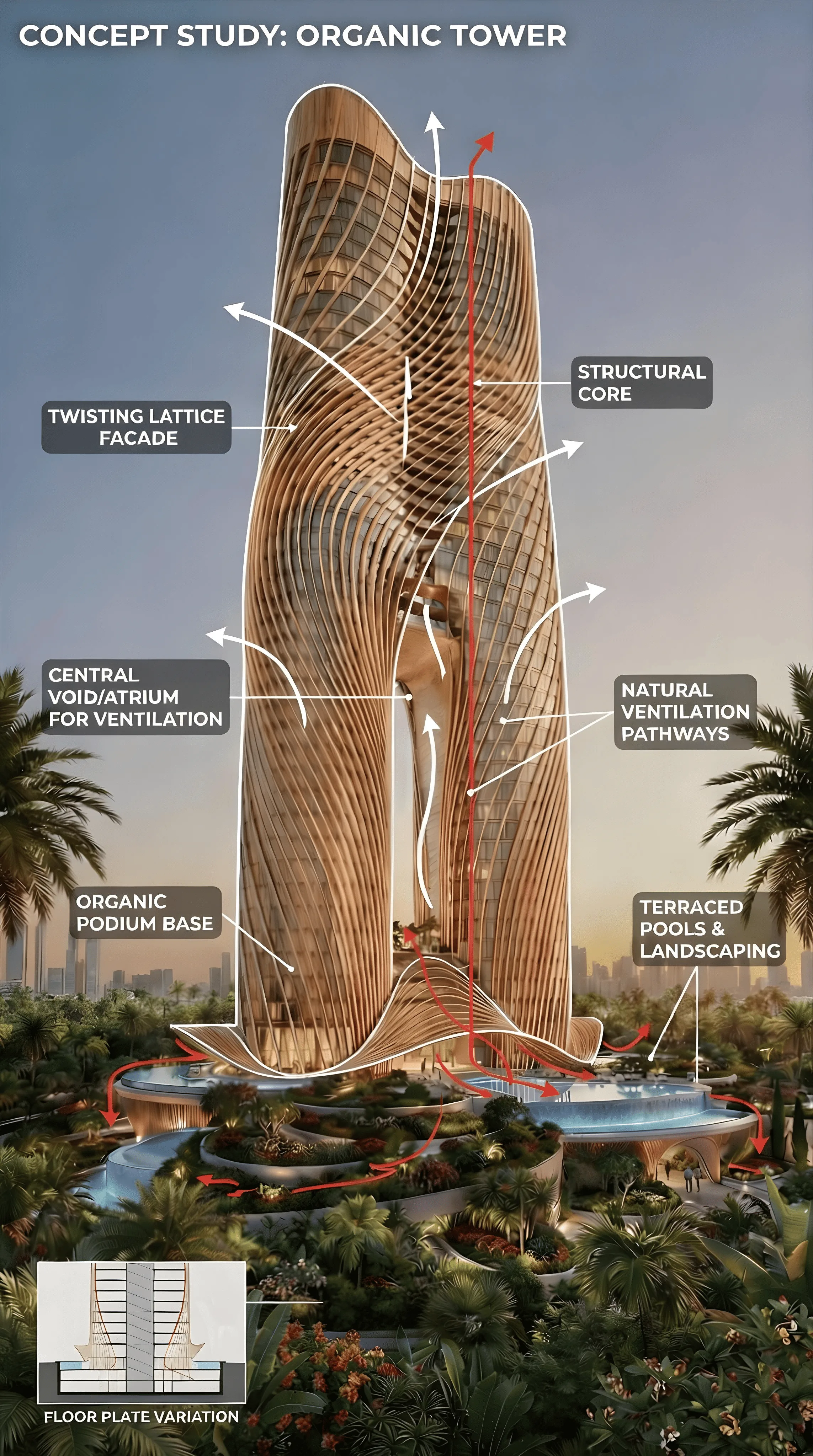
Among all building elements, façades are especially well-suited to AI-assisted design exploration. Façades sit at the intersection of architectural intent, environmental performance, structural logic, and fabrication reality. They are both expressive and repetitive, unique in concept yet systematic in execution. This duality makes them ideal candidates for variation-based thinking.
Unlike interior layouts or structural systems, façades operate across large surfaces where pattern, repetition, and proportion matter enormously. Minor shifts in mullion spacing, shading density, or panel depth can dramatically alter both performance and perception. Traditional digital tools can explore these variations, but they often require significant setup time, parametric expertise, or scripting effort. As a result, teams tend to limit exploration to a narrow band of options.
AI excels precisely where these workflows struggle. It allows designers to explore a broad range of formal and systemic variations quickly, without heavy upfront investment. This makes it possible to test multiple directions in parallel rather than committing prematurely to a single approach. Importantly, this exploration happens before engineering, procurement, and detailing constraints harden the design.
The Capabilities And Limits Of AI In Façade Exploration
To use AI responsibly in façade design, it is critical to understand its strengths and limitations. AI is particularly effective at generating large numbers of visual and spatial variations from a defined set of inputs. It can explore shifts in proportion, rhythm, density, layering, and articulation at a speed no human team can match. It is also useful for revealing patterns designers may not intuitively consider, helping teams escape habitual solutions and first idea bias.

The role of artificial intelligence in façade design is most effective when it is clearly situated within the broader process of analysis and validation. AI contributes by expanding the range of options available for consideration and by helping designers identify promising relationships and tendencies early on. However, analytical evaluation, such as assessing structural performance, environmental behaviour, detailing implications, and long-term material response, continues to rely on specialised tools and professional expertise. When these roles are clearly distinguished, AI complements rather than competes with established analytical methods, strengthening decision-making by ensuring that technical resolution is informed by a genuinely broad field of exploration. AI helps focus analytical effort where it matters most. Rather than replacing evaluation, it helps prioritise it, narrowing attention to the most promising systems and strategies before they are subjected to rigorous technical testing. In this way, AI strengthens the overall façade development process by improving the quality of decisions that enter analysis, rather than by attempting to perform the analysis itself.
A Practical AI-Driven Façade Variation Workflow
The value of AI lies in its capacity to support iterative testing and comparative evaluation across multiple parameters, within a structured workflow that integrates human judgment at every stage. When applied in this way, a practical approach can be broken into four clear phases.
Stage 1: Define The Design Logic
Before any AI exploration begins, the design intent and constraints must be clearly articulated. This includes architectural goals, climate and orientation assumptions, structural grids, planning constraints, and non-negotiables related to performance or fabrication. AI performs best when it is given a clear framework within which to operate. Vague prompts produce vague results.
Stage 2: Generate Variations
Once the logic is defined, AI can be used to generate families of façade variations rather than isolated images. These variations might explore different shading densities, mullion rhythms, panel sizes, degrees of porosity, or depth strategies. The focus should be on systemic shifts rather than surface styling. At this stage, quantity matters. The goal is to explore the breadth of possibilities, not to identify a final solution.
Stage 3: Curate And Eliminate
Curation is where authorship truly resides. Designers must aggressively filter the outputs, discarding the majority without hesitation. The aim is not to select a favourite image but to identify promising patterns and logic worth developing further. This process often reveals unexpected insights, such as which parameters are most influential or which directions consistently fail.
Stage 4: Translate To Feasible Systems
Once a small number of promising directions have been identified, they must be translated into buildable facade systems. This is where AI’s role ends. Engineers, facade consultants, and material specialists take over, rationalising geometry, defining tolerances, and validating performance. AI does not design the final façade. It helps ensure that the chosen direction is informed by a genuinely broad exploration.
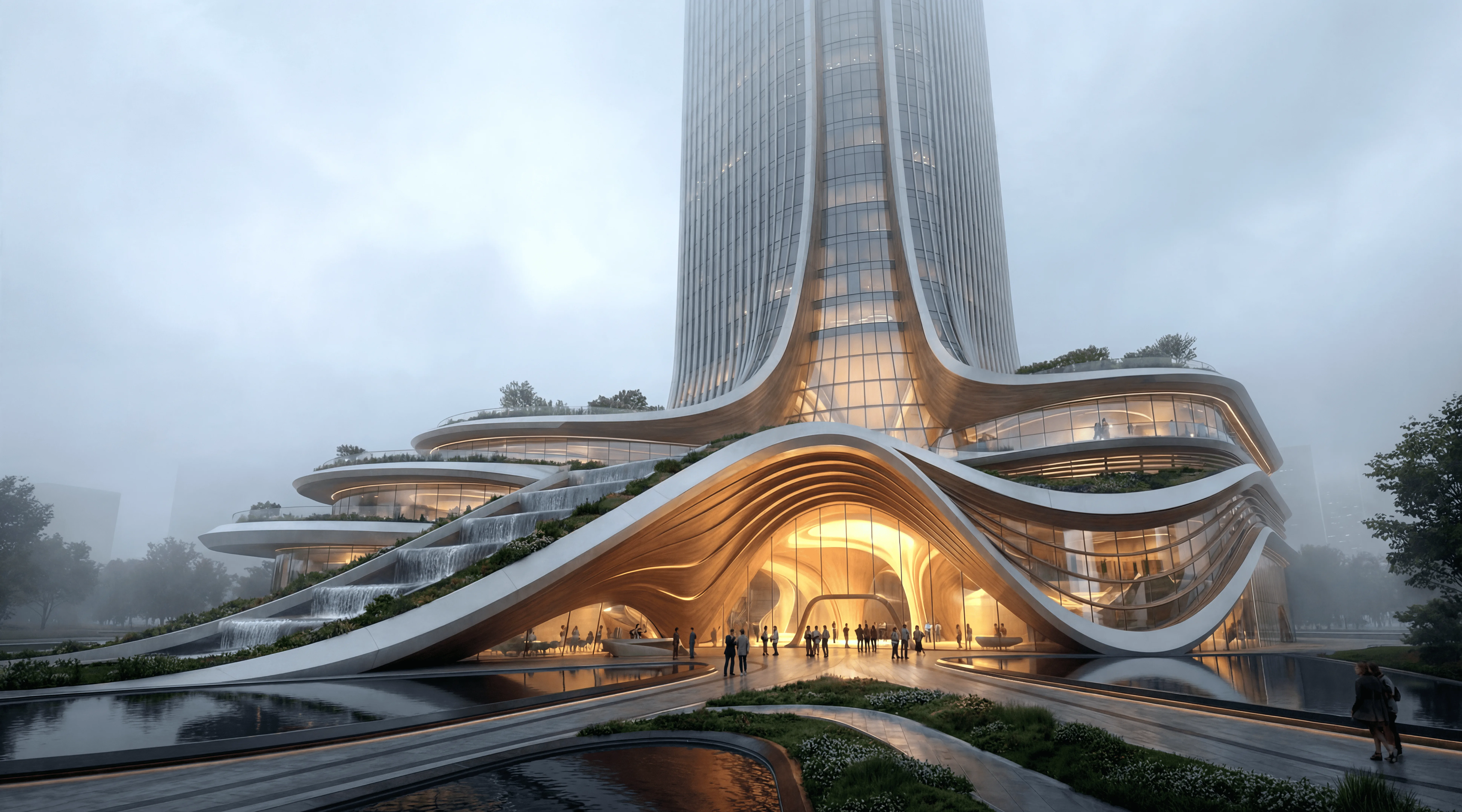
From Visual Variation To System Variation
A common misuse of AI in façade design is limiting its application to visual variety alone. While changing patterns or textures may produce visually distinct images, it adds little real value if the underlying system remains unchanged.
The true power of AI emerges when it is used to explore different facade systems and logics. This might include comparing layered shading strategies against deep mullion approaches, testing continuous screens versus modular panels, or exploring different depth hierarchies across an elevation. These variations have direct implications for performance, cost, and constructability.
By quickly visualising and comparing these systemic differences, AI helps teams make more informed decisions earlier. The question shifts from which image looks best to which system has the greatest potential to balance intent, performance, and feasibility.
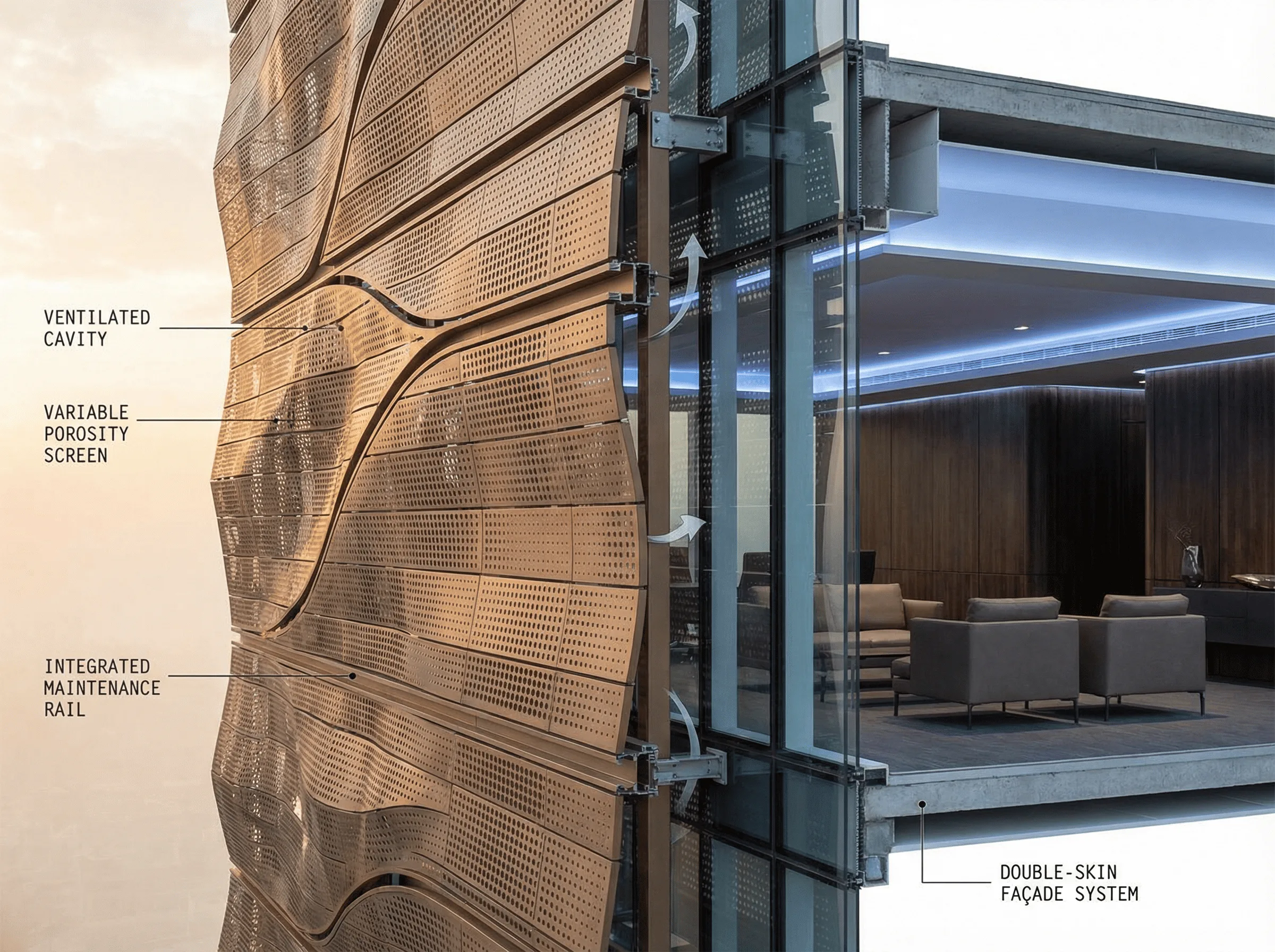
When Systematic Variation Becomes Accessible
When generating variation becomes fast and inexpensive, the design process itself begins to change. Designers become more selective rather than more indulgent. With a wider field of options available, teams are forced to articulate clearer criteria for success. Discussions around intent, performance, and priorities happen earlier and with greater clarity.
Client engagement also improves. Instead of presenting a single polished image, teams can communicate ranges and tradeoffs, helping clients understand the implications of different directions. This often leads to stronger alignment and fewer disruptive changes later in the process.
Perhaps most importantly, late-stage value engineering becomes less destructive. When multiple viable options have already been explored, cost-driven adjustments are less likely to undermine the core design intent. And when multiple viable options have already been explored, cost-driven adjustments are less likely to undermine the core design intent.
Risks, Misuse, And False Confidence
Alongside its advantages, the use of AI requires discipline and clarity of intent. Despite its benefits, AI introduces new risks if used carelessly. Overproduction of options without intent can overwhelm teams and obscure decision-making. Highly polished AI visuals can create false confidence, making early concepts appear more resolved than they actually are. There is also a risk that younger designers may rely more on AI outputs without developing a deep understanding of façade fundamentals. Without grounding in materials, structure, and detailing, AI expands the field of possibility and amplifies creative capacity, but judgment, authorship, and accountability remain essential human contributions. The quality of the outcome continues to depend on how deliberately these tools are employed and how clearly architectural responsibility is retained.

Façade Design As Curated Possibility
AI will not design better façades on its own. What it offers is something subtler and more valuable: the ability to see more, test more, and question assumptions earlier than ever before. In this context, the architect’s role evolves from producing a single solution to curating a field of possibilities and guiding it toward clarity. AI ensures that the chosen direction emerges from informed exploration rather than early fixation. Used thoughtfully, it does not dilute authorship; it reinforces it.