


Prakash Jain is the Chairman and Managing Director of Viva Composite Panel Pvt. Ltd., one of India’s leading manufacturers of Metal/Aluminium Composite Panels. A visionary entrepreneur with over two decades of industry experience, he has played a pivotal role in shaping India’s façade and cladding landscape through uncompromised product reliability, manufacturing excellence, and continued technological advancement. Under his leadership, Viva has evolved from a leading domestic brand into a globally trusted name with a strong presence across GCC/MENA and expanding footprints in the USA, Europe, Russia & South Asian markets. Driven by innovation and quality, he has consistently invested in design evolution, state-of-the-art machinery, production processes, sustainability practices, and stringent safety standards. His belief in “progress through responsibility” has enabled Viva to champion initiatives around recyclability, environmentally conscious coatings and customer-centric solutions. Recognised for his strategic vision and strong business ethics, Mr. Prakash Jain continues to lead Viva towards global leadership while contributing significantly to the architectural and infrastructure ecosystem. Prakash JainChairman & Managing Director
|
VIVA’s Journey Has Been Defined By Purposeful Growth And A Commitment To Raising Façade Standards In India

Q. VIVA Is A Well-Known Name In The Façade Industry. Could You Please Brief Our Readers About VIVA’s Journey To Becoming A Leader?
VIVA’s journey has been defined by purposeful growth and a commitment to raising façade standards in India. Established over two decades ago, VIVA began by offering dependable, high-quality aluminium composite panels at a time when the façade industry was still developing. Early investments in advanced manufacturing, in-house quality control, and globally benchmarked coatings helped build strong credibility with architects, consultants, and developers.
Over the years, VIVA evolved beyond conventional ACPs into specialised finishes, fire-safe systems, and monolithic aluminium solutions, aligning with changing safety norms, design aspirations, and sustainability goals. Today, with large-scale integrated manufacturing, a pan-India and growing international presence, and immersive experience centres, VIVA has emerged as a technology-led, design-driven leader shaping the future of modern façades.

Q. The Industry Is Highly Competitive. What Makes You Stand Out From Others?
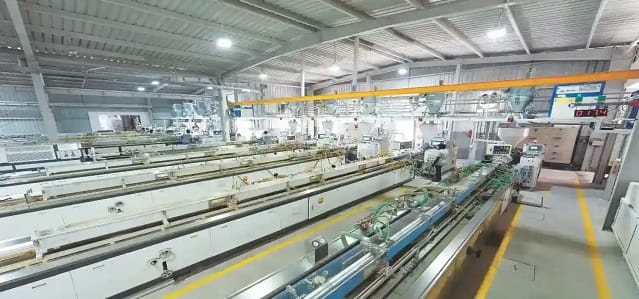
The façade industry is indeed highly competitive, but VIVA stands apart through a rare combination of speed, scale, innovation, and reliability. One of our key differentiators is lead time: solid shades can be delivered in just 30 minutes, and textured finishes within 24 hours, enabling architects and contractors to meet tight project timelines. With five advanced colour-coating lines capable of coating panels from 0.5 mm to 5 mm thickness, and 14 high-capacity production lines, we offer unmatched flexibility and customisation.
Innovation at VIVA spans both exteriors and interiors, with curated finishes that seamlessly integrate with interior design palettes. Backed by over 100 in-house laboratory tests, FR-rated panels, and a strong sustainability focus, we function as a true one-stop solution for façade contractors—offering both systems and panels under one trusted brand.

Q. VIVA Introduced India’s First Pre-Coated, Ready-To-Install Solid Aluminium Panels – A Breakthrough Moment. What Was The Story Behind This Innovation, And How Challenging Was It To Steer The Industry Towards Safer, Long-Lasting Monolithic Aluminium Façades?
The idea behind introducing India’s first pre-coated, ready-to-install Solid Aluminium Panels emerged from our exposure to international projects in the Middle East and the USA, where stringent fire and safety certifications are non-negotiable. These markets highlighted the growing global shift towards monolithic aluminium façades that offer superior fire performance, durability, and long-term value.
At VIVA, safety has always been treated as a hygiene issue, not a differentiator. Every product and process undergoes rigorous quality checks to ensure the highest standards for man, machine, and material. Rather than viewing the transition to solid aluminium façades as a challenge, we saw it as a natural extension of our responsibility to the industry. The result was a safer, ready-to-install solution that aligns Indian façades with global best practices and future-ready construction norms.

Q. You Have Expanded Your Product Portfolio With Aluminium Louvers And Baffles For Façades And Interiors. What Unmet Needs Or Design Opportunities Did You Aim To Address With These Additions?
The expansion into Aluminium Louvers and Baffles was a response to a growing design trend where façades and interiors are expected to be both functional and visually engaging. Architects and interior designers increasingly seek solutions that allow air and natural light to pass through while controlling glare, heat, and visual privacy.
Our louvers and baffles address this need by combining performance with aesthetics. They enable designers to play creatively with light and shadow, adding depth, rhythm, and movement to spaces. Available in a wide range of colours, textures, and custom profiles, these systems integrate seamlessly into both exterior façades and interior ceilings or feature elements. By transforming shading and ventilation components into design statements, VIVA’s louvers and baffles unlock new architectural possibilities without compromising durability or precision engineering.

Q. EPD Certification Is A Stringent Process. What Encouraged VIVA To Pursue This Level Of Environmental Transparency, And How Do You See It Shaping Long-Term Trust In Your Brand?
EPD Certification was a conscious step towards reinforcing long-term trust through transparency and accountability. As the industry moves towards data-backed sustainability, we felt it was important to go beyond intent and clearly quantify the environmental impact of our products. The rigorous nature of the EPD process aligned well with our internal benchmarks and our broader goal of working towards net-zero operations.
This initiative also reflects our alignment with the Indian government’s vision for sustainable growth, responsible manufacturing, and a reduced carbon footprint. By offering verified environmental data, we empower architects and developers to make informed, future-ready material choices. Over time, this transparency strengthens confidence in the VIVA brand, positioning us as a responsible, globally aligned Indian manufacturer committed to sustainable construction and long-term environmental stewardship.

Q. Do You Feel This Recognition Changes How Indian Materials Are Perceived On The World Stage?
Absolutely, such recognition plays a meaningful role in reshaping how Indian materials are perceived globally. It reinforces the fact that Indian manufacturers are no longer just cost-competitive suppliers, but innovation-led, quality-driven partners capable of meeting the most stringent international standards.
Achievements such as global certifications, advanced manufacturing benchmarks, and sustainability recognitions demonstrate that Indian materials can compete with, and often surpass, international counterparts in performance, safety, and environmental responsibility. For brands like VIVA, this recognition builds confidence among global architects, consultants, and developers, helping position India as a serious contributor to future-ready architecture. Over time, it elevates the credibility of Indian materials on the world stage and encourages wider acceptance in international markets.
“From specialised finishes to fire-safe systems and monolithic aluminium solutions, VIVA continues to respond to evolving safety, design, and sustainability expectations.” |
Q. VIVA Has Recently Opened An Experience Centre In Surat – Now Asia’s Largest Metal Composite Panel Experience Space, Which Feels Like A Major Milestone. On A Personal Level, What Did It Mean To You To See This Vision Built At Such A Scale?
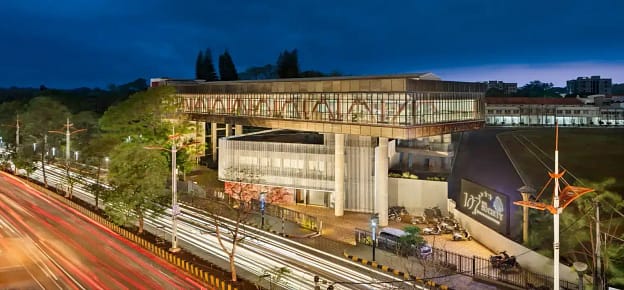
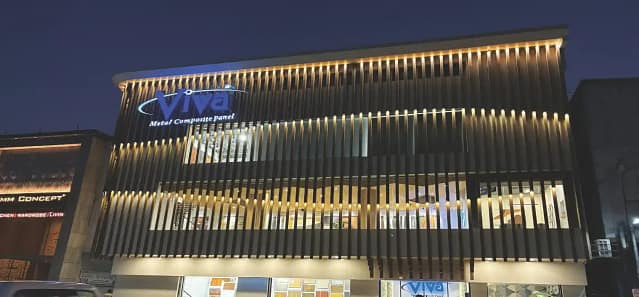
On a personal level, the Surat Experience Centre is an extremely meaningful milestone for us. Built across two storeys, every space has been thoughtfully designed with architects and designers in mind, to inspire and showcase the true versatility of new-age ACP solutions. From solid aluminium baffles used across the interiors to the striking exterior fins in pre-rusted Corten steel–finished in solid aluminium, the centre reflects materials that architects truly admire. These fins are designed to feel welcoming, visually drawing visitors inward and seamlessly extending into the reception area. The ceiling, crafted using our De Madera series, adds an earthy, warm character to the space. Beyond materials, the centre celebrates artistry, with installations dedicated to Surat’s weaving heritage and immersive interior zones where designers can experience full-sheet displays, textures, and shades first-hand. It is a space built to engage, educate, and inspire.

Q. The Centre’s Parametric Façade In Solid Aluminium Fins And The 2D Mosaic Wall Using The Lustre Series Beautifully Merge Art, Engineering, And Product Innovation. How Important Is Experiential Storytelling For You In Educating The Design Community?
Experiential storytelling is extremely important to us because materials are best understood when they are experienced, not just specified. The parametric façade in solid aluminium fins and the 2D mosaic wall using the Lustre series are designed to demonstrate how engineering precision and artistic expression can coexist within a single material system. Such installations allow architects and designers to see scale, texture, light interaction, and structural possibilities in a real-world context. This approach helps bridge the gap between concept and execution, making material selection more intuitive and informed. By telling stories through built forms, we can engage the design community on a deeper level—encouraging exploration, innovation, and confidence in using advanced aluminium solutions in contemporary architecture.

Q. You Participated In Industry Events Such As ZAK And ACE Tech 2025. What Were Your Plans For These Platforms, And Which Products Did You Showcase?
We participated in industry platforms such as ZAK and ACE Tech 2025 to create an immersive and design-led engagement for architects, interior designers, and façade consultants. A key highlight of our showcase was the newly launched Aluminium Louvers and Baffles, where the entire stall was conceptualised as an arresting play of baffles and lighting. Crafted from our Solid Aluminium series, this installation drew strong attention from the design community for its scale, form, and visual impact. In addition, we showcased a wide range of our product innovations, including the Tarnish Metallum, De Madera, Santa Fe, and Aluzinto series, along with 3D product displays that demonstrated depth, texture, and application versatility. The overall presentation reinforced VIVA’s strength in combining material innovation, aesthetics, and performance across both façade and interior solutions.

Q. With Expansion Into The GCC/MENA Markets, New International Alignments, And An Upcoming Experience Centre In Poland, Where Do You See VIVA Standing Globally By 2030 – Especially As You Advance Your Sustainability Roadmap Focusing On Recyclability, Green Coatings, And A Reduced Carbon Footprint?
By 2030, we envision VIVA as a truly global façade solutions brand with a strong and trusted presence across key international markets, including the GCC, MENA, Europe, and beyond. Global expansion remains a clear focus, supported by strategic international alignments and initiatives such as the upcoming Experience Centre in Poland, which will further strengthen our engagement with the global design community. Having established ourselves as one of Asia’s largest metal composite panel manufacturers and a leading brand in the region, our next aspiration is to be recognised as the number one global brand in this category. This growth will be guided by our Sustainability Roadmap-prioritising recyclability, green coating technologies, and a reduced carbon footprint—ensuring that our global leadership is built not just on scale, but on responsibility, innovation, and long-term value creation.