Post Date: December 8, 2025 |
Last Edited: December 22, 2025

Amar Kirale, Associate Vice President – Marketing, 3A Composites India

Over the past decade, the façade industry has undergone a remarkable transformation driven by sustainability, design innovation and performance. Advancements in fire-retardant and recyclable materials have redefined architectural standards. We have led this evolution through pioneering surface technologies and sustainable manufacturing practices that meet global benchmarks.
By 2030, façades will evolve into intelligent, adaptive systems that seamlessly integrate aesthetics, performance, and sustainability. We will continue to lead this transformation by delivering future-ready materials that empower architects to innovate boldly and design without compromise.
Neeraj Agarwal, Managing Director, Duroplast India

Over the past decade, the Indian uPVC fenestration industry has evolved remarkably, driven by quality improvement, awareness, and performance standards. The introduction of Indian Standards (IS) has been a game-changer, significantly enhancing quality and acceptance across the market.
While the market hasn’t doubled as often as perceived, it continues to grow steadily at a rate of around 7–8% CAGR, with strong adoption now coming from Tier 2 and Tier 3 cities. The focus of specifiers and institutions has also shifted from basic profile testing to comprehensive window performance testing, including sound insulation, structural performance, and air and water tightness, marking a new era of quality-driven demand.
The expansion in profile variety by manufacturers has added design flexibility, and as we advance, standardisation of window and door sizes will further streamline the industry. Moreover, government support through safeguard or anti-dumping duties on low-quality imports will be crucial in maintaining driving, sustained, high-quality growth by 2030.
Sheetal Khanna, General Manager Marketing And Specifications, Gold Plus Glass Industry

The past decade has been transformative for the glass industry, marked by the rise of value-added products such as high-performance coated glass, solar control glass, and energy-efficient façades. Innovations in online and offline coating technologies, coupled with advancements in process automation and precision float manufacturing, have elevated both quality and performance benchmarks. At Gold Plus Glass Industry Limited, India’s fastest-growing float glass manufacturing industry, we have diversified into solar glass production, aligning with the nation’s renewable energy goals. By 2030, we envision a dynamic shift towards low-carbon manufacturing, integration of AI-driven quality systems, and an increased share of solar and high-performance architectural glass, propelling India toward global leadership in sustainable glass solutions.
Puneet Agarwal, Director of Sales & Marketing, Wonder Alu Board

Over the past decade, the ACP industry has undergone a ~~remarkable transformation. Notably, advances in coating and fire-resistant technologies have raised standards for safety and durability. Design flexibility has improved, too, allowing bold architectural façades and interior finishes to become more mainstream. At the same time, growing emphasis on sustainability-driven materials has spurred lightweight, energy-efficient composites to the fore.
Looking ahead to 2030, we foresee the market growing significantly in both size and scope. Demand will expand beyond traditional building cladding into transportation, modular systems and retrofit segments, especially as urbanisation accelerates and building codes tighten. The market is projected to experience steady growth, driven by infrastructure investment, evolving aesthetics, and a stronger focus on green construction practices.
Mayank Jain, Director, Viva Composite Panel

The façade industry is rapidly transitioning from conventional ACPs to solid aluminium systems, driven by the need for enhanced durability, aesthetics, and sustainability. At Viva Composite Panel Pvt. Ltd., we are leading this evolution with pre-coated solid aluminium panels that deliver strength, precision, and longevity. Complementing this shift, our solid aluminium louvres and baffles offer architects greater design flexibility and functional elegance for modern façades and interiors. Looking ahead to 2030, the industry’s direction is clear — towards sustainable, recyclable, and energy-efficient materials that minimise environmental impact. Viva remains committed to pioneering this transformation by developing eco-conscious façade solutions that balance innovation, performance, and design excellence for a greener, smarter built environment.
Nikhil Parasuraman, Managing Director – India & SAARC Region, SE Controls India

Over the past decade, the façade and fenestration industry has seen notable advancements, especially in smart façades and technologies in glass, with dynamic façade systems becoming increasingly prominent. BIM has also entered the picture, although it is still not fully implemented in Indian projects. Sustainability has taken the front seat and will continue to remain a primary focus for the near future. Additionally, automatic vents for smoke and natural ventilation have progressed, and this life-safety aspect is expected to become the norm going forward.
By 2030, rapid urbanisation will lead to the modernisation of Tier II and III cities, resulting in major market expansion. The Indian façade market is projected to reach USD 3.5–5.5 billion, and new cities will take shape. Façades will become smart and sustainable, with fully tech-enabled systems and more net-zero projects. Different verticals within the industry will work closely together to build better and safer environments, leading to compliant design practices. Digital twins are also expected to become an industry standard.
Dr. H.C. Mario Schmidt, Managing Director, Lingel Windows and Doors Technologies

Several innovations have transformed the façade and fenestration industry over the past decade. At Lingel, we have introduced Wi-Fi-operated windows, allowing seamless control and smarter living, with sustainability at its core. Modern consumers increasingly demand products that combine aesthetics with functionality; Lingel’s premium uPVC, aluminium, and wooden windows, along with glass conservatories, roller shutters, and roof glazing, cater to these expectations, enhancing both interiors and exteriors.
Looking ahead to 2030, the Indian fenestration market is projected to grow substantially, driven by technologically advanced solutions. Lingel is committed to leading this evolution by offering innovative, high-performance products, ensuring that homes are not only beautiful but also functional, durable, and aligned with future-ready building standards.
Amir Hashmi, Chief Sales & Marketing Officer, Profine India Window Technology

Over the past decade, the Indian fenestration industry has witnessed a major transformation driven by rapid urbanisation, evolving architectural trends, and growing awareness around energy efficiency and sustainability. The shift from conventional materials to modern, high-performance systems has redefined how homes and buildings are designed. To cater to these ever-evolving industry trends, we began our Koemmerling India journey by setting up an extrusion facility for uPVC window & door profiles in 2013, setting new standards in quality, durability, and innovation. Recognising the growing demand for versatile and high-performance solutions, in 2017, we diversified into aluminium window & door systems, offering advanced solutions for contemporary architecture. Through EFP International, our façade solutions bring world-class engineering to India. Our portfolio further grew with KömaBoard, a premium range of PVC and WPC sheets. With a focus on German engineering, innovation, and sustainability, Koemmerling is well-positioned to lead the industry’s next phase of growth towards 2030 and beyond.
Manish Bansal, CEO & Director, Window Magic
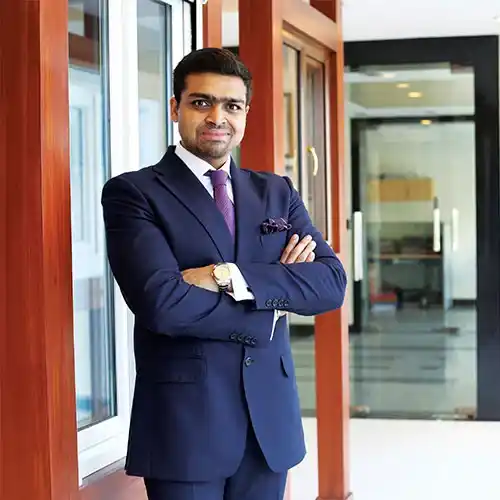
Over the past decade, the window and façade industry has undergone a paradigm shift driven by innovation, sustainability, and design precision. Moving beyond traditional systems, the sector now embraces high-performance, energy-efficient, and aesthetically advanced solutions that define contemporary architecture. At Window Magic, we have led this transformation through smarter materials, automation, and environmentally responsible manufacturing practices.
A key development accelerating this progress has been the adoption of aluminium formwork in modern construction. This technology enables faster floor-to-floor cycles, often within 5-7 days, while delivering exceptional structural accuracy and surface finish. The result is a smoother, more precise building envelope that reduces finishing work and improves installation accuracy for windows and façades. Reusable for up to 200- 300 cycles, aluminium formwork also minimizes material waste and supports the industry’s sustainability goals. By and large, the fenestration sector has greatly benefited from this synergy between formwork innovation and façade design. Enhanced precision in structural openings allows for better coordination, reduced on-site adjustments, and quicker project delivery. As construction timelines shrink, façade and window systems can be integrated earlier, driving both efficiency and quality.
Looking ahead to 2030, the industry will be defined by intelligent façades, seamless technological integration, and greater customization aligned with global design trends. India’s window industry is no longer following the world; it is shaping the next chapter of global innovation, where speed, sustainability, and design excellence converge.
Parul Mittal, Director, Greenlam Industries Ltd

Over the past decade, the façade and fenestration industry has undergone a significant transformation. What was once primarily focused on aesthetics has now evolved into high-performance solutions that seamlessly integrate design, durability, energy efficiency, and occupant comfort. Materials such as high-pressure laminates (HPL) offer UV resistance, thermal insulation, and protection against extreme weather, enabling façades that are both visually striking and highly functional.
Sustainability has become a central driver of innovation. At Greenlam Industries, we prioritise the use of recycled materials, renewable energy, and FSC®-certified products, while minimising VOCs to ensure healthier indoor environments and a reduced carbon footprint. Regulatory developments and green building certifications such as LEED, WELL, and GRIHA have further accelerated innovation, while fire-safety standards are driving the adoption of non-combustible, high-performance façade materials.
Technology is increasingly shaping the industry’s future. Robotics, automation, and digital façade solutions are enabling faster, more precise project execution, while close collaboration between architects, façade consultants, and technology partners allows for the development of intelligent, data-driven designs that enhance both performance and aesthetics. Hybrid material systems combining HPL, ceramics, and other materials are further expanding the possibilities for strength, resilience, and design flexibility.
Looking ahead to 2030, the global façade market is expected to grow significantly, fuelled by rapid urbanisation, green building mandates, and premium-value projects. We foresee a continued shift towards sustainable, human-centric, and technology-integrated façades, reflecting a clear convergence of aesthetics, functionality, and environmental responsibility — a direction that will define the next era of building design.