
Automation of smoke vent solutions and natural ventilation systems is vital for modern commercial buildings, ensuring rapid emergency response, healthier indoor environments, and significant energy savings. These integrated technologies use sensors, actuators, and controls to manage airflow intelligently, adapting to real-time conditions such as fire alarms, temperature shifts, or pollutant levels.

Core Principles Of Smoke Vent Automation
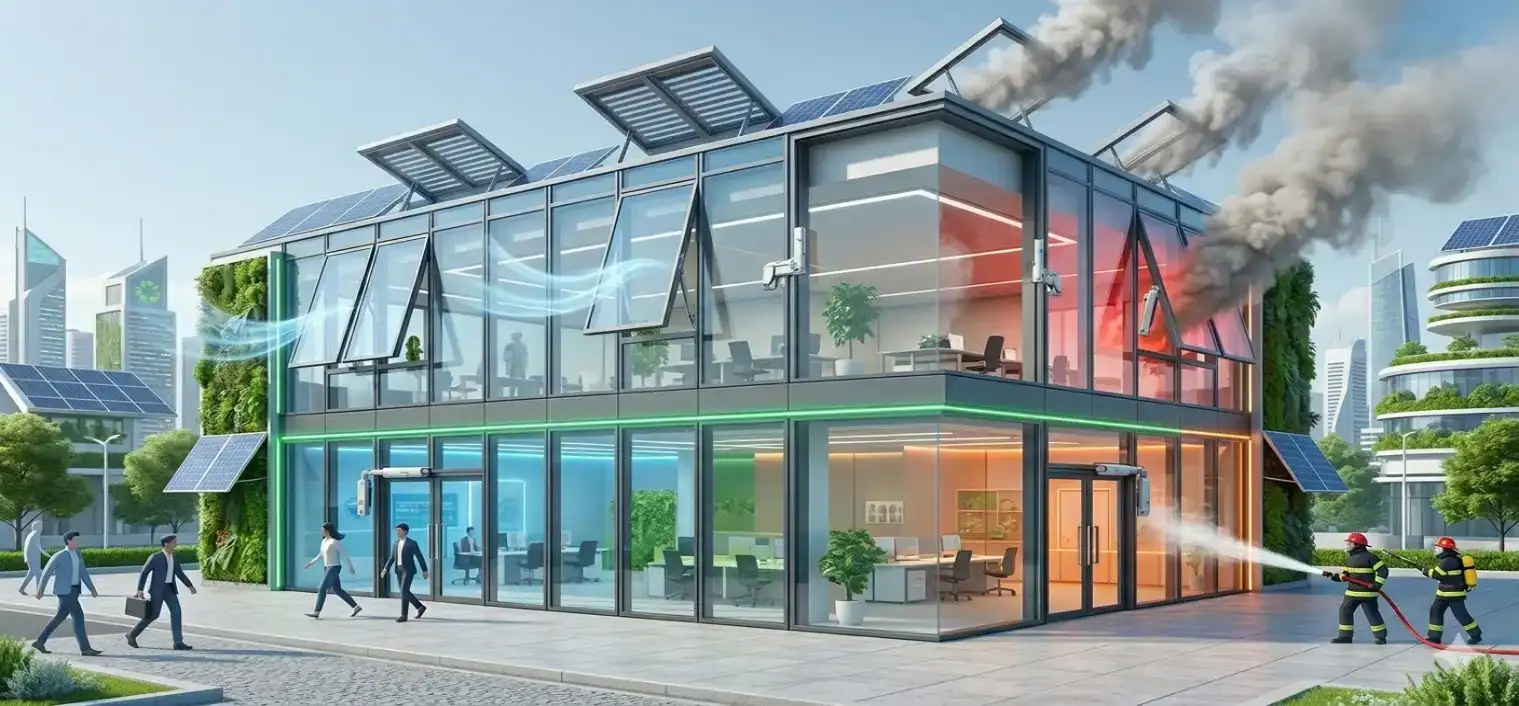
Smoke vents, often certified under SHEV standards, deploy automatically via thermal fuses, electrical triggers, or building management systems during fires. They expel hot smoke and gases upwards, creating a breathable layer at floor level for safer evacuations. This prevents smoke logging, where toxic fumes accumulate and obscure visibility, directly supporting compliance with fire safety codes in offices, warehouses, and retail spaces.
Enhancing Natural Ventilation
Automated natural ventilation leverages weather sensors and occupancy data to open windows, vents, or skylights precisely, drawing in fresh air without mechanical fans. It dilutes indoor pollutants such as CO2 and VOCs, boosting cognitive function and reducing sick building syndrome. Hybrid models blend this with HVAC systems for optimal performance in varying climates, maintaining comfort while reducing electricity use by up to 40%.
Critical Life Safety Impacts
In fire scenarios, these systems activate within seconds, channelling smoke out and preserving clear exit paths, which can halve evacuation times. They protect structural integrity by rapidly cooling interiors, minimising fire spread to adjacent areas or assets such as inventory. Fire services gain tactical advantages, entering buildings with better visibility and lower heat stress for effective suppression.

Energy Efficiency And Sustainability
By prioritising passive airflow, automation reduces HVAC runtime, cutting carbon emissions and operational costs over a building’s lifespan. Smart controls predict needs, optimising openings for peak efficiency. This aligns with green standards and enhances property value through proven ROI from lower utility bills and minimal upkeep.
Integration And Maintenance Best Practices
Seamless integration with BMS platforms enables remote monitoring, scheduling, and overrides for daily use or emergencies. Regular testing of actuators and sensors—typically annually—ensures reliability, while modular designs simplify retrofits in existing structures. Future trends include IoT connectivity for predictive maintenance, further elevating safety and performance.
For More Details, Contact:
LGF Sysmac India Pvt. Ltd.
Website: www.lgfsysmac.com
Email: info@lgfsysmac.com
Phone: +91 11 47348888