


WFM: What are the important aspects to be considered while designing and installing fenestrations?
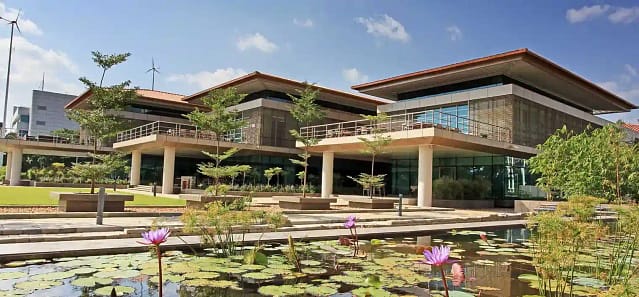
Nilabh Nagar (NN): The most important design factor would be the orientation of the opening. But many times, constraints of site and function do not allow proper orientation. So one needs to adopt other methods. The summer-winter contradiction can best be addressed on the south face only. In the east and west façades, the sun comes at low angles and can only be done by cutting off. On the south façade, simply having awnings/sun shades to match solar angle for winter and summer, as well as adjustable louvres, can easily get the benefits asked (We have used them in important projects: e.g., Infosys SDB). However, the proportion of windows, overhang of balconies in residential buildings, Chajjas, etc., greatly contribute to optimised lighting. We must ensure that the window is not too small to create glare. There are software programs available that can calculate the daylighting and glare. Light shelf, sun shades, orientation, and glass values are some of the measures that are considered while designing efficient façades. Building geometry plays an important role, too. Glare is also important, especially in the Indian context, where one can get exposed to too much light, but blinds increase the lighting load.
WFM: How can we improve the insulating value of window glazing?
NN: The Performance of coatings in glass has improved over time. Now, the best coated glasses are produced in India. By selective spectrum control, the heat and visual light have been addressed.
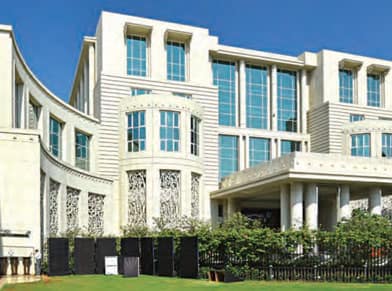
Double-glazed was followed by laminated double-glazed and thermal break profiles, which ensured that conduction thru metal parts of the window does not transmit inside. We now have triple-glazed windows, as well as special polycarbonate film as an intermediate layer to ensure very little heat transfer. Increasing the airgap is another effective tool. In the Taj Hotel Project at Santacruz Airport, we have installed double skin façades, which will cut off heat.
WFM: Please brief on daylight redirecting technologies such as light pipes, light shelves and skylights that allow natural light to penetrate deep into the building space?
NN: I think that is one of the most important technologies that should be used widely. We have used light shelves extensively in Infosys campuses along with daylight analyses. We have looked at special skylight double-glazed units which have embedded louvres to direct light inside. Light pipes are wonderful and should be developed further.
WFM: How would U-value and highly insulating window technologies affect energy conservation? What are the means to achieve the same?
NN: Research on glass have lead to very low U-values and gives architects the range to design the buildings. But one must be responsible in the use of glass. One must also understand that the bulk of the high-performance glass is used only in the commercial office segment. However, the bulk of buildings are residential, where cost constraints ensure they are not used. (Thankfully, the glazing sizes are limited in residential areas, and most have balconies to provide adequate shading.) But conducting heat is also a major energy issue and something that may require a law to ensure thermal performance in the residential sector. In Mumbai, where the new law has discouraged the use of balconies and increased the glazing areas in residential buildings, U-value plays a critical role. Highly reflective coatings do mitigate the problem, but create mirrors at night for the users. Low-E low-IR glasses are very expensive, so louvres and curtains play a greater role. Embedded louvres in the glass are also effective, but block vision. Operable louvres area wonderful solution, but come at a prohibitive cost.
WFM: Please tell us briefly about the challenges involved in designing integrated façades for both energy conservation and optimal daylighting at the same time for optimal daylighting?
NN: The greatest challenge is that the industry still needs to have specialist vendors who can integrate. Currently, curtain wall fabricators are familiar with Aluminium and glass, but very few have worked with Glass Reinforced Concrete (GRC) or Fibre Reinforced Polymer (FRP) solar panels or fabric or mesh façades and integrating them. Dust conditions do allow moving louvres on the outside, which are the most effective sun shading system. Double skins so created do add to the cost. Jalis are an effective tool, but to have it permanently in front of windows blocking out side view can be irritating. Dynamic shading devices are best, but they do cost and require effort to install and maintain. Probably a double-track louvres, like a mosquito layer with simple manual operation, could provide shade and can be controlled by the user like a curtain. There are international vendors who have a lot of work on this, but systems are expensive and currently designed more for European use. In India, it is better to design with an optimal window/glazing ratio to minimise heat and sun.
WFM: What are future Window & Façade technologies that could save significant energy in buildings?
NN: Technologies like photo voltaic, superior glass, fritting, louvres, dynamic façades, screens of metal, wood, terracotta, GRC stainless steel fabric, etc., are already available. However, all of us would like to use a single glass with a 1.6 U-value, 70 per cent light transmission, which is photo-chromatic and changes light transmission based on incident light with no internal reflection! One-way glass which ensures privacy and has maximum light ingress!
Challenges Involved in Designing Integrated Façades
One must define the priority between light transmission and solar factor while selecting glass for the windows. Glass with the least solar factor may not be so good in terms of light transmission. So either of them needs to be compromised to have optimum solar factor & light transmission together.
Various developments are being done in the fenestration technology in order to reduce the U-value further. Currently Galvanised iron (GI) is being used to strengthen the PVC-U windows. Being a metal, it absorbs the heat, which affects the U-value of the overall window system. These GI sections can be replaced with suitable non-conductive material having equivalent strength to steel. Profile systems having bigger depths and a larger number of internal chambers are being developed to achieve better results.
Façade & Fenestration Designs for Zero-Energy Buildings and Net Energy Gains
Net Zero Energy Building is the upcoming concept that will be mandatory in developed countries within a few years. The building should be instrumented with automation and control systems for effective monitoring of the energy consumption of the building. The energy storage capacity of the building is also an important factor that plays a vital role in designing this type of building. The thermal comfort of the building should also be maintained.
Raman Sikka of Sikka Associates points out that architects have to design façades with a very strong focus on technical performance in restricting heat gain, allowing visible transparency, and at the same time utilising solar incidence to produce energy wherever it is feasible.
Net Zero Energy Building concept can be defined as a building that is neutral over a year (i.e. the energy given to the grids is equal to that supplied from the grids) when energy efficiency measures are successfully combined with renewable energy resources. Thus, it can be achieved by reducing the energy demand of buildings and by generating electricity or other energy carriers to get enough credits to achieve the desired energy balance, says Kembhavi. In a nutshell, to achieve the Net-ZEB concept, two key factors to be considered at the design stage are:
- To reduce the building energy demand by using energy-efficient systems and passive strategies;
- To meet the electricity demands through renewable energy and maintain the optimal energy mix.
According to the Energy Conservation Building Code (ECBC), the building envelope design must take into consideration both the external and internal heat loads. External loads include mainly solar heat gains (SHGC) through windows, heat losses across the envelope surfaces and unwanted air infiltration in the building.
Substantial energy efficiency is possible only when fenestration is integrated with other building systems. i.e., 1. Daylighting, 2. Natural ventilation, and 3. Integration of envelopes and 4. Use of HVAC systems. With the advancement in research, many products are being developed that are aimed at heat loss or gain through windows by controlling thermal conductance, resulting from the difference in inside and outside temperature, solar gains from direct sunlight and infiltration of air from outside the building.
Façades for the Future
Design of advanced façades will require better simulation and design tools, better ways of organising the design team around the goals and better tools for commissioning and building operations. Traditional façade design is based on minimal use of simulation tools, primarily for peak load estimates, says Ar. Gupta. Dynamic, responsive systems must be analysed under a range of diverse conditions for proper system sizing.
The ability to create and model a “virtual building” and explore its operational modes with different glass façade controls is a major objective of new building energy simulation tool development. Tools that provide accurate optical and thermal properties of the façade elements, e.g., glazings, are available, although more work is underway on the subject of optically complex glazings and shading systems. Advanced façades are now asked to provide additional details on control of ventilation air and daylight, requiring expanded use of tools that address computational fluid dynamics (CFD) and daylight performance for both energy studies and comfort assessment, observes Gupta.
Accurate modelling of performance is needed so that mechanical systems can be properly sized to meet loads. This requires a new degree of tool integration so that thermal and daylighting interactions of façades are properly considered as part of whole building energy modelling. In the future, the modelling investment made for design might also be reused for commissioning and operations.
According to Ar. Sharma, Photovoltaic cells should be used in façades of the future. One of the newest energy-producing technologies to achieve the same is thin-film photovoltaics (PVs). Unlike other glass coatings that only reduce energy consumption in buildings, thin-film PVs can also harvest solar energy. Thin-film PVs are made of many different materials deposited in thin layers on a conductive substrate. Cadmium telluride (CdTe) PVs are currently the only thin-film option that costs less than conventional crystalline silicon solar cells, he elucidates.
To achieve the necessary performance, the windows of the future need to be switchable, adjusting for season and time of day, notes Ar. Amit Kembhavi. They should be durable, affordable and should address energy and comfort by separately switching the visible and IR (invisible like infrared). They should be grid-independent and multifunctional. They should be equipped with sensors and communication channels, along with receptors for response.
There is growing interest in highly glazed building façades, driven by a variety of architectural, aesthetic, business and environmental rationales. The environmental rationale appears plausible only if conventional glazing systems are replaced by a new generation of high-performance, interactive, intelligent façade systems that meet the comfort and performance needs of occupants while satisfying owner economic needs and broader societal environmental concerns.
The challenge is that new technology, better systems integration using more capable design tools, and smarter building operations are all necessary to meet these goals. The opportunity is to create a new class of buildings that are both environmentally responsible at a regional or global level, while providing the amenities and working environments that owners and occupants seek.