
Post Date: November 13, 2026 |
Last Edited: November 13, 2026
Key Highlights
|
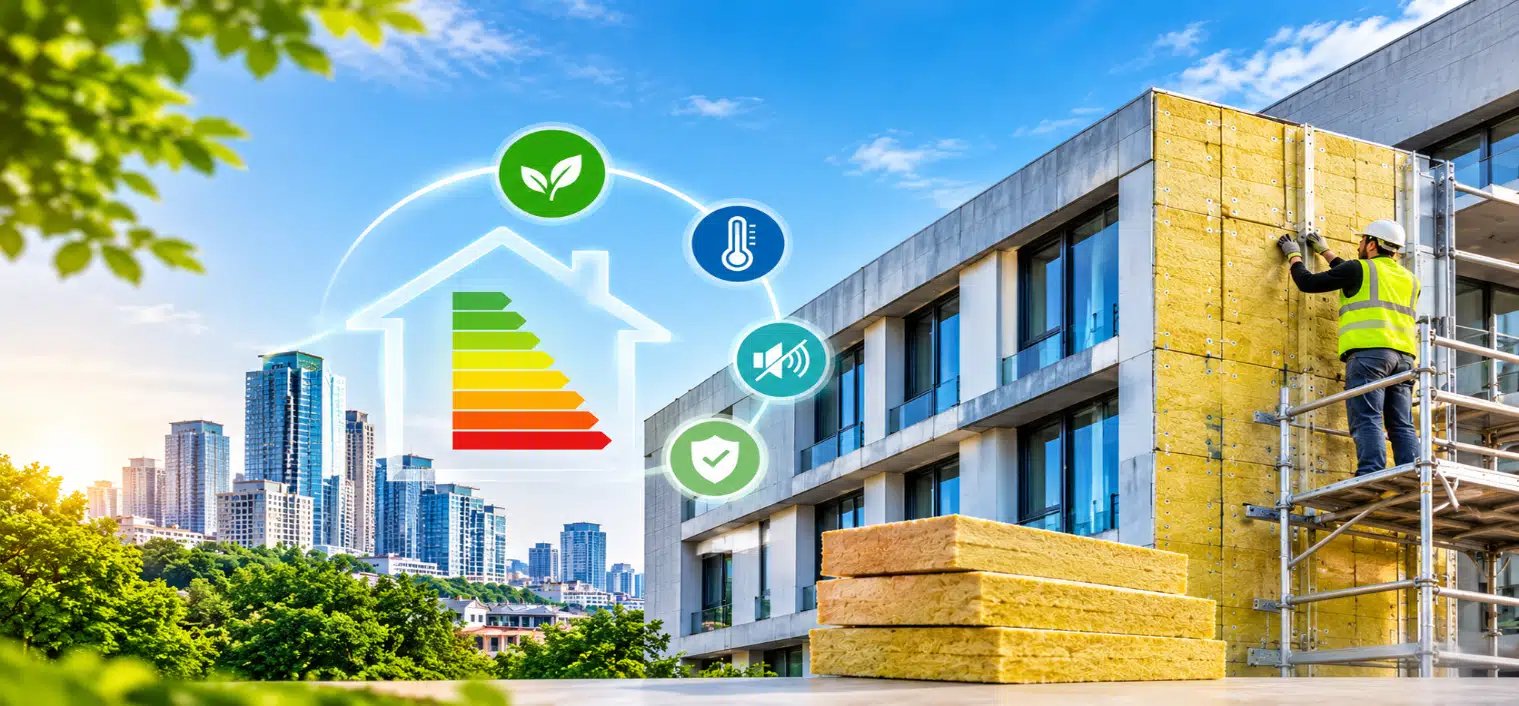
The average replacement rate of our national housing stock is less than 0.5% per year. This means that 80% of existing dwellings will still be in use in 2050. With ageing homes, historically high energy costs and the increasing prevalence of extreme temperatures caused by climate change, there is an urgent need to retrofit homes to make them fit for the future. Retrofit approaches seek to make homes more energy efficient in cooling and heating – to reduce greenhouse gas emissions – whilst also making them healthier, safer and more affordable to run. Research shows that around 20 million homes need to be retrofitted by 2050 to meet the government’s target of net zero by 2050 – a retrofit rate of almost 1.5 per minute!
The materials used in energy efficiency retrofit measures have their own environmental impact. The embodied carbon – that is, the greenhouse gas emissions of the industry that makes and fits the insulation and other materials – can be significant and must be considered. These greenhouse gas emissions are made now, to save operational emissions later. The time it takes for operational emissions savings to offset upfront embodied carbon emissions is known as the carbon payback period. In the case of thermal insulation retrofits, the optimal balance between insulating performance and embodied carbon must be found to minimise the total impact of the system. Increasingly, the industry is defining embodied carbon benchmarks to drive decarbonisation of our materials supply chains as well as design optimisation. Recent benchmarks published by CRREM define a target embodied carbon for medium and deep retrofit of between 20 and 80 kgCO₂e/m² for a multifamily residential building. This is the same as driving a medium-sized car from London to Glasgow for every square metre!
We Know That These Retrofit Measures Are Essential, But How Bad Is The Potential Short-Term Impact (I.E., The Embodied Carbon), And Is There Anything We Can Do About It?
Most studies we’ve seen looking into the carbon impact of thermal insulation look at the insulation materials in isolation. In reality, the insulation material itself is just one component within a wall build-up system, particularly in the case of retrofit solutions.
In the majority of cases, retrofitted insulation will need to be external:
- To reduce potential condensation issues with internal insulation;
- To reduce the loss of (potentially already cramped) internal living space; and
- To reduce disruption to inhabitants.
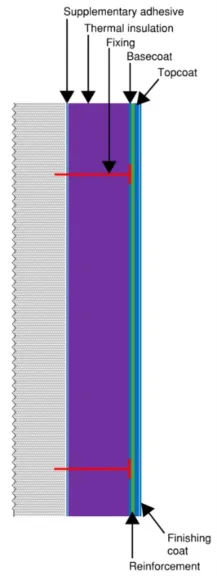
Current viable solutions are External Thermal Insulation Composite Systems (ETICS), made up of polymer-modified renders on rigid insulation, shown schematically in Figure 1. Typically, these utilise oil- or mineral-derived insulation materials. We posed the question to ourselves: could biobased insulation materials (utilised within an ETIC system) present a viable solution to reduce the embodied carbon of external insulation retrofit interventions?
So, What Did We Find? We Need More (And Better) Data
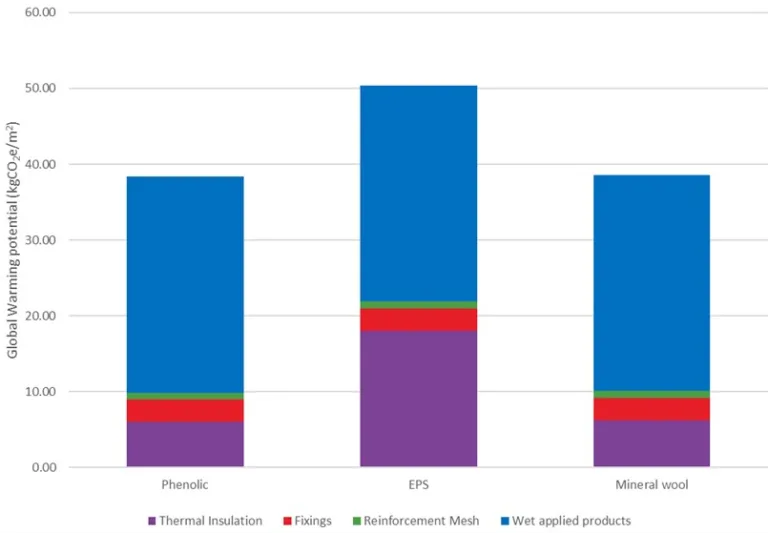
The first thing we found, perhaps unsurprisingly, is that there is little system-level carbon data available. Whilst material manufacturers are more readily providing Environmental Product Declarations (EPDs), there are few ETICS suppliers who have produced system-level reports. Additionally, there is huge variation in the global warming potential of different insulation types, and a great need to carefully interpret the data due to differing densities, thermal properties, forms of product and methods of reporting data. We carried out a high-level comparative analysis, shown in Figure 2, of an ETIC system with a fixed wet applied render system, but varying insulation materials. We fixed the thermal performance of the insulation materials to enable a more accurate comparison; i.e. the thickness of the insulation products varies, but the thermal performance is the same. These results show the variability in the ETIC system embodied carbon based on traditional insulation types.
We Need To Look At The Full Picture
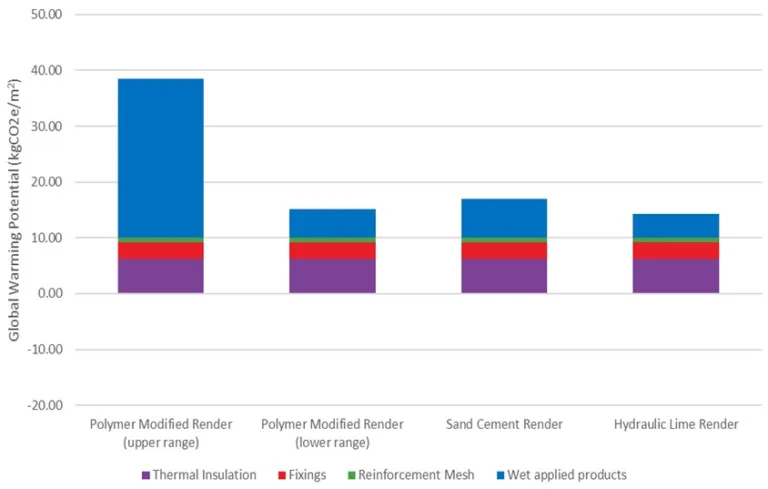
With an initial focus on the impact of insulation material substitution, by stepping back and looking at the full system, we find that there are other components with significant carbon impact. Typical ETIC systems rely on several layers of wet-applied products, which are typically polymer-modified. With some polymer-modified renders having a high global warming potential, the net impact of these layers could contribute a significant proportion of the total carbon of the system, as shown in Figure 3 above. If alternative products, such as sand-cement, hydraulic lime, or carefully selected lower-carbon polymer-modified render products could be used, our high-level assessment suggests that we could substantially reduce the impact of the system, as shown in the figure below. This highlights the importance of assessing the impact of whole systems, not just individual components.
So Do Biobased Materials Present A Viable Solution? Maybe…
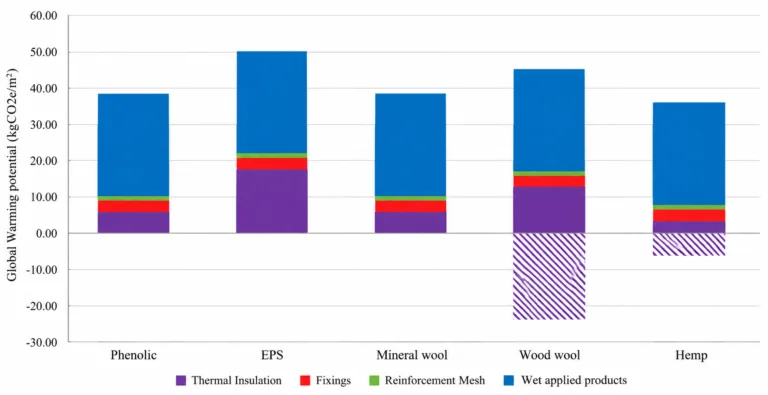
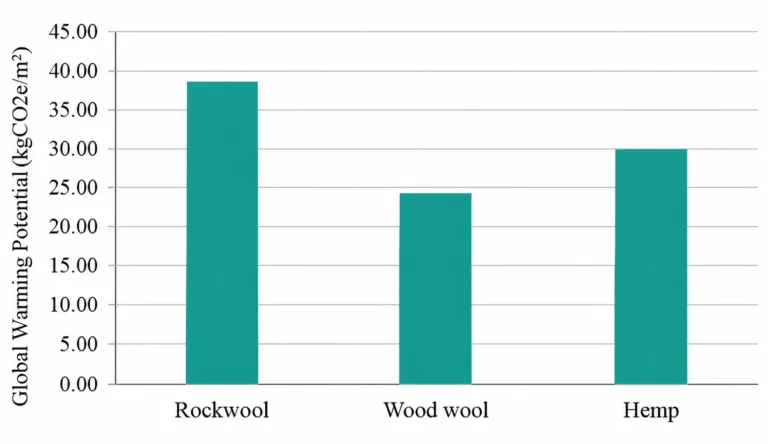
In contrast to substituting the wet-applied finishes from polymer-based to mineral-based, the beneficial impact of substituting the insulation material with a biobased solution is less clear. As with traditional insulation materials, we see a significant variation in the embodied carbon of different biobased solutions; in Figure 4, we see results for woodwool and hemp products compared to the traditional solutions.
Unlike for oil- or mineral-derived insulation materials, for biobased materials we have a sequestered carbon component in addition to the carbon expended during the processing of the material to make the product – the sequestered carbon is the carbon dioxide that is captured during the growth of the material and subsequently ‘locked’ into the product. Typically, at end of life, this sequestered carbon will be re-released into the atmosphere, and there is ongoing discussion across the industry as to how this carbon should be accounted for.
Even if we do account for it, we still find only a limited reduction in the ETIC system embodied carbon, due to the relatively small contribution that the insulation component makes to the whole system, as summarised in Figure 5.
Whilst there could be value in exploring a biobased insulation ETIC system, these results suggest that there could be additional (and perhaps greater) value in focusing efforts towards reducing the impact of the wet applied products.
Carbon Is One Piece Of The Puzzle
As noted previously, retrofitting buildings is not straightforward, and we can’t forget that embodied carbon is just one of a number of parameters we must consider. Durability, vapour permeability, cost, scalability, and workability will also be significant factors in determining the viability of a given solution. Given the huge number of homes that need to be retrofitted by 2050, circularity should also be seriously considered during material selection. When these ETIC systems reach their end of life, it is essential that robust reuse or recycling pathways are available. At present, whilst some of these insulation materials (for example, mineral wool) are theoretically recyclable, in reality, the markets are immature, and recycling is limited. In addition to biobased materials offering lower upfront embodied carbon, at end of life they can also often be managed with a lower environmental impact as compared to oil-derived insulation materials.
This high-level study has reminded us of the importance of carrying out carbon assessments, enabling data-informed approaches and decision-making. By taking a system view, we have identified an additional opportunity to broaden focus from exploring lower-impact insulation materials towards the higher-impact wet-applied finishes within these systems.
As noted earlier, there is no doubt that retrofitting our existing building stock is essential as we strive to reduce global carbon emissions, and we should act fast. Alongside this, we should also look to innovate to support embodied carbon reductions alongside these operational improvements.