
WFM: Tell us about your design firm, your journey as an architect, and a few of your recently completed innovative and iconic projects?
Yatin Patel: With a vision to establish a multi-faceted design consultancy firm and to extend its services pan-India, I co-founded DSP Design Associates with Mehul Shah and Bimal Desai, two prominent visionaries in the architectural industry.
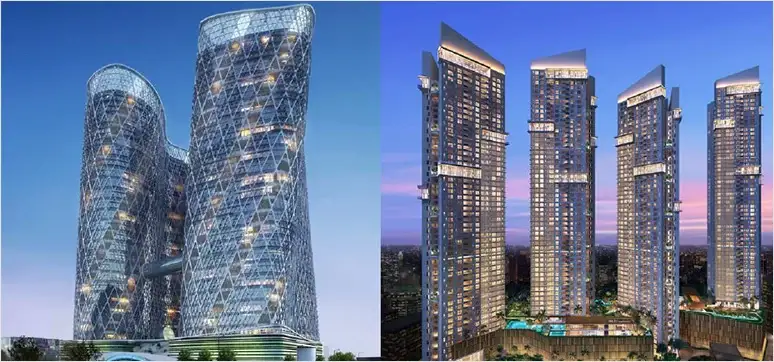
DSP Design Associates credits their goodwill to a healthy clientele, having designed over 200 million Sq ft spread across over 1000 projects. The crux of business success comes from a research-driven, highly scientific approach to projects, irrespective of the scale and scope of the project. Every project is assigned a well-thought-out, sui generis treatment in terms of strategy, vendor recruitment, execution and quality control. In addition to commercial and residential real estate, the organisation also services verticals like hospitality and industrial architecture.
DSP Design commands expertise across Master Planning, Building Design Services and Interior Design with a global rank of #66th among the biggest 100 architectural practices worldwide by WA100, with an encouraging appraisal for 3 consecutive years.
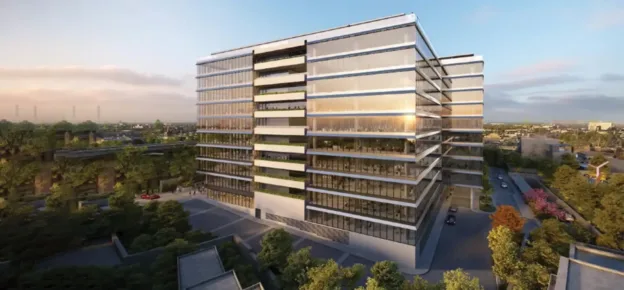
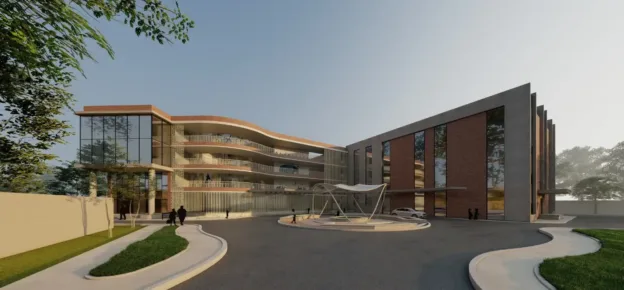
DSP Design is currently a finalist at the World Architecture Festival Awards, 2017, scheduled for November 2017, for a recently designed concept for an IT Park at Bengaluru.
From Public architecture and buildings to Master Planning, to conceiving commercial and residential buildings, and thereby executing projects to meet international standards, DSP Design has served brands like Lodha Group, Piramal Realty, Omkar Developers, Sheth Creators, Kalpataru Developers, TATA Housing, L&T Realty, Wadhwa Group, and Mantri Realty, among others.
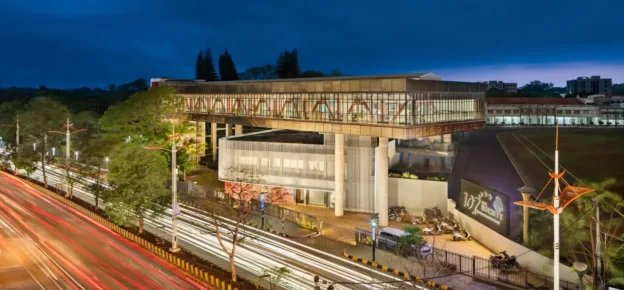
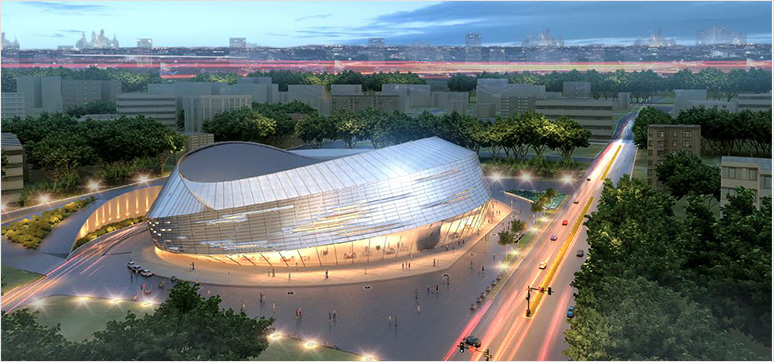
The organisation has also undertaken extensive work within the public domain, with Transstadia, Ahmedabad, being one of the most recent landmark projects.
WFM: How would you describe your design approach?
Yatin: At DSP Design, we have never believed in a “one size fits all” solution. Instead, we believe that by understanding our clients and their particular needs, we create inspiring spaces that are bespoke to each client. What sets us apart is the fact that we work with our clients to understand their vision and requirements and help them develop their design brief to optimise real estate value and increase the utility of the space without compromising on design.
Each time we take on a new project, we spend a considerable amount of time in the initial stages working with the client to develop and add to their design brief. The client brief is not a static document for us, but rather a dynamic piece of documentation that evolves during the initial stages. We conduct our own research and analysis to optimise their design requirements, and with our experience, research and the prevailing regulatory norms, we arrive at an efficient design strategy, which eventually makes it distinct with every project/client.
With rising real estate costs, efficiency of space has become imperative, and we ensure that all our design solutions respond to this. Our research and experience in global architectural trends and designs, along with our analytical approach, help us in optimizing design solutions. Using an approach that integrates the research of new trends, strategies and design, we have repeatedly delivered transformative solutions that use space more productively, enhance organisational performance and allow people to connect with one another.
WFM: According to you, what is a green design & what is a sustainable building?
Yatin: Green and ‘sustainable’ are terms that cannot be used interchangeably. While green is a relatively simple concept with major sensitivity towards the impact on the environment and its inhabitants, sustainable buildings are a derivation of thoughtful application of processes with multiple consideration factors over the building life-cycle of the project.
A green design may be one that is conceptualised to reduce the project’s environmental footprint, while a sustainable building is planned by not only evaluating the environmental factors, but also considering its social and financial implications over time. A sustainable building is, to a great extent, future-oriented 3-pronged applications from planning to design, construction, operation, maintenance, renovation and demolition.
WFM: What are the greatest challenges when it comes to designing for environmental sustainability?
Yatin: The alarming rate of global warming has changed the way the architecture and construction industries operate – a building design needs to factor in this change.
With LEED Certifications, innovations in green materials, resource-efficient products, at the same time, uncompromised building design and functionality, the increasing costs of green and sustainable products and the dynamics of the building regulation norms, have all been key in affecting the transition from the traditional building design towards green and sustainable structures.
Achieving a balanced output with an unparalleled design makes it a challenging exercise.
WFM: What is the role played by the building façade in achieving sustainability?
Yatin: ‘Intelligent Facades’ is a popular jargon when it comes to facades and sustainability. The building facades have a major impact on the primary energy consumption of the building with extensive implications for climate regulation, daylight levels and the building’s overall carbon intensity.
Facades, being an integral partition between the inside and the outside, are capable of creating self-regulating thermal protection, which makes them a largely considered and accepted material to empower the use of renewable energy and achieve sustainability.
There is scope for customisation and scalability, depending upon the level of energy usage estimations, and it can be a major influencing factor towards the structural design, which is typically decided at the initial stages of the design.
WFM: What are the key factors to consider while designing a sustainable facade of a building?
Yatin: The key factors are:
(a) Due-diligence in terms of the building energy consumption analysis
(b) Arriving at an optimum glazing ratio and an area perspective as a balancing act between the solar energy optimisation and the aesthetic intent within the design plan
(c) Shading analysis to achieve an optimum balance of energy and daylight
(d) Decisions on thebuilding material that directly impact the building’s performance
WFM: Talking about materials for facades, how do you choose them for your projects?
Yatin: The intended use of the project takes precedence. The design strategy involving façade for a residential project, as opposed to a commercial project, is invariably different. The design specification of the façade definitely leads to setting the norms for material procurement; however, this involves simulation in terms of determining how the façade responds to the context and the use of space.
The parameters considered towards the testing exercise typically include thermal properties of the material (u-value and SHGC, SF, SR) and the performance of the material with respect to various climatic conditions.
WFM: Please tell us about some of the innovative technologies and materials that you have adopted for building facades.
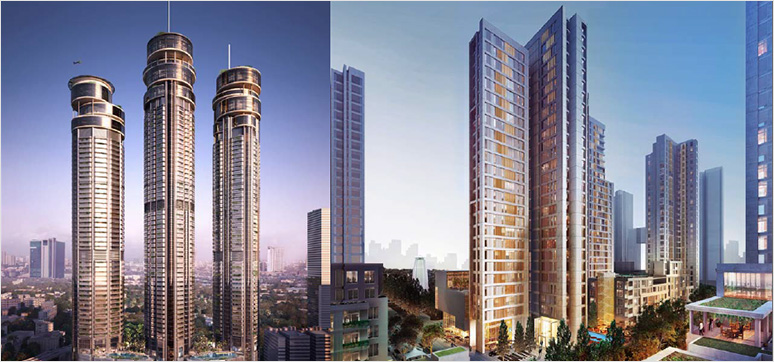
Yatin: Technological advancements in manufacturing green building materials have changed the way building skins are designed, with a positive shift in consumer acceptability from a value-for-money perspective. Integrated solar cells on facades, shading devices, cladding with recycled materials with thermal and insulation properties, and metal screens made of Copper/Zinc/Aluminium/Steel are some materials we use extensively.
Materials like UHPC (Ultra High Performing Concrete), Carbon Fibre, Corten Steel, high-pressure laminates (HPL), ETFE Membranes and Solid Surfaces have also served as intelligent choices given thorough due diligence before execution.
WFM: Brief on the important factors to take care of while designing and executing façade for a high-rise building?
Yatin: Analysis of wind pressure/ the projected loads on the facade, use of unbreakable materials, resilient and self-cleaning finishes, flammability factors, use of low combustibility materials, sturdy cavity barriers, materials used for insulation and inner lining, materials used for external wall cladding, use of leak proof material, creating glazing systems keeping in mind the acoustical comfort of the user, building façade maintenance system, psychological safety factors for the user, performance of the system with respect to adverse climatic conditions, life safety factors in case of damages, are a few factors we cautiously consider while designing and executing façade for a high-rise building.
WFM: Throw some light on quality control aspects (like the thermal insulation, acoustics, etc) to consider while designing and installing facades. Could you please explain this?
Yatin: Any material, be it thermal insulation towards environmental considerations, is procured based on the compliance specifications as laid down by the HVAC/STC consultants. We undertake strict quality checks at the time of designing as well as at the time of installation, also ensuring a quality audit before finalisation.
WFM: Please brief on some of the opportunities and challenges faced by your firm.
Yatin: Designing and executing the building skin has its own challenges based on the type of project, as sustainable façade designs demand a healthy initial investment. However, managing the design, with no compromise in the sustainability, life safety performance, and aesthetics, within the assigned budgets, is critical.
Residential architecture, especially in the case of high-rise developments, is relatively more challenging than commercial/public architecture.