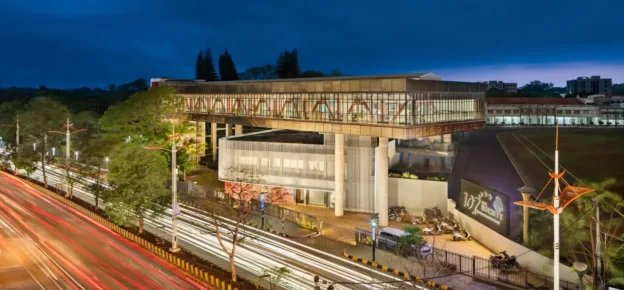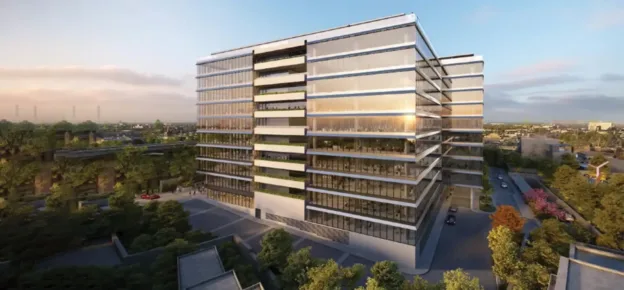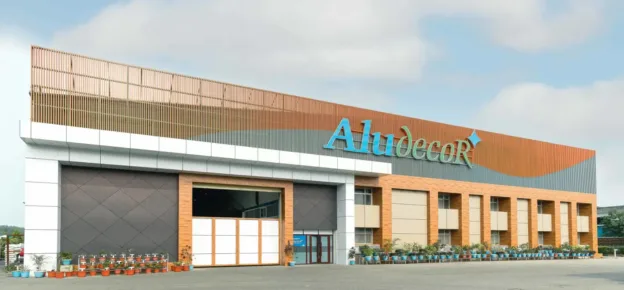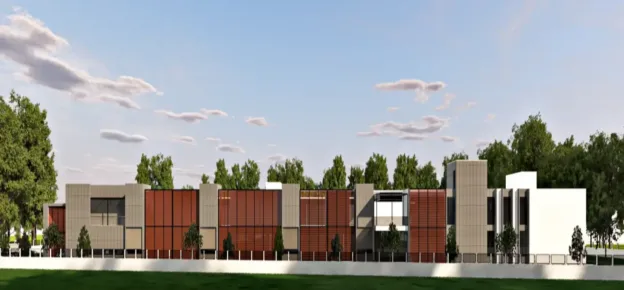
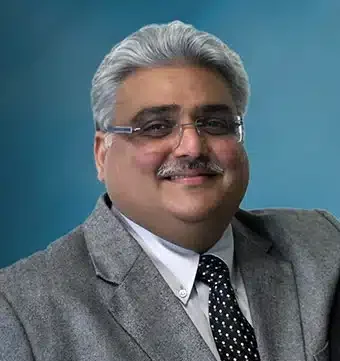
The history of the city of Delhi has seen it being built, ransacked and then rebuilt a number of times. The city boasts of being equally modern as it is ancient, with iconic modern landmarks dotting its landscape amidst the ancient historical ones. Looking at modern architectural landmarks, one name that can be associated with a large number of them, invariably, is Alkarma. Be it Vikas Minar at ITO or India Habitat Centre on Lodhi Road, the firm has manufactured and installed windows at these buildings and continues to be one of the most reputed façade manufacturers in this part of the country. WFM speaks to Sandeep Chowdhry, Managing Partner at Alkarma and Managing Director at Durable Windows(a sister concern of Alkarma ), a man of fine taste and impeccable discipline in whatever he undertakes, as he relates various anecdotes along his exciting journey at Alkarma. Following are the excerpts –
Please give a brief background of Alkarma and how you forayed into the façade and window industry.
SC: Alkarma was founded by my father-in-law in 1972 as a hardware manufacturing unit that made tower bolts and other small hardware for doors and windows, which were sold into the local markets – primarily Chawri Bazar in Old Delhi. We had been producing hardware for only about a year or so when we got our first order of aluminium windows for DDA’s Vikas Minar at ITO. At that time, it was probably one of the largest projects and a high-rise, as per the standards prevalent then, standing 16 storeys high. The total value of the project was around 5.5 Lakhs, which was a big sum at that time. That order changed the fate of Alkarma, and we decided not to go back into hardware manufacturing, which remained a short-lived story.
From then to now, how have Alkarma progressed?
SC: Right from the beginning, quality was the prime factor for our family, per se, which reflected through all the work we did. We started to be known in the market because of the values and quality that we offered to the customers. In 1982, we collaborated with VAW Bond, Germany and set up the electro chemical anodizing plant, for which they were our technology consultants. They gave us the license and rights to use their patented process, Metexol. That’s where the colour anodising came into being. We were probably the 1st in the country to start electro chemical anodizing process. Before that, people were doing anodizing but that was largely the now obsolete hot-dipped process, which led to colour variations.
I joined the business in 1986, and subsequently, we incorporated a lot of changes in the running of the firm. We bought new equipment and upgraded the manufacturing unit. We bought machinery from Elumatec in 1988. Here again, in the times when aluminium fabrication was largely done with the help of small indigenous equipment, on site, we were the 1st company to bring in sophisticated machines from Elumatec, Germany.
So, before that, you were also fabricating on-site?
SC: No-no! We never did. We have always fabricated in the factory, but we had very ordinary equipment. We had simple cutting machines that were available in India at that time. The automatic cutting lines as we see today were unheard of. I remember very clearly that when I joined, people used to make lock slots using a drill machine. There were templates that were drawn, and the holes were drilled around the periphery. And then the cut flap was taken out. The best fitter in our company used to drill 8 slots in a day. You see, it was a skilled act. 8 lock slots in an 8-hour shift; you can imagine what kind of production was happening at that time. So when we bought these copy routers, drain-slot machines, and other sophisticated equipment, it was a huge change for our company. It was like driving a Fiat car and then suddenly moving on to a Mercedes. In the same year, we changed our anodising plant, stepped up the volume, set up overhead conveyers and other things to enhance the production.
Weren’t you using powder-coated aluminium at that time?
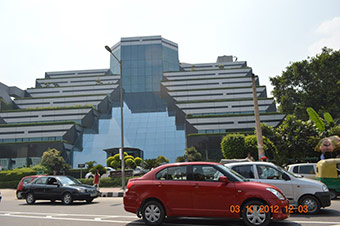
SC: Well, down the line, we started powder coating also, at the time when I think only 2-3 people in the whole country were doing powder coating. Our first project with powder-coated aluminium was the medical unit of the British High Commission, just behind the main building. It was designed by Mr Jasbeer Sawhney, who’s known for his penchant for colours. He always used to ask me, “Why do you always bring these bronzes and metallic tones? Why can’t you give me the reds and the greens?” I told him, sir, it’s not possible. Although I did know about powder coating at that time, it was a question of availability, investment, and we didn’t know if there would be a return. The projects seldom asked for coloured profiles. So it was his idea to use colour in that project. We had been working with him for a long time and knew each other quite well. It was actually him who tricked me into setting up the powder coating plant. For this project at the British High Commission, he called me, and we outlined the specifications for doors and windows together.
During the discussion, we settled on bronze anodised sections. However, a couple of days later, when I was called by Mr Ahuja of Tirath Ram Ahuja, who was the main contractor for the project, I got a shock of my life. The tender was out, and it said the aluminium profiles had to be in RAL 3003 – which was red. I was amazed, but then what could be done? I said ok, we’ll go ahead and put the powder coating plant. We roped in Thermax from Pune to set up the plant for us, and the total investment came out to be 20 lakhs, and the total value of the project was somewhere about 20-25L. I thought this was not fair. Mr Ahuja told me, “Don’t worry, set up the plant and we will work out”. So anyway, the question remained – what option did we have as a backup, as the time was too short and the project was already underway. Then, Thermax only suggested a coating facility in Pune. So we spoke to them and gave an undertaking to Mr Ahuja that in case our plant is not up within the stipulated time frame, we’ll get the coating done from theother plant in Pune. As it turned out, it was only the 1stpart of the hurdle.
2nd part was that the British demanded that the coated profile samples be sent to the UK for testing and approval, in case we were going to do the coating. So we, along with Thermax, worked around the clock, and the plant was up in less time than anticipated. We made a sample and gave to the British high commission authorities, who then sent it to the UK, and it got approved, that too in in 1st shot. And we completed the project. So that’s how the coating line started.
WFM: Which were the other projects that set you in the big league?
SC: From the project angle, there were 2 projects at that time, which were very big. One was the Scope Twin Towers in Laxmi Nagar, designed by Mr Vidur Bhardrwaj and the other big project was the India Habitat Centre, which was designed by Stein, Doshi and Bhalla. To get into those two projects was one of the major developments for us. Scope tower had somewhere about 22000 sq.mt. of curtain wall at that time, and IHC had 11000 sq. mt of windows.
By then, you already had all this automatic processing machinery?
SC: Throughout 1988-90, something or the other kept us on our toes. Machines came around the end of 1988, Scope Towers came in in 1989 and IHC in 1990. So, constantly something or the other was happening at once.
Scope Tower was not a problem and went through smoothly, as for that, we had a tie-up with Alico, Dubai, who were our back-end, and all technical support came through them. They, in turn, were in collaboration with Schueco there. So essentially, the FW50 system of Schueco is what has been installed at the Scope Towers.
The window system for IHC was totally designed by us. I think that’s where we really took off as an engineering company.
Can you go into a little detail about the IHC? It’s one of the most iconic projects in the heart ofDelhi!
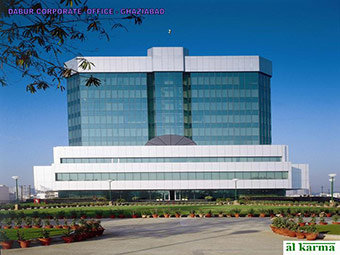
SC: Stein, Doshi and Bhalla, the architectural firm based out of New Delhi, were the architects for this iconic project. The way Mr Stein went about the project was very peculiar. They charted out the window requirements in the form of handmade sketches of the elevations, which were then sent to some of the leading fabricators in the country, asking to come up with solutions. Initially, we didn’t respond. I believed we were not equipped to answer those questions at that level. My father-in-law also was of the opinion that there is no point stressing on it as there was a lot of homework involved, and we were not even sure if we’d get the job. So for the time being, I agreed, but kept on thinking about it. Fortunately, after 3 months, another letter came saying “Thanks for all your inputs. Based on your inputs, we have reworked the drawings. Please see the same and give your solutions”.
The new set of drawings was actually a mix of all the sections that the other fabricators might have proposed. I thought of seizing the opportunity then and took the help of my mother-in-law, who helped me on design and detailing. Then I got the designs analysed by one of the acquaintances who was practising structural engineering. He gave me a complete report, which I took to Mr Stein along with our recommendation and told him that whatever you are thinking, will not work. Mr Stein was obviously not so happy about it. He got those reports counterchecked by another practising authority and reconfirmed what I had said. Later, I got a call from him asking me to come over and saying, “Let’s talk”
Then we designed the entire project along with the architects. So our drawings became the concept drawings for the project. That’s how the IHC happened.
How did this association with Vatika materialise?
SC: First project that we did for Vatika was the First India Place in Gurgaon, TCG Development were the consultant for the project. There was an open tender which we bid for along with the other competitors and won. We got to know Vatika from there.
Now you seem inseparable. Whatever projects Vatika comes up with are invariably done by your firm ( Alkarma).
SC: Things are changing now. Vatika, as a company, is growing, and there is a lot of work that’s happening in Vatika. It’s practically impossible for one fabricator to do all of it. But yes, we are doing the major chunk of it, that’s alright, and the association has been pretty much good. Since we were their chosen fabricators, we are involved in the projects right from the design stage. So whatever designs are being made, they are made considering the profile system that’s going to be used. Whatever is specific that has to be designed for a particular project, we create it. And Vatika has been very fair in this respect. Never, not once, has it happened that we have given drawings for a project and it has been awarded to someone else. In a way, it works well. If everything is in place from the beginning, when you actually get to the job, there is no confusions
Back then in the 80s, you were the lone player, I suppose?
SC: CEC was doing quite a few jobs at that time. The first curtain wall job in Delhi was done by Mr Rajeev Shamlal from CEC. Mr Deepak Gupta was the façade consultant and the key person for the project who did the engineering part of it. At that time, the CEC was doing a couple of projects in Mumbai also. That was the same time when we got the Scope Twin Towers. So yes, largely it was they and us who were doing most of the projects in this part of the world.
Have you done any projects outside Delhi as well?
SC: Although I was never keen, we at Alkarma have done a lot of work outside Delhi. We have done work in Bhubaneswar – for Infosys, in Pune, we did the Tata Research Institute. The Ashok Leyland Building in Chennai was done by us. In Bangalore, we also did a couple of projects. We did a project in Shillong. Hyatt Kolkata was also done by us. We even went to the Maldives, where we supplied and installed windows for Indira Gandhi Hospital, right at the edge of the sea. Designed by Jasbeer Sawhney again, the windows had a very peculiar design and performance requirement.
We at Alkarma did a lot of work here and there. Then, finally decided to concentrate only on Delhi NCR as there was no dearth of projects here and going out and doing projects with high overhead didn’t appeal to us. Moreover, everywhere we have able people – Bangalore we have Pankaj (Alufit), Bombay we have Navin (Aluplex). It was best that I do my part in my part of the world, and they do theirs in their part of the world.
All your systems are designed in-house?
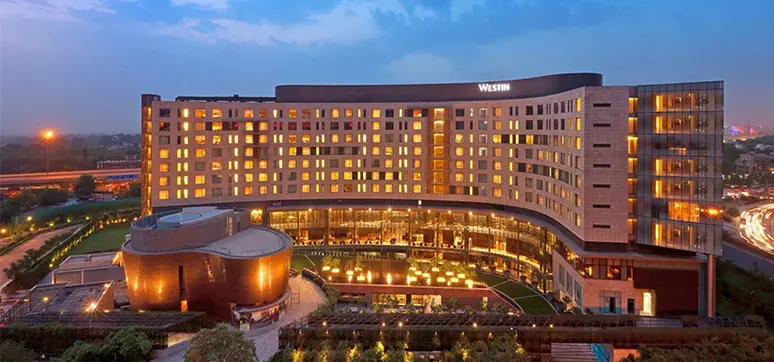
SC: We at Alkarma have a technical collaboration with a company from New Zealand called Thermosash. We get all the unitised structural glazing systems designed from there. The first unitised project we did was the Dabur corporate office in Sahibabad in 1996. At that time, we did 4-5 projects simultaneously in unitised glazing – Capital Court in Munirka, then the Building for Great Eastern Shipping Company in Nehru Place. Sheraton in Saket, back then it was called Marriott. The beauty was that all those 5-6 projects had different systems.
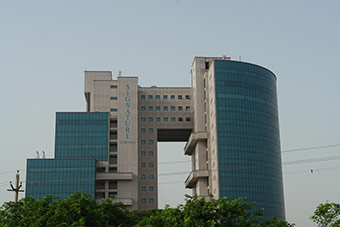
Thereafter, we did Signature Tower in Gurgaon. It is a high-end rain screen pressure equalised system. A similar system was used for the global business park as well. Thus, we kept on developing new systems, new technologies, and all of them worked. We got them tested abroad for leakages and stability, and fortunately, none of the projects that we have done has ever complained of any façade failure.
Is there a demarcation in windows and curtain wall jobs in your company, or all done at the same facility?
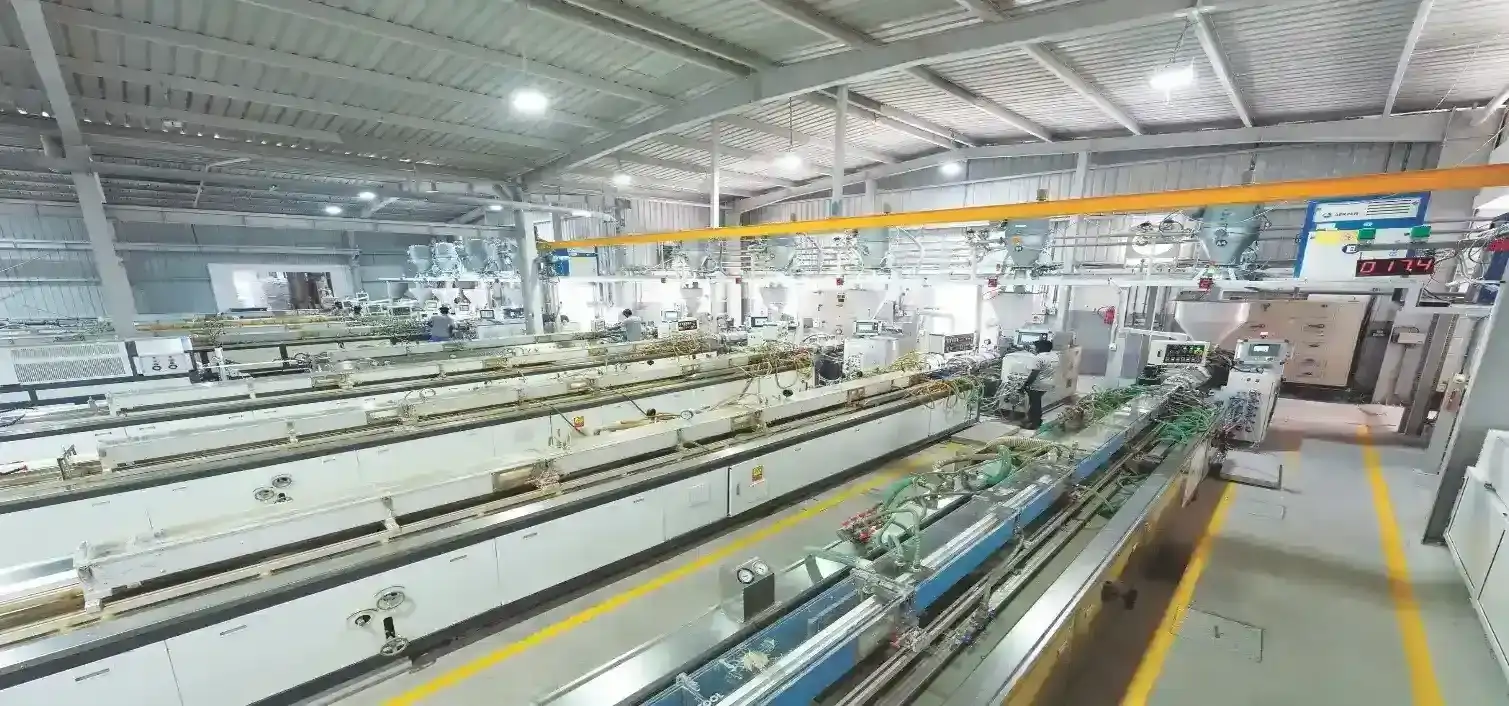
SC: About 6 years ago, we set up a factory in Bhiwadi by the name of Durable Doors and Windows for uPVC window manufacturing. We did a project in Jaipur for Vatika in uPVC. As time went by, Vatika wasn’t very keen on uPVC. And we also felt that aluminium is our forte, and we should abide by that. So we stopped the uPVC production, and only aluminium windows are being fabricated at Durable Windows as of now. But soon we may start uPVC window fabrication again. So essentially, we have two divisions – Alkarma, where curtain walls, structural glazing and skylights are fabricated, and in Durable we manufacture doors and windows. These are 2 completely different setups with different teams working totally independently of each other.
In times where most aluminium fabricators don’t want to manufacture windows and are happy executing façade projects, what made you stick to windows as well as the façades?
SC: You are right. In fact, along the way, I also realised that none of our good friends from the industry were doing the windows. For a simple reason that what you get after producing a window is far less than what you get for a curtain wall job of similar area. Curtain wall production is fairly straightforward and more or less automated, while manufacturing windows is the real deal with so many components and numerous steps involved. I don’t think my friends did anything wrong when they decided to stick to façade manufacturing.
All said and done, I had a theory and decided that I would not lose out on either of the businesses. The residential demand has been high of late. We have done a number of projects where only windows were required, many where the requirement was strictly curtain wall and many more where the combination of both was required. 25 to 30% of our turnover is from the window business.
What are the projects that you are currently working on?
SC: We are doing sizeable work for Vatika along the NH8 in sector 82-83. They are all residential buildings ranging from ground plus 2 stories to ground plus 24. We are doing Victory Valley for Ireo, which is the 1st 50 storey building in Gurgaon. These are the projects from the window front. In façades, we are doing GYS Vision, another project called City Centre for Vatika on NH 8, Mindscape in Faridabad, which is again a Vatika project. The architect for the project is Sohrab Dalal, in association with another architect in Singapore. Besides, we are building a hotel for the bird group in Aerocity. These are all decent-sized projects, which will keep us occupied for the next 14 to 18 months.
How’s the lookout for you, and what’s your vision for the next five years?
SC: Markets are witnessing a paradigm shift these days. The architecture has improved a lot, and demands have gone up. There are a lot of foreign consultants coming in, a lot of foreign architects who are designing Indian buildings. So obviously there is a lot of pressure in terms of performance, designs and delivery. A lot of façade manufacturing companies from abroad are taking up the jobs. And people in our own industry have also risen. All this has raised the bar for the industry as a whole, and we are trying to match the international standards. We are also in the game and have the capacity and calibre to match that and even surpass.
Talking about the next five years, there is going to be growth. We would look at doing far more than what we are doing right now. Looking at the quantum of window jobs we are doing right now, I think that there is a big case for having a much larger facility for windows. Because whatever the industry trend might be, I will still continue to manufacture windows.
The vision is very clear – we want to be very organised as a company and bring in the right system. We are already working on the ISO. On the curtainwall front, we are keen on taking up more jobs. We at Alkarma have the capacity, but we are not utilising it fully. The focus shall be on good quality and happy customers who would want to come back to us time and again.