
Post Date: May 6, 2026 |
Last Edited: May 6, 2026
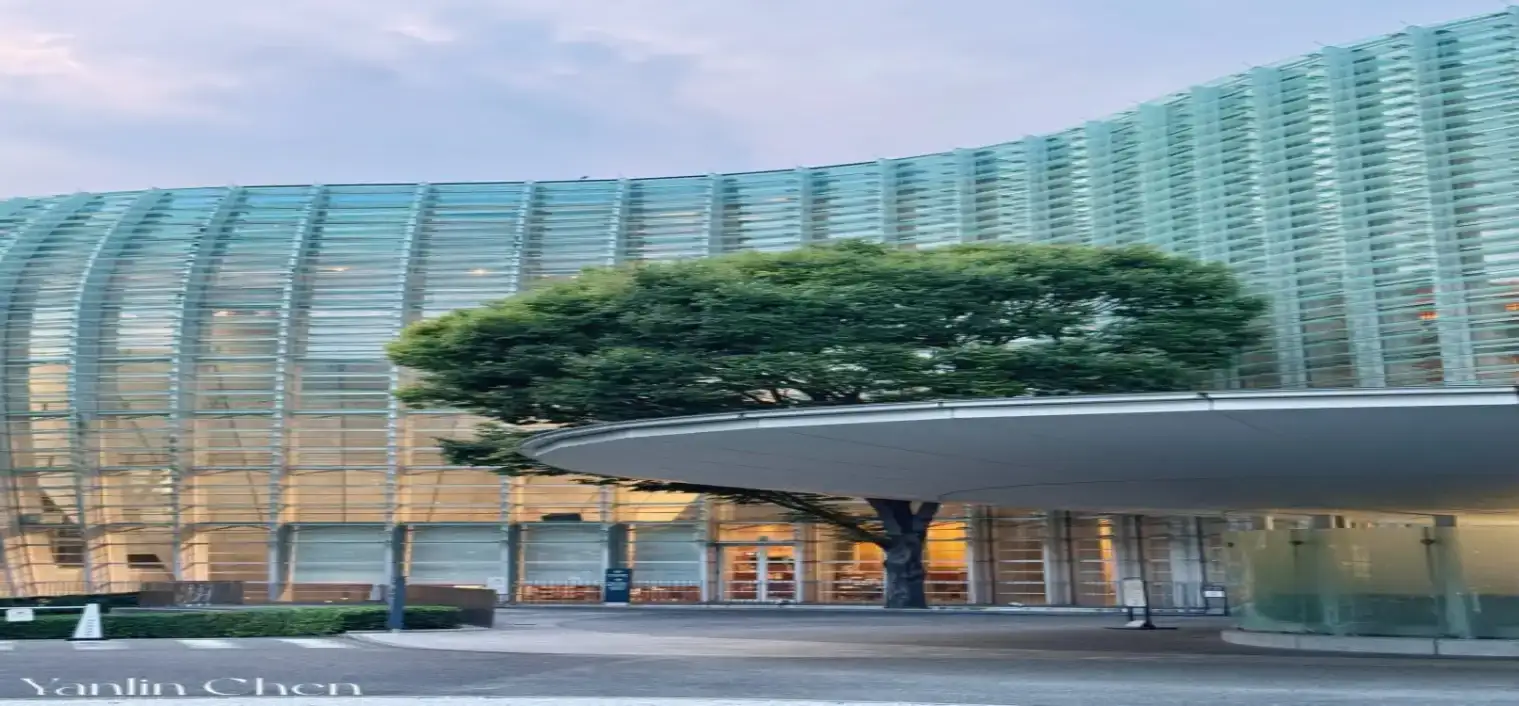
Walking through the bustling streets of Roppongi, where neon lights and high-rise towers set a relentless urban rhythm, I found myself pausing before one building. It does not announce itself with grand signage, nor does it overwhelm visitors with monumental mass. Instead, through the careful orchestration of light, spatial layering, and deliberate moments of emptiness, it engages the city in a subtle, almost conversational dialogue. This is Kisho Kurokawa’s National Art Center, Tokyo (NACT). It is a journey through architecture, light, and urban context, inviting reflection on the meaning of public space.
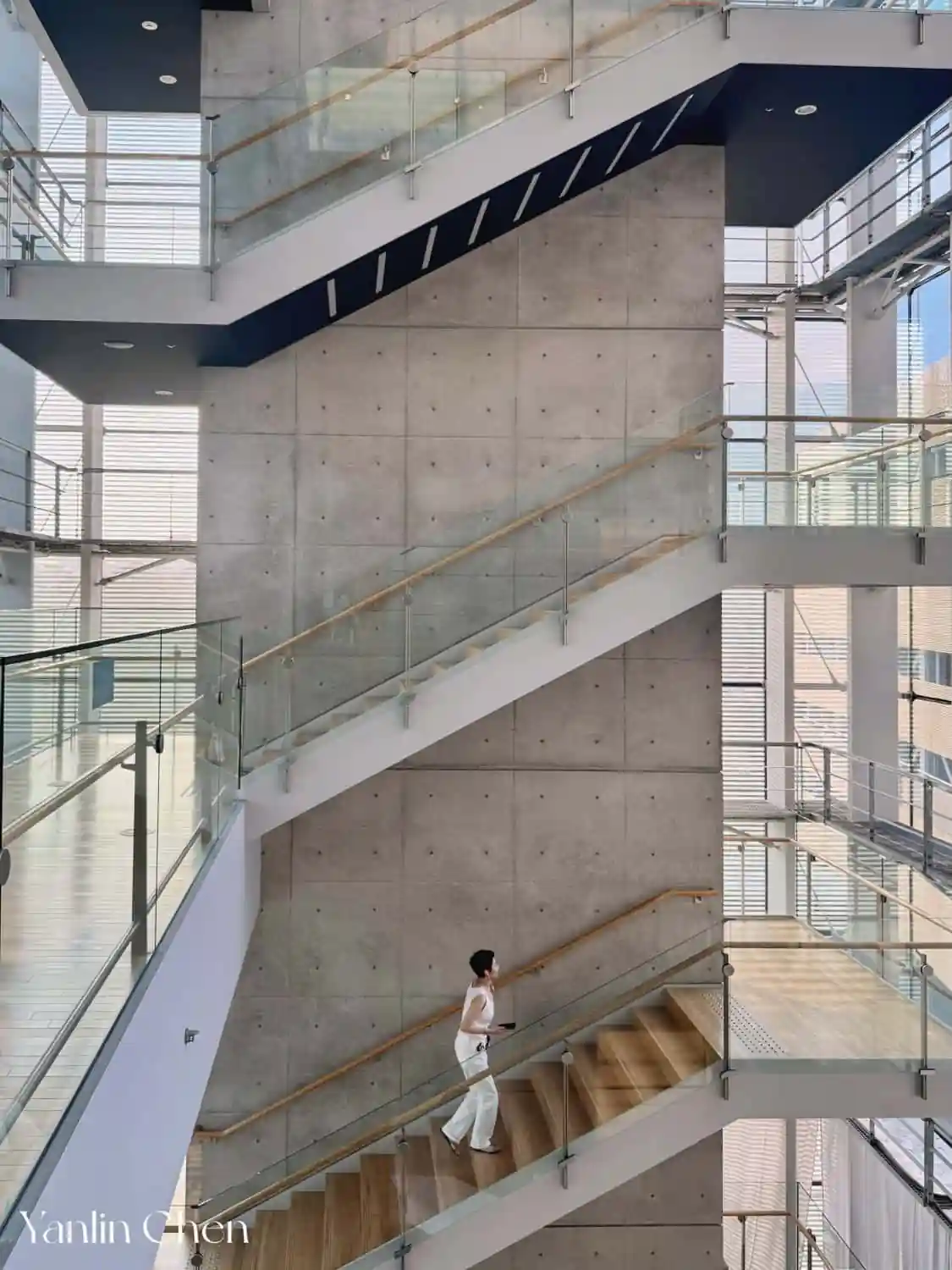
Kisho Kurokawa: From Metabolism To Symbiotic Architecture
Kisho Kurokawa resists simple categorization in postwar Japanese architectural history. Early in his career, he was among the most ambitious voices of the Metabolist movement, envisioning cities as living, evolving organisms. Later, his focus shifted from urban expansion to “symbiosis,” emphasizing the softening of boundaries between architecture, nature, and people. Completed in 2007, the National Art Center, Tokyo (NACT) embodies his late-career philosophy: there are no permanent collections, no fixed narratives, only the architecture itself, offering possibilities rather than answers. Walking toward its undulating glass facade along Roppongi, I realised this is not a museum that demands attention; it is a building that “steps aside,” allowing the city and its visitors to occupy the spotlight.
Urban Context: Roppongi’s Density And A Gentle Retreat
Roppongi is dense with urban activity: art institutions, commercial complexes, and office towers layered atop one another. Yet the National Art Center chooses to step back, using a two-hundred-meter-long curved glass façade to allow the city to speak first. This façade is not about attracting attention but providing a buffer. Standing at the street edge, I felt the building redefine “publicness” in a very Kurokawa way: not by adding more functions, but by offering moments of pause. Paradoxically, it is this quiet generosity that makes it so striking in the rapid pace of Tokyo.
Spatial Experience: Light, Glass, And A Blank Collective Space
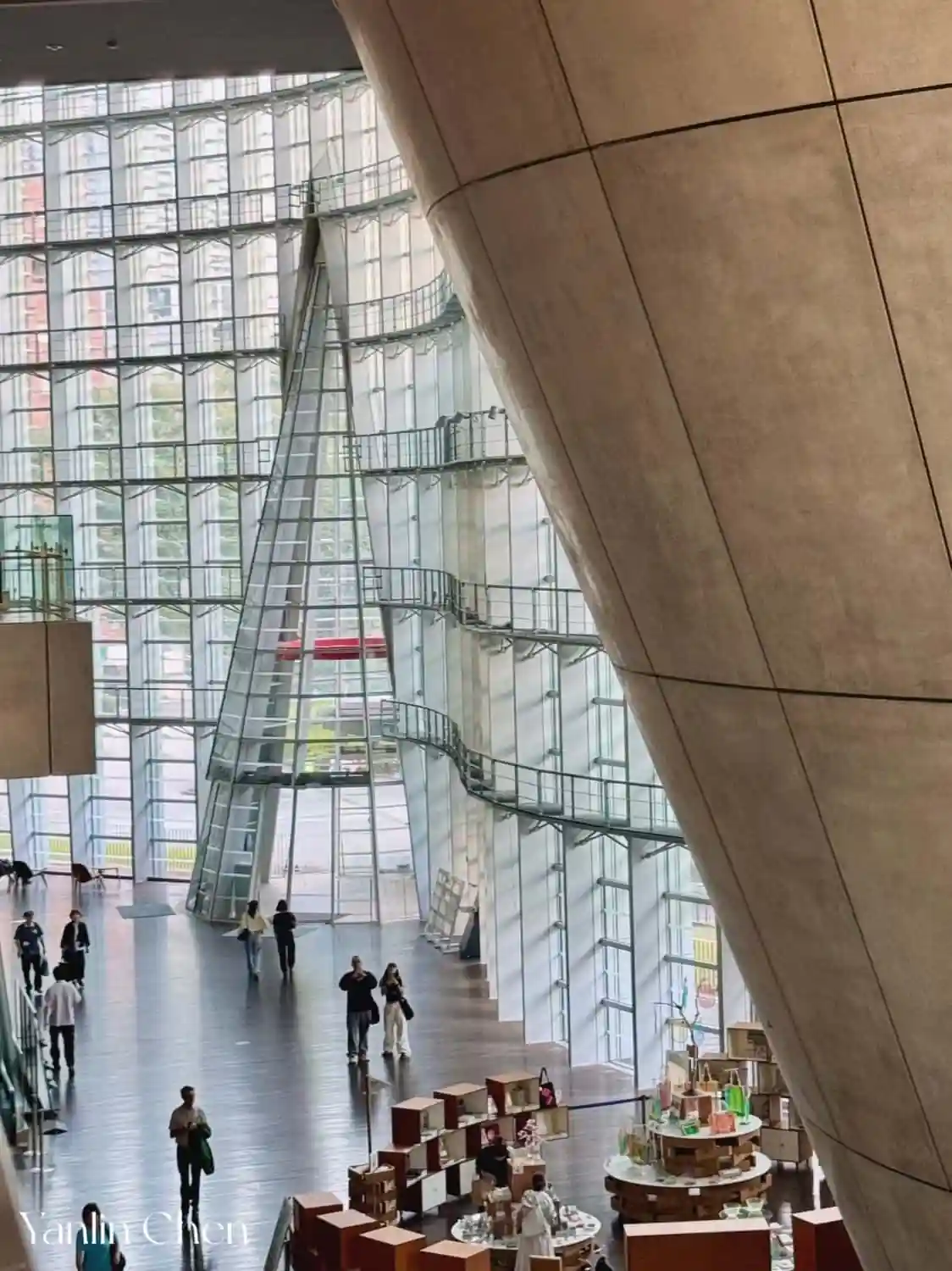
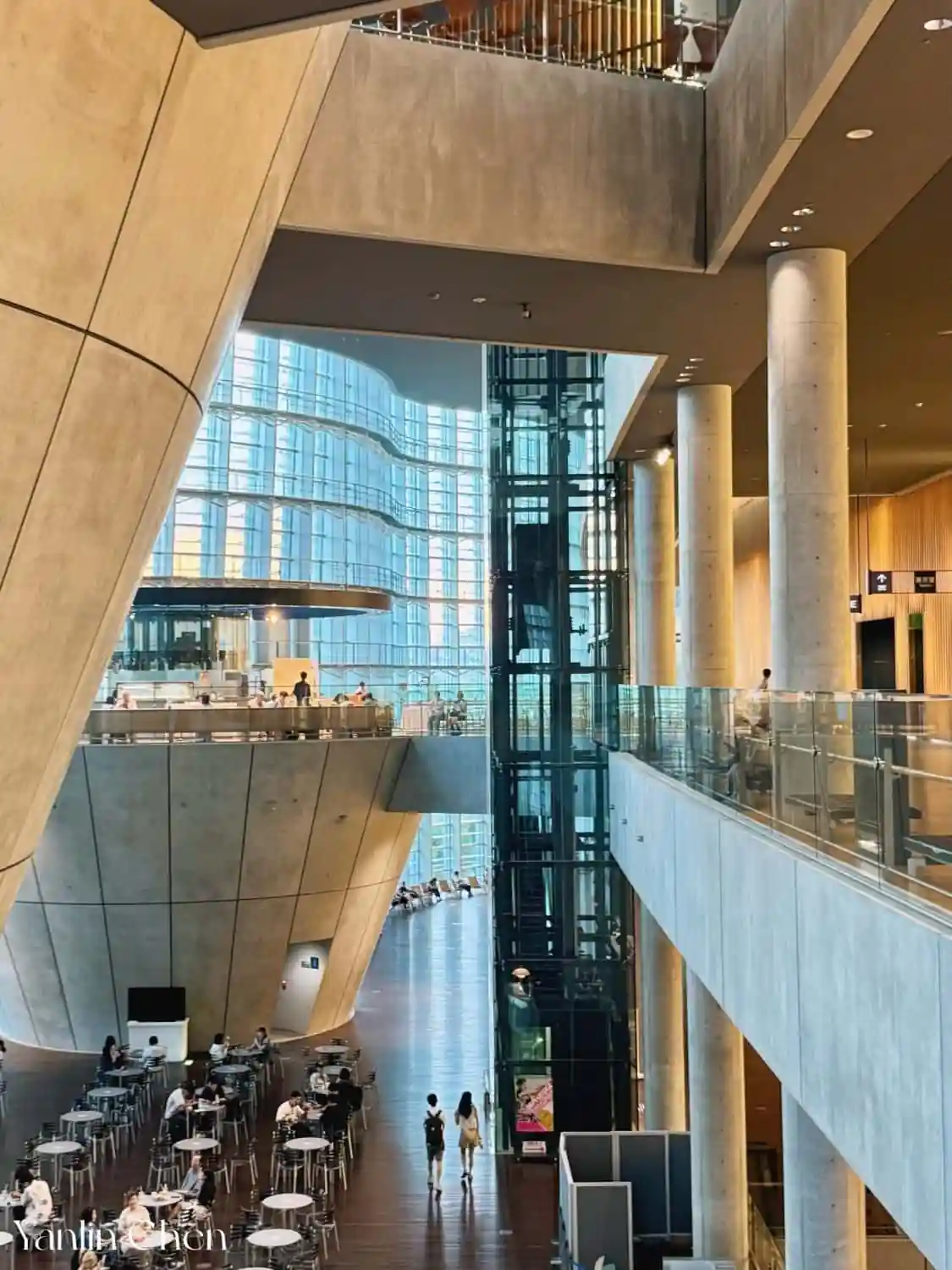
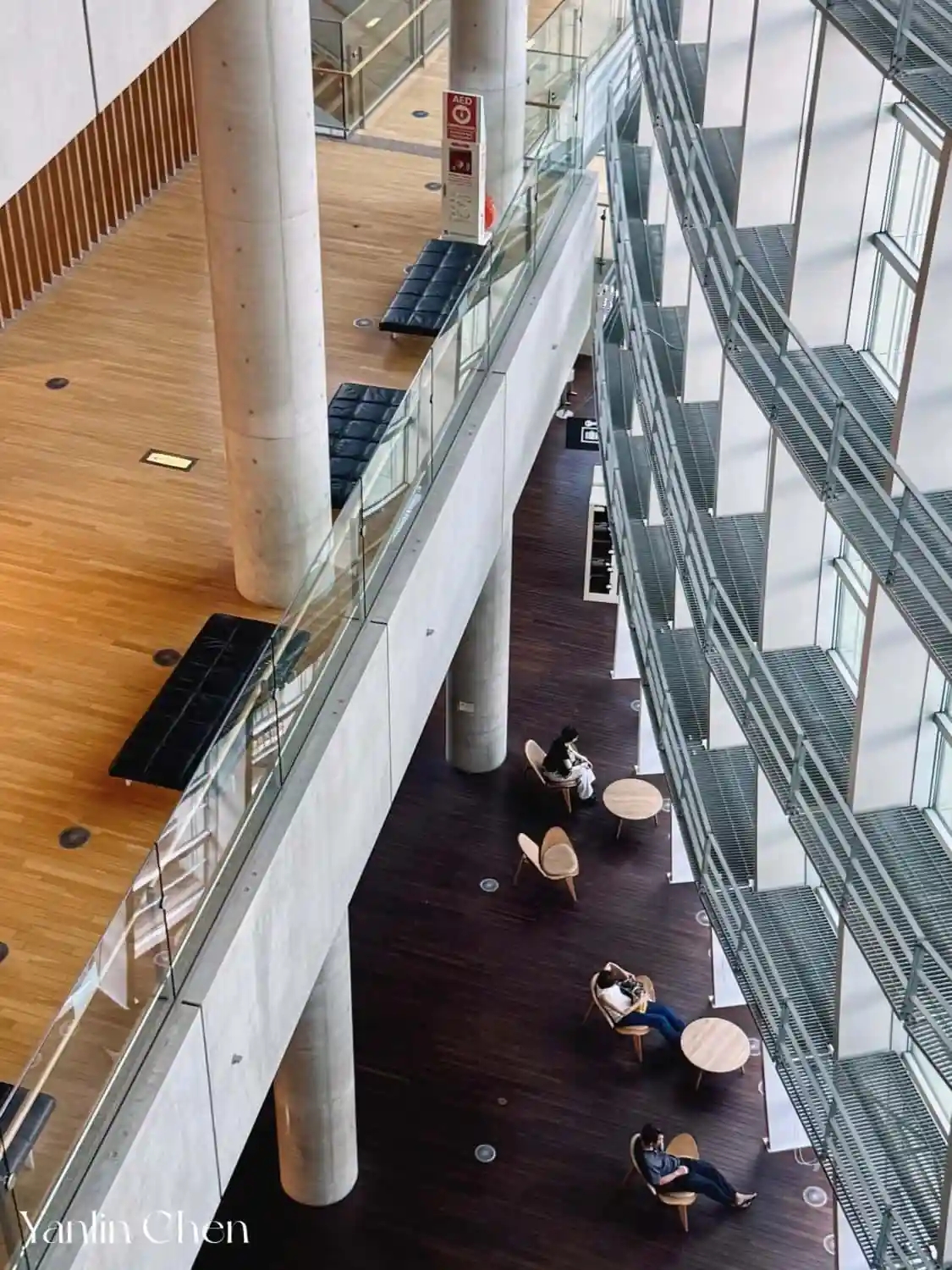
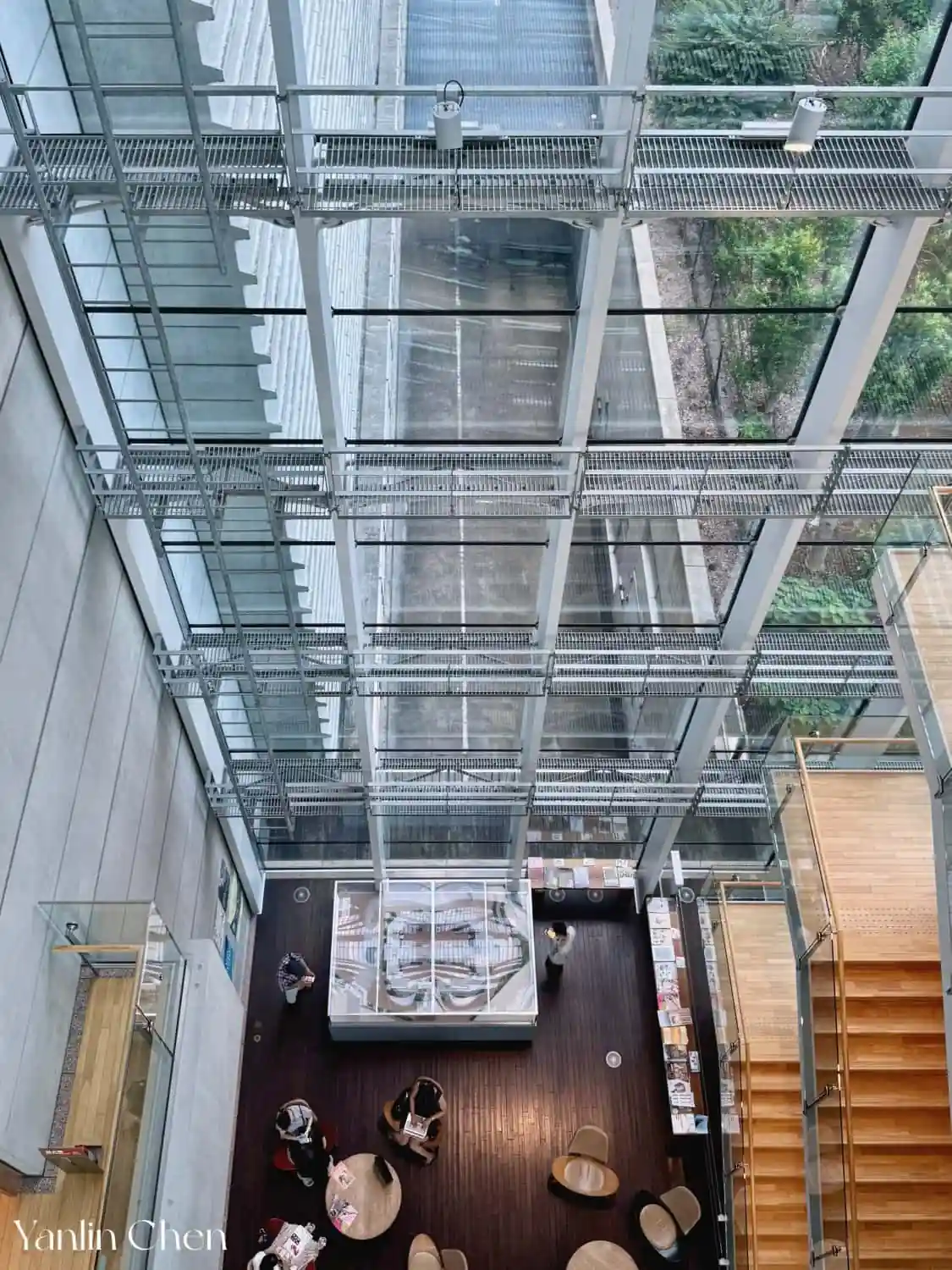
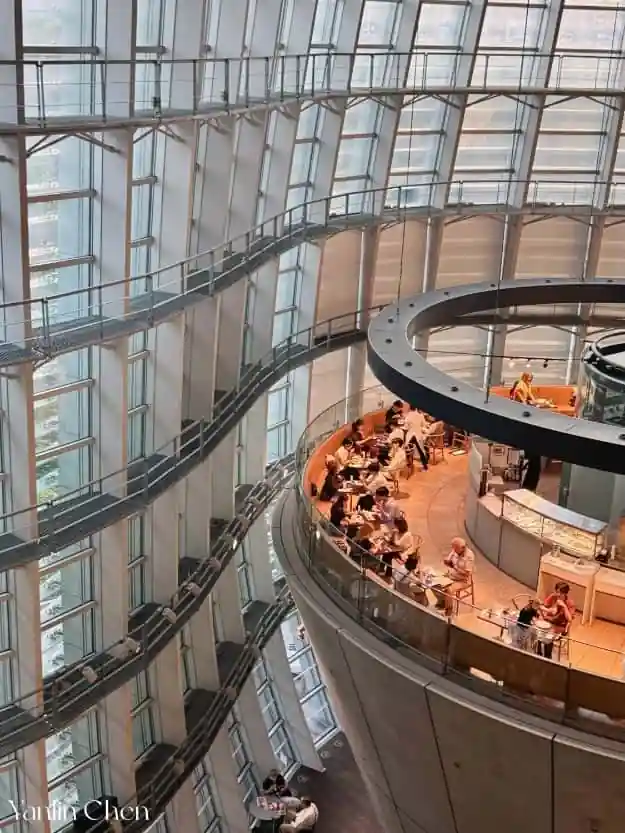
Inside the museum, the main hall stretches up to 21 meters. Two inverted concrete cones anchor the space in light. A smaller one housing a café, a larger one a restaurant, without imposing the heavy solemnity often associated with traditional museums. Walking along the curved glass, I noticed how the light here differs completely from the experience at Kioicho Seido: there, the light is inward and contemplative, here, it flows outward, constantly shifting. The space functions more like an intermediary between the city and its visitors than a closed container. One can move freely, pause, and let the architecture gently guide circulation rather than dictate it.
Structure And Material: Balancing “Light” And “Heavy”
Over six hundred slender steel columns support the undulating glass curtain wall, revealing the structure with clarity while preserving a sense of softness and elegance. The material palette is restrained yet deliberate: exposed concrete conveys solidity, transparent glass allows the city to flow in, and warm wooden surfaces bring a human scale and tactility. Kurokawa’s handling of materials is purposeful, not to impose the traditional “solemnity” of a museum, but to soften boundaries, allowing the external environment to permeate the interior. This strategy recurs throughout his later works, prompting reflection on whether architecture can achieve publicness not by explicit statements but through the careful orchestration of shared space.
No permanent collection: Choosing to stay “Empty”
Perhaps NACT’s most provocative and conceptually daring feature is its lack of a permanent collection. Every gallery is temporary, short-term, and interchangeable. To me, this presents both liberation and risk. The freedom lies in the fact that no single narrative ever dominates the space, offering visitors an “open beginning” with each visit. The risk, however, is that the architecture itself may overshadow the exhibitions, and the institution’s cultural identity could become less defined. As I walked through the expansive galleries, I found myself reflecting: can a museum without fixed content allow the architecture itself to become the most enduring exhibit?
Critical Reflection: A “Third Stance” In A Fast-Paced City
Roppongi moves at a relentless pace, yet the National Art Center deliberately slows it down, rendering the space more transparent, calm, and contemplative. The building neither asserts itself with volume nor relies on drama or monumentality. Instead, it embodies an “active retreat,” a hallmark of Kurokawa’s late-career philosophy.
Experiencing it as an architectural traveller, I found the impression both nuanced and uplifting: it neither dictates how one should navigate the space, as traditional museums often do, nor does it densely fill the urban fabric like commercial streets. It occupies an intermediary role, a buffer within the city. In a metropolis governed by efficiency, density, and narrative clarity, this ambiguous, light, and intentionally open architecture prompted me to reconsider the value of public space. Perhaps architecture does not always “express” itself; sometimes, allowing the city and its inhabitants to slow down is the most profound expression of all.