
Post Date: May 20, 2026 |
Last Edited: July 29, 2026
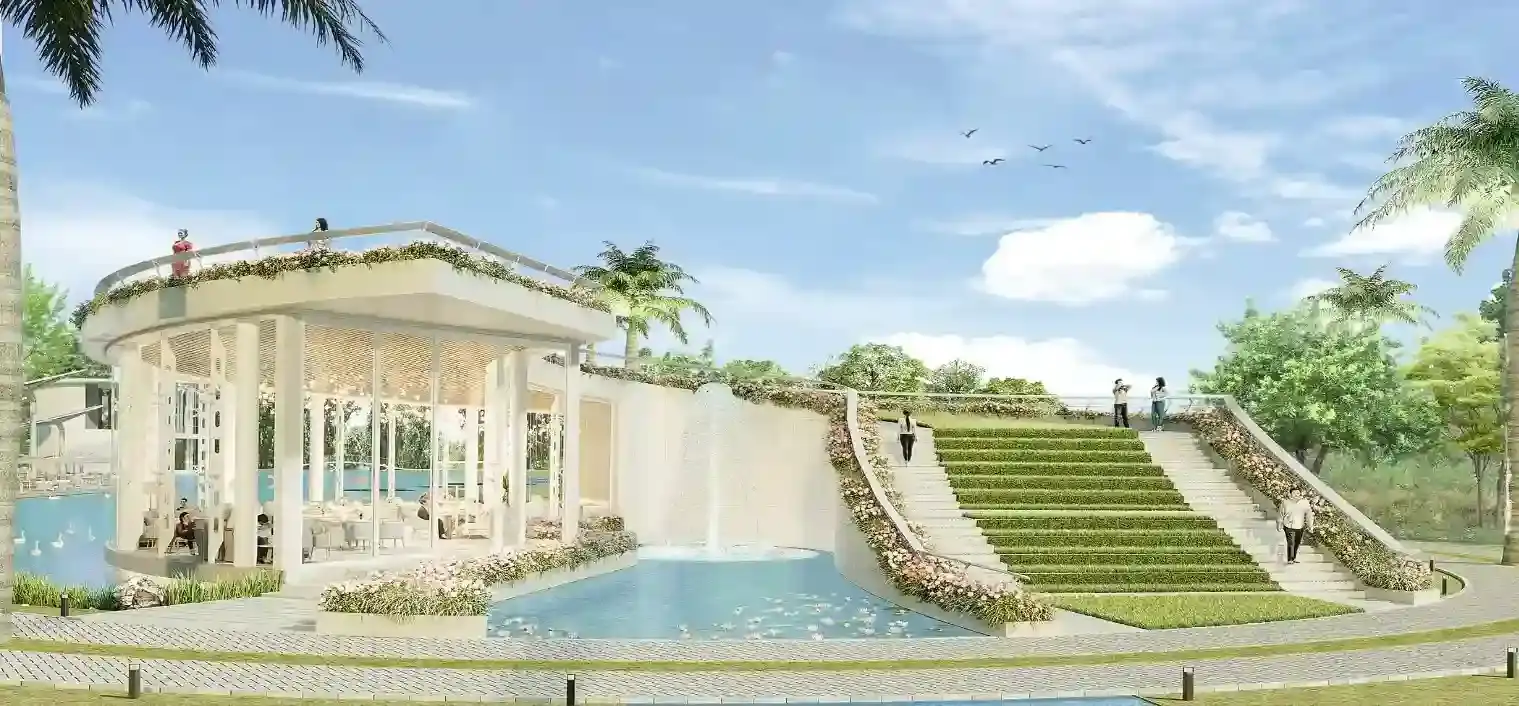
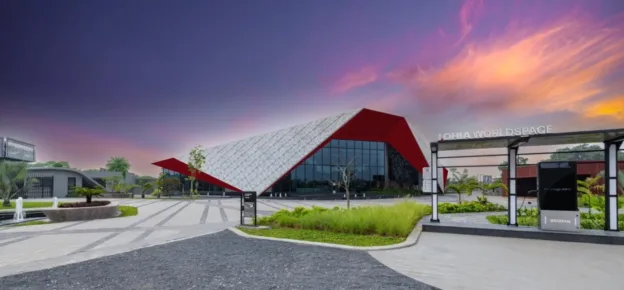
Located in Vashi within a large mixed-use township, Raheja District Park is a lakeside hospitality development by Raheja Universal, designed by Bobby Mukherrji Architects. The project comprises a series of lake-edge restaurants and pavilions where facade design, glazing technologies, and environmental responsiveness shape the architectural identity. Transparent building envelopes form the core design strategy, creating strong visual connections between interior dining spaces and the central waterbody while responding to Mumbai’s humid coastal climate.
Large-format glazed façades frame views of the lake and surrounding landscape and allow abundant natural daylight to enter the interiors. Four restaurants positioned along the lake edge employ distinct glazing systems tailored to their architectural forms while maintaining a unified language of transparency and slender structural expression.
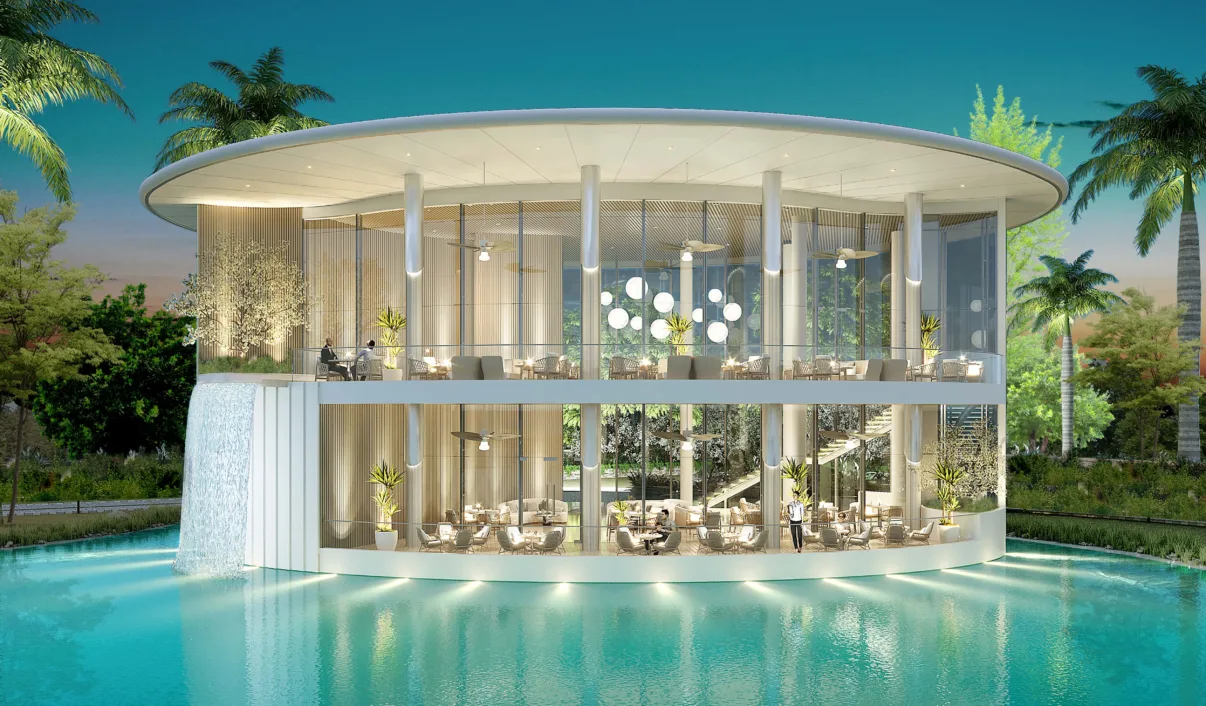
Restaurant 01 features a stick or mullion curtain wall system reinforced with vertical metal fins that provide structural support and introduce rhythmic articulation to the façade. Restaurant 02 adopts a point-fixed glass system with metal fins and loop fittings, creating a lighter, more minimal glazed surface while ensuring structural stability. Restaurant 03 incorporates a spider glazing system with glass fins, resulting in a highly transparent façade with minimal visual obstruction and uninterrupted views of the waterbody. Restaurant 04 returns to a stick or mullion curtain wall system to maintain structural efficiency and design continuity.
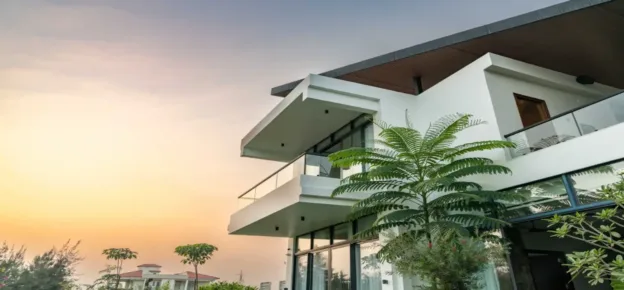
Across all buildings, the glazing integrates high-performance insulated glass units and low-E coated glass to improve thermal insulation, reduce solar heat gain, and enhance acoustic comfort. Fenestration design is closely aligned with passive climate strategies, with large glazed surfaces complemented by pergolas, deep roof overhangs, recessed openings, and deck projections that reduce glare and direct solar exposure while preserving outward views.
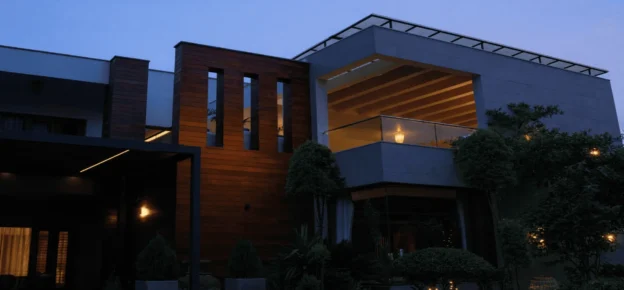
Material selection further strengthens façade performance and durability. Natural stone cladding forms a robust base suited to monsoon conditions, while structural steel framing allows slender profiles and larger spans that support expansive glazing. Aluminium louvres add shading, ventilation, and depth to the façade composition, while glulam timber pergolas soften the glass-dominant elevations and create shaded transitional spaces at terraces and entrances. Stainless steel and aluminium cladding protect exposed structural elements in the coastal environment.
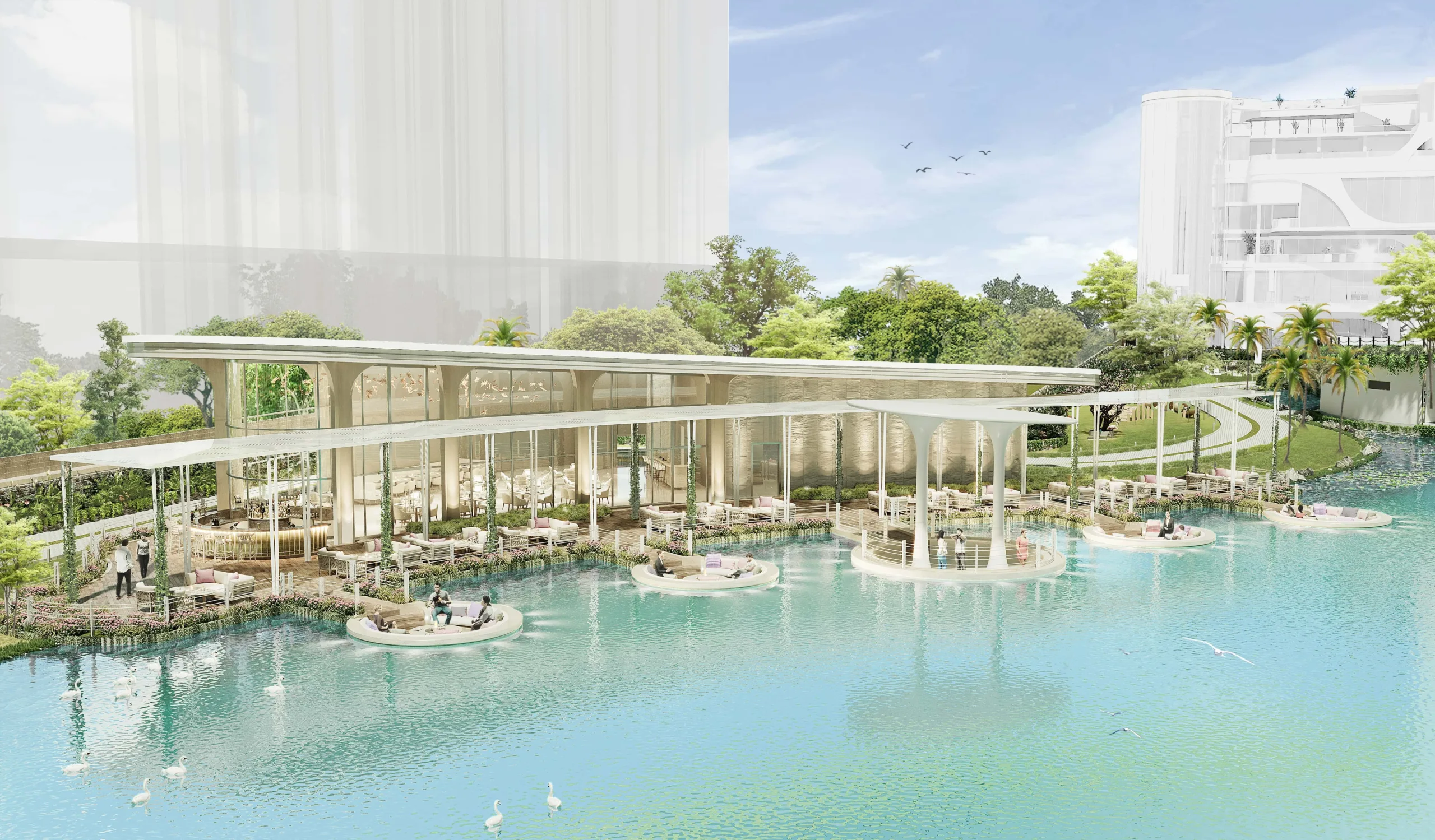
The project also incorporates photovoltaic solar panels integrated into sculptural installations across the park, generating renewable energy while contributing to the visual character of the site. Through the integration of advanced glazing systems, climate-responsive fenestration, and durable materials, Raheja District Park demonstrates how contemporary façade design can enhance environmental performance while creating a distinctive lakeside architectural experience.
Quick Facts:
|