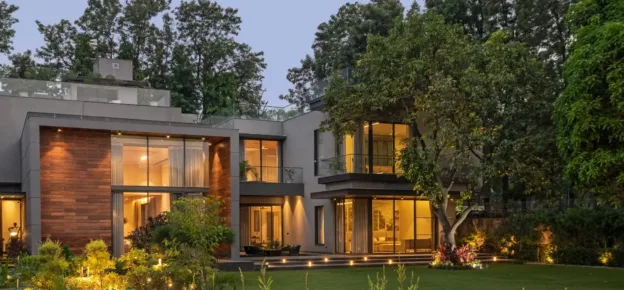
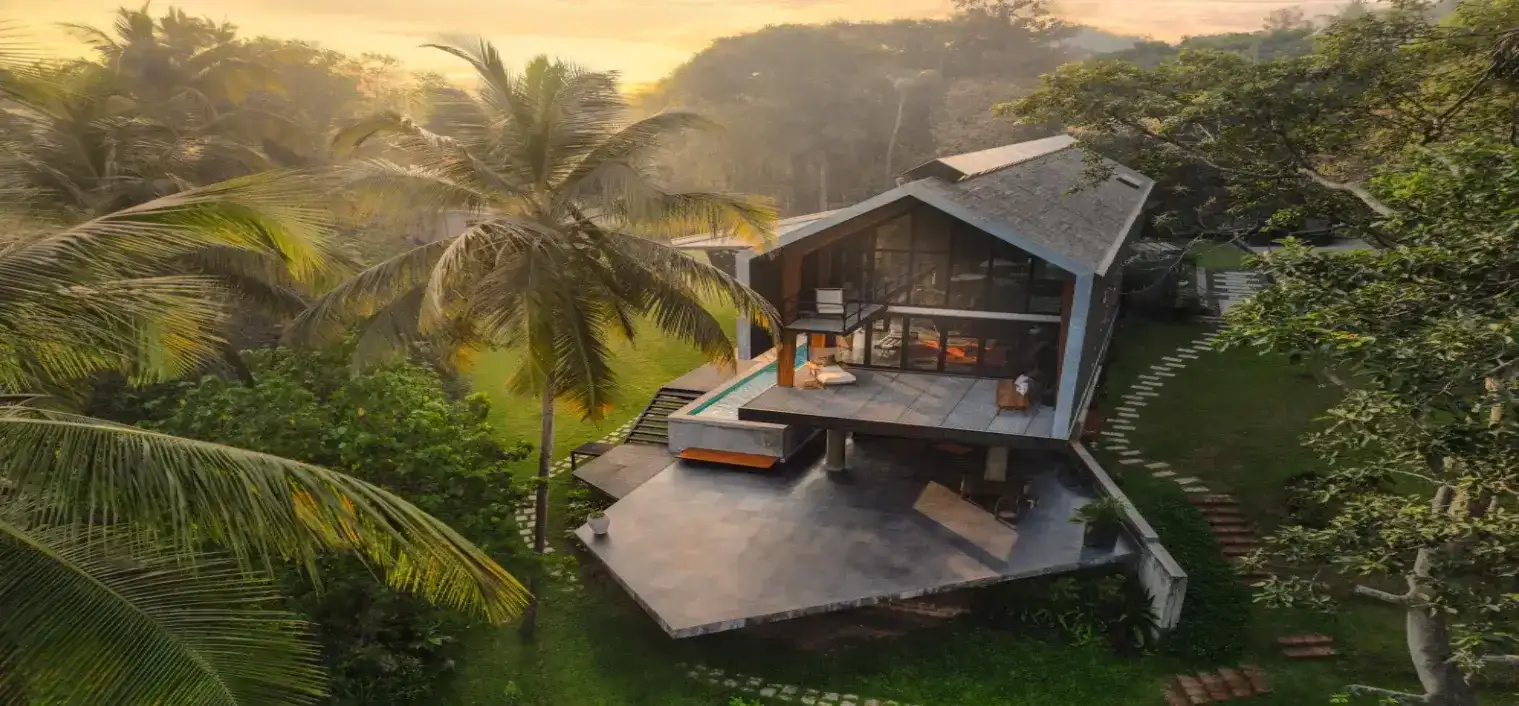

Timber has steadily gained ground as a preferred façade material in contemporary architecture. Its natural character and environmental advantages make it a compelling choice in projects that seek to establish a connection with the site’s landscape. As architectural approaches continue to shift towards more sustainable and context-sensitive solutions, timber presents itself as a practical and aesthetic alternative.
Timber can age gracefully and weather with time, unlike synthetic construction materials that may deteriorate in appearance. Timber takes on new tones and textures to evolve as a façade rather than decay. This slow transformation is part of its charm and makes it well-suited for buildings designed to settle gently into their surroundings. Timber introduces variation and softness to built forms, allowing structures to appear less rigid. It reflects seasonal changes, shifts in light, and the passage of time, imparting a dynamic quality to the building.
With careful detailing and appropriate treatment, timber also performs well across climates. It offers natural insulation, helping regulate interior temperatures and reduce energy demand. In coastal or humid regions where high rainfall and salinity present challenges, careful selection of typology and surface treatments becomes critical. Charred timber, for instance, enhances resistance to rot and pests, making it an effective choice for long-term exposure. The process strengthens the timber while imparting a textured finish to the material. The charred surface creates a protective layer that shields it from moisture and UV damage, reducing the need for frequent maintenance.
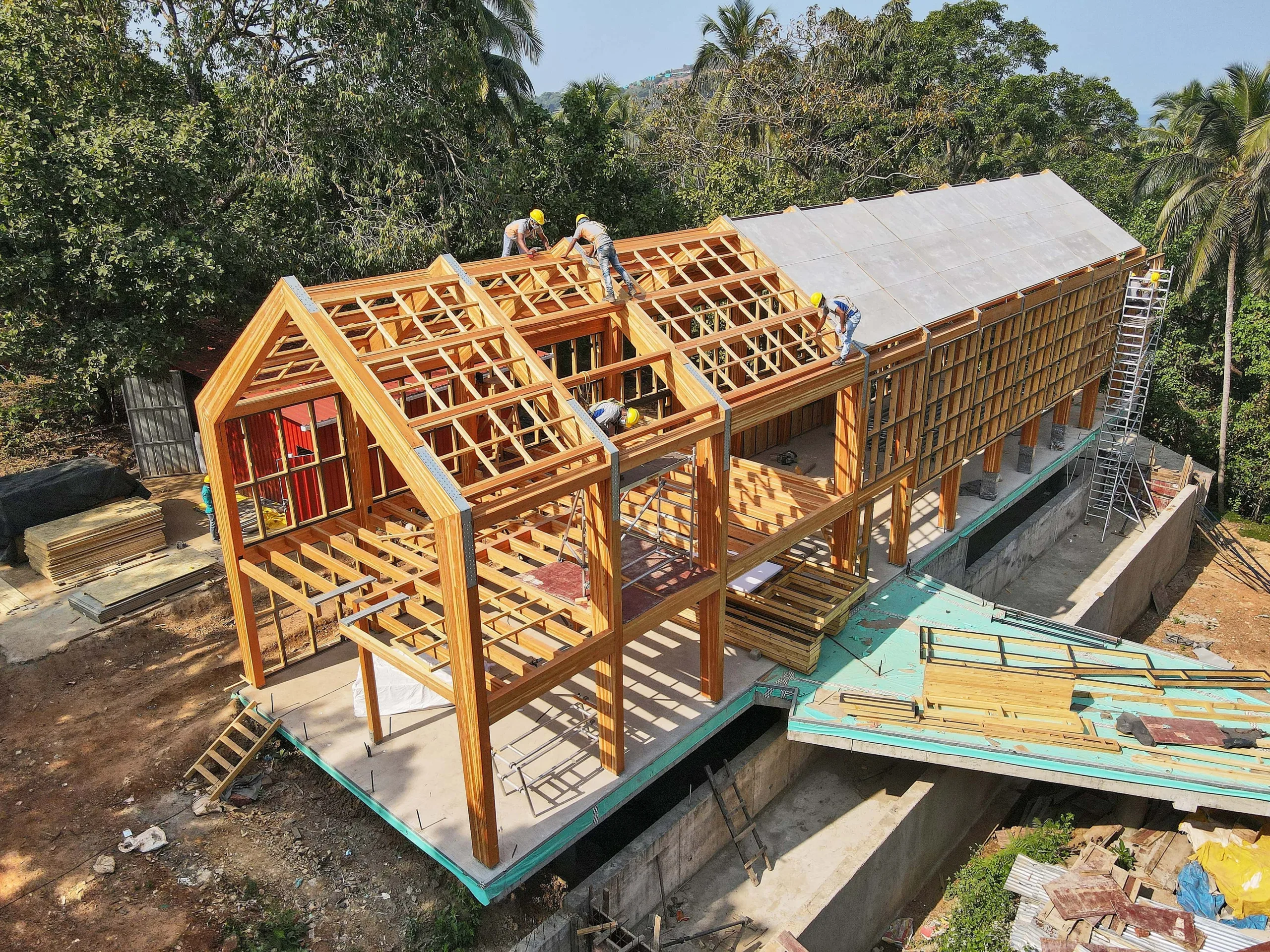
Timber can also be effectively utilised for designs that wish to be perceived as a unified envelope of structure and façade. Engineered timber products like glulam (glued laminated timber) have made it possible to use wood beyond just as a cladding material and have applications as structural systems as well.
Prefabrication plays an important role in the precision manufacturing of timber façades. Glulam components can be pre-cut, assembled, and tested off-site before being transported and installed on location. This results in reduced on-site waste, minimal disturbance to the surroundings, and faster construction timelines. In projects built within ecologically sensitive or densely vegetated areas, this strategy helps preserve the natural setting while still delivering high-quality craftsmanship.
The environmental benefits of using timber as a construction material are manifold. Responsibly sourced wood acts as a renewable material with a lower carbon footprint than concrete or steel. Beyond its low embodied energy, timber also stores carbon within the building envelope, contributing to long-term carbon sequestration. When timber is used as both structure and façade, the material load is reduced to a significant extent. Buildings that adopt this integrated approach are inherently lighter, more efficient, and closer to net-zero design objectives.
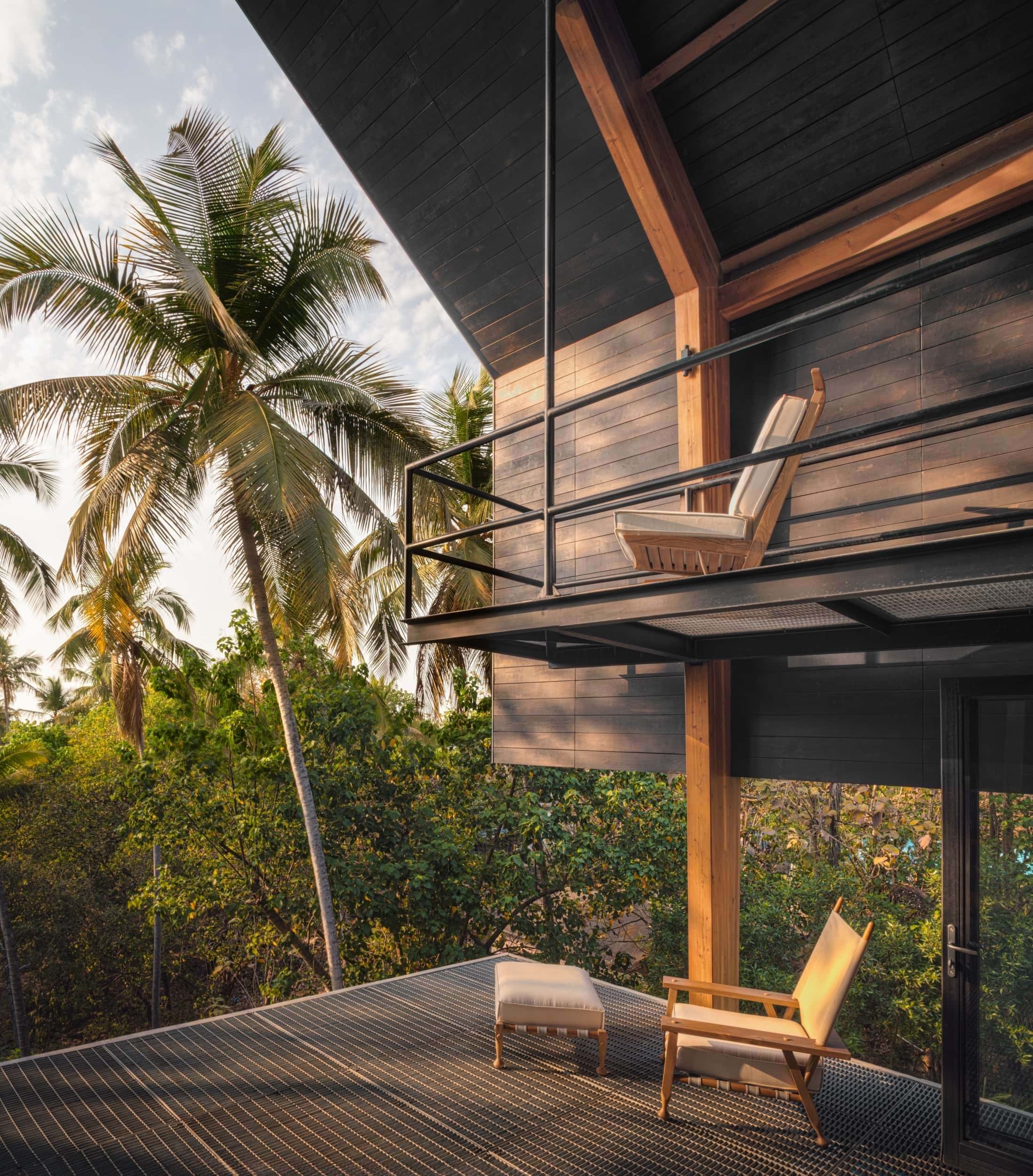
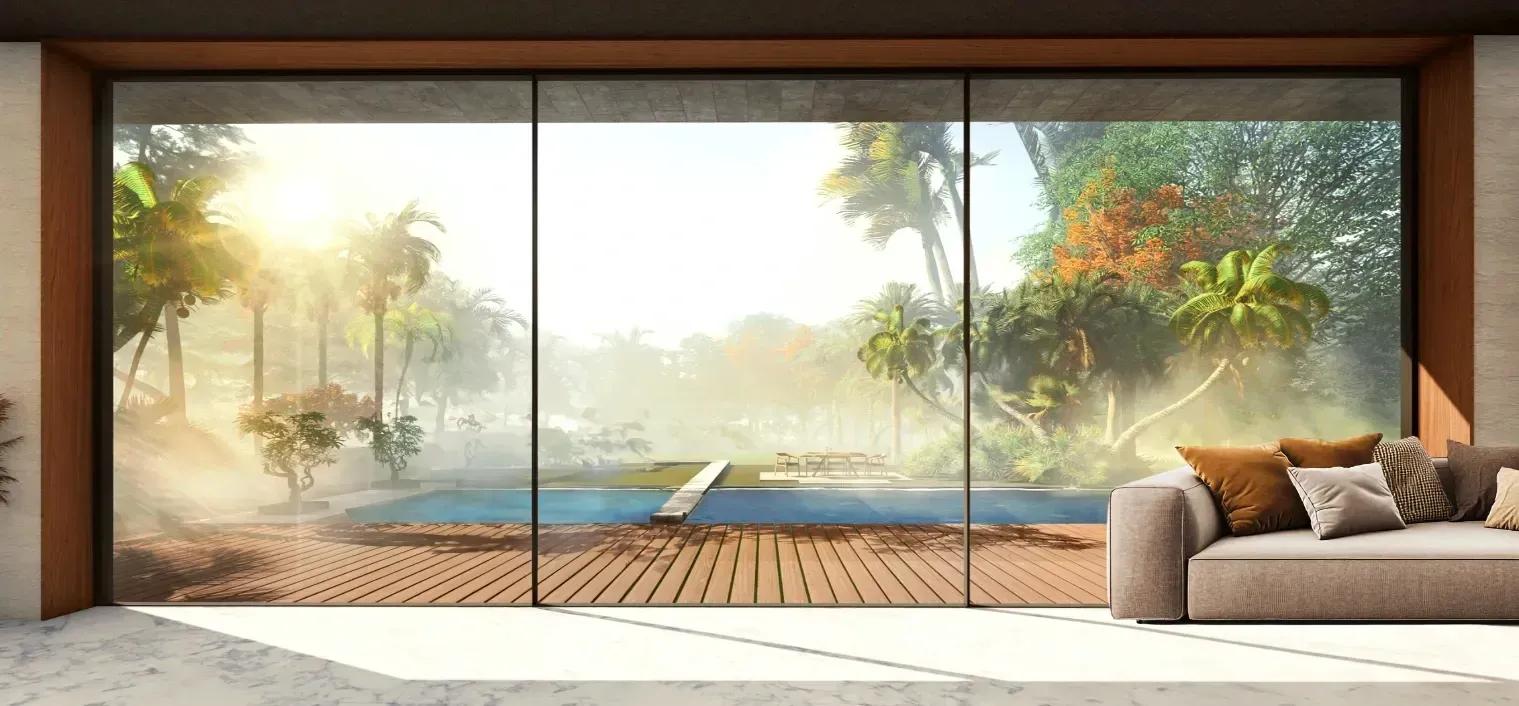
Timber is particularly effective when integrated with carefully calibrated openings. In buildings that rely on cross-ventilation, shaded transitions, and visual porosity, the façade becomes an active environmental filter. Large glazed panels, sliding doors, clerestory windows, and shaded verandahs are often embedded within timber frames that provide both structure and refinement. In tropical contexts where direct sunlight and heavy rain alternate throughout the year, timber louvres and screens allow façades to breathe while providing thermal comfort and protection from the elements. Their operability and responsiveness add a layer of adaptability to the building, enabling users to adjust the façade depending on the time of day or season.
As a façade material, timber also invites a sense of human scale. Its texture, warmth, and tactility contrast sharply with harder materials like glass or stone. It softens the visual language of a building and can help it respond more sensitively to its immediate context. The transition between indoor and outdoor spaces becomes more fluid when defined by timber frames and details.
Maintenance remains an important aspect of using timber externally. It requires regular inspection and, depending on the treatment used, it may need periodic reapplication of finishes or protective layers. However, the rewards often outweigh the effort. A well-maintained timber façade can last decades and continue to perform structurally and visually. With the right choices at the design stage, timber’s longevity can be ensured without excessive upkeep.
In architectural projects that aim to reduce their footprint, connect more closely with the environment, and offer a sense of warmth, timber is a material that delivers on multiple fronts. Its renewed relevance is not rooted in nostalgia but performance, responsibility, and experience. Timber enables buildings that are lighter, cleaner, and less resource-intensive without compromising on design ambition. Rather than acting as a neutral backdrop, timber façades participate in the life of a building. As material practices continue to evolve, timber stands as a reminder that architecture and the construction industry need innovative solutions that are sensitive to the environment and can be implemented with ease.
| Case Study: Timber Residence – Vagator, Goa, India |