

Post Date: September 30, 2026 |
Last Edited: September 30, 2026
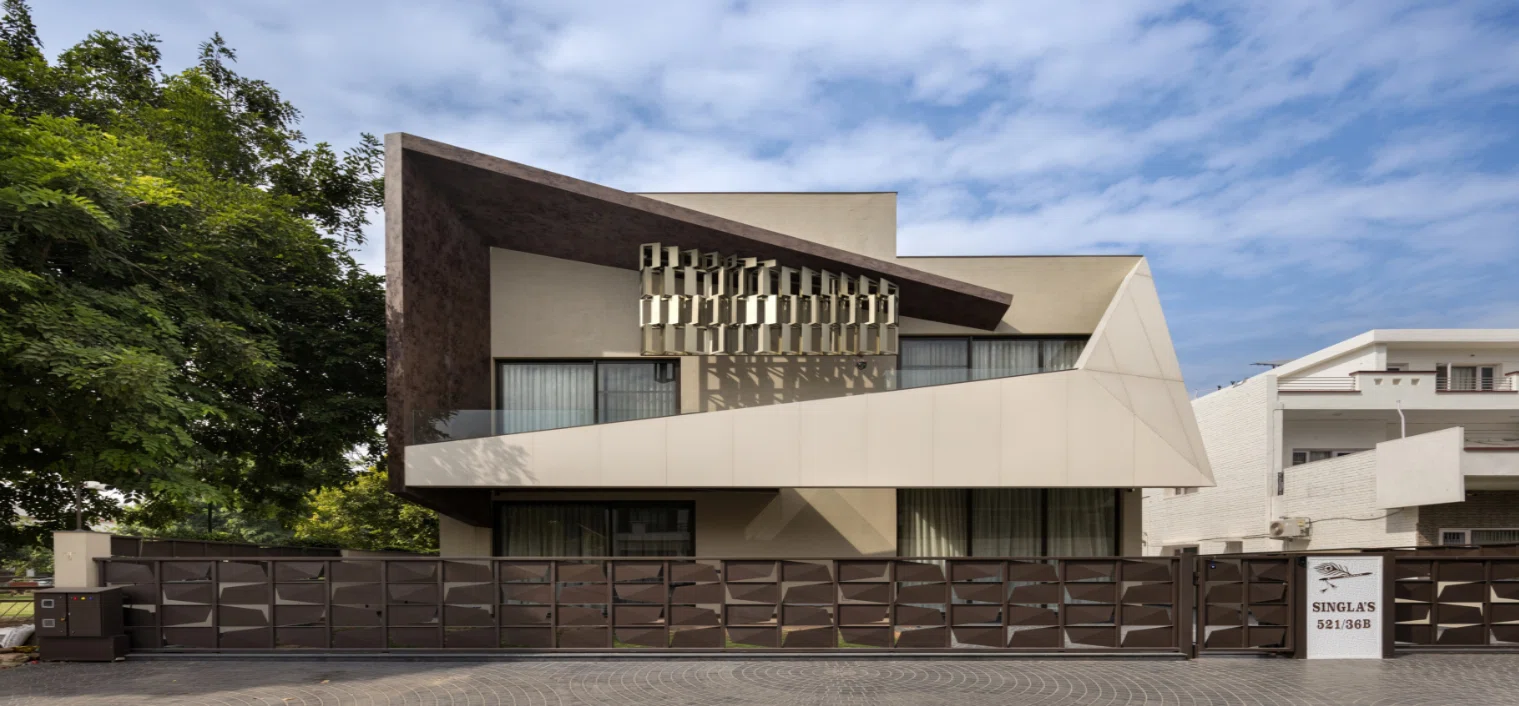
When homeowners discuss façades, the conversation usually revolves around colour, cladding or curb appeal. Rarely does anyone ask a more practical question: What will this façade look like after five summers, three monsoons and countless dust storms?
Key Highlights
|
In North India, a building’s exterior faces some of the harshest environmental conditions in the country. Surface temperatures can climb well above 50°C in peak summer. Dust storms blanket façades in abrasive particles. Weeks later, torrential rain tests every joint, edge and seal. Designing only for appearance is no longer enough. The real challenge lies in creating façades that continue to perform year after year with minimal maintenance.
The most successful façades today are those that respond to climate before they respond to style.
Design For The Climate, Not The Catalogue
A façade should begin with orientation rather than materials. West and south-facing elevations receive the harshest sunlight, making them more vulnerable to heat gain. Instead of relying on large expanses of glass, these sides benefit from shading devices, deeper overhangs and carefully positioned openings. North-facing elevations, meanwhile, can admit generous daylight without introducing excessive heat.
Good design is often about reducing the work a building has to do later.
Shade Is The New Luxury
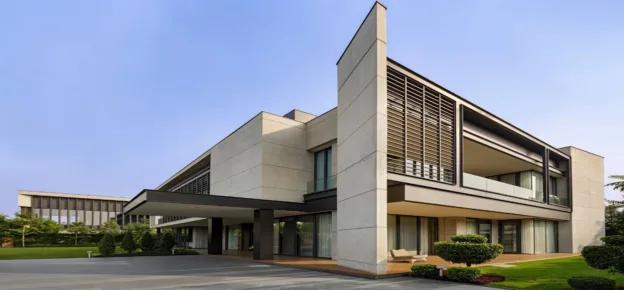
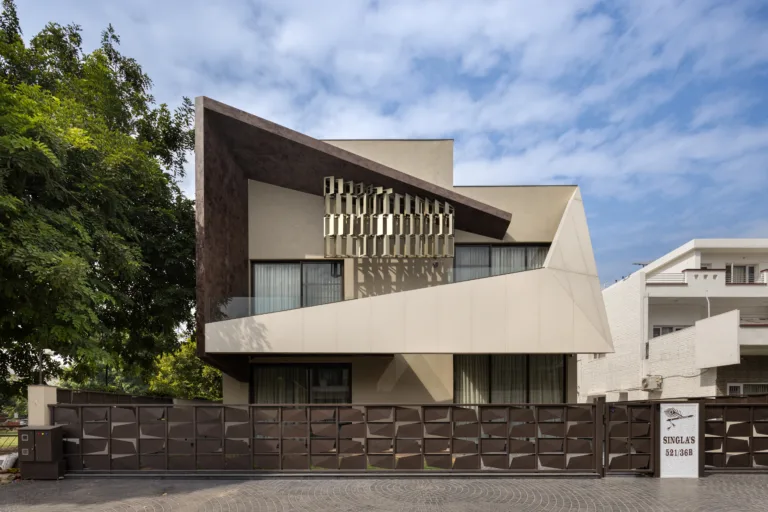
Deep projections, recessed balconies and slatted screens have become defining features of climate-responsive architecture, and for good reason. They shield walls and glazing from direct sunlight, lowering surface temperatures while creating constantly shifting patterns of light and shadow.
Vertical fins work particularly well on east and west façades where the sun strikes at lower angles. Horizontal overhangs perform better on south-facing elevations. These elements are not decorative additions. They actively reduce heat gain, improve indoor comfort and lessen dependence on air conditioning.
Traditional Indian architecture understood this principle centuries ago. Today’s technology simply allows us to reinterpret it with greater precision.
Bring Back The Jaali, But Build It For Today
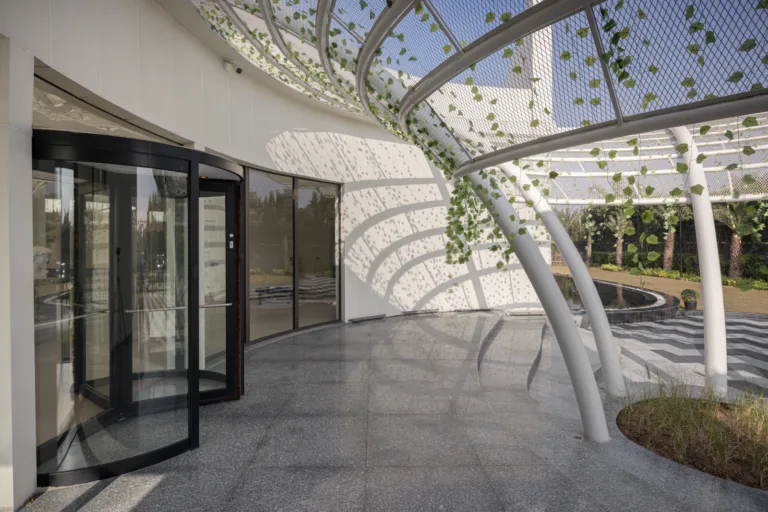
Few architectural elements are as well suited to North India’s climate as the jaali. Its perforated form filters harsh sunlight, allows natural ventilation and creates a buffer against dust-laden winds.
Modern interpretations no longer rely solely on carved stone. Precision-cut metal panels, engineered porcelain surfaces and weather-resistant composite materials offer the same environmental benefits while requiring far less upkeep. Rather than treating the jaali as a nostalgic design reference, architects are once again recognising it as one of India’s smartest climate solutions.
Materials Matter More Than Ever
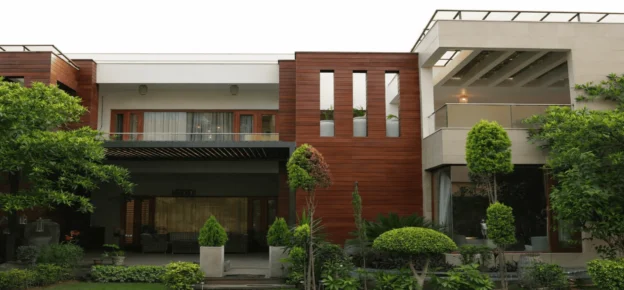
Not every material responds equally to extreme weather. Natural stone carries undeniable beauty, but porous varieties often require regular sealing. Timber introduces warmth but needs ongoing protection against moisture and ultraviolet exposure. Composite surfaces, architectural aluminium and high-performance porcelain have become increasingly popular because they retain their appearance with significantly lower maintenance.
Mixed-material façades also deserve careful consideration. Combining stone, metal and porcelain creates visual richness while allowing each material to perform where it is strongest. Light-coloured finishes help reflect solar heat, reducing thermal stress on the building envelope.
Choosing durable materials is not simply about longevity. It is about reducing the number of interventions required over the life of the building.
Dust Should Not Dictate Design
Dust storms are an unavoidable reality across much of North India, yet façade design often ignores them. Complex ledges, deep decorative grooves and horizontal projections quickly become dust traps. Within weeks, even the most striking façade can appear neglected.
Cleaner geometries perform far better. Smooth vertical surfaces allow dust to wash away naturally during rainfall. Carefully detailed joints, flush finishes and simplified profiles reduce accumulation while making routine maintenance considerably easier.
The same thinking extends to windows. High-quality gaskets and airtight seals prevent fine dust from entering interiors, improving both indoor comfort and long-term performance.
Monsoon Is The Ultimate Test
If summer exposes weaknesses, the monsoon magnifies them. Water has an extraordinary ability to find poorly detailed corners. Without adequate drip edges, flashing and properly sloped drainage systems, moisture can travel behind cladding, stain façades and eventually compromise interior finishes.
Every junction deserves attention. Window heads, balcony edges, parapets and coping details should guide water away from the building rather than allowing it to linger.
Hydrophobic coatings on porous materials such as exposed brick or natural stone provide another layer of protection, helping reduce moisture absorption, staining and biological growth.
Smarter Façades Are Quietly Changing The Industry
Technology is making façades increasingly responsive. Double-skin systems create a ventilated cavity between two layers of the building envelope, allowing hot air to escape during summer while providing insulation during cooler months. Operable louvres can adjust throughout the day, limiting solar gain without sacrificing daylight.
Even on smaller residential projects, automated shading systems and integrated ventilation strategies are beginning to appear. Their greatest advantage is not novelty, but adaptability. Buildings that respond to changing weather place less strain on mechanical systems and remain more comfortable throughout the year.
Beauty Should Age Gracefully
Perhaps the biggest misconception is that maintenance begins after construction. In reality, maintenance is determined during design.
Every material selected, every joint detailed, and every projection introduced influences how a building will weather over the next decade. A façade should not demand constant cleaning, repainting or repairs simply to preserve its original appearance.
The most enduring buildings are rarely the most elaborate. They are the ones that understand their climate, respect their context and age with dignity.
In North India, where buildings must withstand scorching summers, abrasive dust and relentless monsoons, designing for maintenance is no longer an afterthought. It is one of the clearest measures of good architecture. A beautiful façade may capture attention on the day it is completed. A well-designed façade continues to earn admiration long after the seasons have done their work.