
Post Date: September 3, 2026 |
Last Edited: September 3, 2026
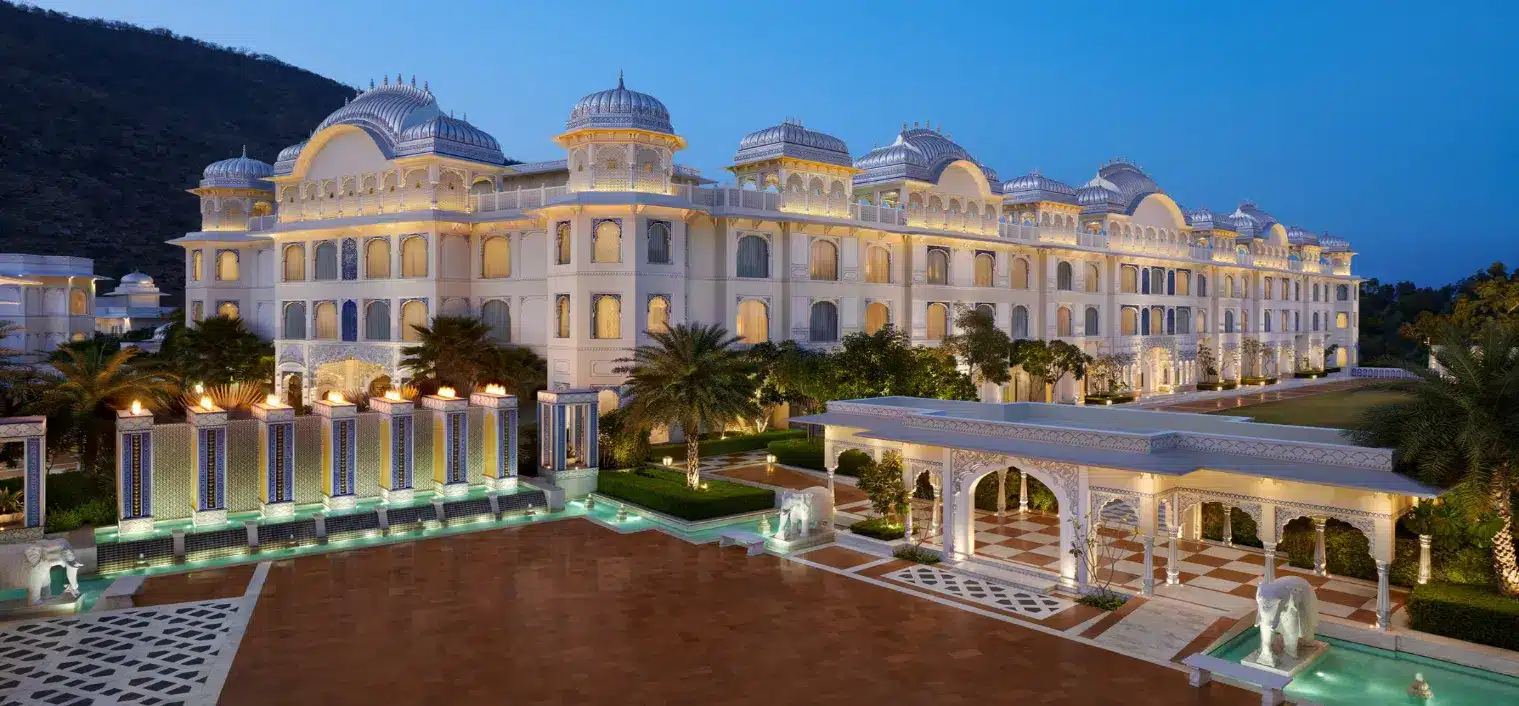
Luxury façades often grab attention for their materials, colours and sculptural forms. Yet in North India, the true test of a façade begins only after the ribbon has been cut. It must endure scorching summers that push surface temperatures beyond 50°C, relentless dust storms that settle into every crevice, and monsoon downpours that expose the smallest construction flaw.
A façade is not simply the face of a home. It is its first line of defence. As Indian homes become more compact and urban plots grow tighter, façades are expected to do far more than create a striking first impression. They must regulate heat, improve energy efficiency, protect interiors from moisture and dust, and continue looking fresh with minimal upkeep. Good façade design is no longer about following global trends. It is about responding intelligently to the local climate.
Read The Climate Before You Draw The Elevation
Every successful façade begins with understanding the path of the sun. West- and south-facing elevations receive the harshest solar exposure, making them vulnerable to excessive heat gain. Instead of relying on expansive glazing, these sides benefit from deeper overhangs, carefully placed openings and external shading systems that reduce direct sunlight before it reaches the building envelope.
Key Highlights
|
North-facing façades, on the other hand, can introduce generous daylight without significantly increasing indoor temperatures. This simple shift in planning reduces dependence on artificial lighting and mechanical cooling throughout the year. When orientation drives design decisions, every other element begins working more efficiently.
Height, Shade And Airflow
Vertical groove façades have become increasingly popular across urban homes, particularly on narrow plots where height becomes an important visual tool.
The linear pattern naturally draws the eye upwards, making compact homes appear taller and more elegant. However, their benefits extend beyond appearance. Well-designed vertical grooves encourage rainwater to drain efficiently during the monsoon, reducing water retention on exterior surfaces. When executed in porcelain slabs or other durable materials, they also require relatively little maintenance while creating a refined architectural rhythm.
Integrated lighting within these grooves adds another dimension after sunset, allowing the façade to change character without excessive ornamentation.
Materials That Age Gracefully
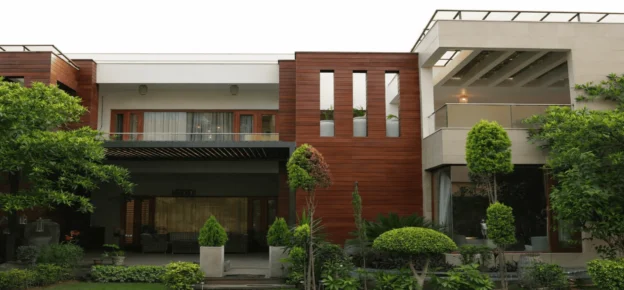
Modern façades increasingly rely on combinations rather than single materials. Natural stone introduces permanence and richness. Porcelain slabs offer durability with minimal maintenance. Architectural metals bring precision, while timber or wood-finish elements soften the overall composition.
The key lies in assigning each material a role where it performs best. Lighter finishes help reflect solar radiation in hotter climates, reducing thermal stress on the building envelope. High-performance porcelain withstands UV exposure without fading, while treated metals resist corrosion through repeated monsoon cycles.
When materials are layered thoughtfully, the façade gains visual depth without compromising long-term performance.
The Case For Simplicity
Minimalist grid façades continue to appeal because they offer visual clarity while solving practical challenges.
Their disciplined geometry creates calm in dense urban neighbourhoods and allows utility shafts, service areas and storage zones to blend seamlessly into the architecture.
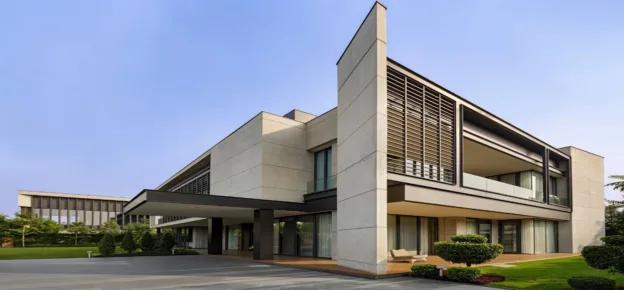
Large-format panels with fine joints minimise visible interruptions while reducing areas where dirt can accumulate. Earthy colours further soften the composition, allowing the building to age gracefully rather than chase short-lived design trends. Sometimes restraint creates the strongest architectural identity.
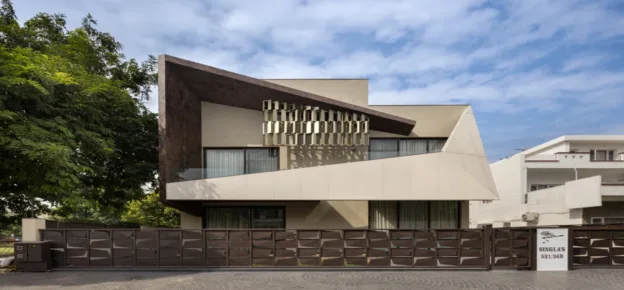
Deep projections and slatted overhangs have become defining features of climate-responsive homes for good reason. Horizontal overhangs protect south-facing walls from intense overhead sun, while vertical fins perform better against the low-angle sunlight striking east- and west-facing façades.
Besides reducing heat gain, these elements cast constantly shifting shadows that add movement throughout the day. Steel, aluminium or treated timber slats paired with durable porcelain cladding create façades that remain expressive while standing up to harsh weather.
The best shading devices work quietly. They reduce indoor temperatures, lower cooling loads and improve comfort without demanding attention.
Planning For Dust, Not Just Sun
Dust is perhaps North India’s most underestimated design challenge. Decorative ledges, heavy mouldings and layered projections often become permanent collection points for fine dust particles. Within weeks, an otherwise pristine façade can begin to look neglected.
Cleaner geometries perform far better. Smooth vertical surfaces encourage natural cleaning during rainfall. Flush detailing, simplified profiles and carefully planned joints reduce accumulation while making routine maintenance significantly easier.
Window detailing deserves equal attention. High-quality EPDM gaskets and airtight seals prevent fine dust from entering living spaces, improving indoor air quality while protecting finishes and furnishings.
Every Monsoon Finds A Weak Detail
If summer tests materials, the monsoon tests detailing. Rainwater inevitably finds poorly designed junctions. Without proper flashing, drip edges and drainage slopes, moisture can seep behind cladding, stain external surfaces and eventually damage interiors.
Every horizontal surface should encourage water to move away from the building rather than allowing it to collect.
Hydrophobic coatings provide additional protection for porous materials such as exposed brick or natural stone by reducing water absorption and discouraging biological growth. Properly designed gutters and downpipes ensure rainwater is quickly diverted away from foundations. Good drainage rarely attracts attention, but poor drainage always does.
Adaptive Façades For Changing Weather
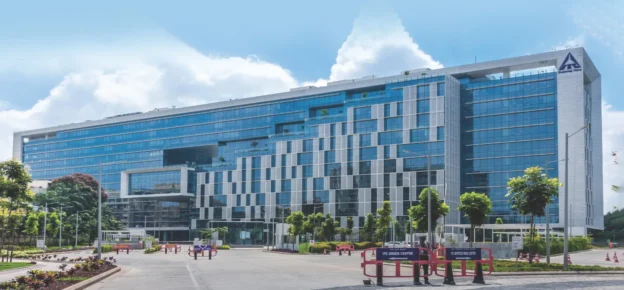
Advanced façade systems are becoming increasingly relevant for premium residential projects. Double-skin façades introduce a ventilated cavity between two protective layers. During summer, rising hot air escapes naturally through the cavity, reducing heat transfer into the building. In winter, the same system can help retain warmth.
Operable louvres take adaptability even further by adjusting according to the sun’s position. They block harsh afternoon sunlight while preserving daylight and outward views.
Although these systems are more common in institutional buildings, they are steadily finding their place in contemporary luxury homes, where long-term performance matters as much as appearance.
The most successful façades are rarely the loudest. They are the ones that continue performing after years of exposure to intense heat, seasonal dust and relentless rain. They demand fewer repairs, require less cleaning and retain their character without constant intervention.
In North India, every design decision carries long-term consequences. Material selection, orientation, shading, drainage and detailing all determine whether a façade matures gracefully or becomes a maintenance burden.
Architecture should never force homeowners into an endless cycle of repainting, repairs and replacement. It should anticipate the climate, respond intelligently to it and grow more convincing with every passing season.
A beautiful façade may attract admiration on the day it is completed. A climate-responsive façade continues to earn that admiration for decades.