
Post Date: March 5, 2019 |
Last Edited: March 10, 2026

Please tell us about your practice and your ongoing projects.
After completing my B Arch in 1988 from Mumbai’s Rachana Sansad Academy of Architecture, I worked under the aegis of Architect Hafeez Contractor for four years. I started my own practice, Sanjay Puri Architects (SPA), in 1992, and my first project was a township.
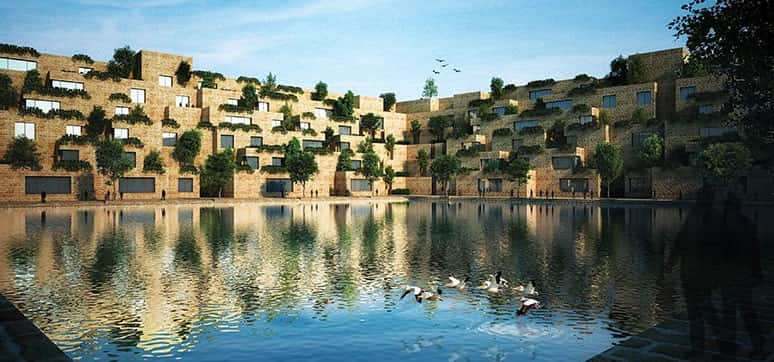
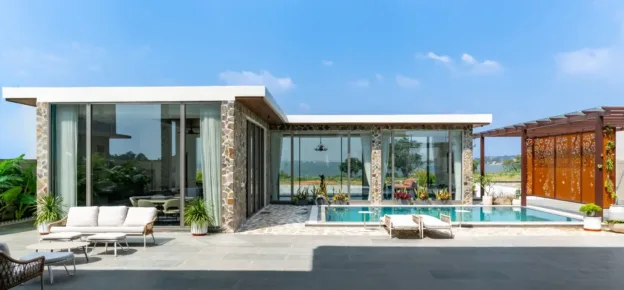
Reservoir, Ras, Rajasthan – The design is responsive to the site contours, the climate of its location and to the need of its users, generating office spaces that require much lower energy consumption due to their orientation while imbibing the traditional architecture prevalent in the region since centuries and creating a large water catchment area in response to the water scarcity prevalent in the location.
We have a broad range of design portfolios which include projects in various typologies, such as hospitality, commercial, retail, educational and residential, as well as large urban projects and town planning. Currently, our firm has a strength of 72 people. All in all, it has been an eventful journey and a learning experience all along.
Some of our ongoing projects are a township of 100 acres in Ras (Rajasthan), another township of 51 acres in Raipur, a textile market in Surat, commercial in Ahmedabad, commercial at Ghaziabad, a bungalow in Lucknow, a club in Ranchi, a University of 30 acres in Indore, a university of 33 acres in Jabalpur, and a school in Aurangabad.
What inspired you to become an architect?
I had a strong fascination for art and was good at it, and fervently wanted to be an artist. Once I had the opportunity to read the book ‘Fountain Head’ by Ayn Rand at the age of 16, which further fuelled my interest in the field of art and architecture. I believe that book has impacted me at a deeper level, which changed my whole attitude and planted a seed of desire to become an architect.
Could you please talk about a few of your projects featuring innovative façade and fenestration design?
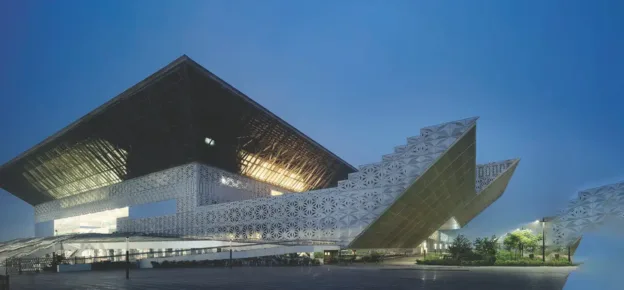
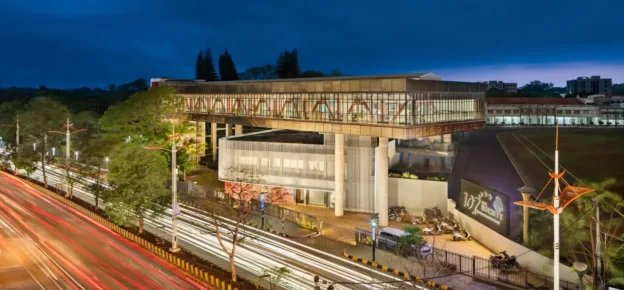
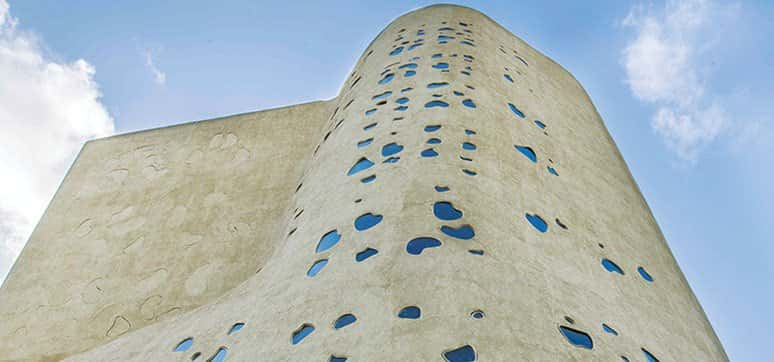
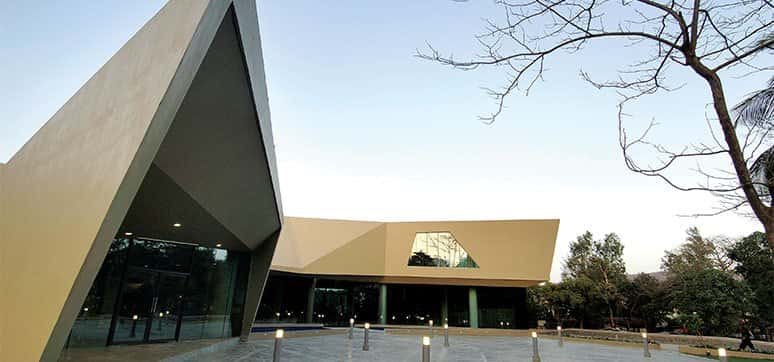 I am excited about all my projects and take up all the projects with the same unwavering spirit, but with a new and innovative approach. Every project is unique and special in its own way. One of the projects that is very close to my heart is the ‘Triose’ at Lonavala, a retail commercial building. As a standalone building, it was very creatively stimulating to work with spaces and forms. The building is created in fluid sculptural form from within and externally and is a unique manifestation of abstract volumes. Angled spaces projected towards different directions and an organically folded concrete skin evoke an exhilarating experience. As one of my early projects, working on this venture was quite interesting.
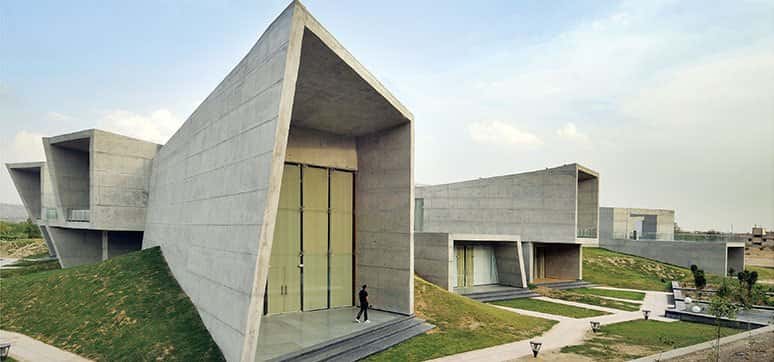
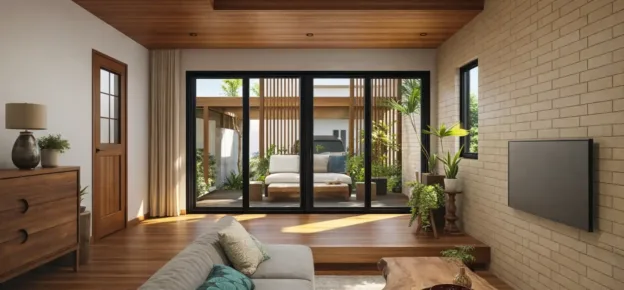
Another very worth mentioning project is the Courtyard House. It is a 35,000 sq ft residence project located in Rajasthan. The house looks like an extension of nature, all in exposed concrete. It is designed in response to a climate with long summer months of 450C average temperature. Organically radiating concrete volumes of varying proportions from central, open-to-sky courtyards create a sculpted series of spaces in this house. This project was completed in 2011-12.
Please tell us about your design approach.
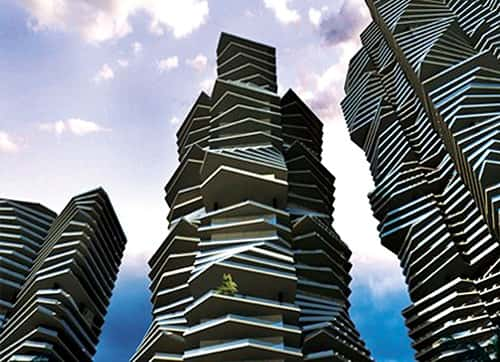 If you are a keen observer with a sense of details, you will see each project portrays individualism and character. Every project is designed based on the contextual and climatic references, such as the geographical position of the site or the location of the project, neighbourhood, locally available materials, etc. These key factors are critically analysed when we design the project, and our emphasis is on contextual design solutions.
When we look at your projects, the style is so obvious – many of them are designed with stacks of cubes and cuboids. Can we call it your signature style?
 That’s right. In my design, you will find cubes and cuboids stacked at different angles. We do not want to design each floor stacked atop one another, which will look very ordinary and monotonous. As for the façade of the building, we consider certain parameters – the direction of sunlight, heat ingress, building orientation, etc. The angular stacking is done by looking at design fragmentation to give the best results to the user or by considering the user’s comfort.
Architects like Le Corbusier have used concrete to create masterpieces. We have seen that you, too, like to design with concrete and play with different forms.
Yes, I like to use only one material in one project. Again, the material that I use depends on the geographical location and the climatic conditions. It also depends on the requirement or purpose of the building. The designs and materials used for a residential project in Mumbai would be very different from those used for projects in Delhi or Rajasthan. So it varies as per the climatic suitability. In Delhi, one needs to consider the direction of hot air blowing in during summers and cold air in winters. Whereas in Mumbai, there is a south-west wind, which compels to give attention to ventilation, daylighting, etc.
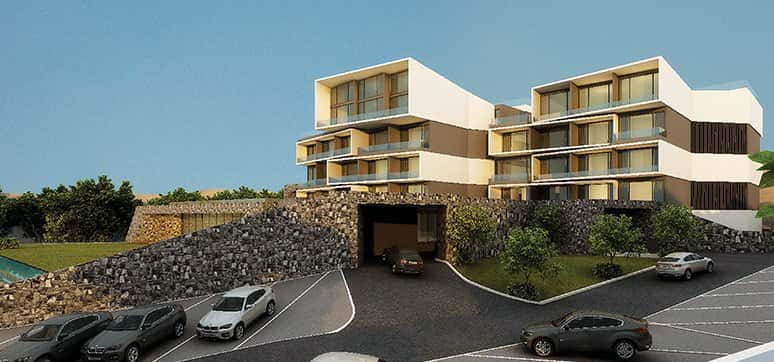
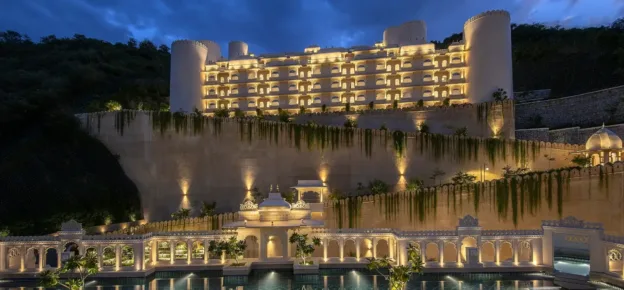
The Wine Resort is a 67-room boutique hotel with banquet, restaurants, bar, multipurpose room and other facilities. The project, while creating framed views of the lake on the north and the hills on the south, is amongst the first cohesively planned hotels on the outskirts of Nashik city and has already been instrumental in adding substantial value to its location. The building integrates with its surroundings by engaging with the contours, the views simultaneously creating a public space that celebrates the natural surroundings.
What are the key factors to consider while designing and installing facades & fenestration?
Every room in the building should get ample sunlight so that the occupants need not depend on artificial lighting during the day. These kinds of designs are nowhere in sight in cities like Mumbai or Delhi now. Every time you walk into a room, you have to switch on the light during the day. How stupid is that? When there is enough natural light and ventilation throughout the day, why should we waste other resources? We need to design more cost-efficient and eco-friendly buildings through efficient fenestration.
Facades and cladding industry in India has gone through a sea change in the past decade. Tell us about the latest façade and cladding materials and technologies available in the Indian market and those used in your projects?
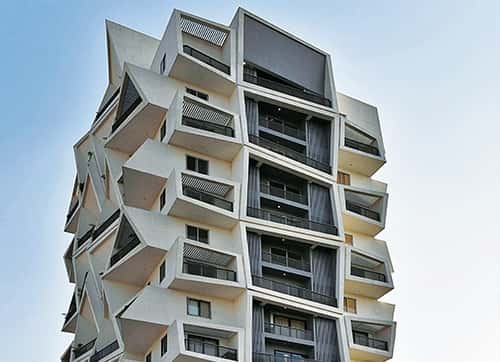 We try to use natural materials or locally available materials as far as possible. The design and products should be contextual and regional. The texture is also important. We have used stone or concrete in most of our projects, and we still try to explore it. Stone is fire-resistant and easy to maintain. We do not use any materials that catch fire easily. We use a lot of stone-like products, like the Neolith stone, in our projects. We also use Nexion tiles or granite, but not aluminium composite panels (ACP).
Many of your projects – for example, the residential projects Fiorenza for Lodha Group in Goregaon, and Waves at Bandra, both in Mumbai – look completely different. Could you please talk about your projects?
Waves is a sea-facing project. It has transparent balconies to enjoy the full sea view from every single room. The form of the building too is like waves, which is very contextual. It is a glass and concrete building.
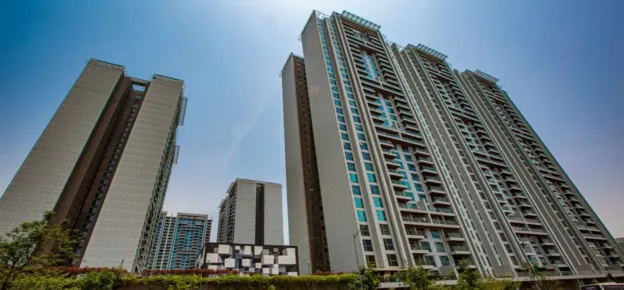
Fiorenza for Lodha at Goregaon in Mumbai has a large green forested area towards the west. It is located near Aarey Milk Colony. We have designed the façade considering the view from each balcony in the building. The building design is very simple.
Please brief on the technical benefits of a well-designed and well-managed façade and how it helps the building to be energy efficient at the same time provide a better interior environment?
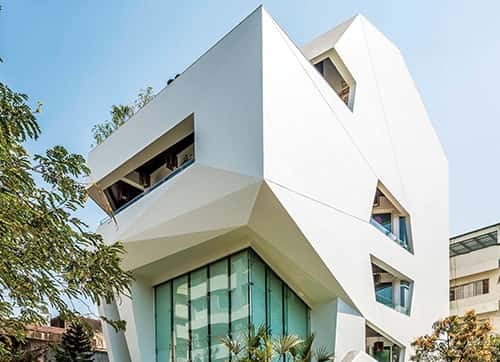 A façade can be managed well, in a much better way, if it is built with or clad with natural materials like stone. Paint or another type of cladding material, which is mostly man-made, requires constant cleaning, and the maintenance is much more expensive. Natural materials do not require cleaning at all.
What are your views on Future facades and fenestration technologies and materials?
We all know that many complex façade designs are possible with available materials and technologies. The resources and technical inventions are immense, hence the options for designing and the availability of materials are limitless. You can build whatever you dream.
Any material you wish to see in the future to create novel facades?
 I wish I could get stones that are flexible to build with, which can take curvatures or could be moulded into almost any form.
According to you, what is an intelligent façade?
If you design buildings judiciously in the planning phase, it will definitely turn out into an intelligent building. So, 90 per cent of intelligent buildings are accomplished through better planning and design. An intelligent façade has to be very flexible and adaptable in the sense that it should be able to easily acclimatise to the outdoor environment or weather fluctuation.
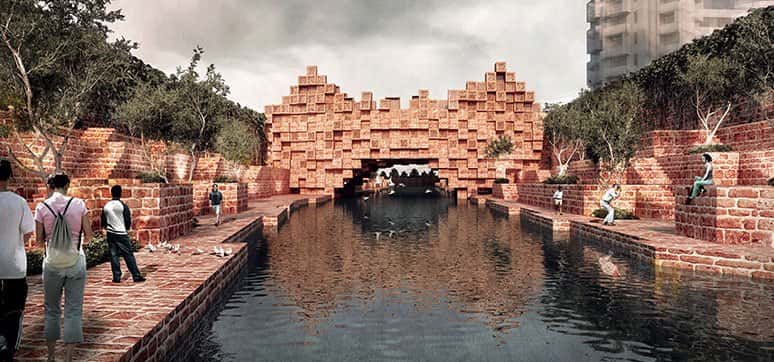
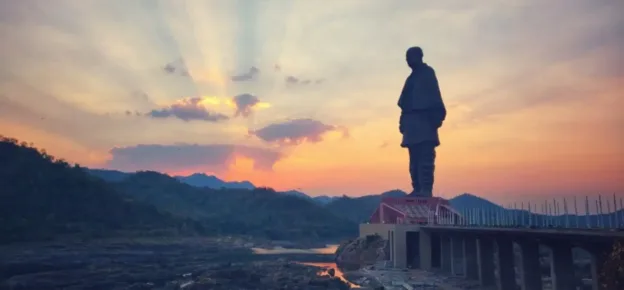
The Bridge & Community Centre, Rajasthan – Designed to engage with the surroundings, the bridge will be made of solid stone below, gradually achieving a lighter feel as it moves upwards. The upper part of the bridge is proposed in a series of cuboid stone screens derived from traditional architecture in Rajasthan. These cuboid volumes create sheltered spaces to sit on the bridge and serve as a community space for the residents along with the waterfront.
Please brief on your projects designed for various geographical conditions.
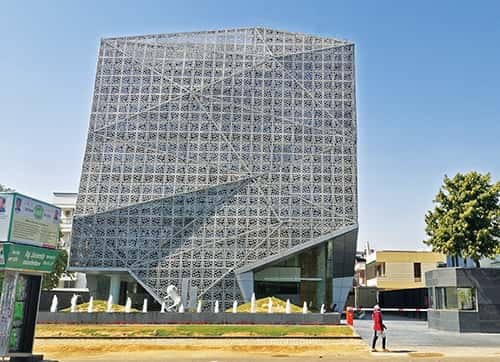
We did an office building in Jaipur, and it is radically different. In the past 10 years, almost all the office buildings built in Jaipur have wrap-around curtain wall facades. How can you build buildings with glass walls in a place where the temperature reaches 500 °C? And that too in desert weather conditions? So we chose to have jaalis made of GRC in all sides of the building, wrapping the building. The façade is designed with Rajasthani jaali, following the traditional architecture. It reduces the internal heat gain by 27 per cent. Of course, it is not done in the traditional way, but using abstract methods derived from the original methods.
Another building we designed in Rajasthan is like a step well. The site is in the midst of desert land where water is scarce, and temperatures are in excess of 400C through 8 months of the year. The site is steeply contoured, and the land forms a natural water collection pit from the surrounding land. The design of the office is inspired by the form of the ancient stepped wells. Office spaces are created on the two north-facing sides, gradually stepping down at each level along the existing contours, generating north-facing landscaped terraces fronting each office. The design generates landscaped spaces, creating a large community space. Most of the building is built underground, and the soil protects it from heat ingress.
We are doing a hotel project in Srinagar for the Hyatt group. The design of the project is worked out considering the geographical conditions and the weather, which is entirely different from Rajasthan. In order to have the beautiful view of the majestic mountains, we have provided balconies to all the rooms. The material used for the façade is locally available stone.
What is your advice to young, aspiring architects?
One has to select materials that are appropriate to the locality and suitable for the geographical conditions. Usage of more and more glass and aluminium lead to excessive use of resources than what is required, and will continue to consume more energy, thus increasing operational cost. Vernacular materials are better compared to those with shiny glazing.

What could be the architecture of Future facades?
The architecture of the Future facades could be the one that belongs to our country — using natural and locally available materials. Nowadays, we see a lot of emulation of design around the world, giving hardly any thought to its relevance in the specific location and climate. It is very important to design according to the geographical and weather patterns in India.