
Post Date: March 27, 2026 |
Last Edited: March 27, 2026
Fenestration In India: Why Execution Defines Success More Than Products
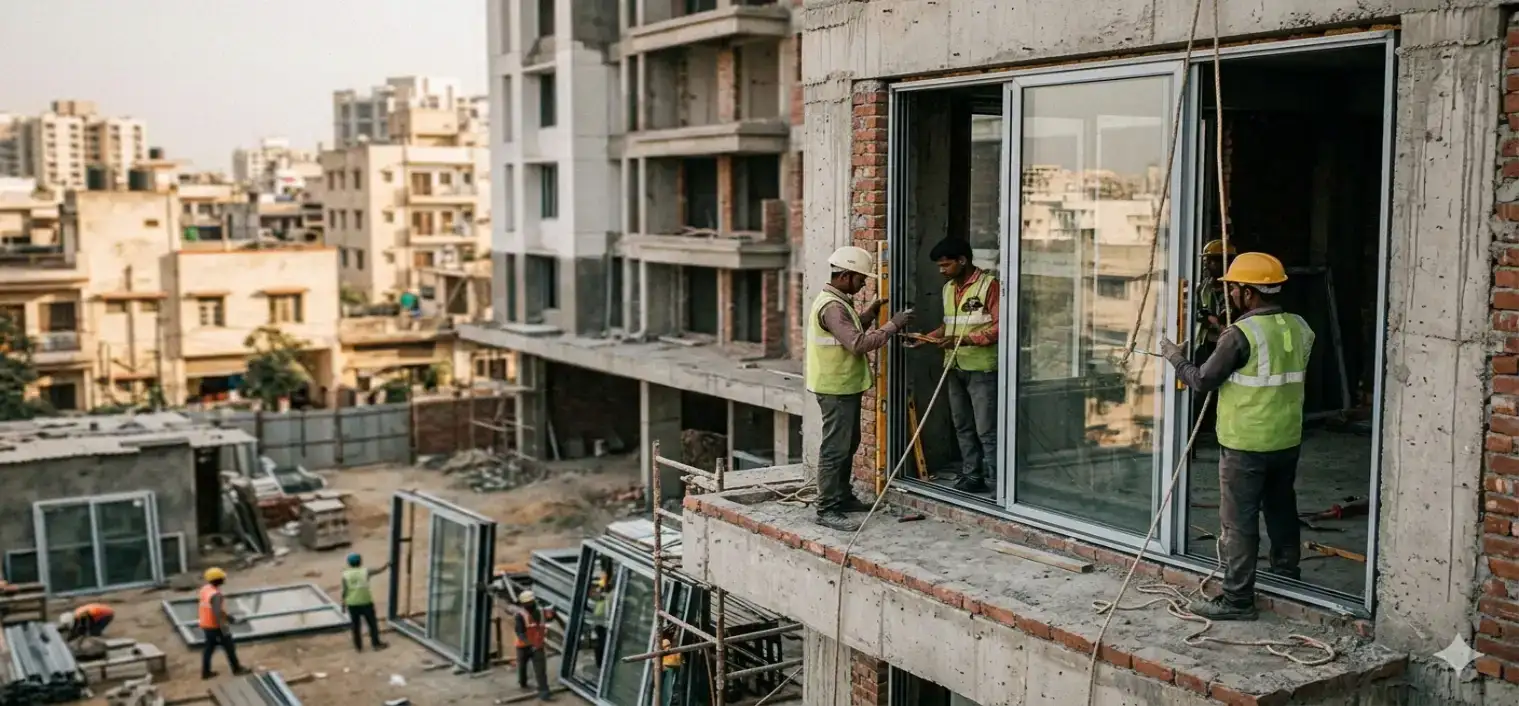
It is not merely a headline, but a reality increasingly evident across the industry. In India’s fenestration sector, conversations often revolve around profiles, glazing combinations, systems, sections, glass performance and hardware. We celebrate catalogues, technical sheets and detailed specifications, taking pride in product debates and innovation. Yet beyond the brochures lies a simple truth: projects are rarely won or lost on design alone. When they truly succeed or fail, the defining factor is seldom the product itself; they are ultimately shaped by the discipline, precision and consistency of execution.
In India’s fenestration industry, we celebrate products. We debate profiles, glazing combinations and hardware innovations. Yet when projects succeed or fail, it is rarely because of the catalogue. It is because of execution.
Indian Consumer Behaviour
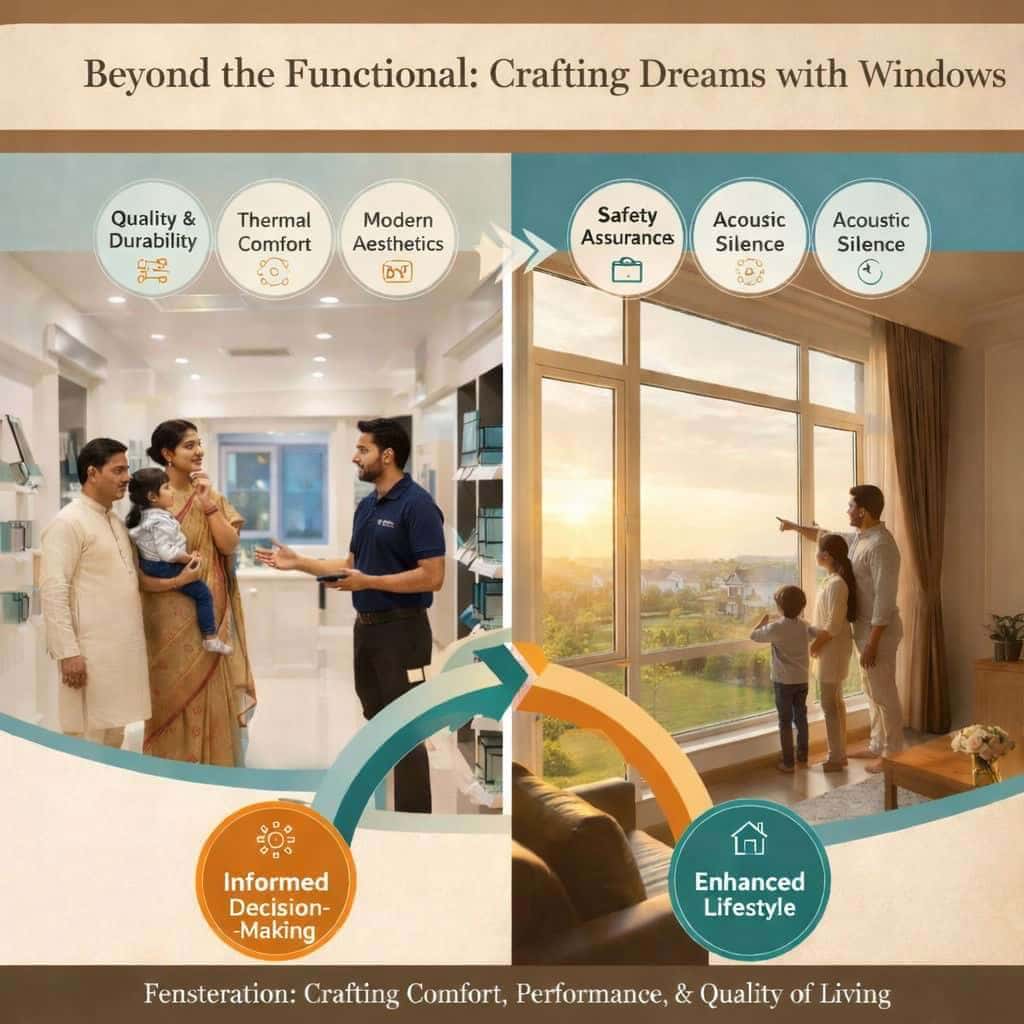
For most Indians, a home is far more than a physical structure or a financial investment; it is a lifelong aspiration shaped by emotion, identity and personal pride. Every decision made during construction or renovation, from windows and doors to furniture, finishes and furnishings, carries deep emotional significance. Indian homeowners today approach these decisions with a strong emphasis on quality, durability and long-term performance, often prioritising these factors over upfront pricing. This shift has led to growing trust in branded and organised players, particularly those operating through company-owned showrooms and professionally managed dealer outlets.
Aesthetics, modern design sensibilities and everyday comfort now play a defining role in consumer behaviour. Homeowners spend considerable time evaluating visible and lifestyle-defining elements such as flooring, paints, wood finishes, laminates, façades, kitchens, wardrobes, furniture, and both entrance and internal doors. Traditionally, windows were viewed largely as functional necessities and often received less attention than interior decor elements like curtains and blinds. However, over the past few years, this perception has changed meaningfully. Consumers today actively evaluate windows on parameters such as thermal efficiency, acoustic comfort, safety, ease of operation, aesthetics and sustainability. Fenestration has moved from being a background construction element to a critical contributor to comfort, performance and quality of living.
From Product To Performance
As awareness increases, industry conversations naturally gravitate towards products, profiles, glass configurations, hardware systems, certifications and design innovations. While these aspects are undeniably important, they represent only one part of the overall value proposition. The real opportunity, and increasingly the real differentiator, lies in the ability to deliver a seamless, coordinated and professionally executed experience that consistently translates product promise into everyday performance at the site level.
In India’s fenestration industry, success is often measured by product superiority, manufacturing capability or specification depth. Yet true success is shaped far beyond the factory floor. Fenestration operates within a complex ecosystem where windows and doors must integrate seamlessly with civil structures, façades, interior finishes, climatic conditions and diverse user expectations.
As an integral component of the building envelope, fenestration performance is directly influenced by façade detailing, sill conditions, structural tolerances, waterproofing interfaces and climatic exposure. Poor coordination at these junctions often leads to water leakage, air infiltration and long-term performance failures, even when the product itself is technically sound.
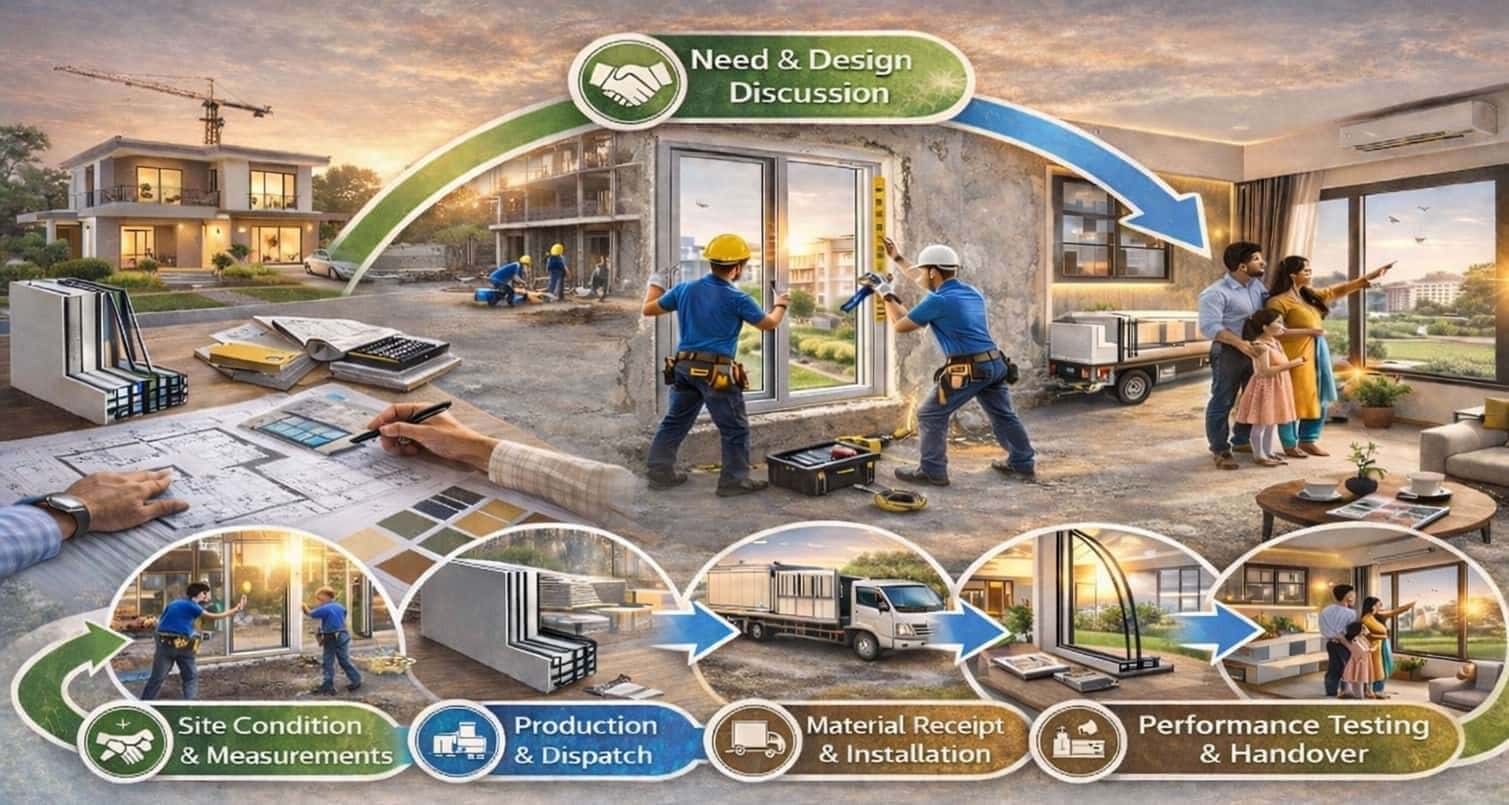
The journey from initial site survey and design validation to manufacturing, logistics, installation and long-term performance involves multiple touchpoints, each demanding precision, coordination and accountability. A technically superior window system delivers its real value only when it is measured accurately, manufactured as per approved designs, installed professionally and aligned with on-site realities.
This is why fenestration cannot be viewed merely as a manufacturing activity or a tradable product category. It is an execution-intensive, engineering-led and experience-driven discipline. Windows and doors are not box products; they are highly customised solutions shaped by site conditions, architectural intent, structural constraints, regulatory requirements and customer expectations. Each project requires early technical involvement during the sales stage to assess feasibility, manage expectations and prevent downstream issues. Disciplined survey methodologies, standardised measurement protocols and clear design controls are essential to eliminate ambiguity before manufacturing begins.
Execution Is A System, Not An Event
Execution is often misunderstood as installation. In reality, execution is a system — one that begins well before manufacturing and continues long after handover. In this industry, a lack of design discipline and poor alignment between manufacturing and site readiness quietly destroy margins and customer trust. Installation must follow clearly defined standard operating procedures supported by quality checkpoints, supervision and final inspection with documented performance validation. Without these controls, even well-designed products struggle to perform as intended.
The industry’s high dependence on manpower across sales, planning, manufacturing, logistics, installation and service further reinforces the need for systems rather than individual effort. Consistency cannot rely on personal experience or intent alone. True execution excellence emerges from structured processes, coordinated teams and governance mechanisms designed to reduce variability and deliver predictable outcomes at scale. Operational discipline, not individual heroics, determines reliability.
This is also where many organisations underestimate the importance of back-end and support functions. Beyond production, supply chain, finance, marketing, human resources and field teams, successful fenestration companies invest deeply in sales operations, service operations and market expansion teams. These functions enable sales and service teams, drive standardisation, expand market reach, ensure compliance and maintain continuity across multiple projects and geographies. Without strong operational support, even capable people and well-engineered products struggle to deliver consistent results.
Four Businesses Inside One Industry
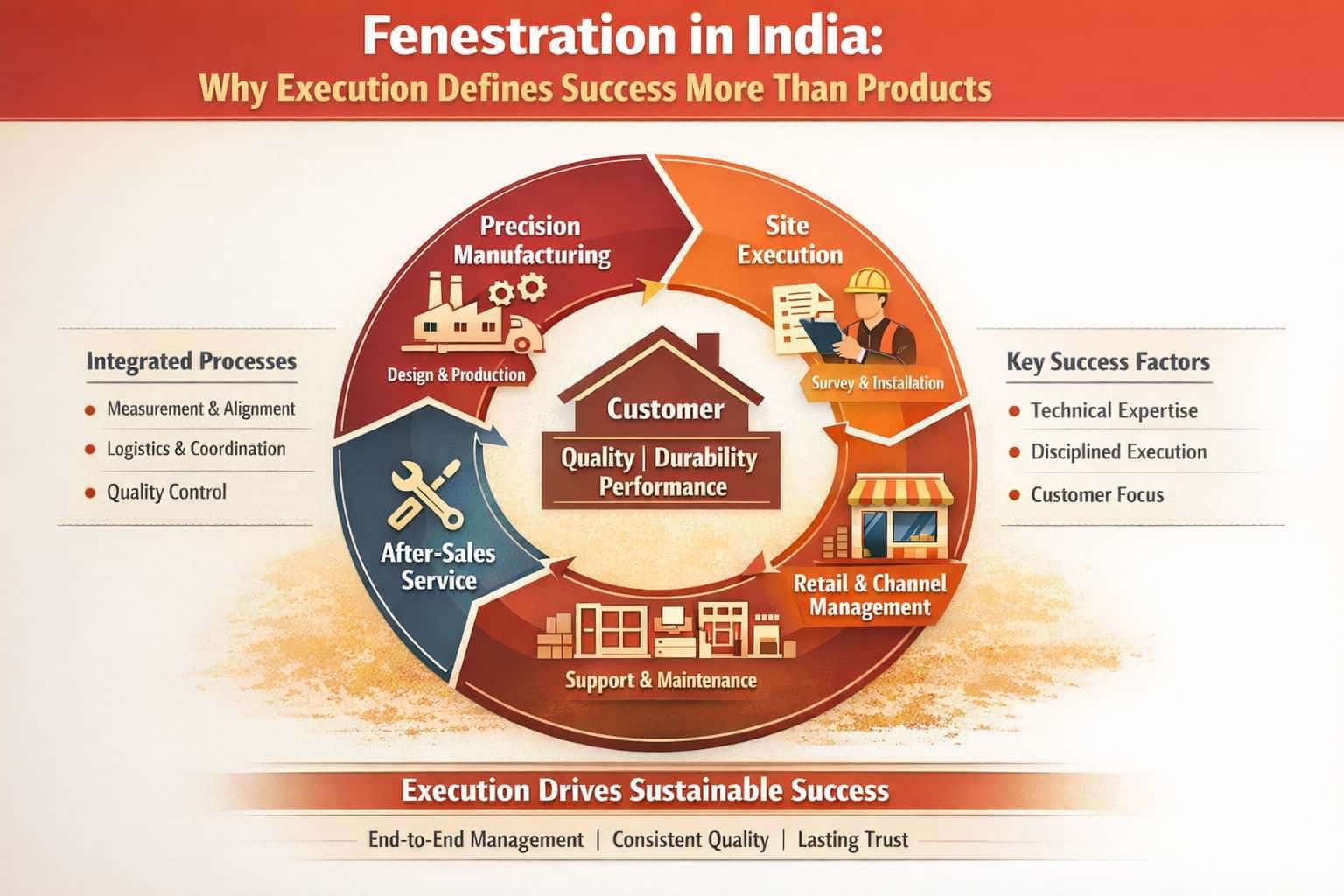
Fenestration projects bring together diverse stakeholders — architects, developers, contractors, fabricators, installers and service teams — making complexity inherent to execution. A recurring challenge is fragmented responsibility: sales drives closures, manufacturing optimises output and installation targets completion. While each may perform well individually, customers experience fenestration as one unified promise. Execution is complex because fenestration is not a single business model but four operating models running together.
Fenestration Operates As Four Businesses Within One Industry:
- Precision Manufacturing
- Site Engineering & Execution
- Retail / Channel Experience
- After-Sales Lifecycle Service
Most industry challenges arise not from competition, but from managing these distinct models through a single lens, without recognising their different capabilities, metrics, leadership focus and execution discipline. Typical site-level challenges include structural openings varying from drawings, inadequate sill waterproofing, last-minute design revisions and inconsistent installer skill levels. These gaps do not appear in specifications, but they determine final performance and customer perception.
As the Indian fenestration market matures, differentiation will not come from profiles or pricing alone. Products can be replicated; execution excellence cannot. The shift must be from selling components to delivering integrated solutions, from transactions to ownership and from short-term wins to long-term performance. This evolution demands investment not just in machinery or capacity, but in people, processes, training, digital systems and leadership intent that consistently prioritises standards over shortcuts and discipline over convenience.
The Inflexion Point
Fenestration in India stands at a clear inflexion point. Rapid urbanisation, rising consumer awareness and growing design complexity are elevating expectations across residential and commercial projects. In this evolving landscape, execution is no longer a back-end function; it is the primary differentiator. The organisations that will lead the next phase of growth understand a simple truth: products may open doors, but execution builds reputations.
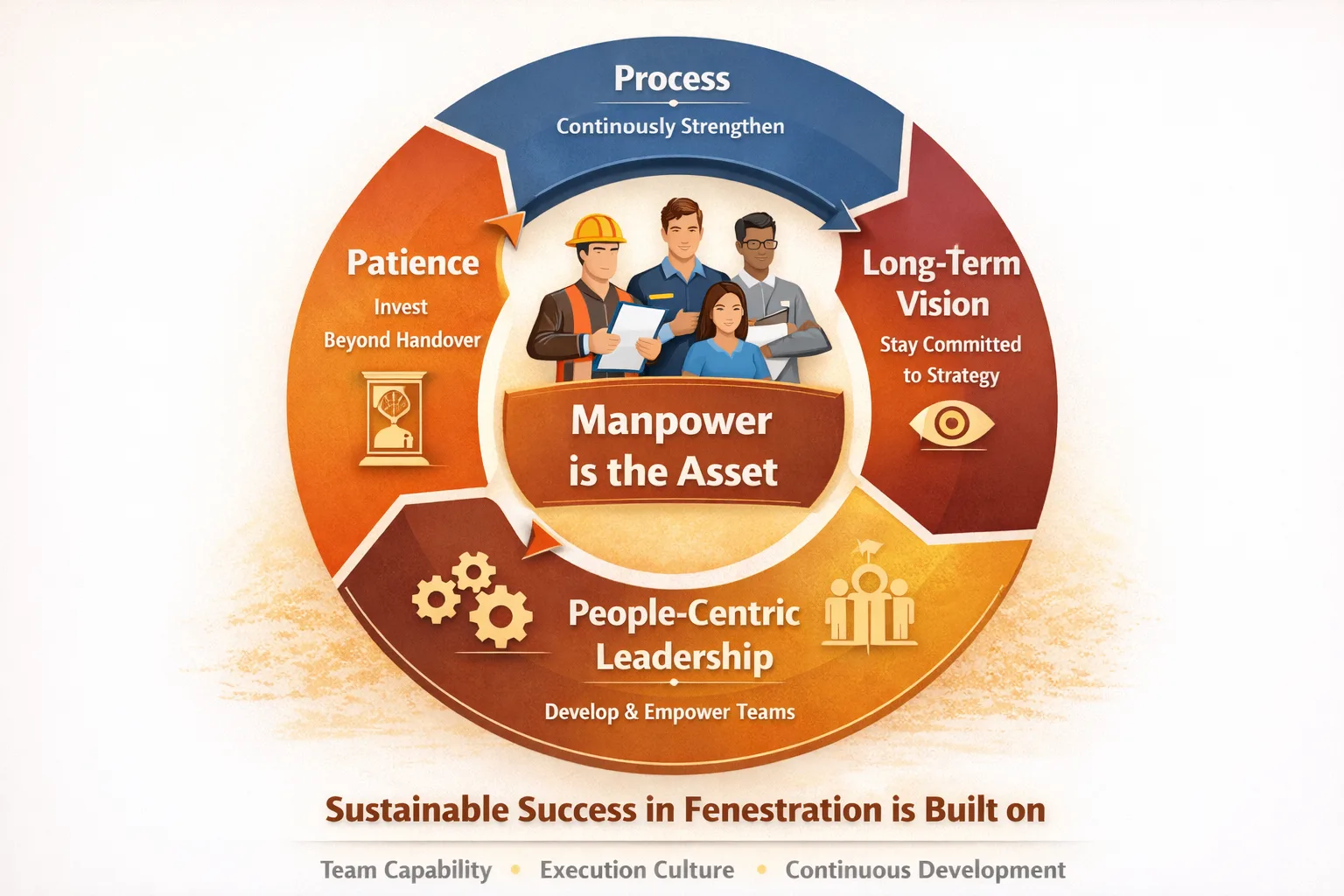
Brands in fenestration are not built in catalogues or showrooms; they are built at the customer’s site. They are defined by how teams manage constraints, coordinate stakeholders and uphold standards under challenging conditions. Success in this industry requires patience, as results do not appear overnight. It demands investment not only in capital, but in time to define strategy, strengthen processes, train teams and embed discipline on the ground. Manufacturing capability is only the starting point of the fenestration journey; sustainable growth and profitability are created through disciplined execution over time. This industry does not reward short-term thinking or rapid closures. It rewards organisations with long-term vision, robust systems and the discipline to consistently refine execution across sales and service.
The Indian fenestration market has witnessed multiple waves of entry. Several companies in the past, and even some large and well-known brands in recent years, have entered this category with ambition and capital. Yet many have either wound up operations, significantly reduced their footprint or continue to struggle to establish a meaningful presence and remain unable to scale beyond a certain level. More often, it is an underestimation of the industry’s operational complexity and the time required to build execution depth. Leadership teams must recognise that fenestration is not a short-gestation business. It demands sustained investment of time, attention and patience. Many more companies will enter this space in the future, attracted by urbanisation, rising consumer awareness and growing demand. However, unless they approach the market with long-term commitment, execution discipline and realistic timelines, scale will remain elusive.
In this industry, machines and fixtures are important enablers, but they are not the true differentiators. The real gold asset is manpower — trained planners, production teams, installers, service engineers and leaders who understand process discipline. Success depends far more on building capable teams and nurturing an execution culture than on adding capacity alone. Sustainable success in fenestration comes from staying invested beyond handover, learning from every project, strengthening processes rather than chasing immediate wins, and continuously developing people who carry the brand promise to the customer’s site. Ultimately, it is execution — guided by patience, people-centric leadership and long-term vision — that creates profitable and enduring businesses.
| “A profitable and sustainable fenestration industry in India will be built on patience and long-term vision, where skilled execution and world-class products create lasting customer trust, and brands grow not through short-term wins but through enduring value delivered consistently in the field.” |