
Post Date: May 11, 2026 |
Last Edited: July 29, 2026
In architecture, façade design plays a critical role not just in defining the visual identity of a building but in shaping its performance, user experience, and environmental impact. Among many elements of façade design, colour is often seen as an aesthetic decision. Colour is a strategic tool — one that influences thermal performance, mood, maintenance cycles, and even urban integration.
With the growing demands of sustainable and climate-responsive design, colour selection can no longer be a secondary thought, and as artificial intelligence (AI) continues to find new applications in the building industry, it is now transforming how colour is approached — from early concept to post-occupancy. With the multi-dimensional role of colour in façades, AI tools are enhancing the process of choice, simulation, and performance alignment.
The Psychology of Colour in Architecture
As one of the dimensions of visual communication, colour plays a crucial role in people’s place identity and environmental experience. It influences how we perceive spaces. A building’s facade colour can make it feel imposing or inviting, warm or cool, modern or rooted in tradition. In residential architecture, colour is often tied to emotional comfort and a sense of belonging. In commercial or institutional settings, it can reflect brand identity or purpose.
Cultural context plays an influential role. In India, for instance, white is associated with purity in some regions and mourning in others. Earth tones blend well with heritage or vernacular contexts, while vibrant accents are often seen in schools or civic buildings to evoke liveliness. By selecting colours with intent — informed by site, purpose, and people — facade design becomes more than skin-deep; it becomes experiential.
AI-powered design tools like DALL·E, Midjourney, NVIDIA Canvas, and Lumion AI (among others) can quickly generate realistic images of how a building will look in different lighting conditions, seasons, and contexts — enabling better decision-making early on. These tools allow architects to experiment with multiple colour schemes instantly, comparing them side-by-side and refining based on the desired output.
Climate Responsiveness Through Colour
Colour is a key factor in thermal performance. Light-colored façades reflect more sunlight and absorb less heat, reducing the cooling load on buildings in hot climates. Darker tones absorb more heat, which can be strategically used in colder regions to aid with passive heating. This reflectivity or albedo effect is particularly important in tropical countries like India, where external wall temperatures can vary by several degrees depending on surface colour and finish.
Modern energy codes like ECBC (Energy Conservation Building Code) and green rating systems (LEED, GRIHA) increasingly recognise façade colour as a passive design strategy — one that reduces operational energy use without added cost. AI tools help in creating an interactive interface with graphic visualisation to explore, review and decide façade material assembly along with colour, thereby reducing decision effort and increasing confidence.
Materiality and Colour Durability
Façade colour is deeply intertwined with materiality. Pigmented concrete, painted aluminium panels, natural terracotta, glass coatings, ceramic tiles — each has a unique interaction with colour in terms of texture, reflectivity, and weathering. For instance, a matte surface will scatter light differently from a glossy one, even if the base colour is the same. Oxidised copper or corten steel may change tone over time, developing a patina that is part of the architectural narrative.
Choosing the right colour-material combination is essential for long-term performance. A vivid hue that looks great in renderings may fade quickly in harsh sun if the coating system isn’t appropriate. Understanding how colour will age, stain, or peel is a vital, yet often overlooked, part of façade design. AI platforms can integrate material databases with performance data — evaluating how a particular colour on a particular cladding material will perform in terms of fading, maintenance, stain resistance, and embodied carbon.
Urban Context and Visual Integration
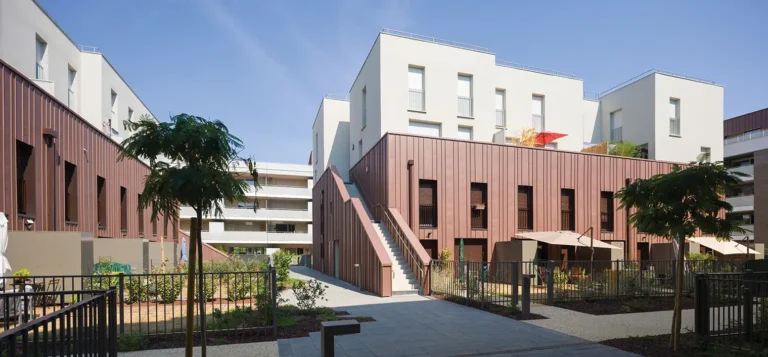
In dense urban environments, façade colours play a role in visual coherence or contrast. A new development in a historic district might need to adopt muted or earthy colours to respect the context. In high-density housing, varying colour blocks can help break monotony and support wayfinding.
Colour also becomes a tool for brand identity — think of how social housing, luxury residences, or educational institutions use colour to project values or lifestyle aspirations.
AI can be trained to analyse urban surroundings, architectural typologies, or heritage influences, and generate colour palettes that blend or stand out appropriately. Some tools can even learn from local vernacular patterns or past projects to make culturally intelligent suggestions.
AI Co-Creation with Designers: From Assistant to Collaborator
AI Co-creation is a paradigm where artificial intelligence doesn’t just automate tasks or provide outputs — it actively collaborates with architects and designers during the creative process. In façade design, this means AI becomes a thinking partner, helping generate, evaluate, and evolve ideas in real time.
Generative Design Platforms like Autodesk Generative Design and Finch3D generate façade options based on set performance and aesthetic goals. Image-Based Prompting tools (like Midjourney or DALL·E) visualise façade concepts based on briefed prompts.
Feedback Loop Learning improves suggestions as the designer accepts or changes the AI output. Real-Time Software Collaboration allows designers to sketch or tweak elements with AI, adapting performance layers in real time.
Adaptive Skins That Respond to the Environment
Dynamic/colour-changing façades are responsive building skins that change colour, transparency, or reflectivity in response to environmental conditions like light, temperature, or humidity.
Key Technologies that are being explored and implemented include:
- Thermochromic Materials: Material Change color with heat.
- Photochromic Glass: Tints based on sunlight.
- Electrochromic Skins: Façade colour is controlled via electric current.
- Microfluidic Skins: Circulate pigments to change colour/pattern.
- Kinetic Panels: Rotate or shift position based on environmental inputs.
The Role of AI in implementing façade technologies is seen in:
- Predictive modelling of behaviour across seasons
- Real-time control and optimisation
- Learning occupant/user preferences
Case Study 1: Eskenazi Hospital Parking Building
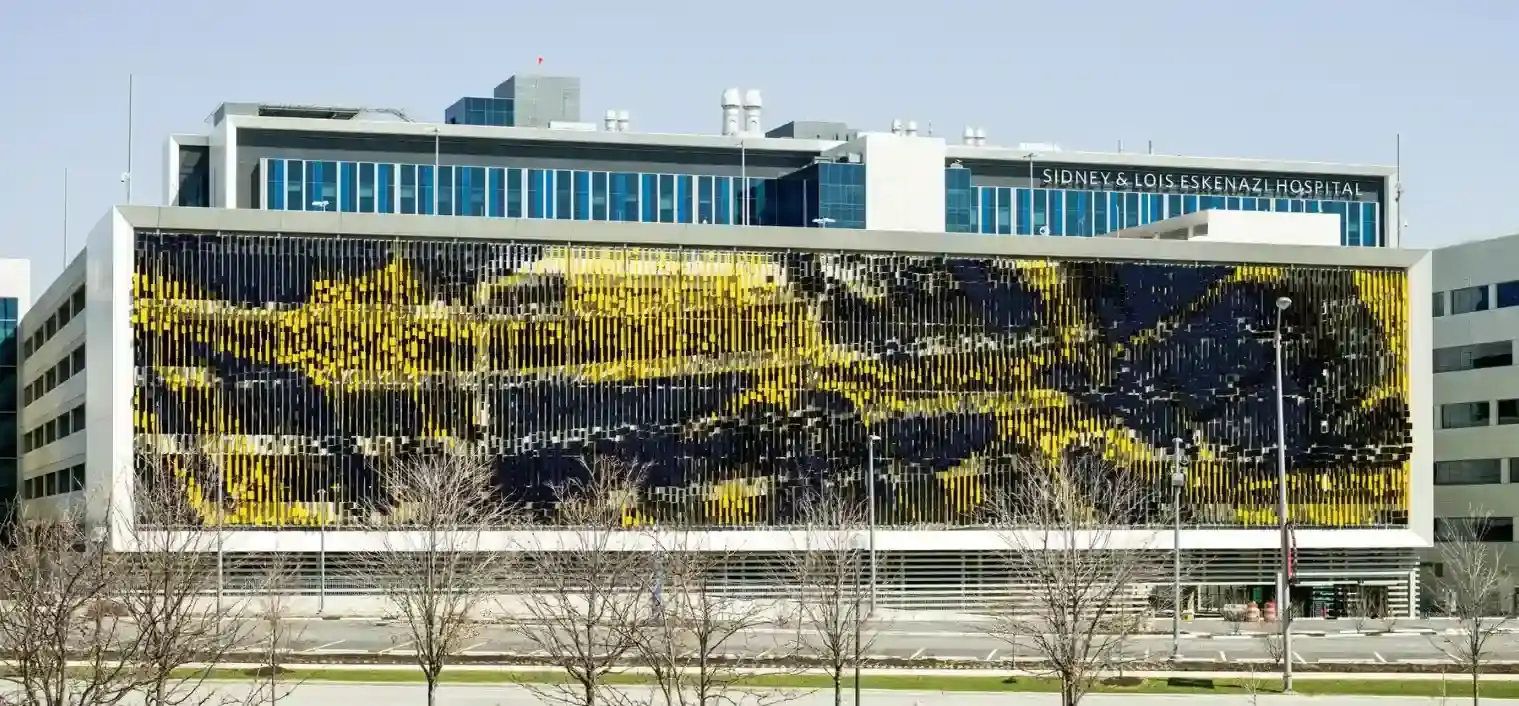
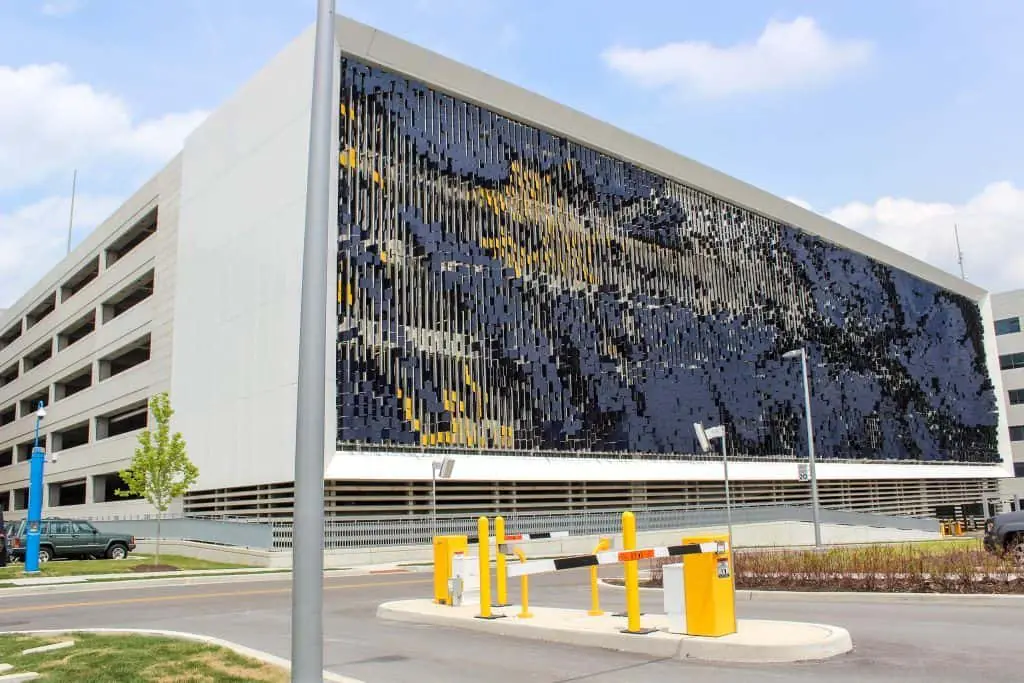
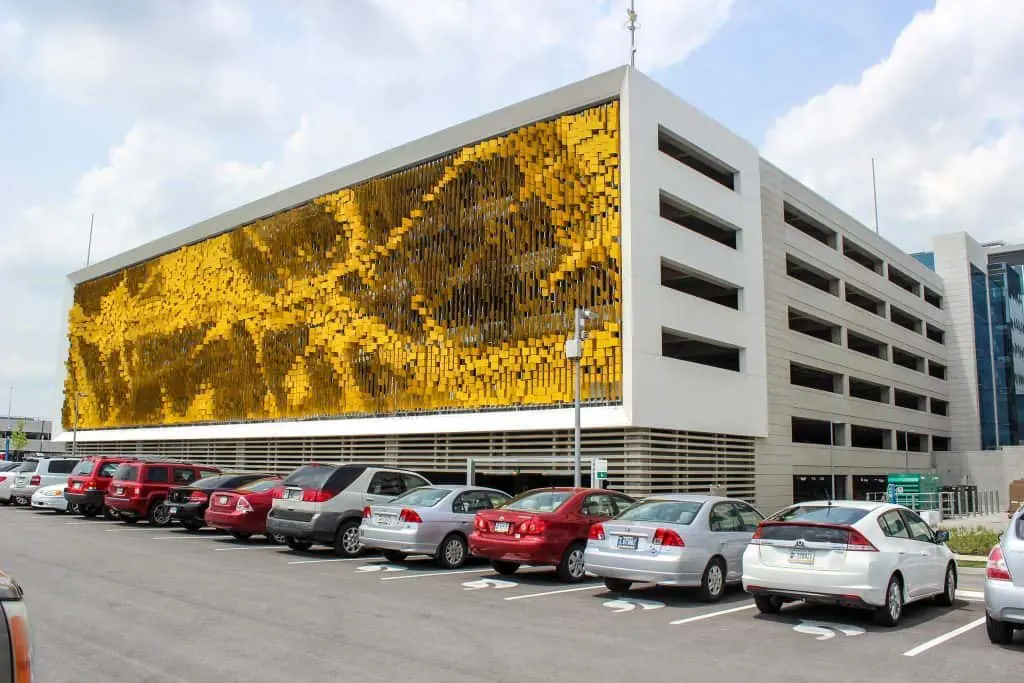
Façade for Indianapolis Eskenazi Hospital parking garage is an interactive wall sculpture by Rob Ley called May/September, consisting of 6500 metal tiles arranged at varying angles, oriented east or west. The artwork, activated by the movement of people around it, is known for its dynamism and colour effects. Designed and executed by Urbana architecture is seen as a golden yellow or deep blue depending on the observer’s direction. The experience is also influenced by the vantage point and the pace of the viewer viewing this masterpiece – i.e., the slow-moving vehicles and pedestrians would view the façade differently from the vehicles driving on the nearby highway.
However, while the metal tiles appear to display two distinct colours, the experience is simply due to the play of angles, the time of the day and the reflection from other lights that make the shades look different.
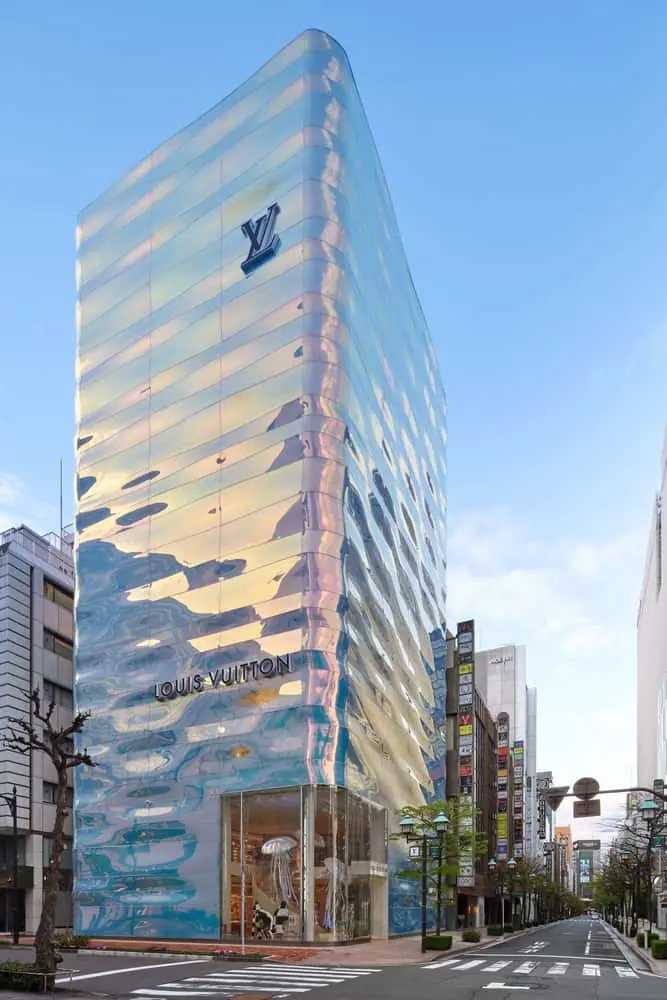
Case Study 2: Louis Vuitton Store, Ginza Namiki – Tokyo
The façade of the Louis Vuitton store at Tokyo’s Ginza reflects Ginza’s location near Tokyo Bay, along with creating a modern, unique design of its kind. Called ‘poetic, playful, shimmering and rhythmic, the waterlike, unique façade designed by Jun Aoki and Associates creates an undulated yet smooth surface from the glass facade that transmits shifting colour from the feature staircase and fixtures. Double-layered glass has been curved to create a water-like effect have been covered by a dichroic film to give the pearlescent colouring.