
Post Date: June 10, 2026 |
Last Edited: June 15, 2026
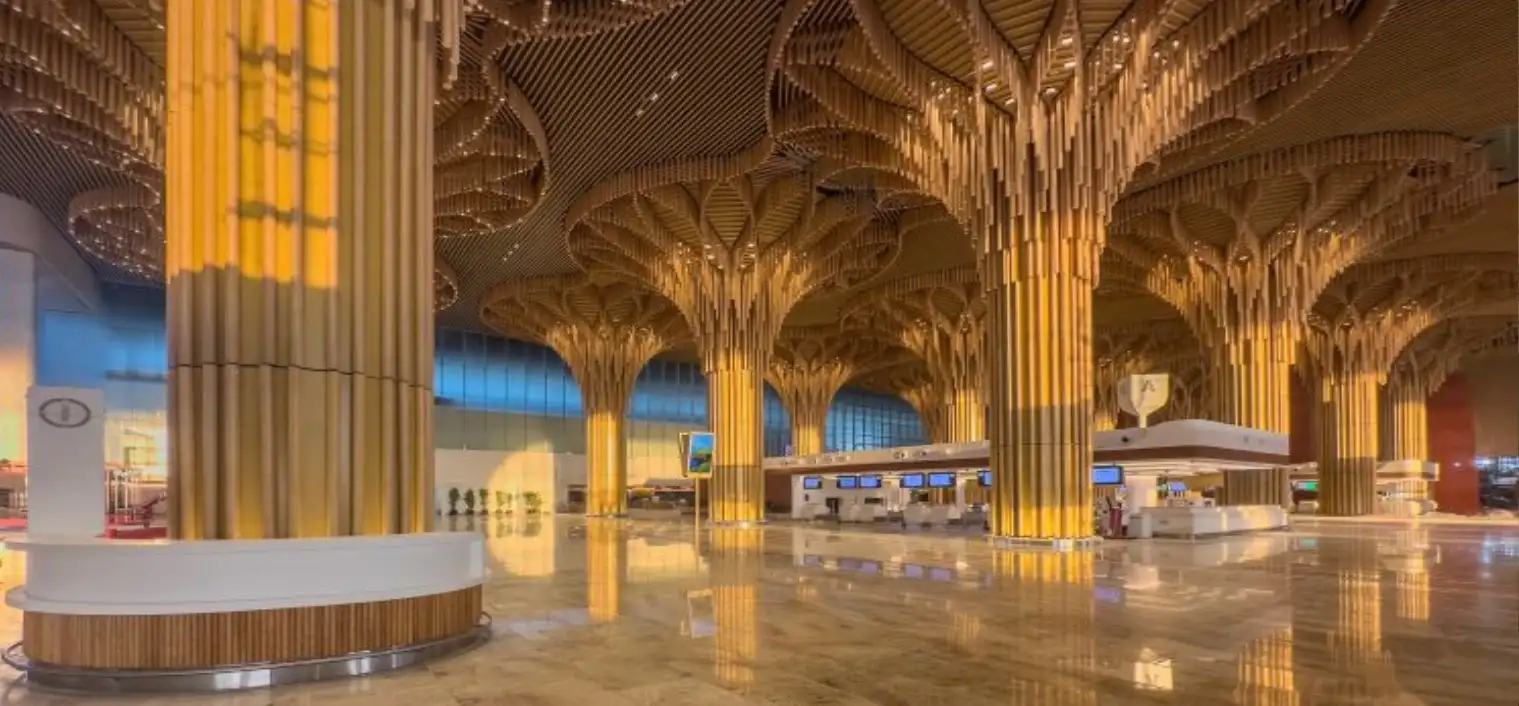
Lokapriya Gopinath Bordoloi International Airport (LGBIA)
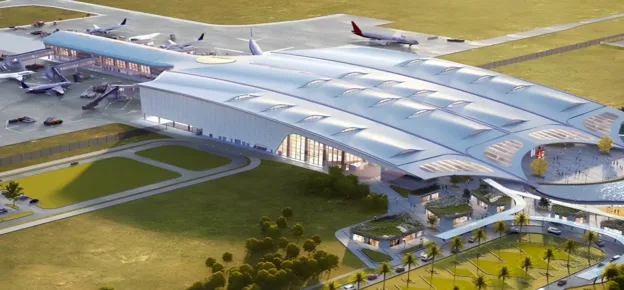
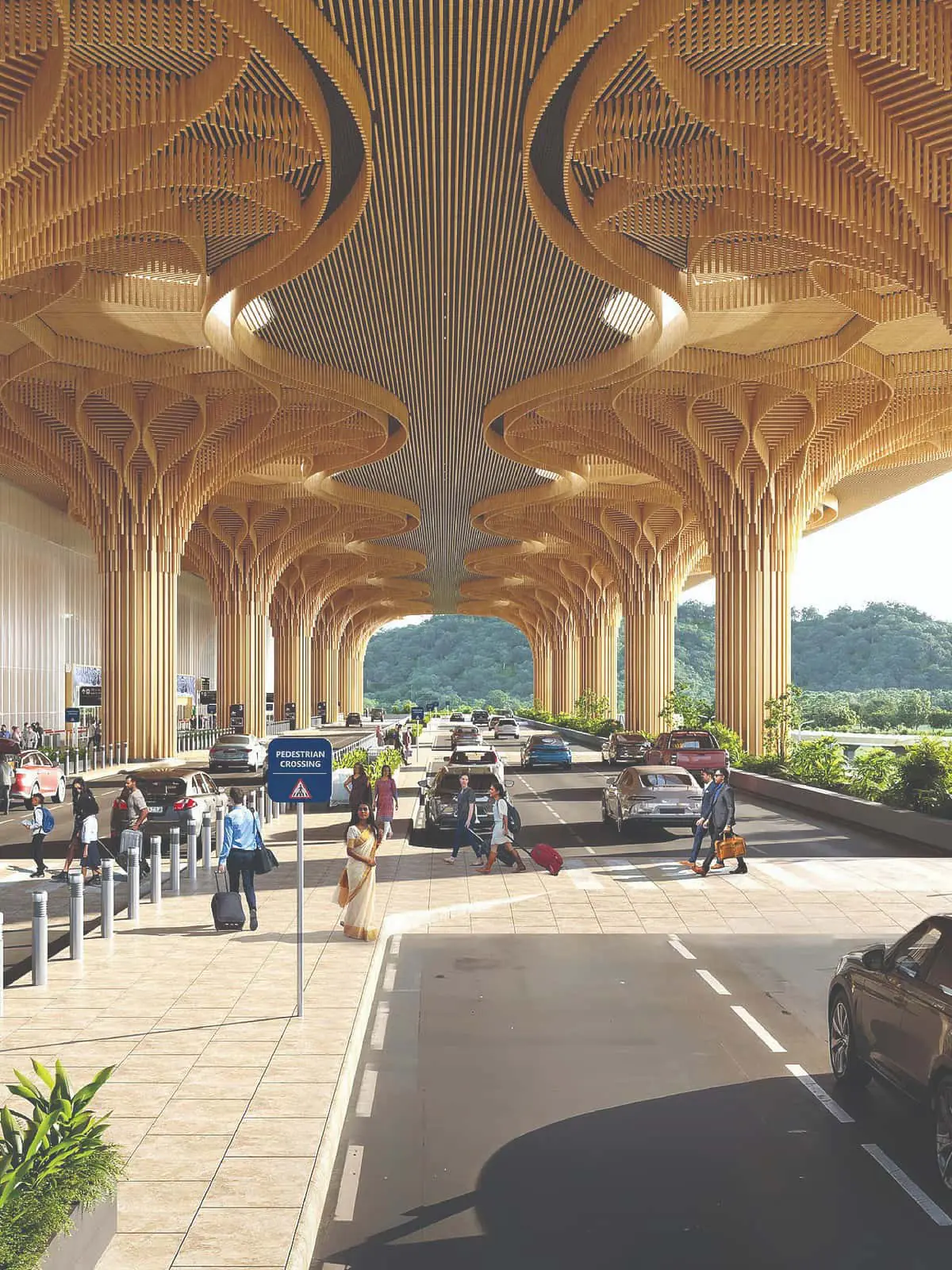
As India’s aviation infrastructure rapidly expands, airport projects increasingly demand precision, speed, sustainability, and multidisciplinary coordination. At Guwahati International Airport, project delivery was supported through an advanced Building Information Modelling (BIM) framework for façade and architectural coordination under the client leadership of Shapoorji Pallonji.
The project required digital coordination across architectural systems, façade detailing, and construction interfaces to support a highly controlled airport environment, where safety, sequencing, and execution accuracy are critical.

Bim Scope Delivered
The focus was on developing coordinated digital models that enabled seamless interaction between façade systems, structural interfaces, and architectural intent.
The BIM Process Included:
- Detailed façade modelling.
- Architectural model coordination.
- Clash detection across disciplines.
- Construction sequencing support.
- Design validation for installation feasibility.
- Quantity extraction for controlled material planning.
A federated BIM environment helped stakeholders visualise design intent before on-site execution, reducing ambiguity during construction.
Tools And Digital Ecosystem Used
To ensure coordinated delivery, a robust BIM toolchain was deployed:
- Autodesk Revit for architectural and façade modelling.
- Autodesk Navisworks for clash detection and model review.
- Escape for visual simulation and stakeholder presentation.
- Dynamo for automation of repetitive BIM tasks.
- Autodesk AutoCAD for detail referencing.
- Microsoft Excel for quantity schedules and reporting.
How Bim Benefited The Project
BIM enabled faster decision-making by identifying coordination issues early in the design stage. This reduced rework risk and improved execution confidence before physical installation began.
Key Benefits Included The Following:
- Improved design accuracy.
- Early clash identification.
- Better façade installation planning.
- Reduced construction delays.
- Controlled documentation flow.
- Higher collaboration between consultants and execution teams.
For airport projects, where every service zone is densely packed, BIM significantly improves predictability.
Sustainability Angle In Airport Façade Planning
A major advantage of digital façade coordination is sustainability integration. Modelling systems before execution helped reduce material wastage and improve resource efficiency. Accurate quantity extraction prevented over-ordering, while clash-free coordination reduced site-level corrections.
Façade Planning Also Supports Long-Term Energy Performance By Helping Evaluate:
- Daylight penetration.
- Thermal envelope behaviour.
- Material optimisation.
- Envelope performance consistency.
In large public infrastructure such as airports, sustainable digital planning contributes directly to lower embodied waste and better lifecycle performance.
This demonstrates how BIM is no longer just a documentation tool—it is a project intelligence system that strengthens delivery quality across complex infrastructure.
From façade detailing to execution readiness, digital coordination continues to redefine how modern aviation projects are built.
Quick Facts:
|
Read Complete Article :
Article: Smart Airport Facades & Fenestration For Safe, High-Performance Infrastructure