
Post Date: October 6, 2026 |
Last Edited: October 6, 2026
Key Highlights
|
A façade is often the first architectural element we encounter. It establishes identity, creates a sense of arrival and shapes our perception of what lies within. But beyond aesthetics, a contemporary façade has a much larger responsibility. It must respond to climate, improve energy performance, ensure safety, accommodate technology and remain durable over time. In this sense, the façade is not merely a building envelope; it is a language through which architecture communicates with its context.
In India, this role becomes particularly significant given the country’s diverse climatic conditions and rich traditions of craftsmanship. From stone jaalis and shaded verandahs to intricately crafted metal screens, traditional architecture has long used the building envelope to regulate heat, light and ventilation. Contemporary architecture has an opportunity to reinterpret these principles through modern materials and technologies rather than simply replicating traditional forms.
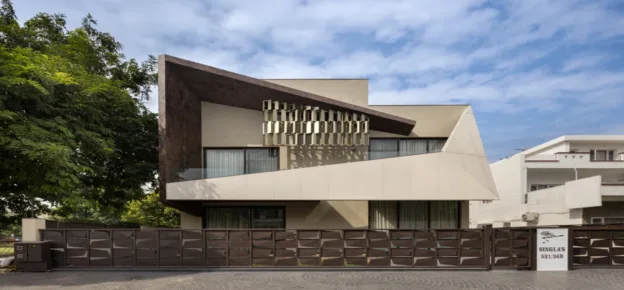
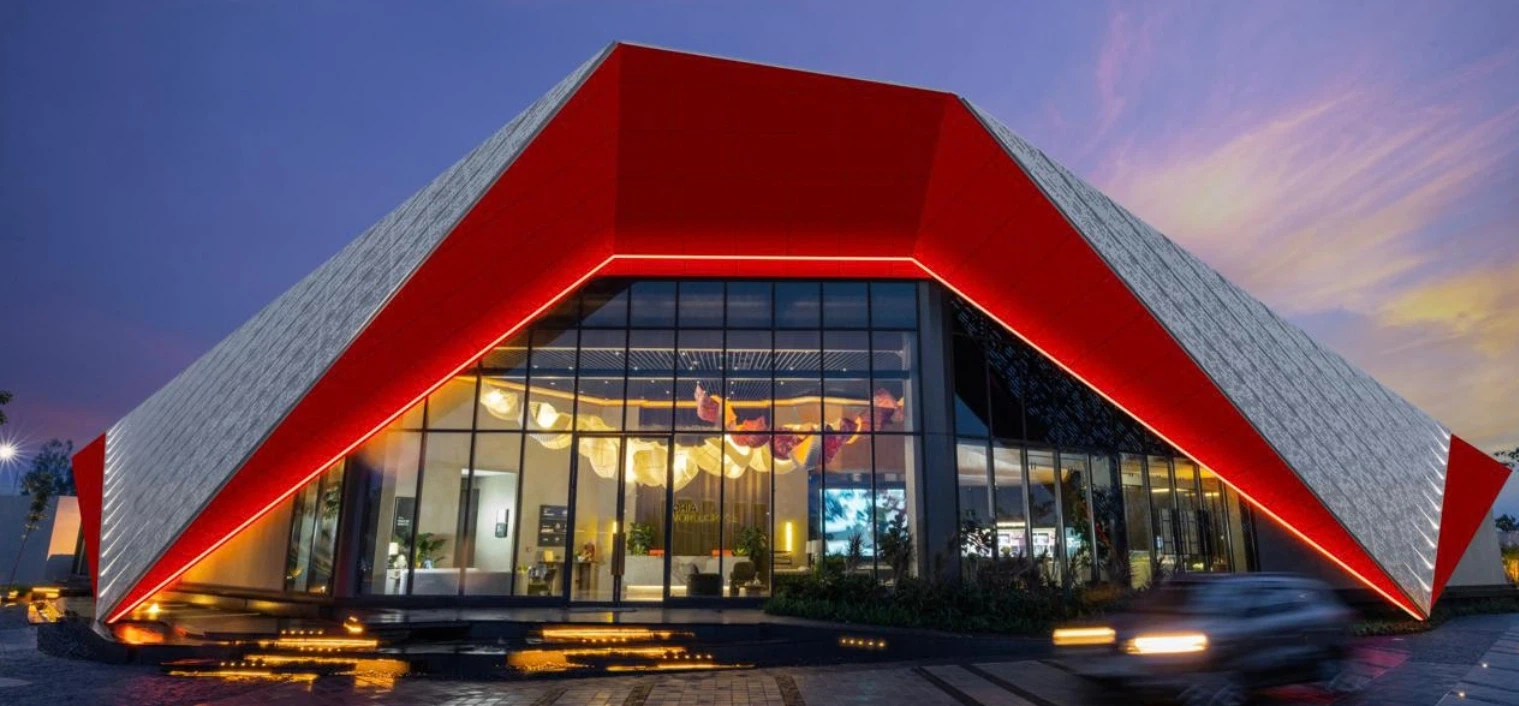
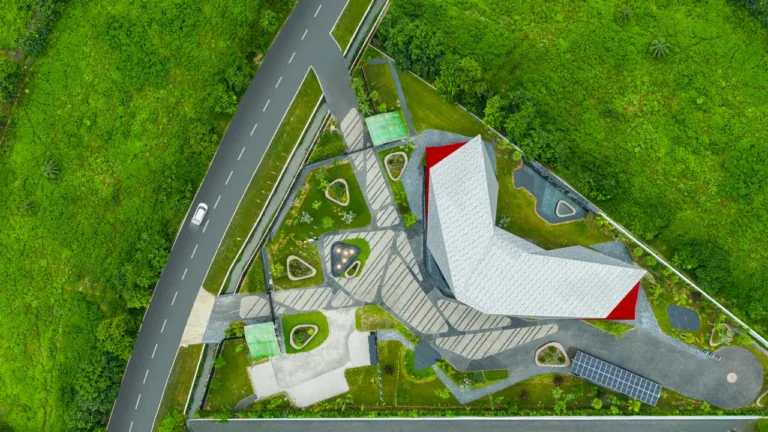
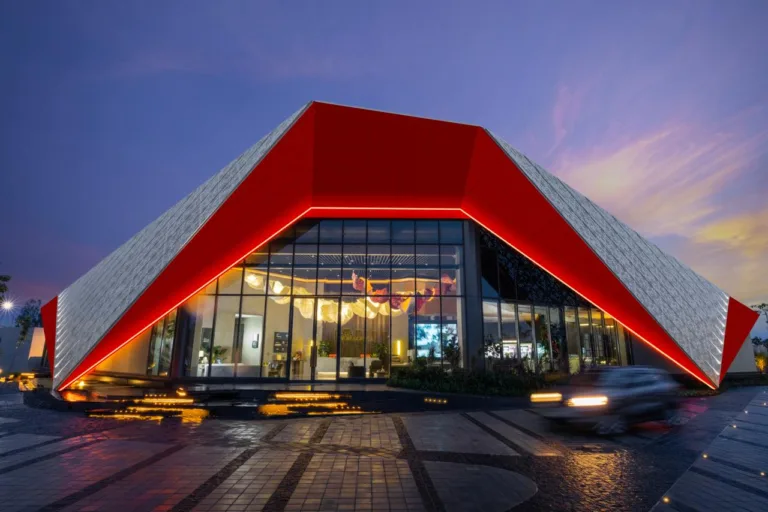
The Lohia Experience Centre in New Moradabad is one such exploration. Its façade draws inspiration from Moradabad’s long association with brassware and metal craftsmanship, translated through perforated surfaces, layered geometry and metallic textures — not as literal reproduction, but as a contemporary architectural expression.
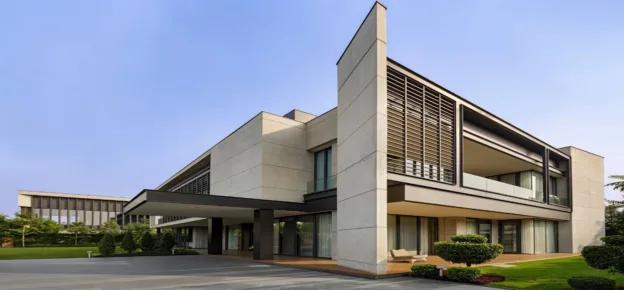
This approach also demonstrates how design and climate responsiveness can work together. Perforated façade elements, deep overhangs and screened surfaces help manage solar exposure while creating diffused daylight within interior spaces, reducing dependence on artificial lighting and cooling while becoming defining architectural features. Material selection plays an equally important role. The choice between glass, aluminium, metal panels, stone, terracotta or composite materials should be guided not only by appearance and cost but also by the building’s orientation, local climate, maintenance requirements, embodied energy and lifecycle performance. High-performance glazing, for instance, can improve thermal comfort when combined with appropriate shading strategies, while durable external finishes can reduce maintenance interventions over the building’s lifespan.
Technology is further transforming façade design. Parametric modelling and digital fabrication allow architects to develop complex geometries with greater precision, while performance simulations help evaluate daylight, solar radiation and thermal behaviour before construction — allowing the façade to evolve from a visual component into a measurable environmental system.
At the same time, safety and security cannot be treated as secondary considerations. Façade systems must be designed to withstand wind loads, thermal movement, water penetration and long-term environmental exposure. Fire safety, material performance, structural anchoring and access for inspection and maintenance are critical parts of the design process. The most successful façade is therefore one where aesthetics, engineering and safety are integrated from the beginning rather than addressed independently.
Maintenance deserves greater attention in India’s rapidly developing built environment. A visually striking façade can lose its impact if it requires excessive cleaning, difficult repairs or frequent replacement of components. Designing for accessibility, drainage, material durability and ease of replacement significantly improves long-term performance — a façade should be judged not only by how it looks on completion but by how responsibly it ages.
Looking ahead, façade design in India is likely to become increasingly responsive and adaptive. Integrated shading systems, smart glass, building-integrated photovoltaics, sensor-based controls and improved digital modelling will expand the possibilities of the building envelope. Yet technology alone will not define the future — the more important shift will be towards façades that are context-sensitive, responding intelligently to local climate, culture, materials and patterns of use. This also creates an opportunity to strengthen India’s architectural identity: as cities become more globalised, contemporary architecture can resist generic, disconnected glass-and-steel expressions by drawing on local craft, materials and environmental knowledge while expressing them through modern design.
Ultimately, the language of the façade is about balance — between transparency and shade, technology and craft, visual identity and performance, innovation and practicality. When these elements come together, a façade becomes more than an enclosure; it becomes an active interface between architecture, people and the environment. The future of façade design in India will not simply be about more complex or striking envelopes, but about façades that perform intelligently, age gracefully and tell a story rooted in place — where craft and climate move beyond inspiration to become integral parts of the architecture itself.