
Post Date: October 7, 2026 |
Last Edited: October 7, 2026
Key Highlights
|
Market Demand And Innovation
The demand for sustainable and acoustically comfortable buildings is fundamentally changing how architects and developers approach the building envelope. A few years ago, windows and façades were often evaluated primarily on aesthetics and cost. Today, they are increasingly expected to contribute to energy efficiency, occupant well-being, acoustic comfort, indoor air quality, and resilience against changing climatic conditions.
This is driving a shift towards higher-performance fenestration systems. We are seeing growing adoption of technologies such as thermal break aluminium systems, high-performance insulated glazing units (IGUs), low-E and solar control glass, laminated acoustic glass, and advanced sealing systems that improve both thermal and acoustic performance. The focus is increasingly on how the entire system performs rather than on individual components alone.
In dense urban environments, acoustic comfort has become a major consideration, particularly for residential developments, hospitality projects, healthcare facilities, and premium office spaces. At the same time, rising temperatures and increasing energy costs are accelerating demand for solutions that help reduce heat ingress and improve indoor comfort without excessive dependence on mechanical cooling.
Another notable trend is the growing emphasis on measurable performance. Architects and developers are increasingly seeking tested solutions with validated ratings for air infiltration, water tightness, wind resistance, thermal performance, and acoustic insulation. This is encouraging the industry to move towards more engineered, system-based solutions that deliver predictable outcomes over the lifecycle of a building.
Ultimately, the market is moving towards façades and fenestration systems that are expected to do much more than provide light and views. They are becoming critical contributors to sustainability, occupant comfort, energy efficiency, and long-term building performance.
Acoustic Performance Metrics
One of the most common misconceptions in the industry is that acoustic performance is determined solely by the glass. While glass certainly plays an important role, the reality is that sound insulation is a function of the entire fenestration system. Even the most advanced acoustic or laminated glass will not deliver the desired results if sound can enter through gaps in the frame, sash, hardware interfaces, or installation joints.
For this reason, architects and developers should evaluate the complete system rather than focusing on glass specifications alone. Parameters such as air infiltration performance, sealing design, gasket quality, frame engineering, hardware precision, and installation quality all have a direct impact on acoustic comfort. In fact, poor air insulation is often one of the biggest reasons why occupants continue to experience external noise despite investing in high-performance glass.
The choice of glazing remains important, particularly in environments exposed to high traffic, rail corridors, airports, or dense urban activity. Laminated glass, asymmetrical glass combinations, and insulated glazing units can all contribute to improved acoustic performance. However, these solutions are most effective when paired with a well-engineered window or façade system that minimises air leakage.
At Eternia, this understanding is reflected in our patented WiWA system, which evaluates windows on Wind, Water, and Air performance. Air insulation is a particularly critical parameter because the pathways through which air enters a building are often the same pathways through which noise travels. As a result, improving air insulation is frequently one of the most effective ways to enhance acoustic comfort and overall indoor living quality.
Technology And Product Advancements
What recent innovations in materials, glass technologies, hardware, or system design are helping improve both acoustic and energy performance?
Innovation in fenestration is increasingly being driven by the convergence of performance, sustainability, and occupant well-being. While advances in materials and glazing continue to play an important role, some of the most exciting developments are happening at the system and building-integration level.
In glazing, we are seeing continued adoption of low-E coatings, solar control glass, advanced laminated glass constructions, and high-performance insulated glazing units that help improve thermal efficiency while also contributing to acoustic comfort. Dynamic glazing technologies, including switchable glass, are also gaining interest in applications where privacy, daylight management, and energy performance need to be balanced.
Hardware systems have evolved significantly as well. Modern fenestration solutions increasingly incorporate precision-engineered hardware that enables larger and heavier panels to operate effortlessly while maintaining sealing performance over long periods of use. Motorised systems, integrated sensors, remote operation, and smart building connectivity are becoming more common, particularly in premium residential and commercial developments.
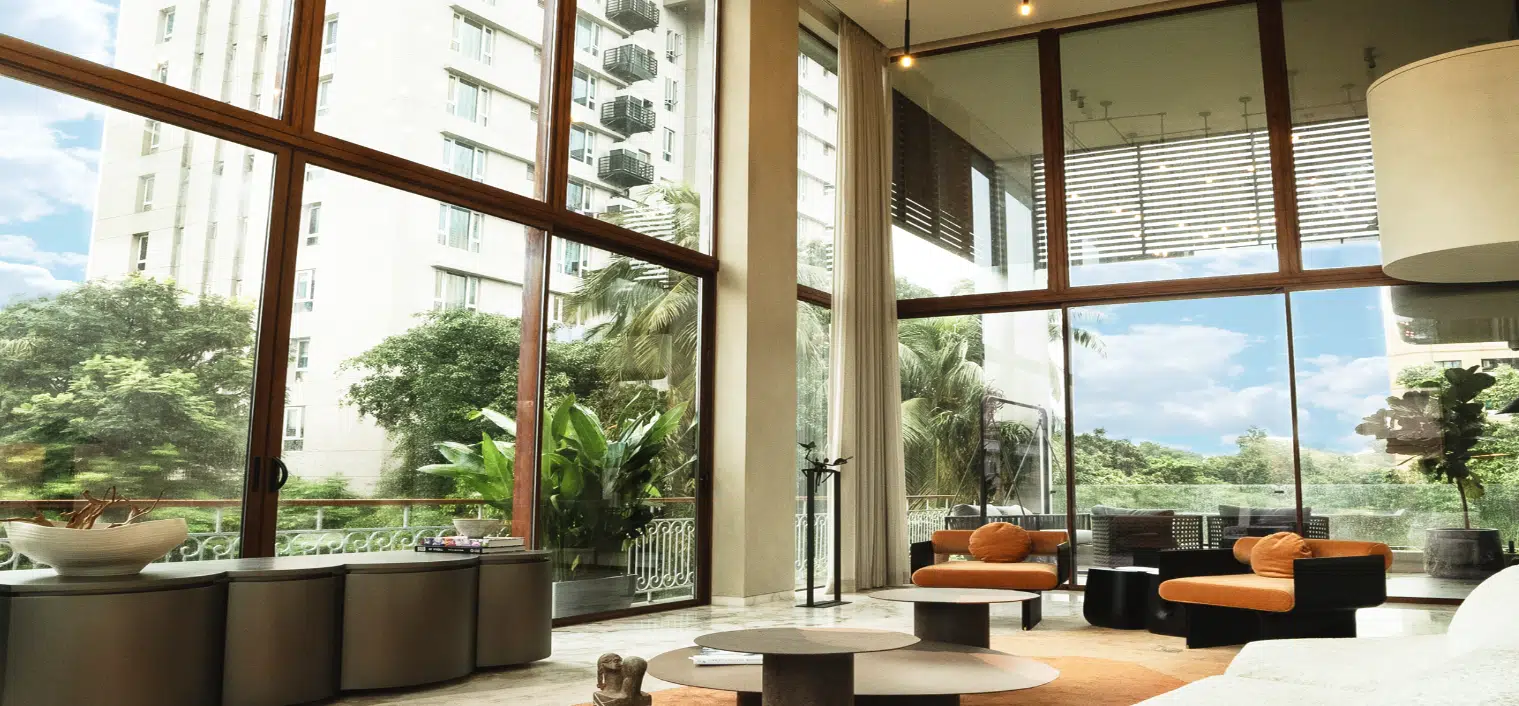
Another important trend is the integration of fenestration into broader occupant wellness strategies. As concepts such as biophilic design gain prominence, architects are looking for ways to maximise natural daylight, outdoor views, and occupant connection with nature. This is driving demand for larger openings, slimmer sightlines, and technologies that help optimise daylight while controlling heat gain and glare. The growing use of circadian and human-centric lighting systems, designed to mimic natural daylight patterns, is part of the same broader movement towards healthier indoor environments.
At the system level, advancements in sealing technologies, thermal break systems, gasket design, drainage mechanisms, and engineering precision are helping improve air insulation, weather resistance, thermal performance, and acoustic comfort. Perhaps the most significant industry shift, however, is the move towards fully engineered system solutions where profiles, glass, hardware, and accessories are designed, tested, and validated as a single integrated system. This delivers more predictable and reliable performance throughout the lifecycle of a building.
Supporting Sustainable Building Goals
The building envelope plays a critical role in determining a building’s overall energy performance and occupant comfort. Well-designed fenestration systems help reduce unwanted heat gain, improve thermal insulation, minimise air leakage, and optimise natural daylight, all of which contribute to lower energy consumption.
Our systems are designed to support these objectives through superior weather insulation, high-performance glazing options, and precision-engineered aluminium profiles. Improved thermal performance can reduce dependence on air-conditioning, while enhanced acoustic insulation contributes to occupant well-being and productivity.
From a material perspective, aluminium is unique in that it is infinitely recyclable without loss of properties. As the industry moves towards more sustainable construction practices, the use of durable, long-life, recyclable materials becomes increasingly important in reducing the overall environmental impact of buildings.
Collectively, these attributes help projects align with green building objectives and support broader sustainability goals across the building lifecycle.