
Post Date: March 25, 2019 |
Last Edited: March 10, 2026
What are the important aspects of façade design for fire safety? Generally, façade design considers the passive design for fire safety and is limited to fire stop and smoke seal. In addition, the design also needs to consider smoke vents in the form of an operable window or actuator for smoke. In Mumbai, it is becoming mandatory to provide fire drenchers specifically for high-rise curtain wall buildings.
What are the impacts of façade design on the fire safety of buildings?
The impacts of façade design are very significant and can be hazardous and unsafe when using combustible materials. The materials used could be due to ignorance or value engineering (VE) options as the façade cost is considered at the fag end of the project. Façade design ideally needs to consider the design parameters for a proper fire stop and smoke seal between the floor and provision for the smoke extraction and evacuation strategy in the event of fire.
What are the parameters that define the performance of façade materials during a fire?
The façade materials and the system components need to be reviewed while deriving the performance of the façade materials. The design should consider the location of the building where the particular material is used, along with the system proposed to anchor the material. The system plays an important role in the design of a façade element during a fire. The fire load is a starting point for estimating the potential size and severity of the fire, and the calorific value is considered while considering materials.
What are the unique aspects of fire testing of building façade materials?
Testing of the façade materials would help us understand the combustibility of the material and its use as a façade element. As mentioned before, the testing should also include the anchoring system, which plays a major role in the case of fire. For example, there are cases where the insulation material has been the source of the fire and caused massive damage to the building façade, even though the exterior façade material is non-combustible. Testing of building material would provide a better insight into the use of the material for a particular project.
How important is the use of fire-rated glass? Is it affordable, or is there a substitute that most companies go with?
In the past projects, fire-rated glass was either wired glass or used in very small quantities. With the advent of high-rise buildings and complicated structures, architects have started exploring the refuge area with fire-rated glass instead of a brick wall and a fire door. The use of fire-rated glass should be only for the purpose it solves and the bare minimum, considering the actual purpose of the glass. Considering the glass to be very expensive, it cannot be used extensively in a building.
What role does fire stop play in fire safety?
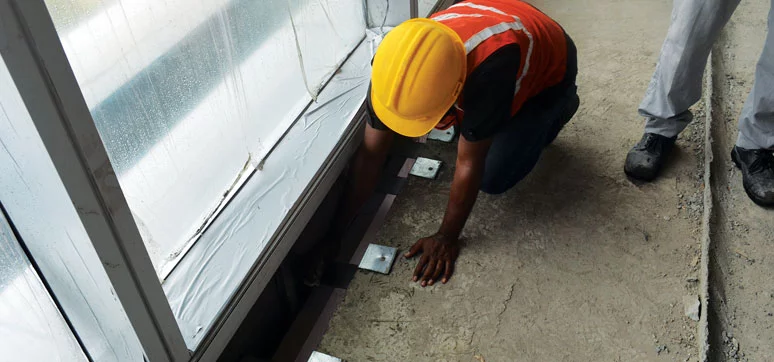
In case of fire, especially in a curtain wall façade where the gaps between the floor slab and the aluminium curtain wall are the weakest link for the smoke and fire to travel from floor to floor. It becomes mandatory to seal the gap by providing a material or system to ensure the assembly can sustain for two hours and take care of the movement of the aluminium grid work, which would deflect during the fire. Thus, it is advisable to use a tested fire stop system for the project.
How important is compartmentalisation in the structure for fire safety?
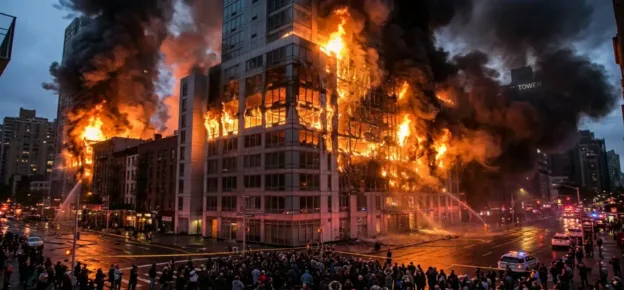
Considering the evacuation time for any fire incident, which is a minimum of 16 to 20 minutes, it is evident that the damage escalates throughout the whole building and is very difficult to control. Thus, compartmentalisation is very important as the fire is limited and is restricted to the source of fire, and the other floors of the building are safe, provided the design principles are followed. The damage and the temperatures can go as high as 1600 degrees in just around 10 minutes, and the damage could be humongous.
How conscious are the builders/ developers/architects about the guidelines, standards and norms for fire safety?
Most of the builders are conscious of the guidelines and standards, but when it comes to implementation. There are shortcuts taken as the cost does not permit them to follow the guidelines. The issue is very convoluted, and it basically boils down to common sense and clearly understanding fire safety and human nature. Personally, I feel it varies from region to region and needs to be addressed independently.