
Post Date: January 29, 2026 |
Last Edited: January 29, 2026
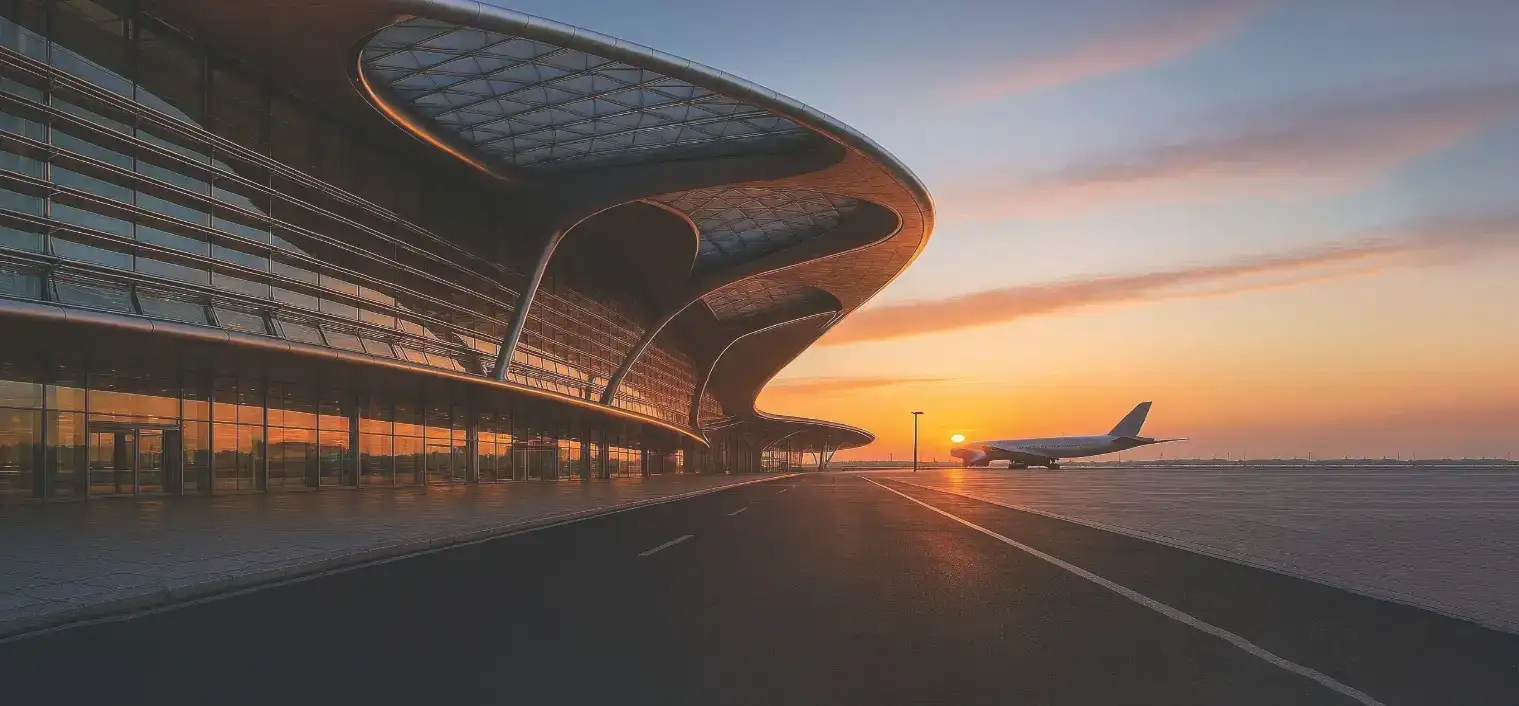
Airport terminals have evolved far beyond their original role as transit spaces. Today, they function as cultural landmarks, sustainable ecosystems, and high-performance engineering marvels – places that leave lasting impressions on millions of passengers each year. As global air travel accelerates and expectations rise, the spotlight is turning towards one critical element: the façade and fenestration systems that shape how terminals look, feel, and perform.
From climate-responsive skins to intelligent glazing, the next generation of airport building envelopes is redefining aviation architecture. Here is a deep dive into the innovations driving this global evolution.
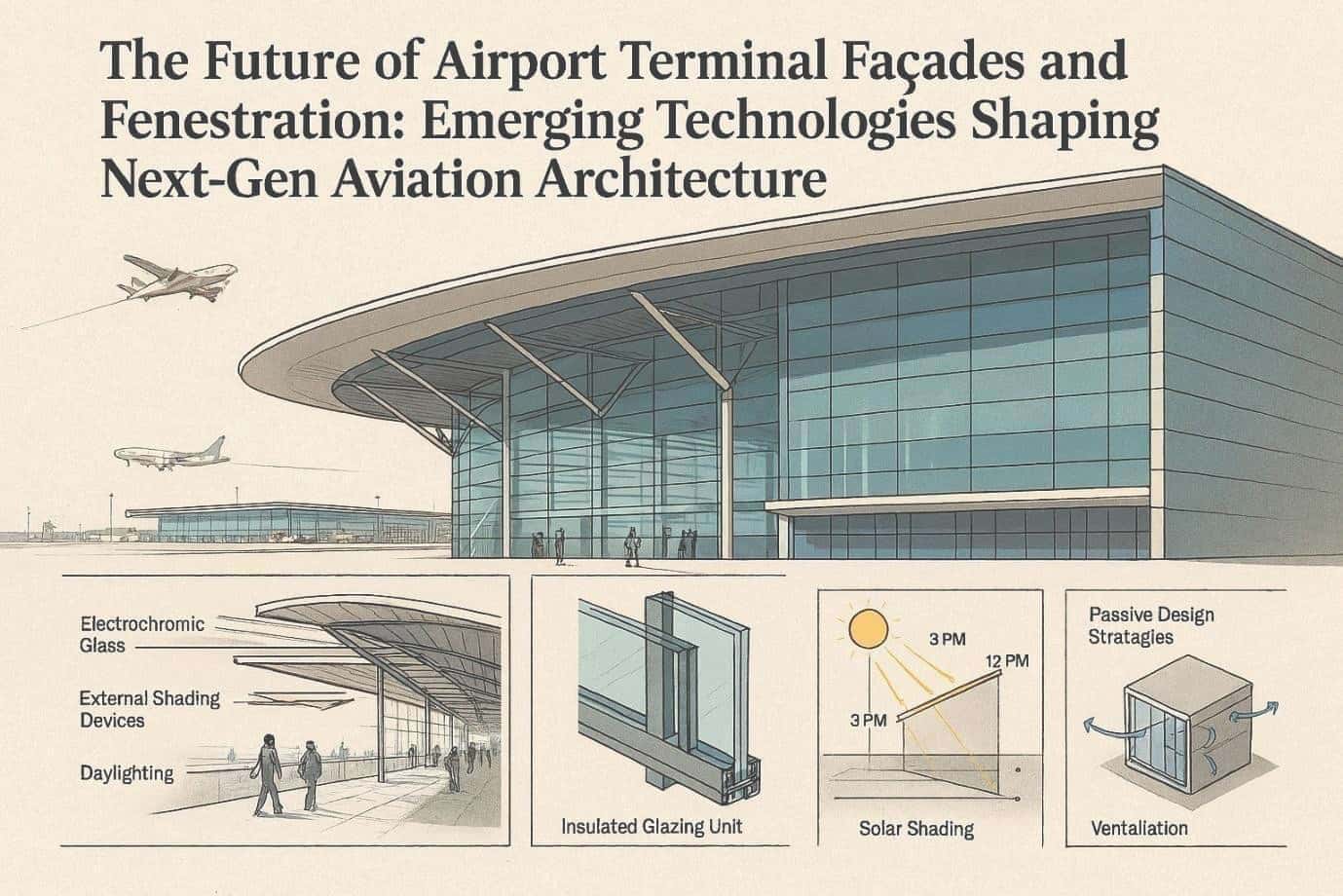
Façades As Identity: Architecture Meets Culture And Climate
In modern terminal design, façades serve as the face of a nation. They communicate identity, welcome passengers, and mediate climate.
Architectural Expression & Branding:
Airports increasingly reflect regional culture through:
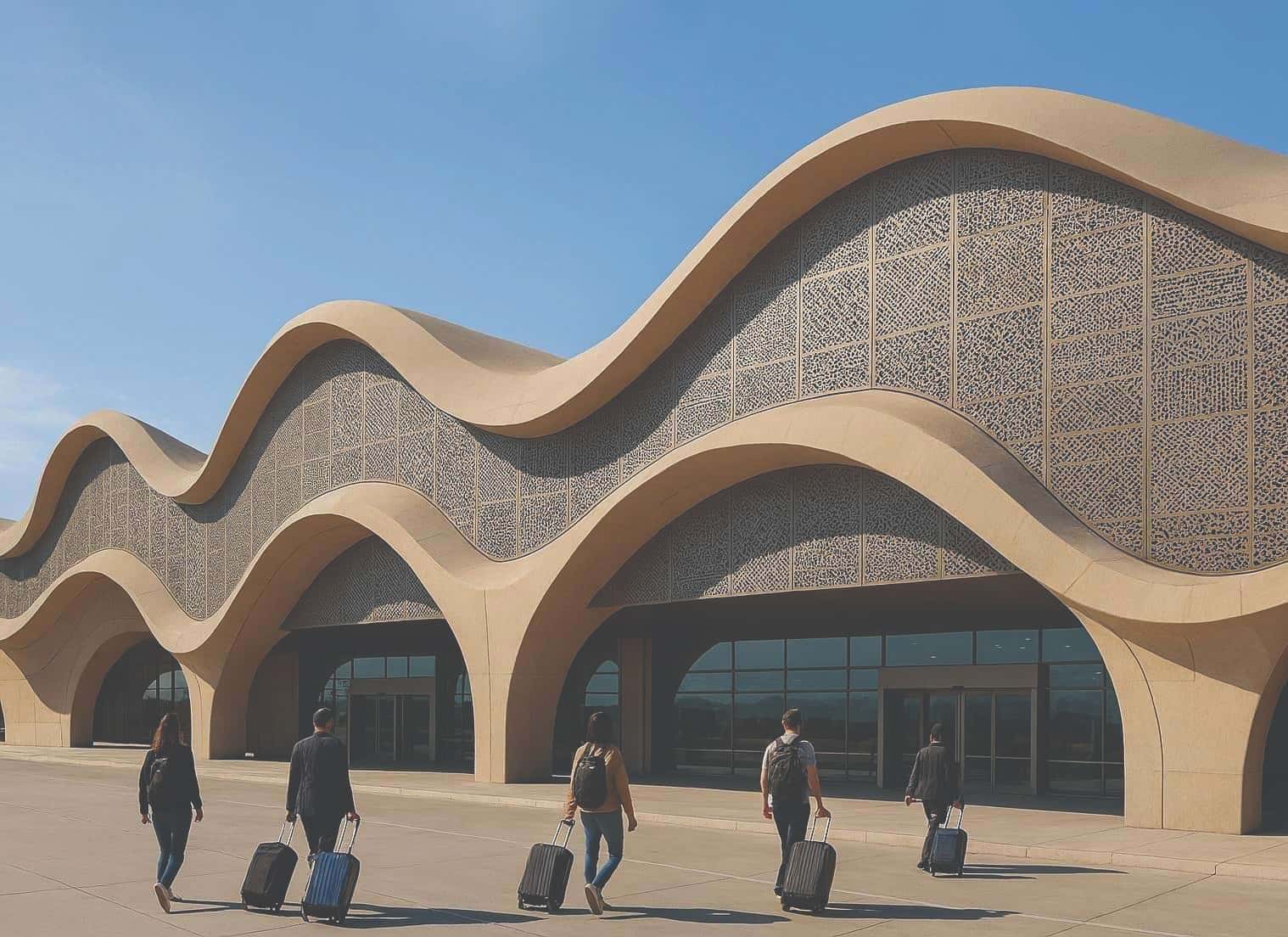
- Sculpted, flowing forms inspired by local topography.
- Perforated metal screens echo traditional motifs.
- Iconic glass façades create distinctive silhouettes.
- Composite cladding materials enabling bold, expressive geometry.
These elements transform terminals into unique cultural ambassadors.
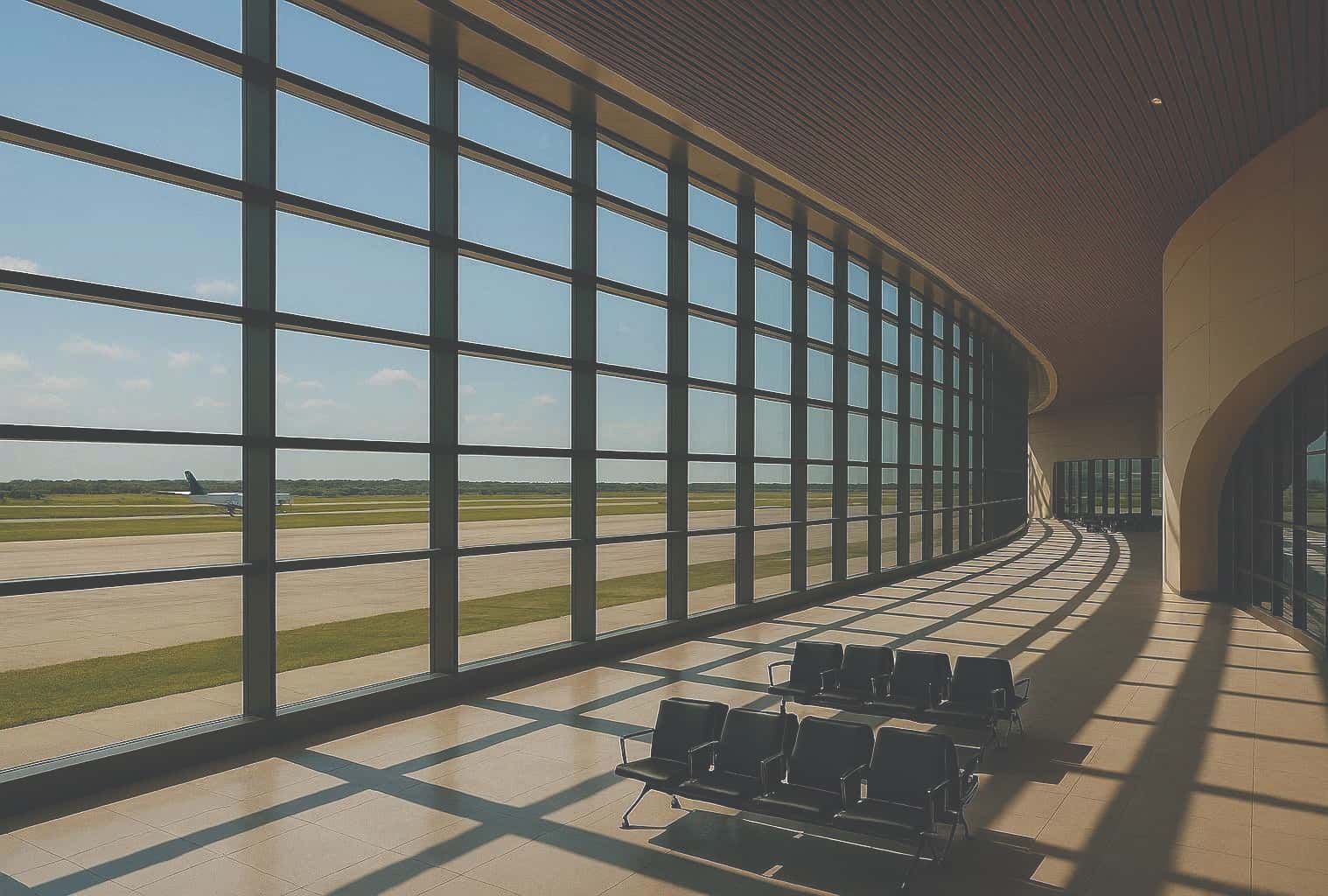
Climate-Responsive Form Finding:
With airports located in extreme climates, from deserts to Arctic zones, façades are evolving into intelligent, climate-adaptive envelopes.
Key Strategies Include:
- External shading louvers and glazing tuned to solar exposure.
- Optimised building orientation.
- High-performance insulated panels.
The result is architecture that works with the environment, not against it.
Fenestration: Where Light, Transparency & Passenger Experience Converge
Natural light is central to airport design. Fenestration systems regulate daylight, frame views, and influence psychological comfort.
Large-Span Glazing & Curtain Walls:
Advances in structural glass now make it possible to design soaring transparent façades that enhance:
- Daylight penetration.
- Passenger well-being.
- Airside visibility.
- A sense of scale and openness.
Cable-net systems, steel–glass hybrids, and silicone-sealed façades enable this without compromising safety.
Skylights, Clerestories & Light Wells:
Modern terminals are celebrated for their luminous interiors, achieved through:
- Continuous skylight ribbons.
- Geometric or domed skylights.
- Atrium-based light wells.
These systems create dynamic light patterns that evolve throughout the day.
Acoustic & Thermal Comfort:
Advanced multi-layer glazing balances transparency with performance, offering:
- Superior aircraft noise reduction.
- Controlled solar heat gain.
- Enhanced thermal insulation.
- Reduced condensation.
Comfort is now a fundamental design requirement – not a luxury.
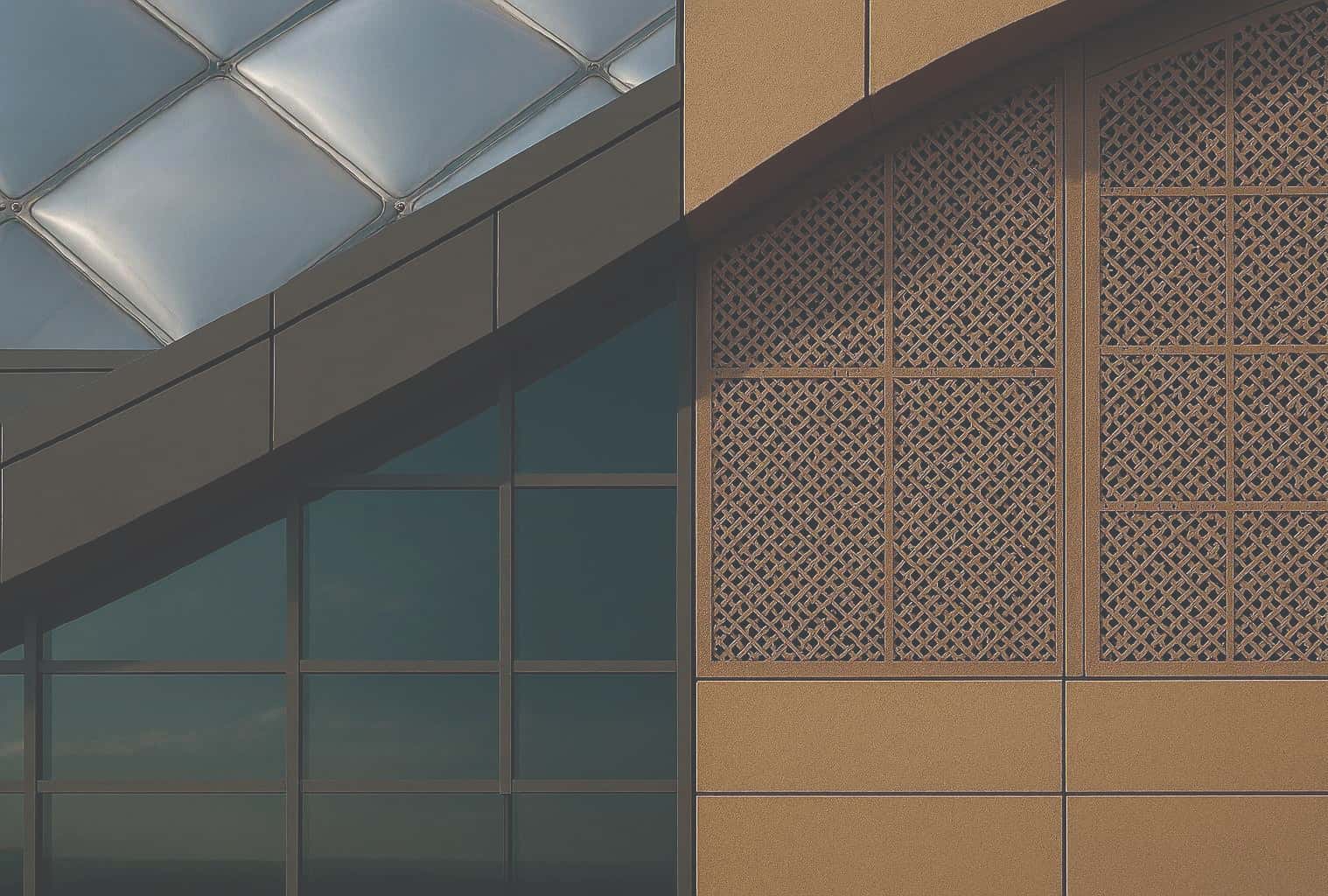
High-Performance Materials Reinventing Terminal Facades
Material science is playing a pivotal role in reimagining airport envelopes.
Next-Generation Glazing Technologies:
Key innovations include:
- Low-E and selective coatings.
- Electrochromic smart glass.
- Vacuum-insulated glazing (VIG).
- Bird-safe fritted patterns.
Smart glass, in particular, is transforming terminal energy efficiency and interior ambience.
Composite & Engineered Cladding Panels:
Airports demand lightweight yet durable materials. Popular choices include:
- Aluminium Composite Panels (ACP)
- Fibre-Reinforced Polymer (FRP)
- High-Pressure Laminates (HPL)
- Perforated metal screens.
These materials support rapid construction, lighter structures, and long-term durability.
ETFE & Tensile Membrane Systems:
ETFE is becoming a preferred choice for modern roofs and façades due to its:
- High translucency.
- Feather-light weight.
- Self-cleaning properties.
- Longevity and UV resistance.
ETFE cushions create bright, thermally efficient spaces with minimal structural demand.
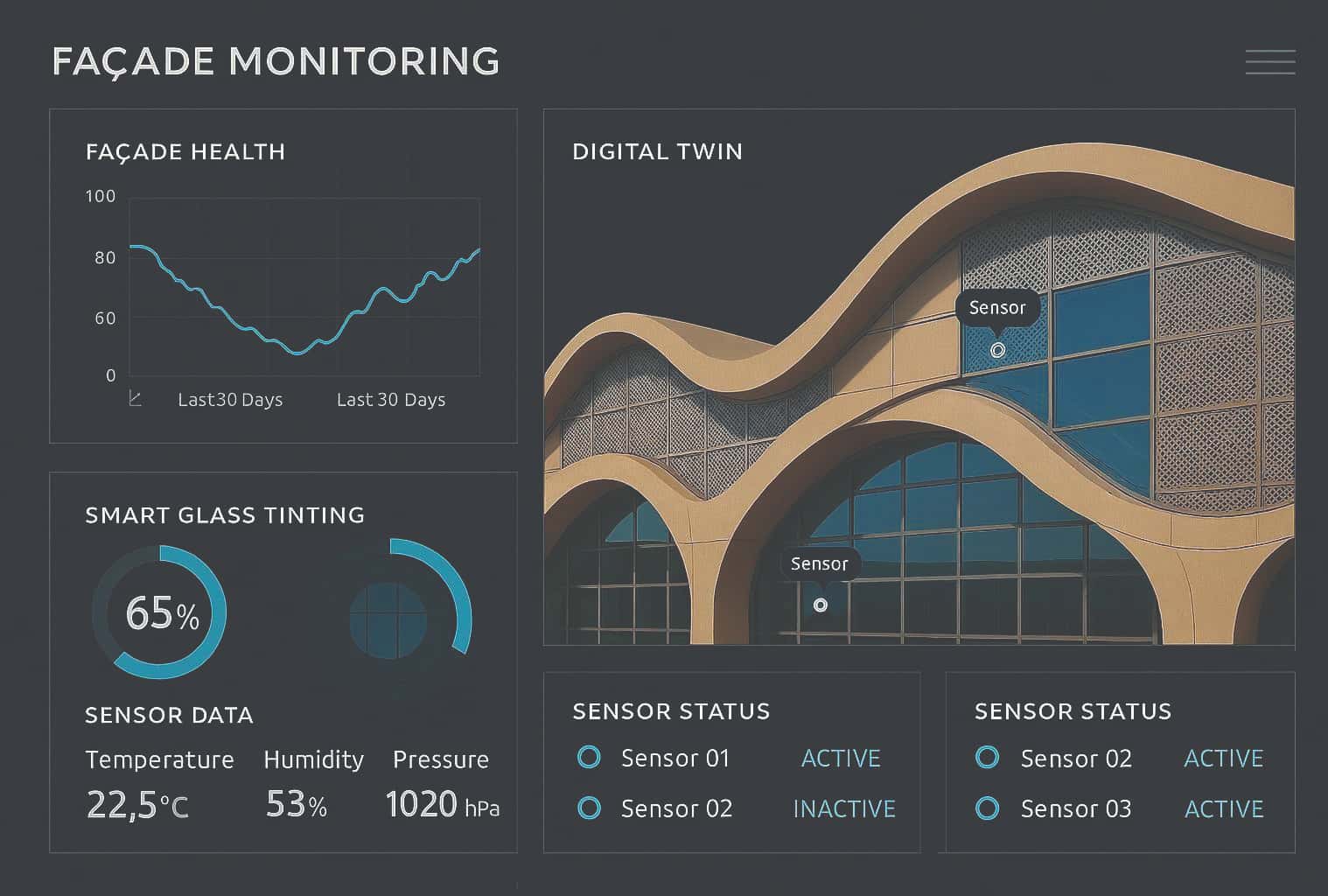
Digital & Intelligent Façades: Ushering In Smart Airports
Digitalisation is transforming building envelopes from static surfaces into intelligent systems.
Sensor-Driven Adaptive Façades:
Today’s smart façades integrate:
- Temperature and daylight sensors with automated louvers.
- AI-based climate control and predictive maintenance analytics.
- IoT-linked façade panels.
These systems respond in real time to environmental changes.
Parametric Design & BIM Engineering:
Advanced KPIs allow architects to simulate:
- Sun paths and glare.
- Material performance.
- Wind pressure and energy consumption
Digital Twins For Lifecycle Management:
Airports increasingly deploy digital twins to monitor façade health, analyse performance, and plan maintenance, reducing operational downtime and costs.
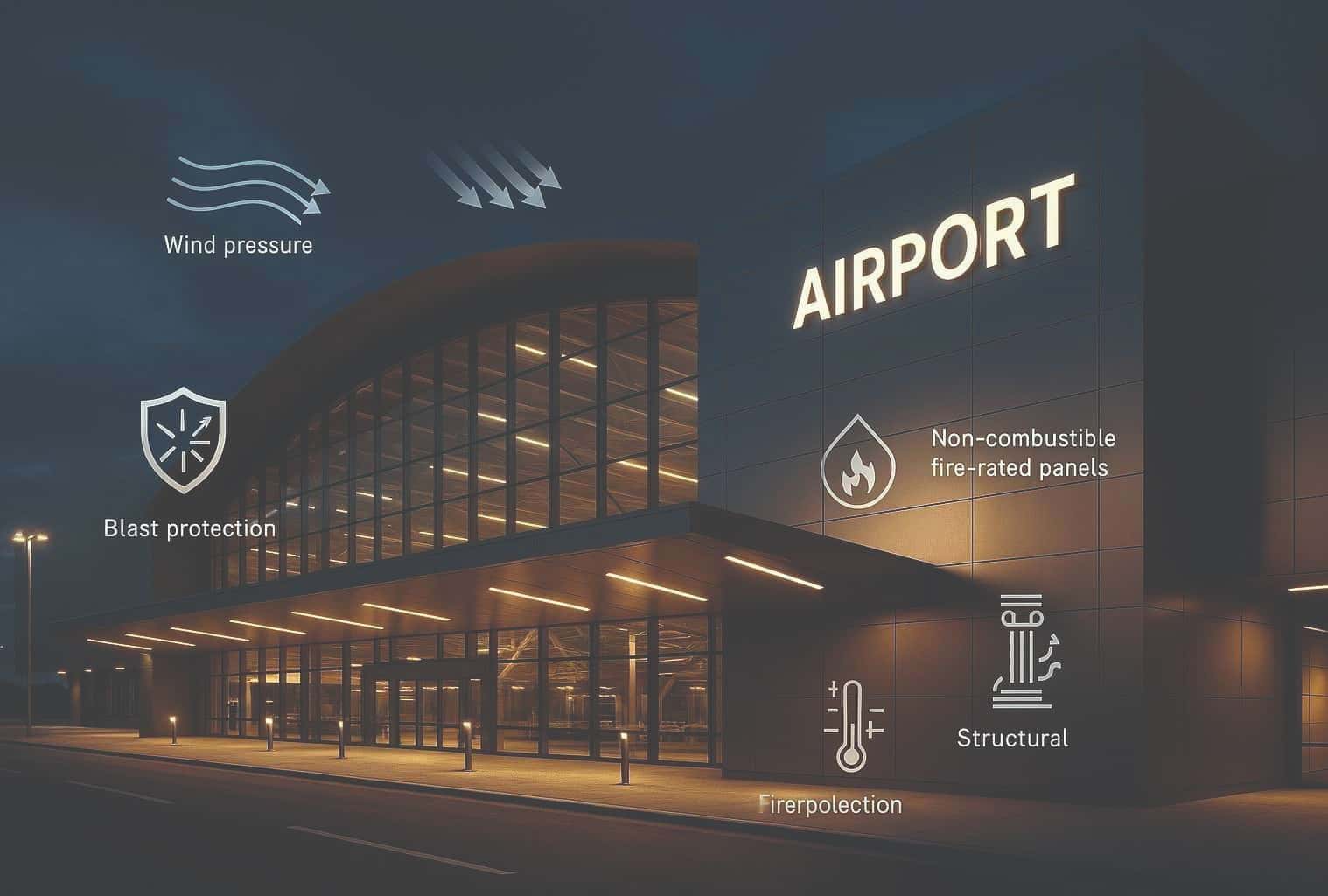
Sustainability: The New Imperative For Terminal Envelopes
As aviation moves towards decarbonisation, façades play a central role in sustainability strategies.
Passive Design Approaches:
Passive Solutions Can Significantly Reduce HVAC Loads, Including:
- Double-skin ventilated façades.
- Thermally broken framing systems and fixed shading devices.
- High-insulation opaque panels.
Renewable Energy Integration:
Façades are evolving into energy generators through:
- Building-integrated photovoltaics (BIPV)
- Solar-active shading fins.
- Photovoltaic glazing reduces the terminal’s operational carbon footprint.
Material & Water Sustainability:
Contemporary façade systems also prioritise:
- Recyclable materials and low-embodied-carbon products.
- Rainwater collection surfaces.
- Longer-life coatings and laminates.
Sustainability is now mainstream, not optional.
Safety, Security & Resilience: Non-Negotiables In Airport Design
Airport façades must comply with stringent safety standards and withstand extreme conditions.
Key requirements include:
- Blast-resistant glazing.
- Non-combustible, fire-rated cladding.
- Systems designed to withstand cyclones, snow loads and seismic events.
These measures ensure round-the-clock operational continuity.
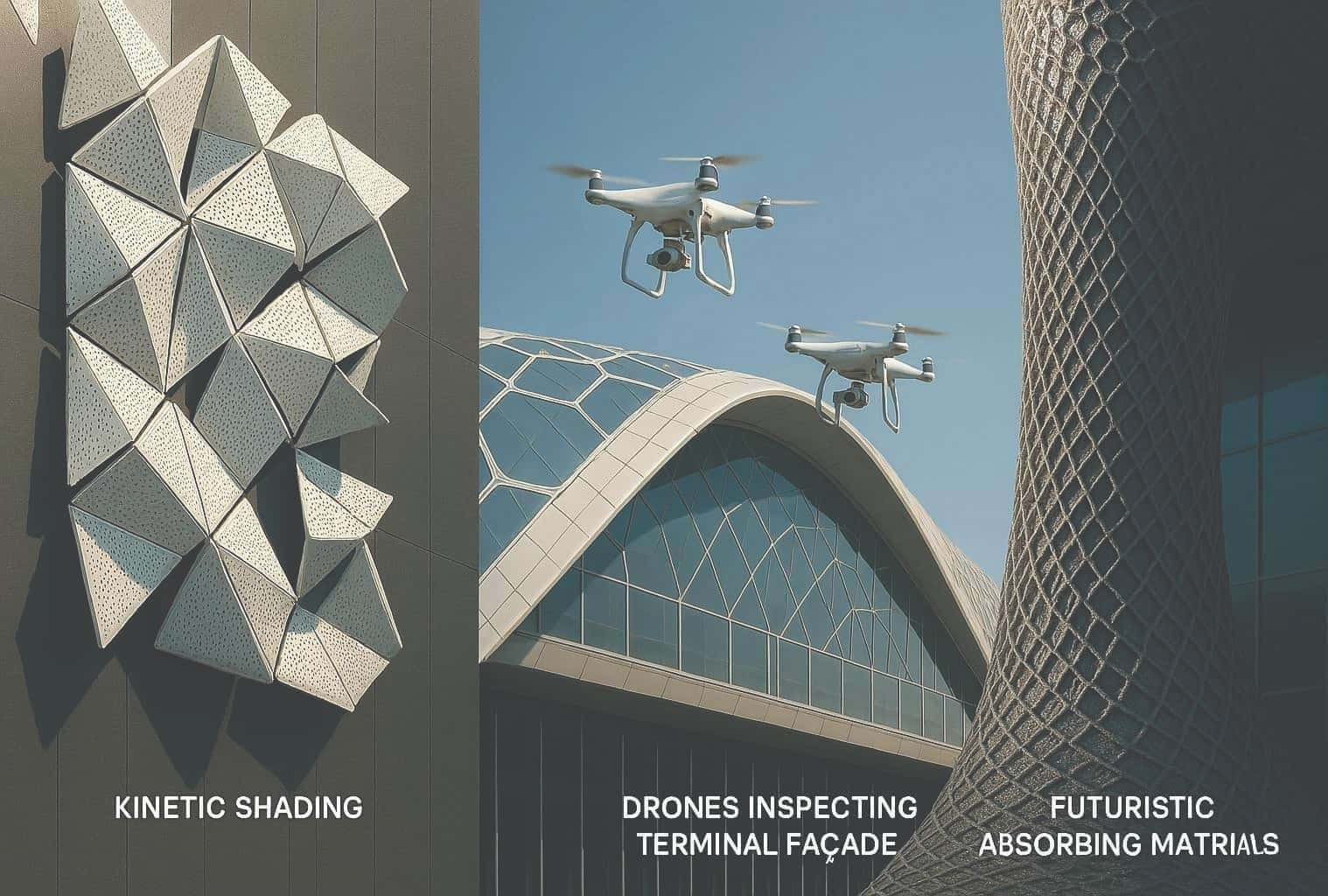
The Future: Adaptive, Autonomous & Climate-Responsive Façades
The coming decade will witness transformative developments, including:
- Kinetic façades that adapt to climatic conditions.
- Aerogel-based super-insulation for ultra-thin envelopes.
- Autonomous drones and robotic BMUs for cleaning and maintenance.
- Carbon-absorbing façade materials supporting carbon-neutral ambitions.
These innovations promise terminals that are not only efficient but regenerative.
Conclusion: The Airport Terminal As A Living, Intelligent, Cultural Organism
Airport terminal façades and fenestration systems are undergoing a profound transformation. What was once a protective shell is now an intelligent interface-one that adapts, performs, expresses identity, and enhances passenger well-being. The future of terminal design lies at the intersection of technology, sustainability, culture, and human-centric innovation.
As the aviation industry evolves, the façades of tomorrow will not only meet functional demands but elevate airport environments into inspiring, resilient gateways that celebrate both place and progress.