
Post Date: August 10, 2026 |
Last Edited: August 10, 2026
As sustainability targets reshape contemporary façade engineering, terracotta rainscreen systems are increasingly valued for their durability, material character and passive environmental performance. However, their environmental benefit depends on more than the clay panel itself. Manufacturing energy, aluminium subframes, transport, installation waste and end-of-life strategies all influence the embodied carbon of the complete façade system. This article examines how terracotta rainscreen systems can be optimised through lifecycle thinking, material efficiency, ventilated cavity design and climate-responsive detailing.
Key Highlights
|
Introduction
The façade is no longer treated only as the external face of a building. It is now expected to contribute to energy efficiency, durability, climate resilience, architectural identity and embodied carbon reduction. Within this wider shift, terracotta rainscreen systems have gained renewed relevance as a natural, durable and visually expressive cladding solution for contemporary building envelopes.
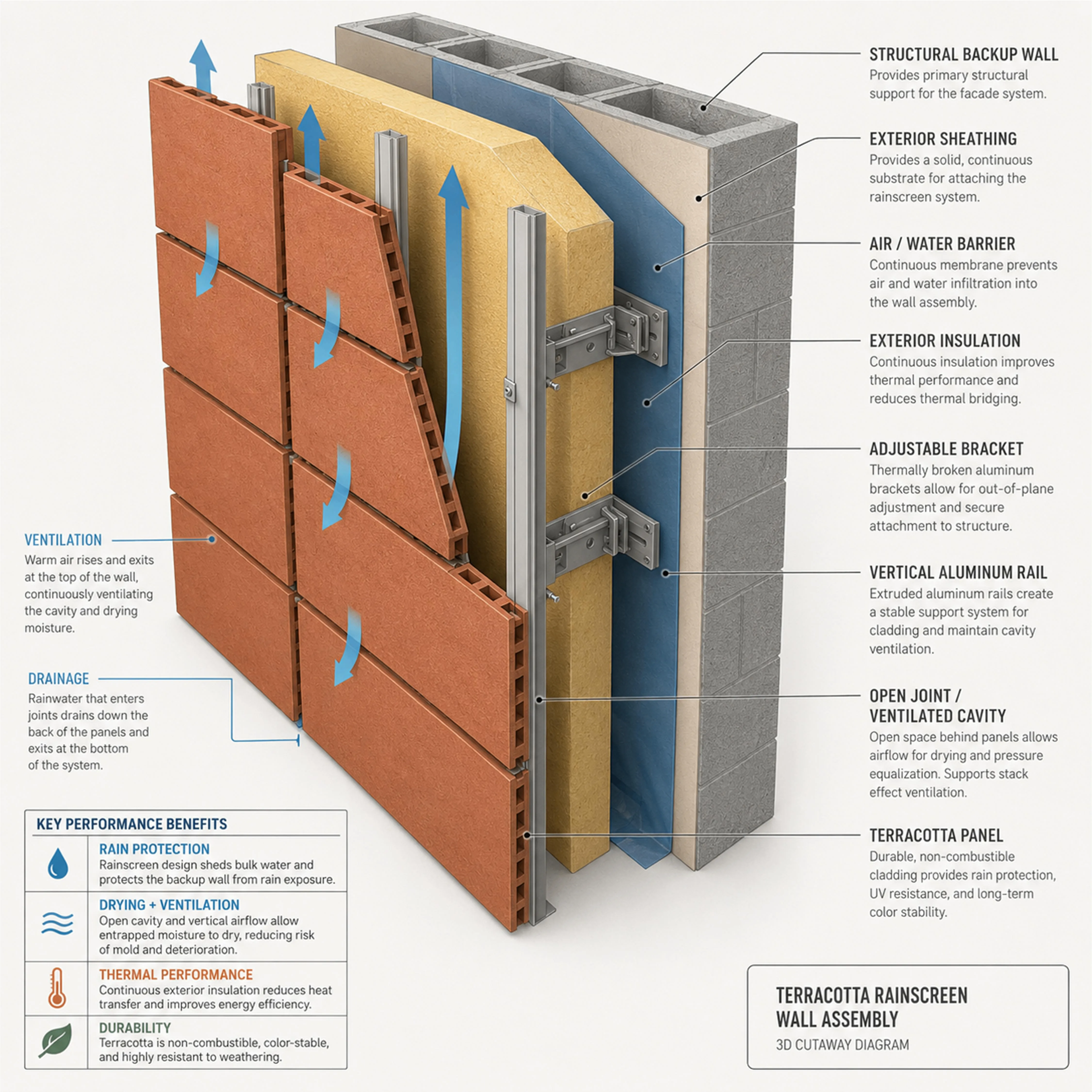
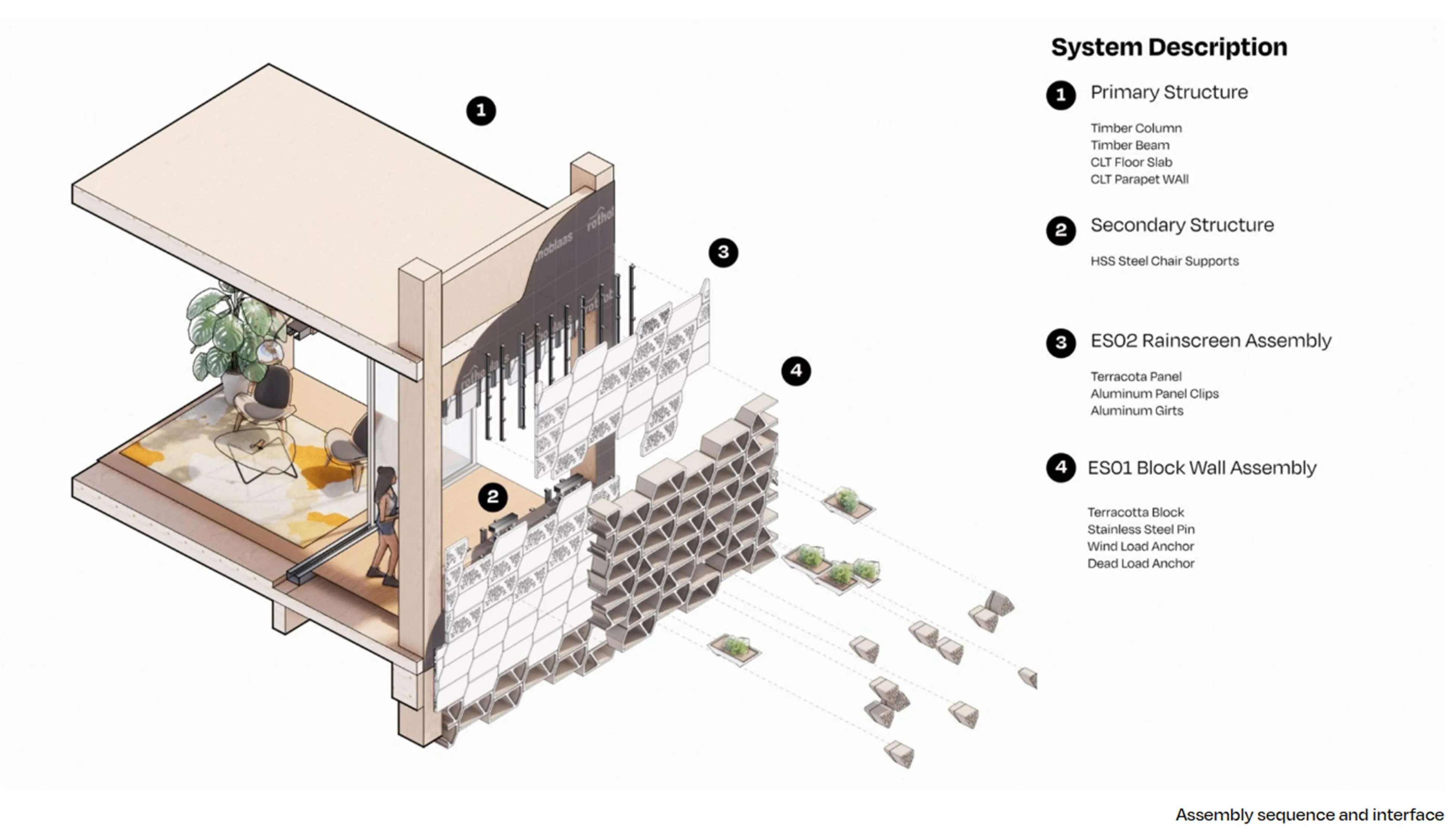
Terracotta has a long architectural history, but its modern application is highly engineered. In rainscreen construction, extruded or pressed terracotta panels are mechanically fixed to a support framework, creating a ventilated cavity between the external cladding and the insulated wall. This cavity allows air movement, water drainage and pressure moderation, helping the façade manage moisture and thermal stresses more effectively.
The material also offers a strong architectural advantage. Its natural earth tones, texture, modularity and range of profiles allow designers to create façades that feel warm and permanent whilst still meeting modern performance requirements. However, sustainability claims must be assessed carefully. Terracotta is natural and durable, but it is also fired at high temperatures, which means manufacturing energy can be significant. The environmental performance of a terracotta rainscreen system therefore depends on how the whole assembly is designed, manufactured, transported and installed.
Understanding Terracotta Rainscreen Systems
A terracotta rainscreen system typically includes the terracotta cladding panel, aluminium or steel support rails, brackets, fixings, gaskets, insulation, breather membrane and structural backing wall. Whilst the external panel defines the visual identity of the façade, the hidden substructure is equally important in determining performance and embodied carbon.
The ventilated cavity is one of the most important aspects of the system. It allows moisture that penetrates behind the outer cladding to drain or evaporate, reducing the likelihood of trapped water and long-term deterioration. The cavity also assists in thermal regulation by reducing direct heat transfer and allowing warm air to escape through the stack effect, particularly in hot climates or solar-exposed elevations.
Pressure equalisation also supports weather performance. By reducing pressure differences across the external layer, the system limits wind-driven rain penetration. When detailed correctly, the result is a façade that provides both architectural expression and practical durability.
“Terracotta rainscreen systems should not be assessed as panels alone; their true environmental performance depends on the complete façade assembly, including cavity design, subframe efficiency, manufacturing energy, transport and installation strategy.” |
Environmental Performance: Looking Beyond The Panel
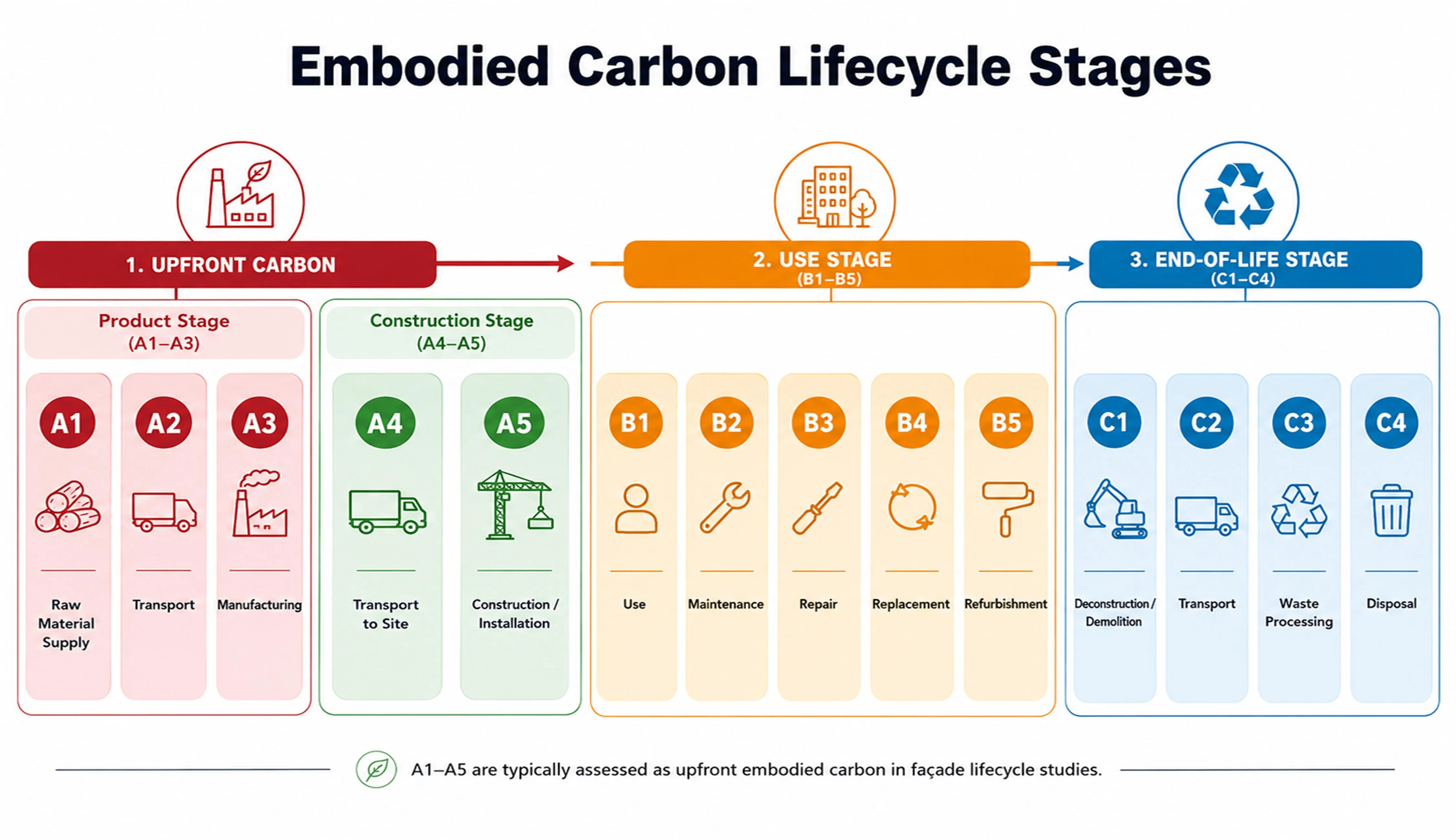
The sustainability of terracotta rainscreen systems should be assessed using a lifecycle-based approach. A cradle-to-site assessment normally considers stages A1 to A5: raw material extraction, transport to manufacturer, manufacturing, transport to site, and construction or installation activities. These stages capture the embodied carbon associated with producing and installing the façade before the building begins operation.
In terracotta systems, the manufacturing stage is typically a major contributor to embodied carbon because clay must be shaped, dried and fired at high temperatures to achieve the required durability and weather resistance. The source of kiln energy, manufacturing efficiency and production waste can significantly influence the carbon intensity of the final panel.
Subframe materials also matter. Aluminium is widely used because it is lightweight, corrosion-resistant and accurate for façade installation, but primary aluminium production is energy-intensive. At the same time, aluminium has a strong advantage in recyclability. This creates an important design balance: use aluminium efficiently, specify recycled content where possible and design support systems that can be disassembled at the end of life.
Transport is another often-overlooked factor. Long-distance road transport can add measurable carbon impact, especially for heavy façade components. Local or regional sourcing, consolidated deliveries and efficient logistics planning can reduce the carbon footprint of the system without changing its visual appearance.
Key Carbon Factors: Clay Processing, Kiln Energy, Aluminium subframe content, transport distance and installation waste.
Thermal And Moisture Performance
The operational benefit of terracotta rainscreen systems is closely linked to thermal behaviour and moisture control. Terracotta has useful thermal mass properties, allowing it to absorb and release heat gradually. In climates with strong day-night temperature variation, this can help moderate heat transfer through the façade.
When combined with a ventilated cavity and continuous insulation, terracotta rainscreens can reduce solar heat gain, improve thermal stability and lower reliance on mechanical cooling or heating. This does not mean that terracotta alone guarantees energy efficiency. The performance depends on climate, orientation, cavity depth, insulation continuity, fixing strategy and detailing around junctions.
Moisture management is equally important. The system must allow drainage, drying and movement. Poorly ventilated cavities, blocked drainage paths, incorrect fixing design or inadequate coordination with insulation and membranes can reduce performance and increase long-term maintenance risk. Therefore, the environmental value of terracotta is achieved not simply through material selection, but through correct façade engineering.
Lessons From Climate-Based Applications
The performance of terracotta rainscreen systems is strongly influenced by climate, building type, façade orientation and system detailing. Case studies from temperate, hot-arid and experimental research contexts show that terracotta should not be viewed simply as a decorative cladding material, but as part of a wider environmental façade strategy.
A. Queens Botanical Garden, New York – Terracotta In A Temperate Climate
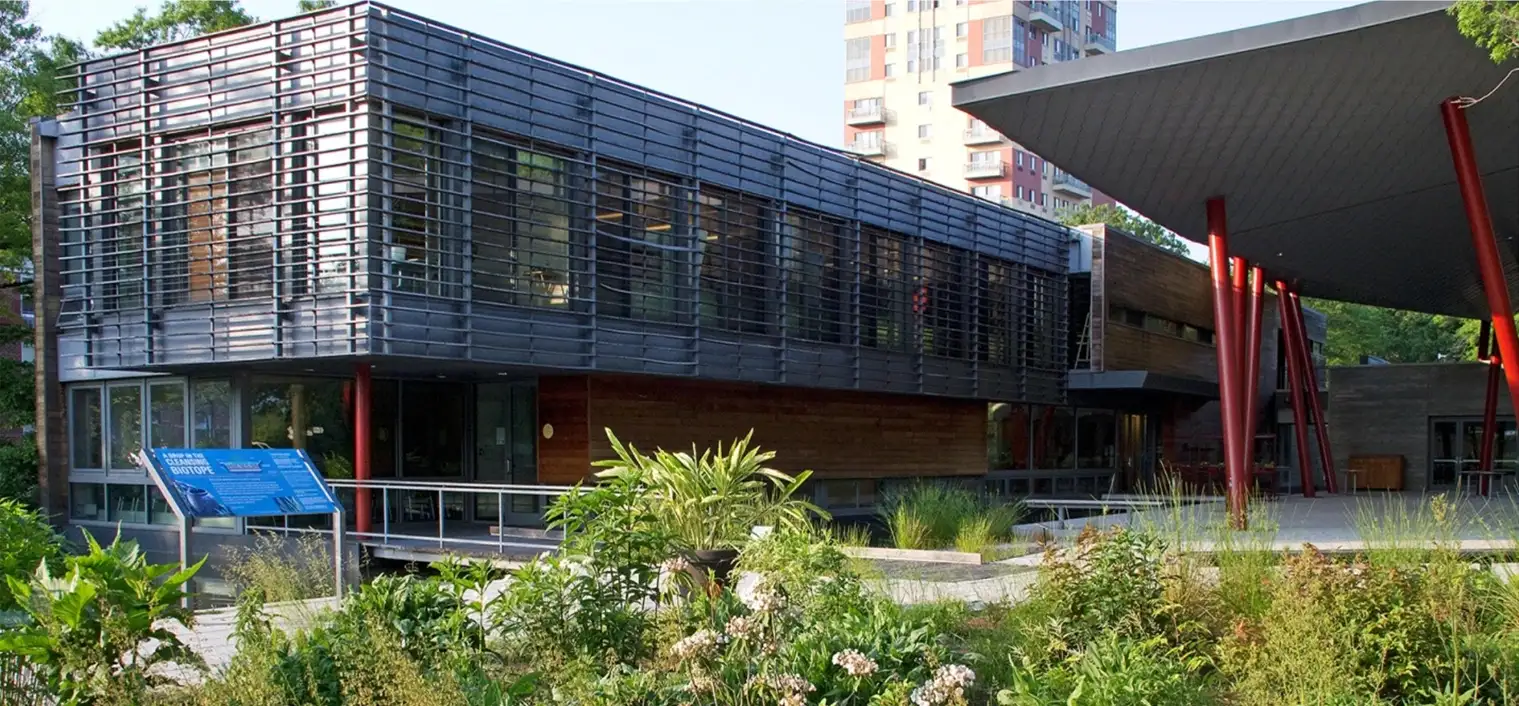
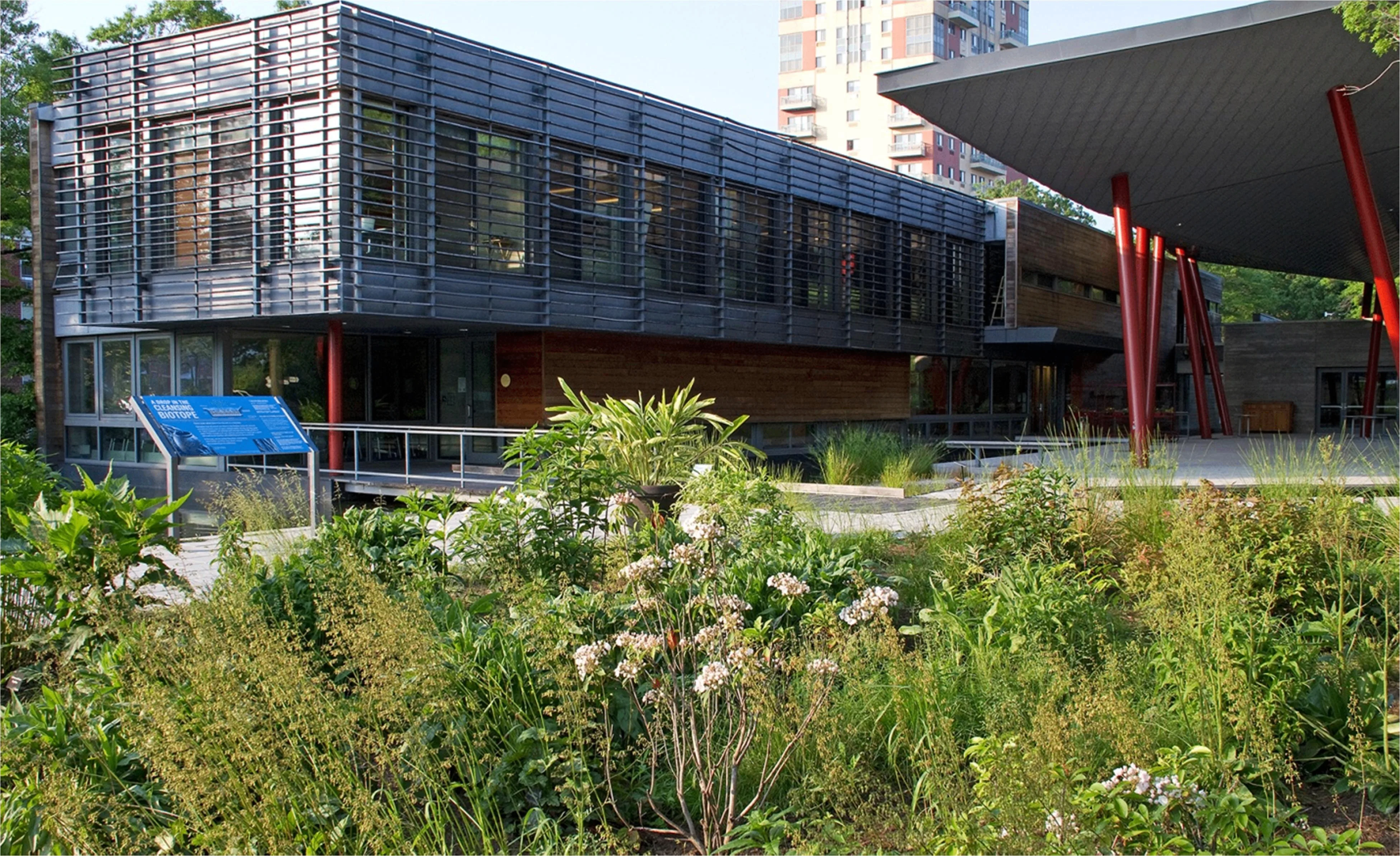
The Queens Botanical Garden Visitor & Administration Building in New York demonstrates how façade design can support broader sustainability objectives in a temperate climate. New York experiences both cold winters and warm, humid summers, requiring façade systems that can manage seasonal temperature variation, moisture movement and long-term weather exposure.
In such conditions, a ventilated terracotta rainscreen system can provide significant envelope benefits. The cavity behind the terracotta panels allows continuous air movement, helping moisture to drain, evaporate and reduce the risk of trapped condensation within the wall build-up. This improves façade durability and supports the long-term resilience of the building envelope.
For projects such as Queens Botanical Garden, terracotta also aligns well with an architectural language rooted in natural materials and environmental stewardship. The building is widely recognised for its sustainability approach, including water conservation and environmental design strategies, making it a relevant reference for discussing terracotta within sustainable public architecture.
Queens Botanical Garden illustrates how natural material expression and sustainable envelope design can work together in a temperate climate context.
B. Educational Buildings, Kingdom Of Saudi Arabia – Terracotta In A Hot-Arid Climate
A different performance requirement emerges in hot-arid climates such as the Kingdom of Saudi Arabia, where cooling demand is one of the dominant drivers of building energy consumption. In these conditions, the façade must reduce heat transfer into the building whilst maintaining internal comfort.
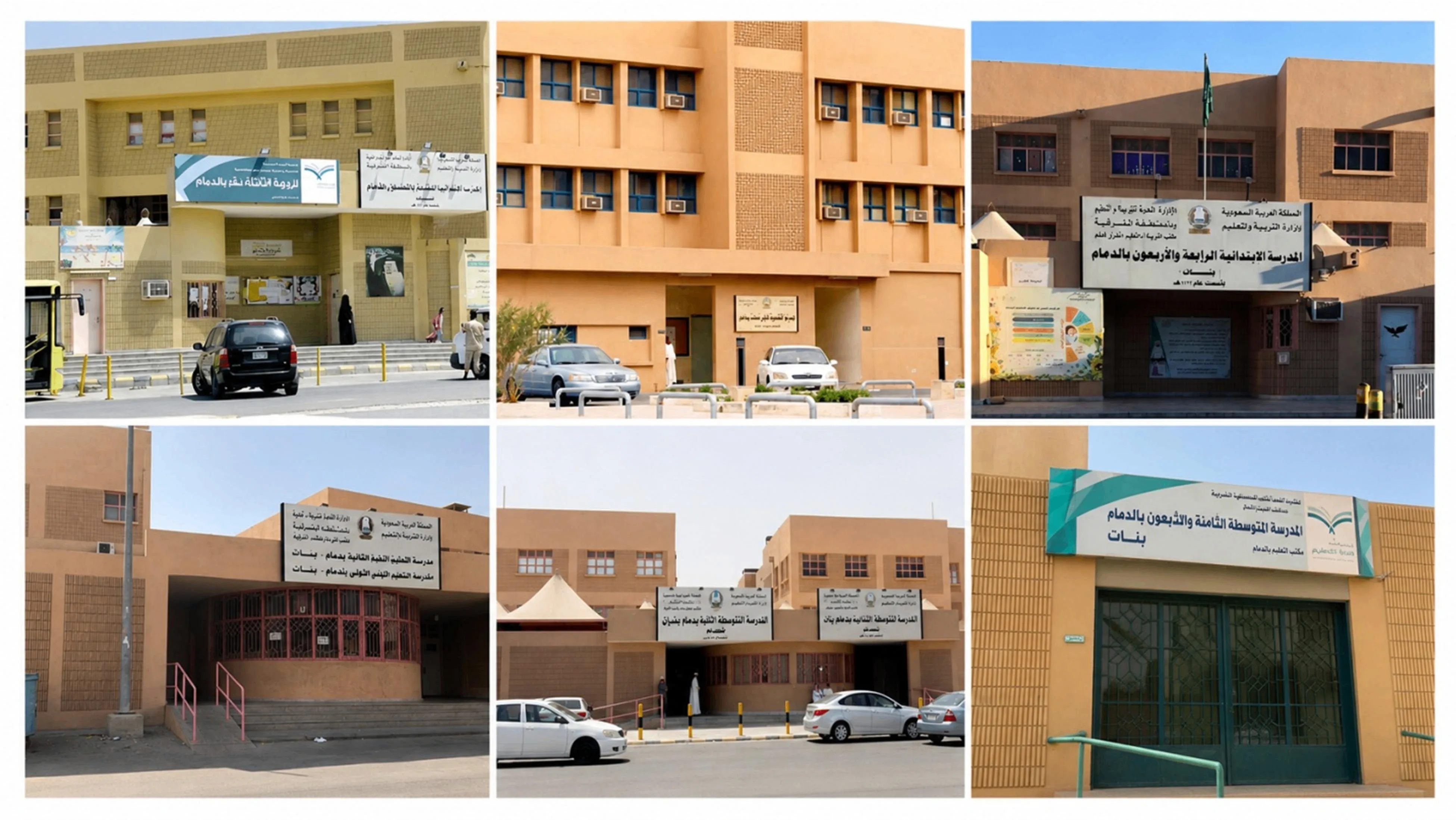
A study comparing terracotta and aluminium cladding in an educational building in Saudi Arabia found that terracotta performed better in reducing annual energy demand and cooling energy consumption. The study reported energy reductions of approximately 12.7% for annual energy consumption and 15.6% for cooling energy consumption when using terracotta cladding. This performance is mainly linked to terracotta’s lower thermal conductivity compared with aluminium, helping reduce heat gain through the building envelope during peak summer conditions.
This case is particularly useful because it shows that terracotta’s environmental value is not only linked to embodied carbon, but also to operational performance. In hot climates, a well-designed terracotta rainscreen system can contribute to lower cooling loads, reduced HVAC dependence and improved indoor comfort.
In hot-arid regions, terracotta cladding can help reduce cooling demand by limiting heat transfer through the façade.
C. RIOS + Arup Terracotta Façade Research – Terracotta As An Active Environmental System
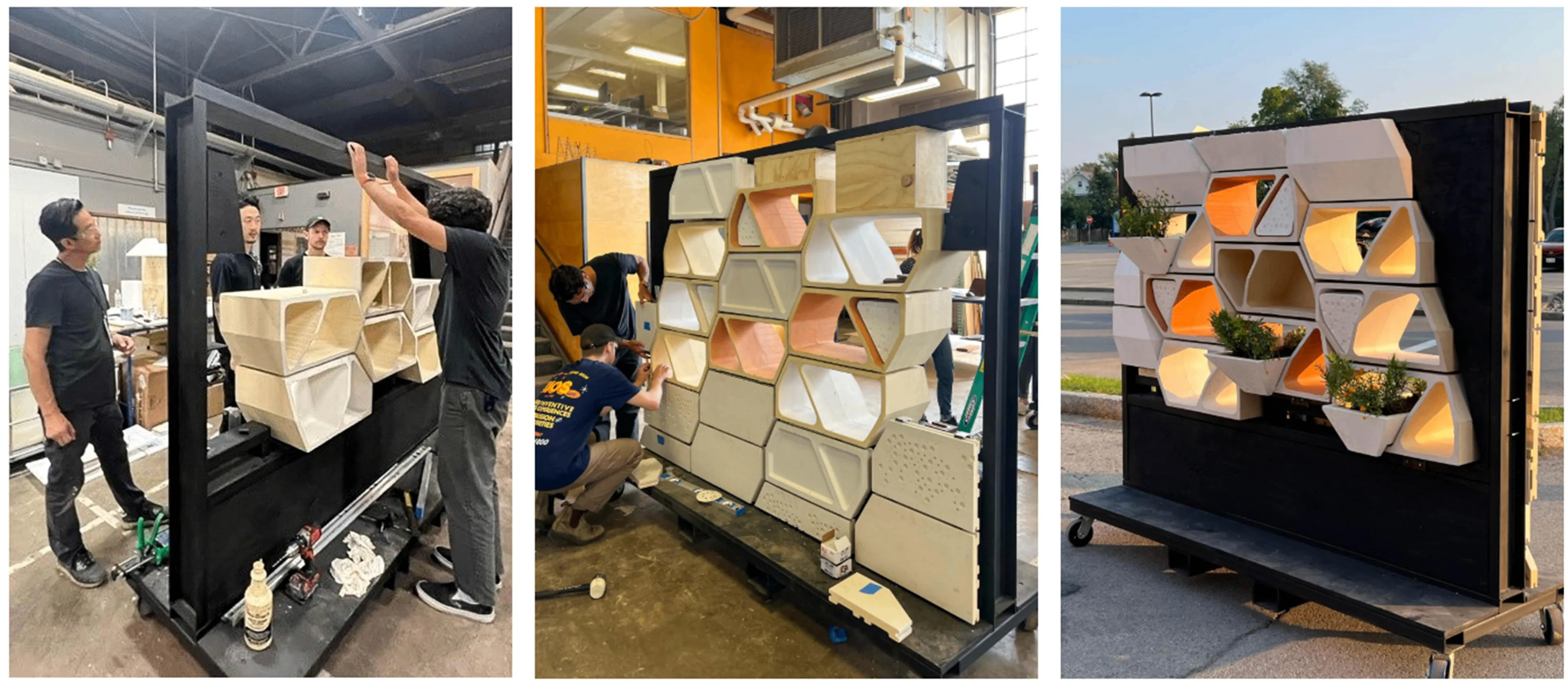
More experimental applications are expanding the role of terracotta beyond passive cladding. The RIOS + Arup Terracotta Façade Research project, developed through the Architectural Ceramic Assemblies Workshop, explored terracotta as a modular, climate-responsive façade system. The prototype combined ceramic rainscreen components with shading, planting and ecological integration.
This research is important because it positions terracotta not only as a weather-protection layer, but as an active environmental mediator. The system explored terracotta modules as brise-soleil elements, planter units and façade components that could improve biodiversity whilst reducing solar heat gain. Solar analysis for the research project indicated a 77% reduction in cumulative solar heat gain during September, the warmest month studied for the Los Angeles test condition.
This type of innovation suggests a future where terracotta façades may contribute simultaneously to shading control, thermal comfort, biodiversity, glare reduction and architectural identity. It also demonstrates how traditional ceramic materials can be reinterpreted through digital design, modular construction and environmental simulation.
Research-led terracotta façade systems are exploring new roles for ceramic cladding, including solar shading, planting integration and urban biodiversity.
Key Lesson From The Case Studies
Together, these examples show that terracotta rainscreen systems are most effective when they are designed for their specific climate and performance objective. In temperate climates, the priority may be moisture control, durability and seasonal thermal stability. In hot-arid climates, the priority shifts towards solar control and cooling-load reduction. In future-facing façade research, terracotta is increasingly being explored as a modular environmental system capable of supporting shading, biodiversity and passive performance.
The key lesson is that terracotta should not be assessed as an isolated material. Its environmental performance depends on the complete façade build-up, including cavity design, insulation strategy, subframe material, orientation, local climate, manufacturing process and end-of-life planning.
Design Optimisation Strategies
Optimising terracotta rainscreen systems requires attention to both embodied and operational carbon.
The following strategies can help reduce environmental impact whilst maintaining architectural and technical performance.
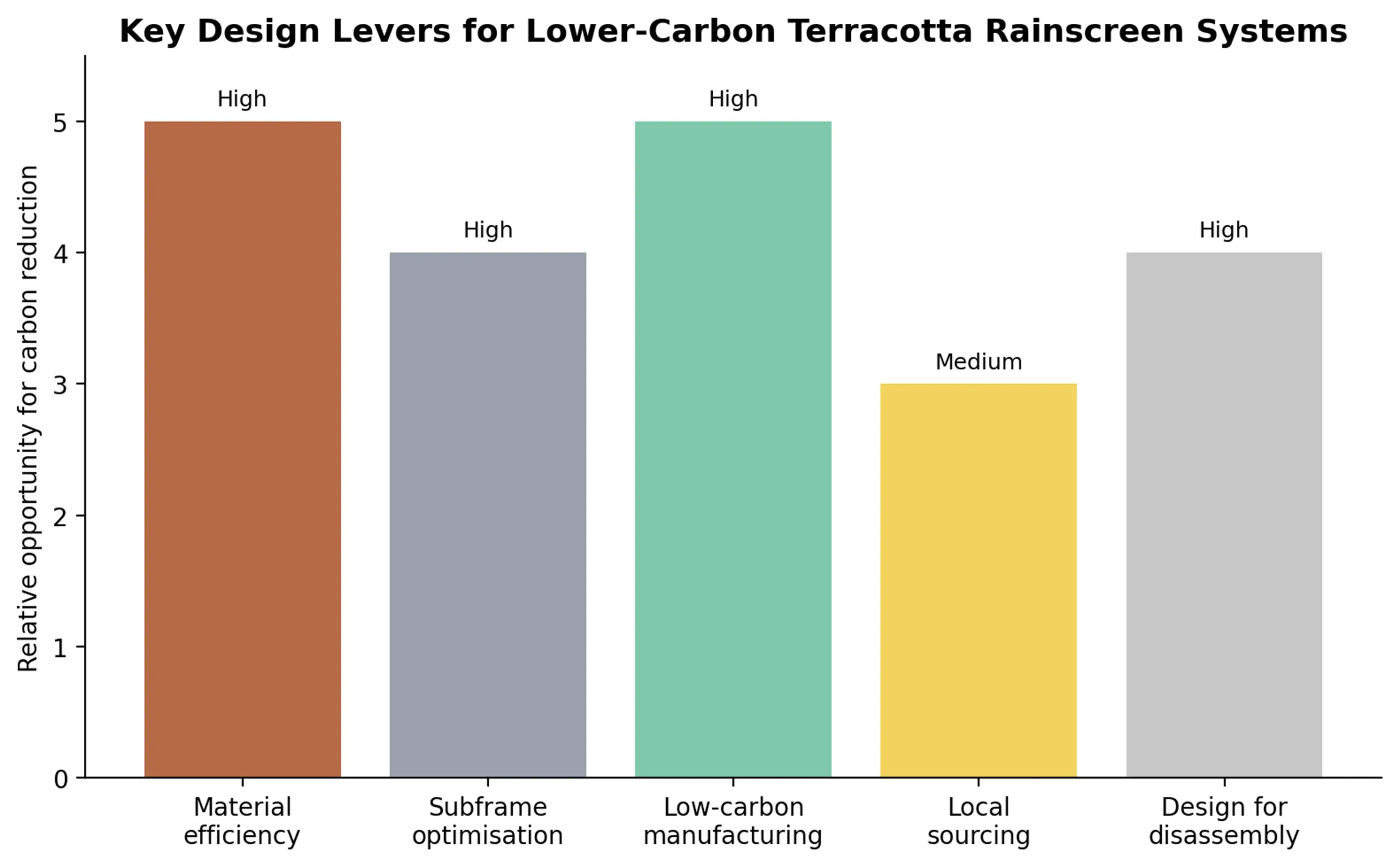
- Material Efficiency: Panel thickness, module size, fixing centres and bracket spacing should be rationalised early in design. Reducing unnecessary material mass lowers embodied carbon and can also simplify installation.
- Subframe Optimisation: Aluminium rails and brackets can contribute significantly to embodied carbon. Designers should minimise redundant profiles, reduce thermal bridging and consider recycled aluminium content where available.
- Cavity And Insulation Coordination: The ventilated cavity should be designed to support drainage, airflow and thermal performance without compromising fire safety, weather protection or installation tolerances.
- Low-Carbon Manufacturing: Manufacturers can improve performance through efficient kilns, renewable energy sources, recycled clay content and reduced production waste.
- Transport Planning: Sourcing strategy should consider manufacturing location, transport mode, delivery consolidation and packaging reduction.
- Design For Disassembly: Future façade systems should be easier to repair, replace, reuse and recycle. Mechanical fixing and modular planning are important in supporting circular construction.
Balancing Embodied Carbon And Operational Benefits
One of the most important conclusions from lifecycle-based façade studies is that a material cannot be called sustainable in isolation. Terracotta may improve durability and thermal comfort, but its firing process creates embodied carbon. Aluminium may have high production emissions, but its recyclability provides long-term circular economy value. The best façade solution is therefore not necessarily the one with the lowest carbon in one component, but the system that balances embodied carbon, operational performance, durability, maintainability and end-of-life potential.
For terracotta rainscreen façades, the biggest carbon reduction opportunities usually lie in three areas: reducing unnecessary material quantity, optimising the aluminium support system and improving manufacturing and logistics. When these areas are addressed together, the system can deliver both visual quality and measurable sustainability improvement.
Challenges For Wider Adoption
Despite its advantages, terracotta rainscreen construction still faces practical barriers. Initial cost can be higher than some conventional cladding systems, particularly where complex profiles, bespoke colours or long-distance procurement are involved. Installation also requires accuracy, robust detailing and experienced façade contractors.
Recycling remains another challenge. Terracotta is durable and non-toxic, but it is not as easily recycled into equivalent new products as metals. Crushed terracotta can be reused in secondary applications such as aggregate, landscaping or fill material, but closed-loop recycling is still limited. This makes design for longevity and repair especially important.
Regulatory and procurement frameworks also influence adoption. Where project teams are focused only on upfront cost, lower-carbon lifecycle thinking may be undervalued. Wider use of lifecycle assessment during concept and technical design stages would help architects, engineers and clients make more informed decisions.
Future Opportunities
The future of terracotta rainscreen systems lies in combining traditional material strengths with modern façade engineering. Low-carbon manufacturing, renewable kiln energy, recycled content and efficient digital fabrication can reduce embodied carbon. Parametric design tools can optimize module geometry, reduce waste and improve solar performance across different elevations.
There is also strong potential for hybrid façade systems. Terracotta can provide durability, texture, thermal mass and solar moderation, whilst efficient aluminium support structures can offer precision, adjustability and recyclability. When designed as a complete assembly, these materials can work together to provide a balanced solution for sustainable architecture.
Adaptive terracotta systems may also become more common. Ceramic modules could be designed as shading devices, ventilation enhancers, façade planters or biodiversity-supporting elements. This would move terracotta beyond a cladding material and position it as part of a responsive environmental skin.
Conclusion
Terracotta rainscreen systems offer a compelling combination of architectural expression, durability and environmental performance. Their ventilated cavity design supports moisture control, thermal regulation and façade longevity, whilst the natural character of terracotta provides a material quality that remains highly valued in contemporary architecture.
However, their sustainability must be assessed holistically. The environmental performance of terracotta façades depends not only on the clay panel but also on manufacturing energy, aluminium subframe design, transport distance, installation waste and end-of-life strategy. Lifecycle assessment highlights that production-stage carbon is often the dominant contributor, making material efficiency and manufacturing innovation essential.
For architects, façade engineers and contractors, the key lesson is clear: terracotta rainscreen systems should be designed as integrated environmental assemblies. When panel design, cavity performance, subframe efficiency and logistics are optimised together, terracotta can play an important role in the future of low-carbon, climate-responsive façade design.