
Post Date: May 30, 2019 |
Last Edited: March 19, 2026
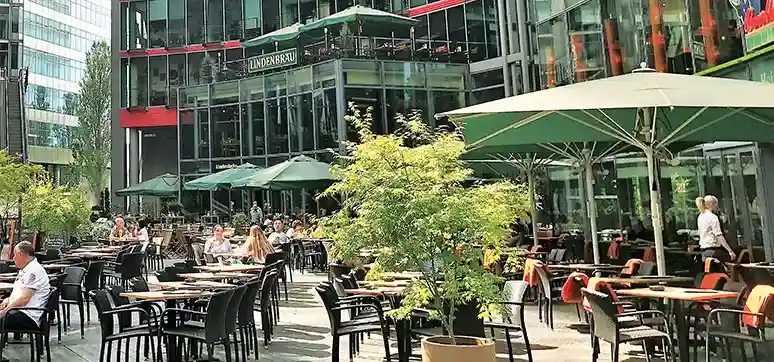
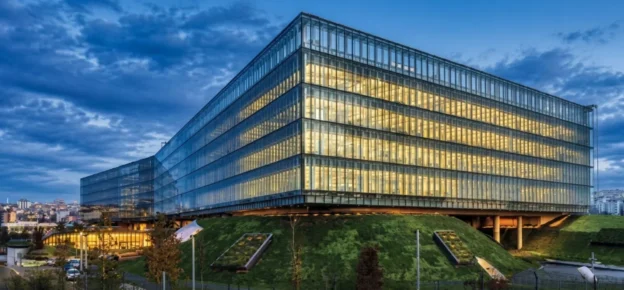
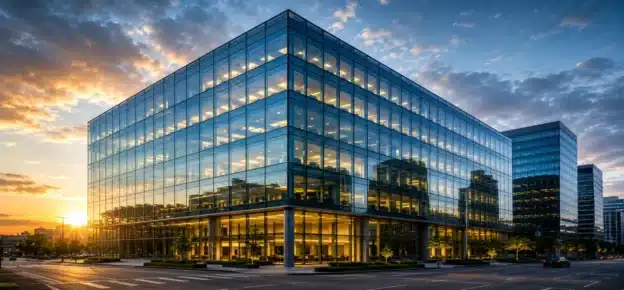
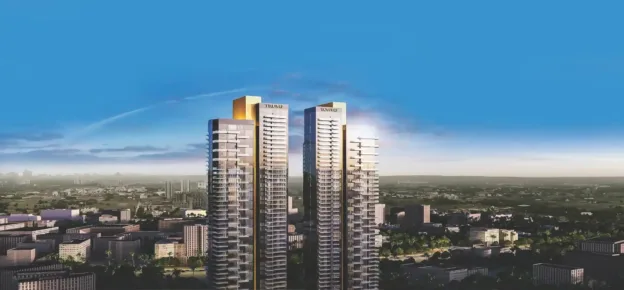
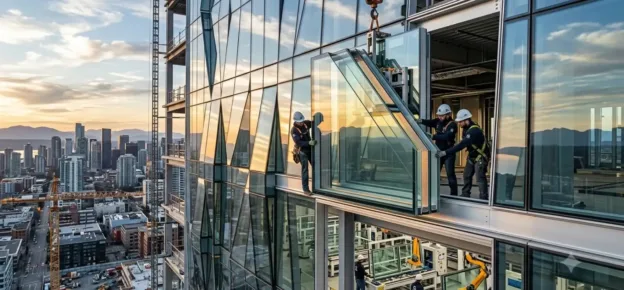
Rising Trend of Glass Façade in India. Glass, with time, has risen to be one of the most important and primary construction components in the building industry. In a country like India, which consists of hot and humid climate zones and where thick brick walls and concrete structures are better at providing insulation, thus lessening the cooling loads of the buildings, in recent times, they are using more and more glass for building façades. The increasing demand for glass façades lies in the fact that glass imparts higher aesthetic value to a building. All high-rise buildings in the metro cities are glazed with high-quality glass façades. The other reason for this trend is the fact that, apart from the sophisticated exterior, glass façades make the buildings lighter and reduce the weight on the foundation. Also, glass provides natural day lighting and unobstructed views of the exterior, giving the building occupants a better working environment[1].
However, all these advantages are outweighed by the higher energy consumption needed for cooling the building’s interior spaces. The difference in performance between a normal brick wall and a glass wall in terms of the amount of heat flow allowed can be understood by simply analysing the U-values of the two. As per ECBC 2017, the maximum allowable U-factor of vertical fenestration for Indian climate zones is 3 W/m2. K. Whereas, the same for opaque external walls in 0.4 W/m2. K.
This simply means that glass façades allow 7.5 times more heat to flow in from the exterior spaces. Hence, drawing a conclusion that the cooling energy consumption of a building with a glass façade compared to that of a normal brick wall building would not be wrong. The trade-off between whether to use a glass façade or apply conventional construction practices largely lies with the architects, building engineers and energy analysts.
Low-e Glass
The solution to the poor energy performance of glass in a country like India is to use the right kind of high-performance glass. This will enable the buildings to reap the advantages of natural lighting and occupant well-being that a glass façade allows while trying to lessen the SHGC (Solar Heat Gain) and U-value. The newest development in the glass and Fig.
low-e glass. Such glasses have coatings that result in a lower solar heat gain, lower reflectivity and glare control, all of which contribute to making the products sustainable. Low-e coatings have been specially developed to minimise the amount of ultraviolet and infrared light passing through the glass without compromising the amount of visible light that is transmitted. The special features of this glass are[2]:
- The low-e coating reduces the emissivity of the glass and lowers the U-factor
- Low solar heat gain coefficient (SHGC) values result in energy and cost savings
- Provides optimum visible light transmittance, helping to reduce lighting loads
- Low internal/external reflection, reducing sun glare and the need for interior blinds and shades
- Low UV (ultraviolet) transmittance, reducing UV rays, results in less fading
Other forms of this glass can be manufactured by providing low-e to an insulated unit, laminating, toughening, and enamelling using standard techniques. Solar low-e coatings provide the lowest SHGC of any pyrolytic family of products. These make this glass a perfect choice for a new commercial building project in the Indian climatic scenario. A modest range of tints, including shades like grey, blue-green, graphite blue, and arctic blue, is also available to designers in the Indian market.
The Technology of a Low-e Glass
The interesting concept about a low-e glass is that it has a microscopically thin (thinner than even a human hair) coating that is transparent. The “e” in low-e refers to emissivity, which is the ability of a material to radiate heat. Normal glass has an emissivity of 0.84, whereas in a low-e glass, the emissivity is reduced to as low as 0.02. This coating reflects long, long-wave infrared energy (or heat).
In colder climates, when the interior heat tries to travel to the colder exterior, the coating helps to reflect this heat back to inside, hence reducing the radiant heat loss. The reverse phenomenon occurs in warmer climate zones where the exterior heat is prevented from travelling to the building interiors. This makes low-e Glasses not only relevant for cold climates but also extremely worthwhile for warm and humid climate zones. The working analogy is the same as that of a thermos, where the temperature is maintained in the interior spaces because heat reflection occurs [3].
There are two types of low-e coatings that are available in the market:
- Passive low-e coatings – allow maximum solar heat gain
- Solar control low-e coatings – contain the quantity of solar heat inside the home.
Both of these techniques keep the building interiors cooler, thus reducing air-conditioning consumption. Pyrolytic, or “hard coat”, and Magnetron Sputter Vacuum Deposition (MSVD), or “soft coat”, are the two processes of manufacturing the low-e glasses.
The performance measures of these glasses are the same as any other glass, where the properties of the measurements are U-value, VLT, SHGC, and light to solar gain. The interrelation between these properties is measured and adjusted such that the SHGC and U-Value are kept lower without compromising the visible light transmitted through the façades.
Promoting the Use of Low-e Glasses

Almost all leading glass manufacturers in India right now produce solar low-e glasses. The glass and façade industry is confident of the fact that low-e glasses are the future of glazing in climatic conditions such as that of India, because using less energy is the need of the hour. The limitations of using these glasses in all commercial buildings lie in the higher cost, which builders are most often reluctant to pay. Conversely, using these glasses as mentioned earlier reduces the utility as well as maintenance costs, due to which the cost savings over the life of the building will suffice the initial extra investment made on the façade.
There is also a certain lack of awareness related to the advantages of the low-e glasses, which needs to be bridged by consultants, architects, and designers and promote the use of smart technologies and glasses such as low-e, which will end up promoting sustainable practices throughout the Indian building construction sector.
Case Study Analysis of Using Low-e Glass Façade in a Design Project:

In a recent design competition, where the task was to design a Net Zero Visitor Centre for the Ranthambore Tiger Reserve Forest, the design team made the use of low-e glass in their design to bring down the air-conditioning energy consumption. The net-zero concept essentially means that a building is self-sustainable in terms of energy, water, and waste.
This is conventionally achieved by balancing out the energy consumption in the building with renewable energy generated within the project site. The utilisation of the low-e glass, in this case, was considered an effective Energy Conservation Measure (ECM) by the design team.
For this case study analysis, this design was used, and energy simulations were run once using a low-e glass and once using a conventional DGU. The claims that the lower SHGC and U-value properties of the low-e glass result in lower cooling energy consumption were tested and critically analysed. The properties of the two different glasses used for the sensitivity analysis are provided in Table 1.
It can be clearly seen from the glass properties that the low-e glass has a far lower solar heat gain coefficient value, along with a lower U-value. While the VLT for the DGU is seen to be higher than that of the solar low-e glass. This can be linked to the fact that the external and internal reflection values for the DGU are higher than.
that of the low-e glass. The energy consumption data for the two cases are as given in Fig. 4. The two main end-use components that are observed to show significant consumption variation are interior cooling consumption and area lighting. The data is given in Table 2.
Analysis Made:

From the consumption data provided in Table 2, it can be analysed that the Space Cooling consumption when the building uses low-e glass in the façade are 5% lowers than that of a conventional DGU. This variation helps to validate the fact that low-e Glasses provide better insulation to the building spaces. The glass property of SHGC is responsible for this reduction. This variation would be far more than 5% if the WWR (Window to Wall Ratio) for any building is higher and the building heavily uses a glass façade. Hence, for buildings relying on glass for their external façade, low-e should be the obvious choice. Secondly, the area lighting consumption for low-e Glasses is found to be 23% lower than that of DGU.

This can be owed to the fact that the visible light transmittance of low-e was 42% while that of the DGU selected was 26%. Hence, low-e not only reduces the cooling energy consumption but also diminishes the lighting consumption. A similar sensitivity analysis can be made between different solar low-e glasses to judge the performance of the wide range available in the market. An initial judgment in selection can be made by studying the glass properties. Lower SHGC means higher cooling consumption reduction, and higher VLT means higher area lighting consumption reduction. This analysis conclusion can also be implemented in real-life building designs, hence achieving similar outcomes.
References:
[1] Economic Times, Pros and Cons of Glass façade, June 16, 2017, [Online] Available at: https://economictimes. indiatimes.com/pros-andcons- of-glass-façades/ articleshow/14178517.cms.
[2] Stanek Windows, What is low-e glass and does it make Windows Energy Efficient? February 14, 2017, [Online] Available at: https:// www.stanekwindows.com/ what-is-low-e-glass-anddoes- it-make-windowsmore- energy-efficient.aspx.
[3] Vitro Architectural Glass: What is low-e Glass? No date, [Online] Available at http://glassed.vitroglazings. com/glasstopics/how_ lowe_works.aspx.