
Post Date: August 20, 2026 |
Last Edited: August 20, 2026

In this interview, he speaks to WFM Media about sustainability, acoustic performance, material choices, and what the industry must do to earn lasting trust from its customers.
Q. How Is The Growing Demand For Sustainable And Energy-Efficient Buildings Influencing The Development Of Window, Door, And Glazing Solutions?
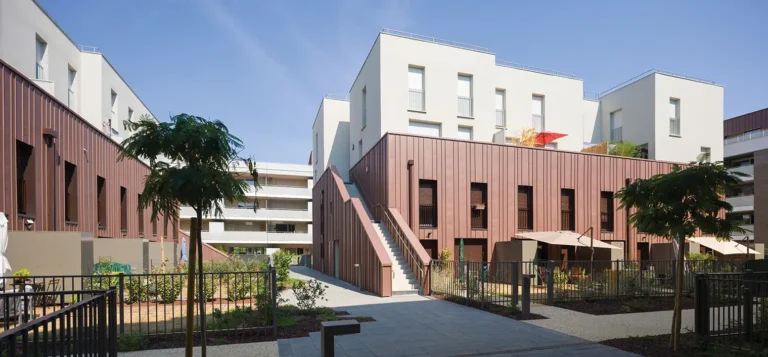
Sustainability is simply the future of this industry. Any product line that ignores it will not remain relevant for long. Doors and windows are central to this conversation — approximately 40% of a building’s energy consumption is attributable to its openings, which makes energy-efficient fenestration a significant lever for any green building strategy. Awareness is growing rapidly among architects and consultants, who are now specifying high-performance solutions with far greater regularity.
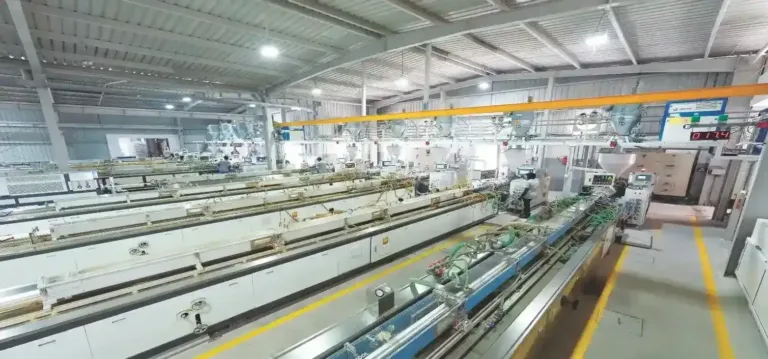
At AIS, we are embedding this into our operations. Our new facility in Hosur, Tamil Nadu, is being built to IGBC certification standards, with around 40% of its energy from renewables. Daylighting has been prioritised for both energy savings and occupant wellbeing. Rainwater harvesting and Green Pro certified materials are also part of the design. All future factories will follow the same blueprint, and we are pursuing distributed manufacturing to reduce delivery distances and lower each unit’s carbon footprint.
Q. What Standards Guide Acoustic Performance In India, And How Does Asahi Validate The Performance Of Its Products?
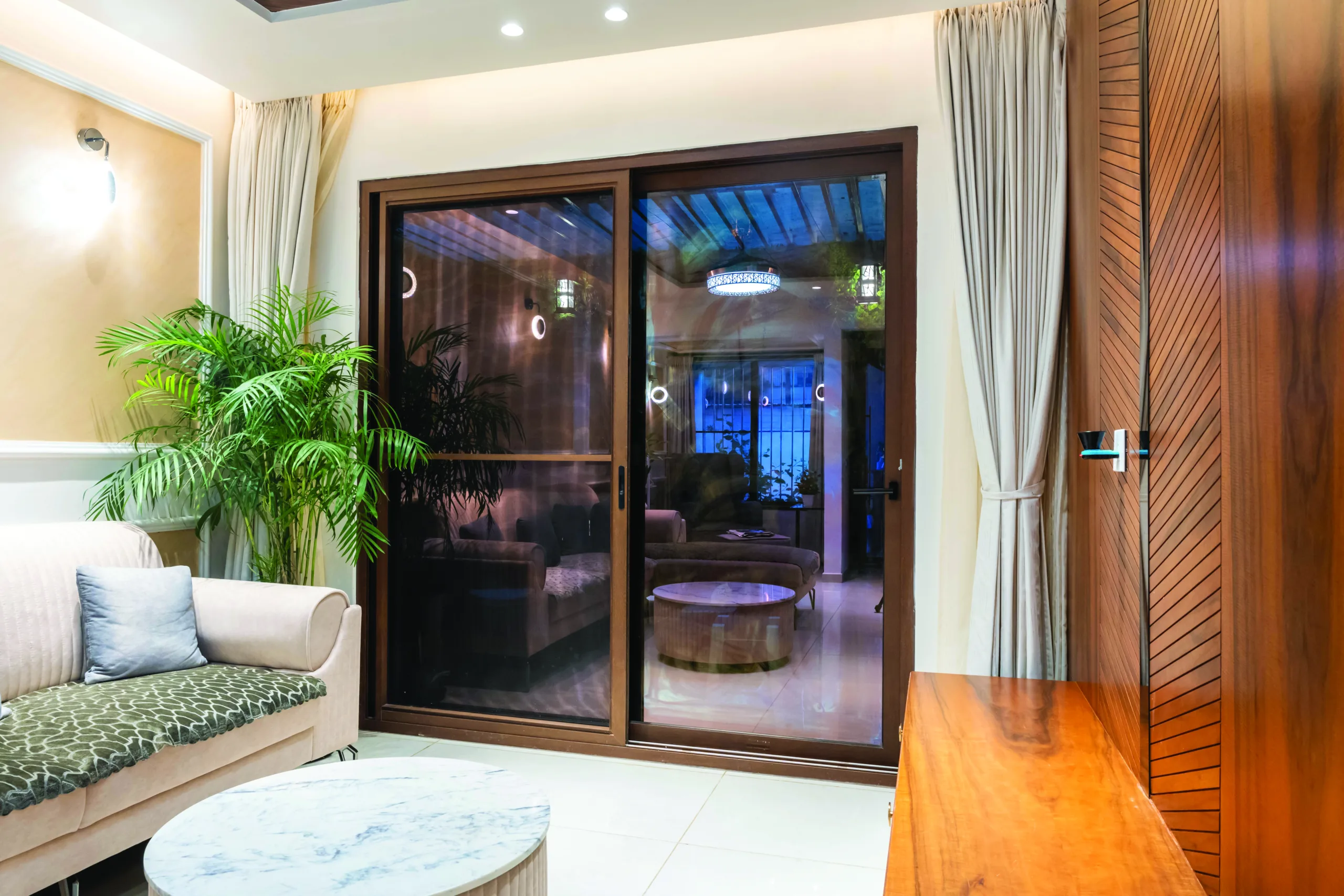
Acoustic requirements in India are currently recommendations rather than enforceable regulations. A five-star hotel, for instance, is expected to achieve around 32 dB at pillow level; classrooms may require up to 42 dB of sound reduction. All materials in the space must work together to meet those targets. Because acoustic performance cannot be reliably simulated, it must be physically tested. AIS became the first company in India to have its door and window products tested by ARAI — the Automotive Research Association of India — validating the performance we claim for our systems.
Q. What Do You Find When Architects And Developers Specify Acoustic Requirements? Is The Knowledge There?
Clients often request a specific acoustic performance level – such as a reduction of 30 or 40 dB – without fully understanding the nature of the noise source or the factors that influence the final outcome. The effectiveness of any acoustic solution depends on whether the challenge is low-frequency, high-frequency, or broadband noise, as each requires a different approach. Once the noise issue is properly defined, identifying the right solution becomes far more straightforward. We specify performance using the Sound Reduction Index (Rw), validated through test data, and then recommend the most suitable system—fixed, casement, sliding, or lift-and-slide—based on the application’s requirements.
It is equally important to recognise that a window is only one element of a building’s acoustic envelope. Even a high-performance window can be compromised by sound transmission through other building elements such as ducts, ceilings, façades, and service penetrations. Achieving the desired acoustic outcome therefore requires a holistic approach to building design. For projects where acoustic performance is critical, the involvement of a qualified acoustic consultant is strongly recommended to ensure that all contributing factors are properly assessed and addressed.
Q. How Do You Advise Customers Choosing Between Aluminium And Upvc Windows?
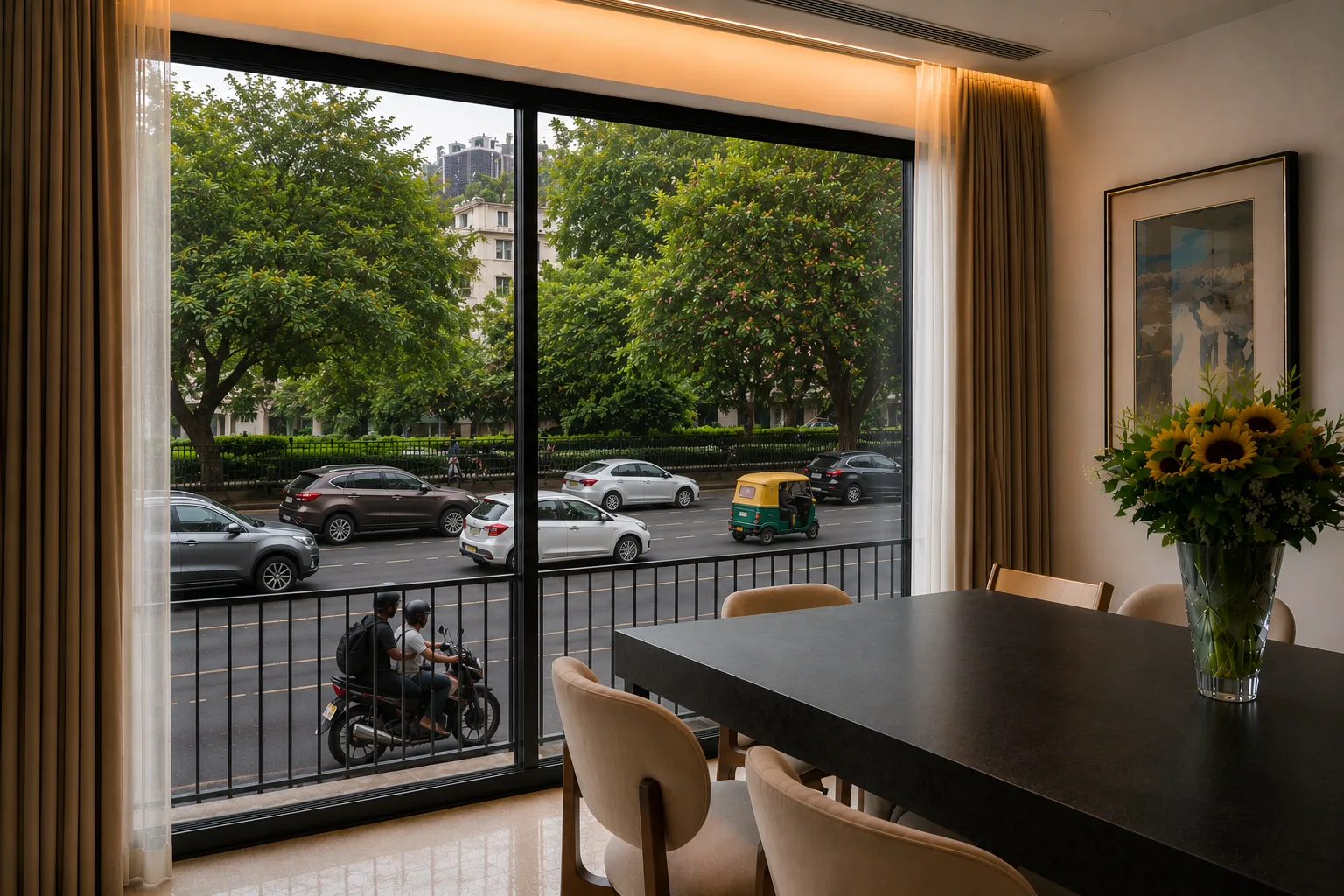
Both are good materials when correctly specified. uPVC offers better thermal insulation — plastic is inherently a better insulator than metal. Aluminium delivers slim sightlines and a contemporary feel that is increasingly in demand as taller windows become the norm. For standard height openings of around 7 to 8 feet, either works well. For taller spans, aluminium begins to outperform uPVC on structural grounds. In our own production, this shift is already apparent: five years ago aluminium was zero per cent of our output; today it accounts for approximately 60%.
On recyclability, aluminium has an inherent advantage — it is infinitely recyclable. The challenge in India is establishing the reverse logistics to collect and return windows at end of life, though regulation is moving in this direction. For uPVC, we are addressing this within our own operations: our new extrusion plant in Roorkee, due to start production in late 2026 or early 2027, will allow us to recycle uPVC off-cuts and material returned from sites.
Q. What Is The Typical Replacement Cycle For Windows, And How Does Asahi Support Retrofitting Projects?
In urban settings, homeowners tend to renovate — including replacing windows — within 15 to 20 years. The pace of innovation is such that newer products offer meaningful gains in comfort and energy efficiency, making the investment increasingly easy to justify. In rural areas, windows can last 30 to 40 years. Over time, I expect the urban cycle of around 20 years to become the norm across both settings.
Retrofitting is currently a small part of our business and of the industry overall, since the majority of the building stock India will need by 2050 is yet to be built. Where we do undertake retrofit projects, we support customers in navigating the specific challenges: older buildings have interface details that differ substantially from new construction, and sequencing matters. We compress timelines and plan carefully to minimise disruption to occupants throughout the process.
Q. Procurement In The Project Segment Is Often Driven By The Lowest Price. How Do You Navigate This?
The L1 dynamic is a feature of institutional procurement, where the decision-maker is not the end user. That will remain the reality for the foreseeable future. Where we engage directly with end users — homeowners in particular — the conversation is entirely different. Customers today understand energy efficiency; they are sensitive to noise, and they can appreciate a premium for genuine performance. The challenge in the project segment is to work with architects and consultants at the specification stage, so that performance requirements are embedded in the tender before price becomes the dominant criterion.
Q. What Is Your Message To The Industry — Manufacturers, Developers, And Policymakers?
A window is not like a smartphone, where the same product is identical regardless of who sells it. In our industry, two windows sold under the same specification by different fabricators can be very different in reality. The industry’s fragmented structure makes this possible, and limited regulation means some players exploit it. My appeal to peers is straightforward: stop competing purely on price and start competing on quality. Customers — and the industry’s long-term credibility — will be far better served by a more organised, quality-driven approach.