
Post Date: September 2, 2026 |
Last Edited: September 2, 2026
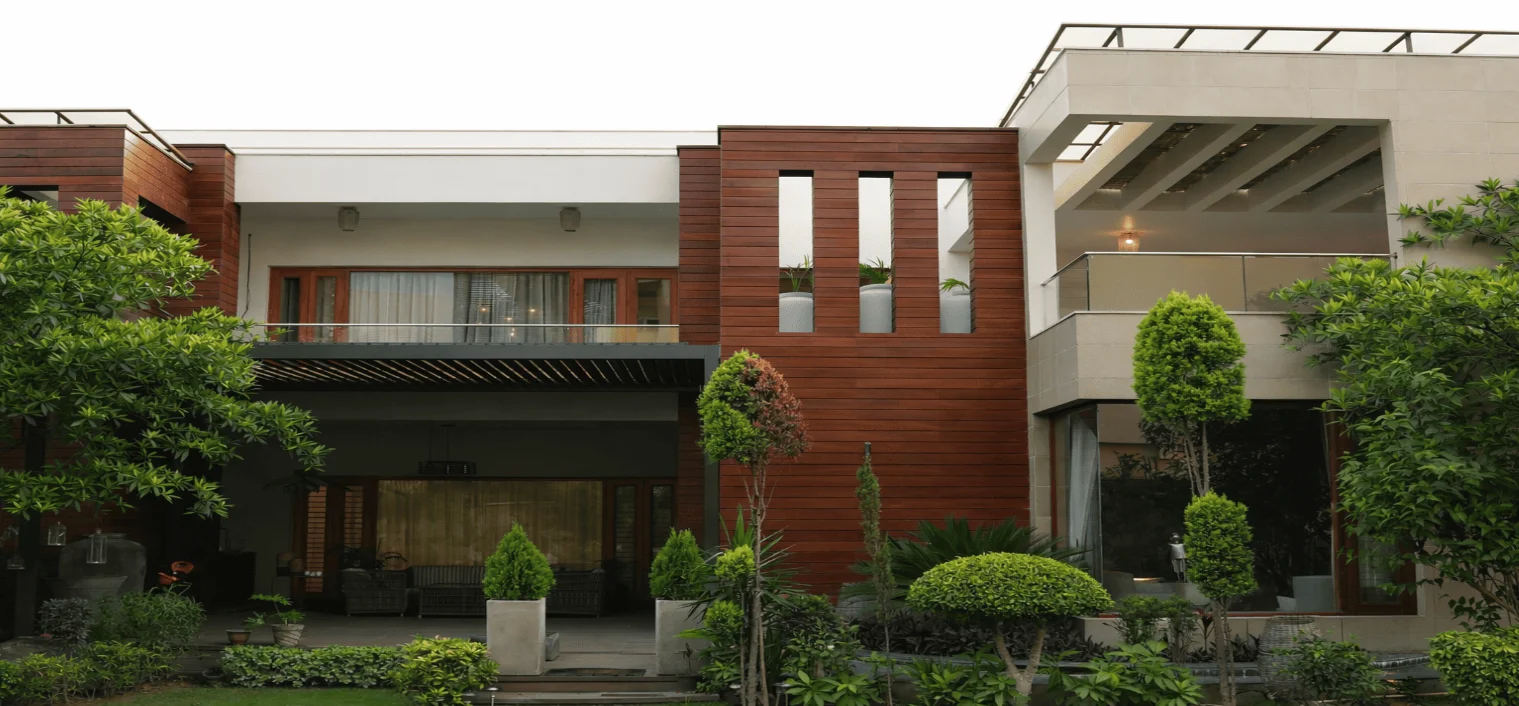
Contemporary façade design has moved well beyond surface articulation or visual branding. Increasingly, the building envelope is expected to perform spatially, climatically, and experientially. It must mediate light, heat, privacy, and perception while contributing to the building’s long-term identity. Two ideas have emerged as central to this shift: façade layering and landscape integration. Together, they redefine the façade not as a static skin, but as an adaptive system shaped by time, use, and environment.
Key Highlights
|
Layered façades introduce depth, shadow, and variation across the day. Landscape integration dissolves the rigid boundary between built form and natural context. When these strategies operate together, buildings no longer present a fixed image. Instead, they evolve with changing light, weather, and seasons. This approach shifts façade design away from singular composition and towards a responsive architectural language, one that is read gradually rather than all at once.
Façade Layering As Spatial Strategy
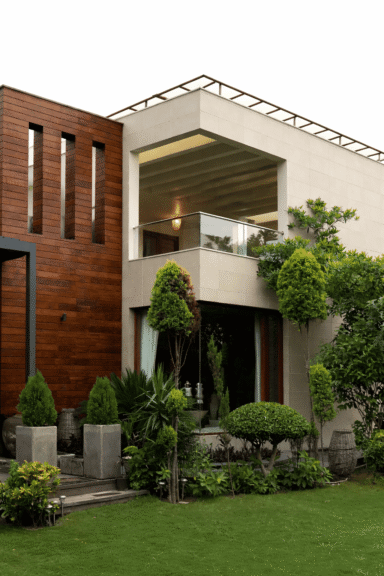
Layering in façade design is often misread as an aesthetic exercise. In practice, it is a spatial and environmental strategy that directly influences scale, proportion, and perception. Layers can be structural, climatic, or visual. Screens, fins, recessed glazing, balconies, and secondary skins all contribute to this depth.
What layering fundamentally creates is a distance between the observer and the building’s primary enclosure. That distance allows light to enter indirectly, shadows to form, and surfaces to reveal themselves over time. Instead of a single plane presenting itself immediately, the façade unfolds in parts. From afar, these layers read as a cohesive mass. At closer range, they separate into distinct elements, revealing detail and human scale. The façade ceases to be a flat boundary and becomes an inhabitable zone, one that mediates between interior and exterior conditions.
Light, Shadow, And The Fourth Dimension
Time is often the missing dimension in façade design. Layering introduces temporality by allowing light and shadow to animate the building. As the sun moves, shadows shift across recessed surfaces, screens, and projecting elements.
Morning light may emphasise horizontal planes, while evening light brings vertical elements into sharper relief. Overcast conditions soften contrast, allowing material texture to dominate.
This constant transformation gives layered façades a temporal quality. The building does not appear the same at noon as it does at dusk. Over time, this variability reduces visual fatigue and adds richness to the urban environment. Layered façades also age more gracefully. Depth helps conceal minor imperfections, while material patina becomes part of the architectural expression rather than a sign of deterioration.
Performance Embedded In Depth
Beyond perception, layering plays a critical role in performance. Recessed enestration reduces direct solar gain. Screens and fins modulate daylight and control glare. Buffer zones improve thermal comfort and acoustic separation. Importantly, these benefits are achieved passively, without overreliance on mechanical systems.
Layering allows façades to respond to orientation with precision. East and west elevations can be deeper and more articulated to mitigate low-angle sun, while north-facing façades may remain lighter and more transparent. In this way, the façade responds to the climate through form rather than solely through specifications, embedding environmental intelligence directly into the architecture.
Landscape As An Extension Of The Façade
If layering introduces depth, landscape introduces softness. When landscape is treated as part of the façade strategy rather than a foreground element, it becomes an extension of the building envelope.
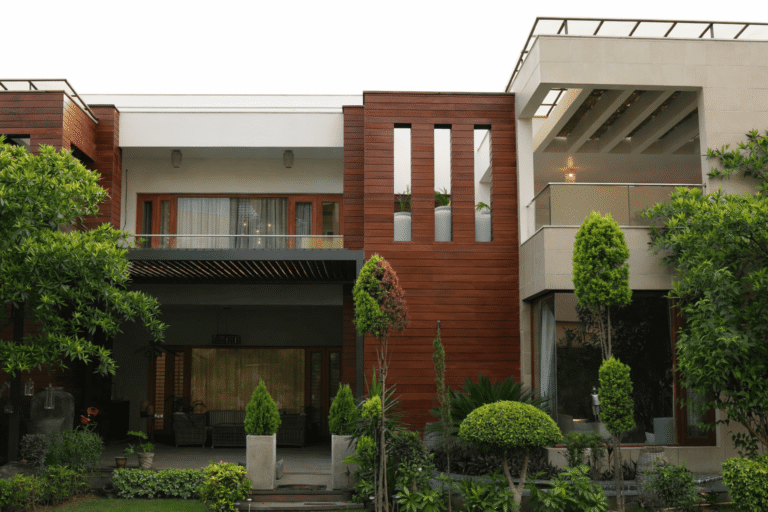
Integrated planters, creepers, and trees blur the boundary between architecture and nature. Vegetation casts moving shadows across surfaces, reinforcing the temporal quality created by layered façades. Seasonal changes introduce variation in colour, density, and texture, allowing the building to register time at a slower, more organic pace. Landscape no longer frames the building. It participates in it.
Softening Scale Through Landscape As A Visual Filter
Large residential buildings often struggle at street level, where architectural scale meets human experience. Landscape plays a critical role in mediating this transition. Low planting, vertical greenery, and layered planters soften hard edges and reduce the perceived height of façades. When aligned with architectural elements, the landscape reinforces rhythm rather than competing with it.
Vegetation also acts as a visual filter for fenestration. Trees and planted screens mediate the relationship between interior spaces and their surroundings, offering privacy without isolation. Views are layered rather than blocked. Light and air pass through foliage, while visual exposure is softened. From within, occupants experience depth, movement, and change instead of a static urban backdrop. This improves comfort, reduces reliance on internal shading, and reconnects interior spaces with natural cycles.
Entry Sequences As Layered Experiences
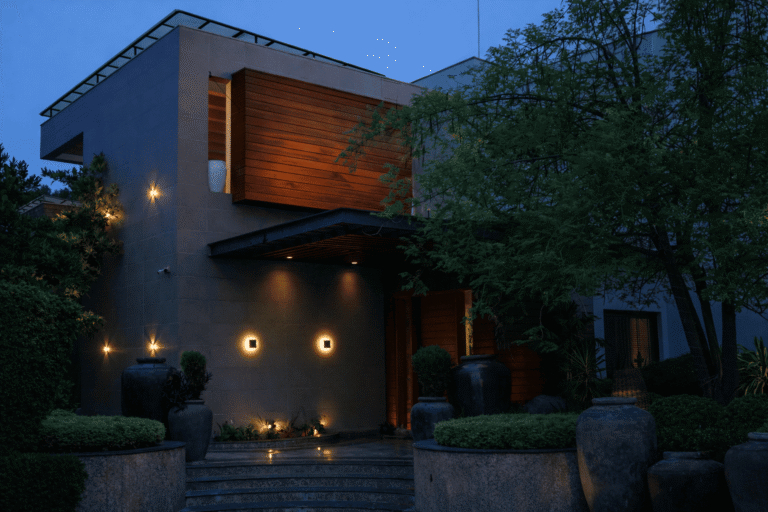
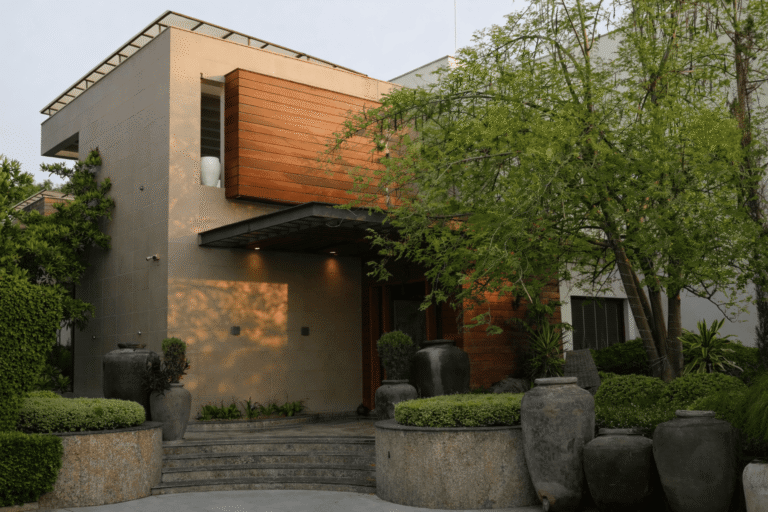
The most effective integration of façade and landscape often occurs at the entry. Rather than a single threshold, arrival becomes a sequence. Movement unfolds through planted zones, shaded recesses, and layered surfaces before reaching the interior.
Built and natural elements work together to guide orientation. Canopies align with trees. Paving patterns echo façade grids. Planters align with structural elements. This gradual transition slows movement and heightens awareness, establishing a sense of place before one enters the building. The façade, in this moment, becomes experiential rather than merely visual.
Time As A Shared Medium
Both layered façades and integrated landscapes engage directly with time. Plants grow, shed leaves, and change colour. Shadows lengthen and contract. Materials weather and acquire patina. When these systems are designed together, their temporal qualities reinforce each other. A façade animated by light becomes more alive when paired with a landscape that evolves seasonally. Buildings begin to feel responsive rather than rigid, encouraging long-term attachment and care.