
Post Date: October 23, 2026 |
Last Edited: October 23, 2026
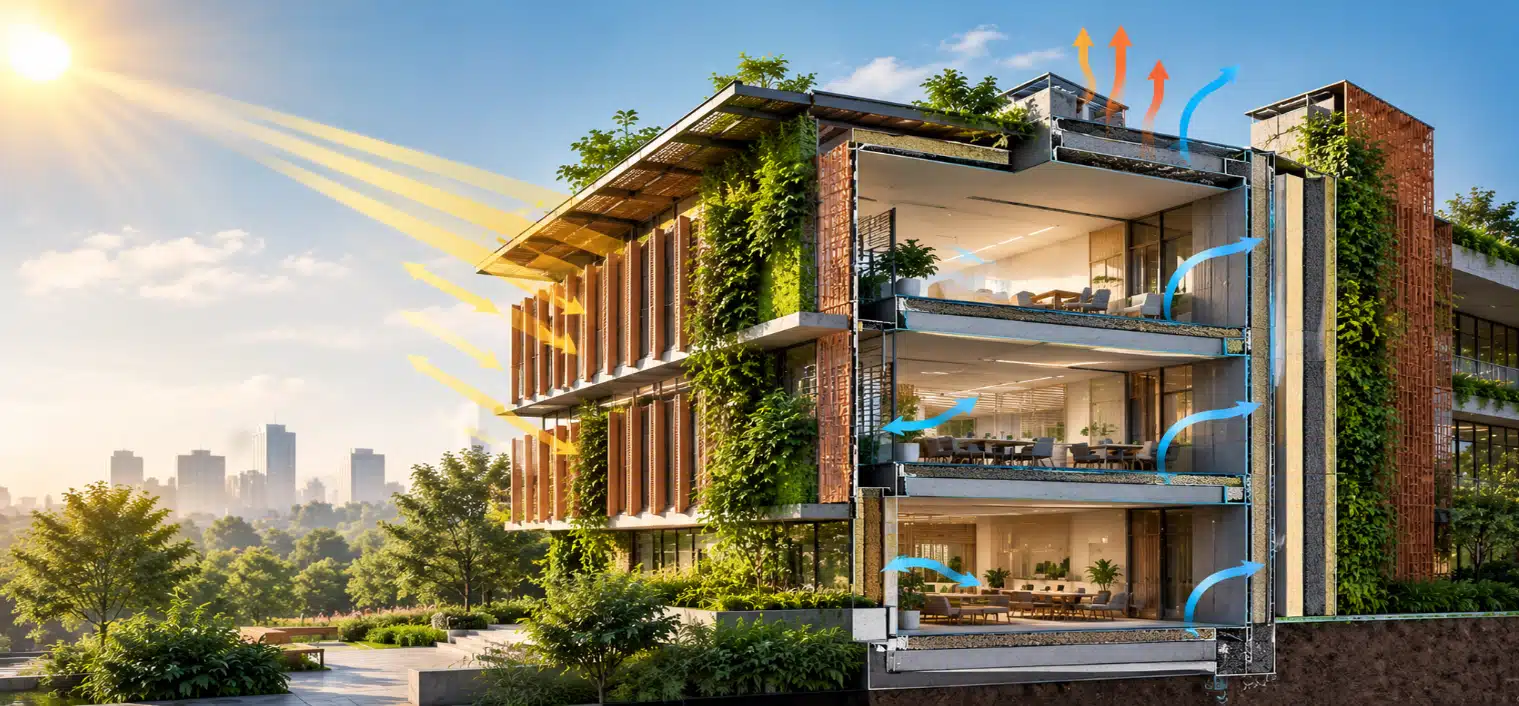
Key Highlights
|
There was a time when the success of a building was often judged by its silhouette. Expansive glass façades, sleek lines, and reflective surfaces became symbols of modernity and ambition. Across cities, commercial towers and premium residences embraced the same visual language. Buildings looked impressive, but somewhere along the way, the conversation became heavily centred around appearance. Today, however, the priorities of both developers and occupants are changing. People are no longer asking only how a building looks. Increasingly, they are asking how it performs.
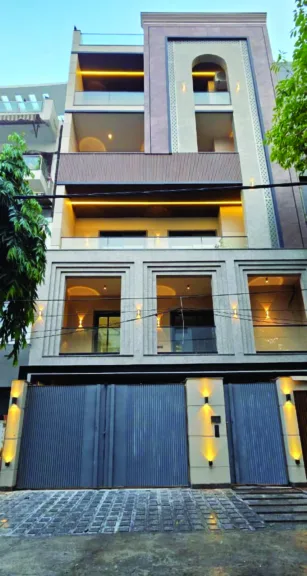
This change is hardly surprising. The effects of climate change are becoming part of everyday life. Summers are longer, temperatures are rising, and energy consumption is under constant scrutiny. At the same time, people spend nearly ninety per cent of their lives indoors. Whether it is an office, a home, a hospital, or a retail space, occupants expect environments that are comfortable, naturally lit, and energy-efficient. As a result, building exteriors are being viewed in a completely new light. They are no longer just architectural statements. They are becoming active participants in the way people experience spaces.
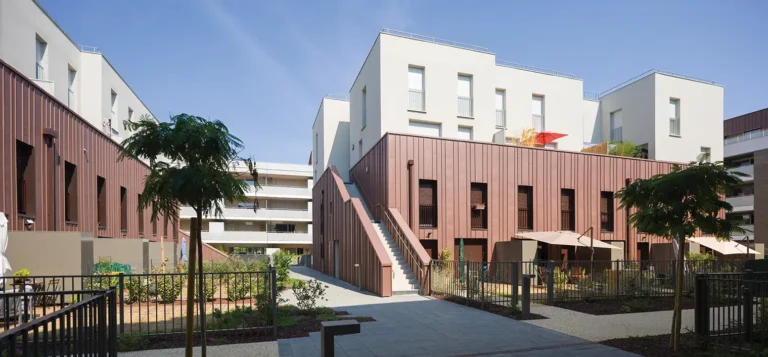
The shift is particularly relevant in India. Cities are growing rapidly, and buildings are expected to remain functional for decades. Decisions made during the design stage therefore have consequences that extend far beyond construction. A poorly designed façade can increase cooling requirements, raise energy costs, and compromise occupant comfort. On the other hand, a thoughtfully designed building envelope can reduce operational expenses while creating healthier and more pleasant environments.
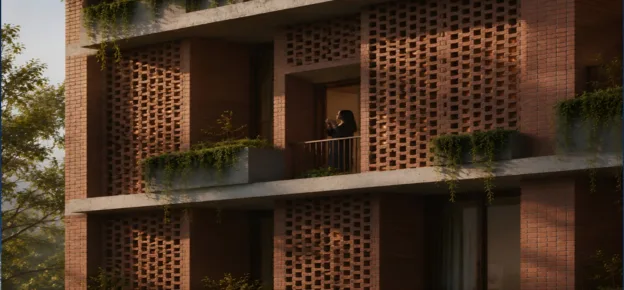
This growing awareness is transforming the role of façades and fenestration systems. Traditionally, exteriors were expected to provide protection and aesthetics. Today, they are expected to regulate heat, manage daylight, enhance acoustics, and contribute to sustainability goals. In many ways, the building envelope has become the first line of interaction between a structure and its environment.
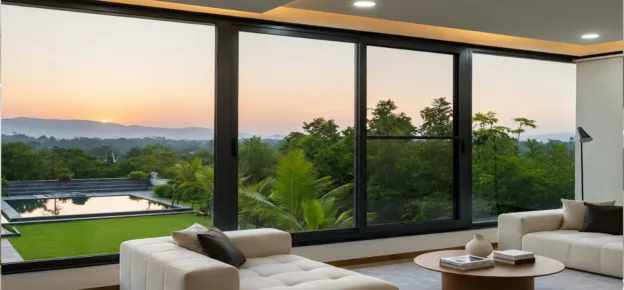
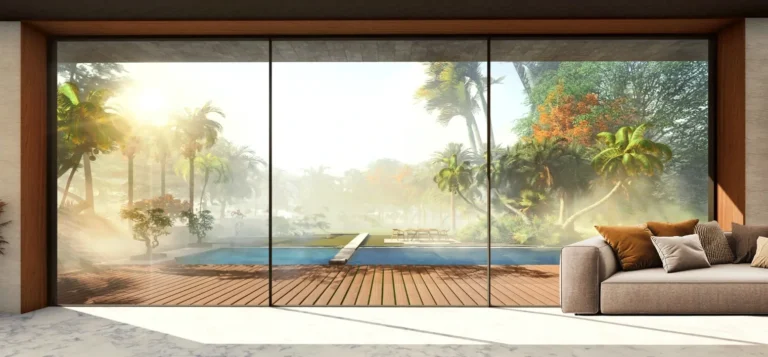
Among all components, fenestration has perhaps witnessed the most remarkable evolution. Windows are no longer passive openings. Their dimensions, orientation, glazing specifications, and framing systems directly influence energy efficiency and indoor comfort. A well-designed window can welcome natural light while minimizing glare and heat gain. It can improve ventilation and create a stronger connection with the outdoors. Conversely, excessive glazing without adequate consideration can make interior spaces uncomfortable and energy intensive.
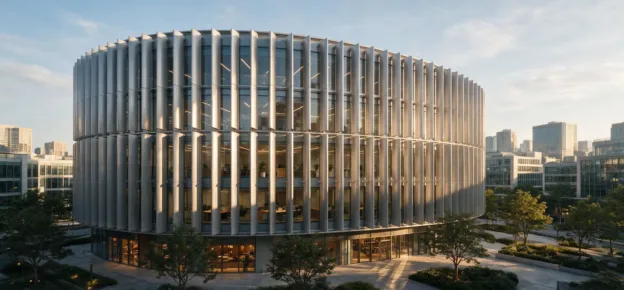
This is precisely why the industry is moving beyond the era of glass boxes. More glass does not necessarily translate into better buildings. Instead, the focus is shifting towards balance. Architects and façade specialists are looking for ways to preserve openness and visual appeal while ensuring thermal performance. Double-glazed units, high-performance glass, shading systems, and advanced aluminium solutions are increasingly being integrated to achieve this balance.
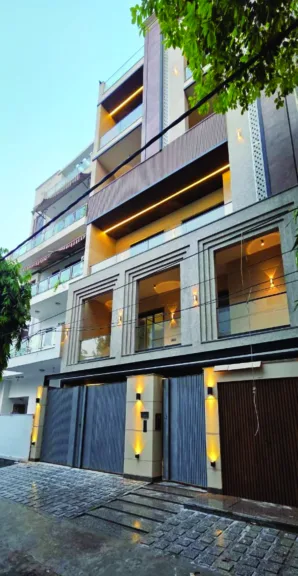
Interestingly, this transformation is being driven as much by occupants as by regulations. Employees today value workplaces that provide daylight and comfortable indoor temperatures. Homebuyers are paying closer attention to ventilation, natural lighting, and energy efficiency. Hospitals are recognising the role of environmental quality in patient recovery. Educational institutions are designing spaces that support concentration and wellbeing. What people experience inside a building is directly influenced by the decisions made on its exterior.
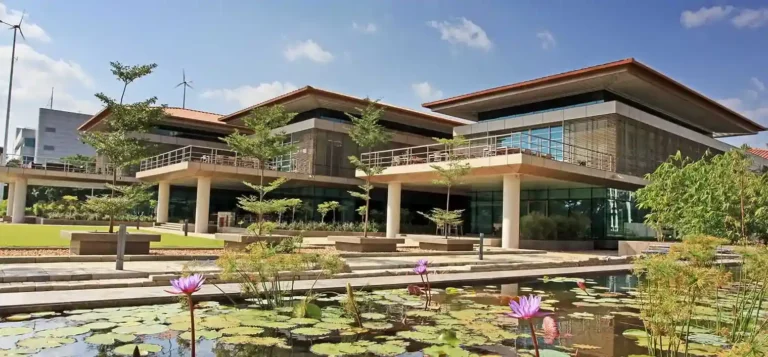
Sustainability has further expanded this conversation. Earlier, green buildings were often associated with a checklist of certifications. Today, sustainability is increasingly being understood as a long-term commitment. Building exteriors play a crucial role because they influence energy consumption throughout the life of a structure. Material choices, durability, maintenance requirements, and thermal performance have become just as important as visual appeal.
This has encouraged the industry to embrace a more holistic approach. Climate-smart structures are not created through one material or one technology. They emerge through thoughtful collaboration between architects, façade consultants, system designers, and engineers. Orientation, shading strategies, glazing specifications, ventilation requirements, and material performance must all work together. The objective is not merely to construct buildings that consume less energy, but to create spaces that adapt intelligently to their surroundings.
Technology is making this possible. Simulation tools allow project teams to understand how a building will behave long before construction begins. Designers can study daylight penetration, thermal performance, and solar exposure to make informed decisions at an early stage. Building Information Modelling has strengthened coordination between various stakeholders, reducing inefficiencies and improving execution. These capabilities are helping transform façades from static elements into high-performing systems.
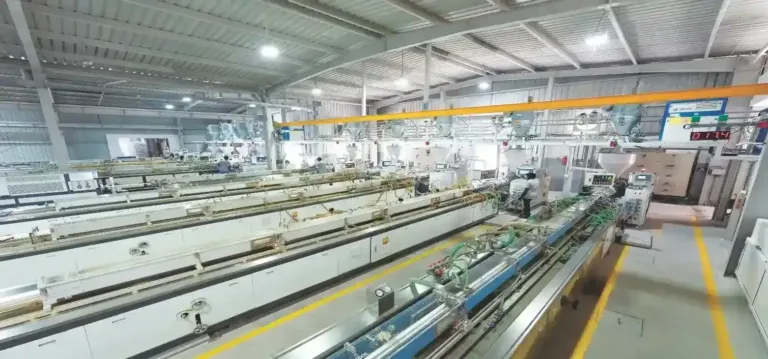
Material innovation is also opening up exciting possibilities. Contemporary façade systems are lighter, stronger, and more durable than ever before. Advanced aluminium systems offer structural strength with design flexibility. High-performance glazing helps control solar heat gain without compromising visibility. Increasingly, there is also a focus on recyclable materials and products that support circular economy principles. Durability and longevity are becoming important considerations because truly sustainable buildings are those that continue to perform efficiently over decades.
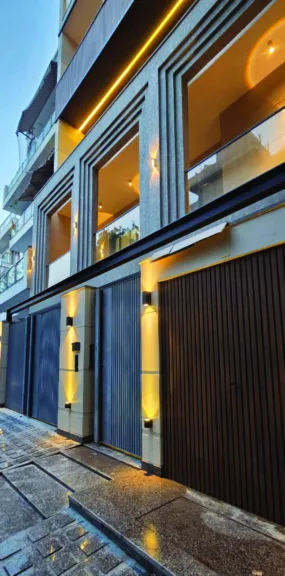
Another important aspect that often receives less attention is resilience. Buildings today are expected to withstand increasingly unpredictable weather patterns. Heavy rainfall, intense heat, and changing climatic conditions demand structures that can perform consistently over time. In this context, the building envelope assumes an even greater responsibility. It becomes the first layer of defence against environmental stress while ensuring comfort for occupants inside.
Perhaps the most encouraging change is that aesthetics and performance are no longer viewed as competing priorities. The best examples of contemporary architecture demonstrate that beauty and sustainability can coexist. Elegant façades can also be energy efficient. Transparent spaces can still maintain thermal comfort. Sophisticated design and responsible construction no longer need to exist at opposite ends of the spectrum.
As cities continue to evolve, building exteriors will increasingly define how responsibly urban environments develop. The buildings that stand out tomorrow may not necessarily be those with the most dramatic forms or the largest glass surfaces. They will be the ones that respond intelligently to climate, consume resources responsibly, and provide healthier spaces for people.
Ultimately, a building is far more than a physical structure. It shapes how people live, work, heal, and interact. The exterior, therefore, is not merely about creating a striking first impression. It is about delivering comfort on a summer afternoon, bringing in daylight without discomfort, reducing energy consumption over decades, and ensuring that architecture remains relevant in a changing world.
The era of glass boxes gave us a vision of modernity. The era ahead calls for something more meaningful. It calls for climate-smart structures that are not only beautiful to look at, but also better to live in.