
Post Date: June 5, 2026 |
Last Edited: June 5, 2026
Key Highlights
|
The architectural paradigm of airport terminals has shifted dramatically over the last few decades. No longer relegated to the status of mere utilitarian transit sheds, modern airports are conceived as dynamic civic landmarks, economic engines, and the ultimate gateways to a region. At the heart of this architectural evolution is the building envelope. The façade and fenestration systems serve as the critical “skin” of these massive structures, carrying the dual responsibility of creating an awe-inspiring first impression while solving intense, highly specific functional challenges.
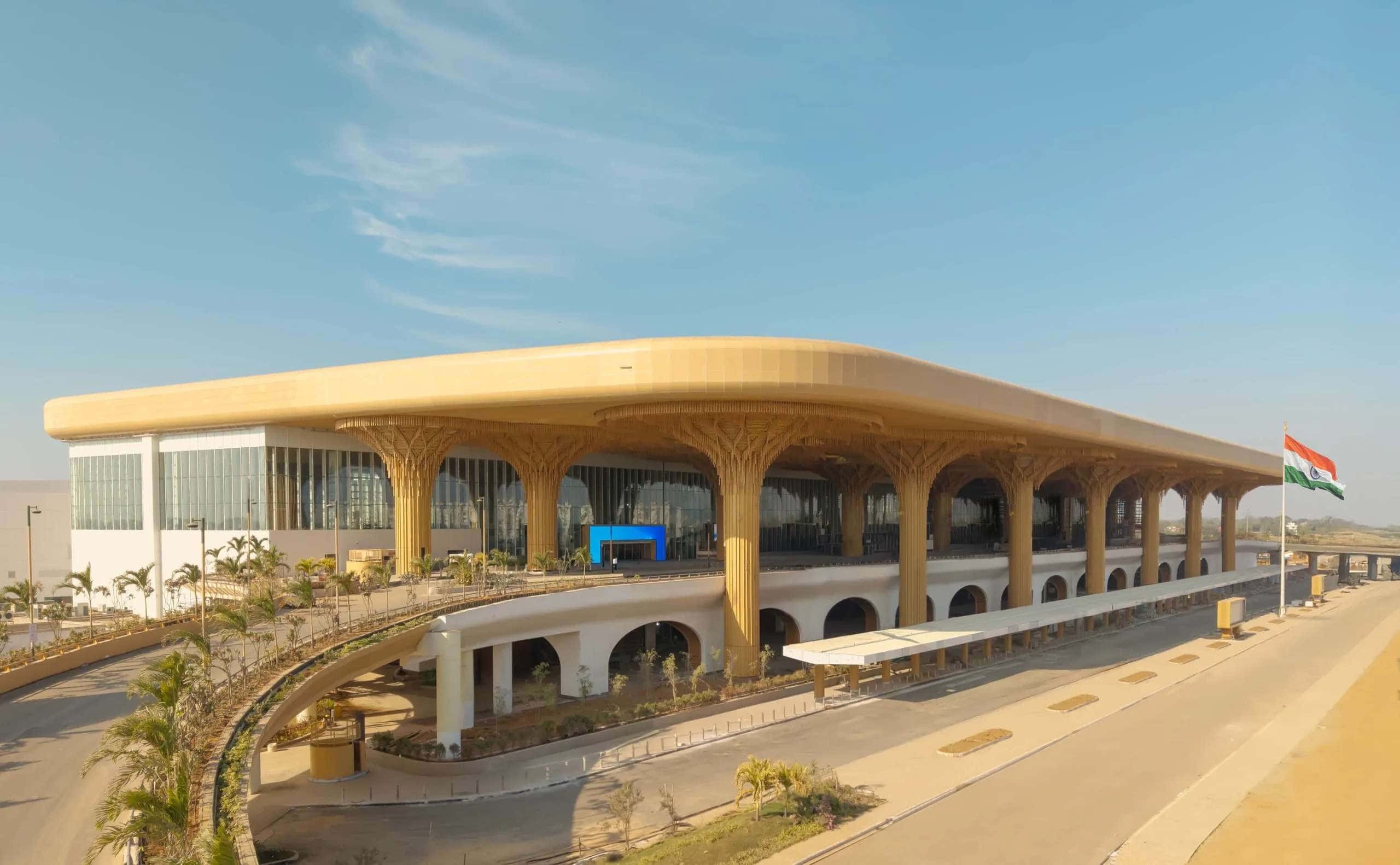
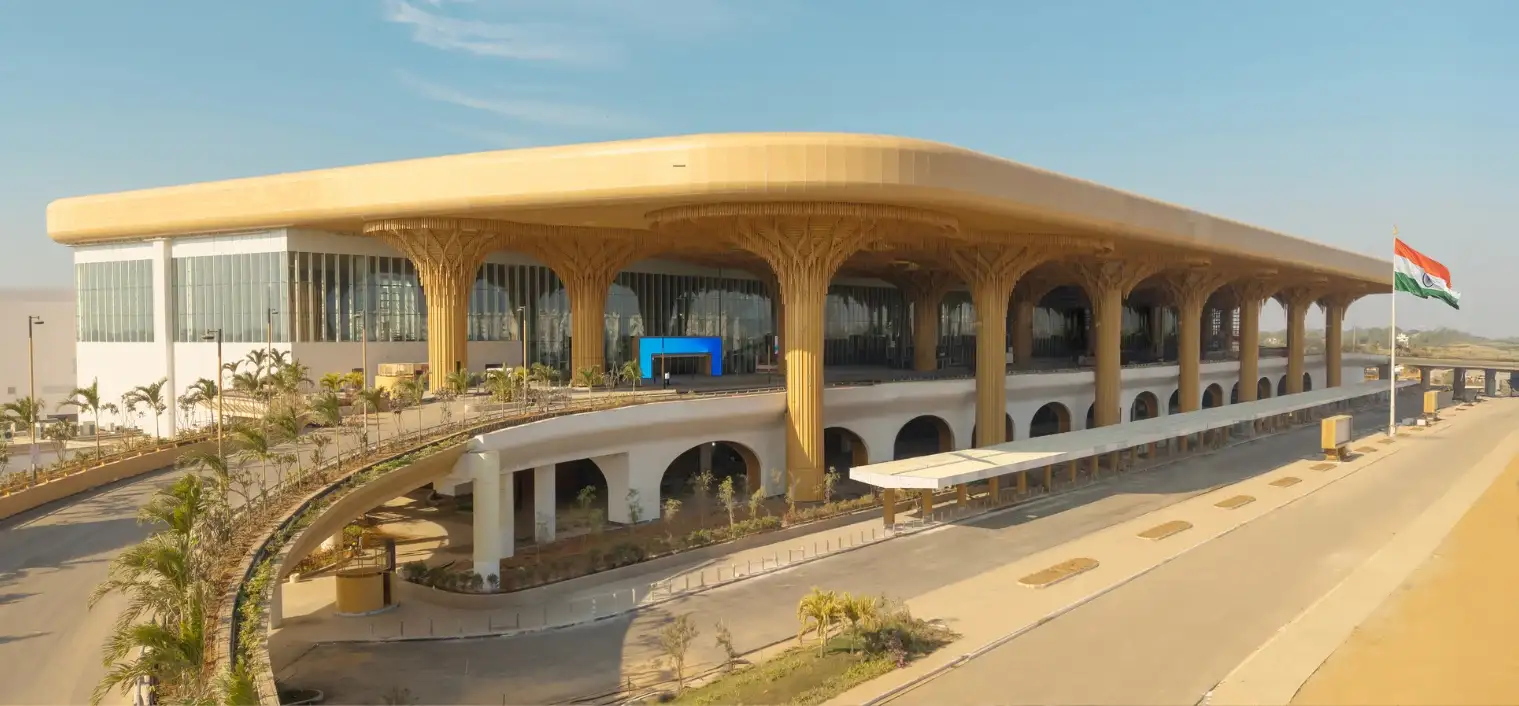
From an executive design perspective, an airport façade is not merely an aesthetic choice; it is a critical asset management decision. It requires a rigorous balance between Capital Expenditure (CAPEX) and long-term Operational Expenditure (OPEX). An airport envelope must breathe, protect, illuminate, and endure, all while handling heavy footfall and the dynamic, high-stress environment of aviation operations. Drawing from universal best practices and the specific, complex implementations currently underway at the new Guwahati International Airport project, this article explores the critical factors that dictate the strategic design and execution of high-performance airport façades.
Acoustic Performance And Noise Mitigation
Airports are inherently loud environments. The continuous roar of jet engines, the hum of ground support equipment, and the heavy flow of vehicular traffic on the city-side approach pose a significant challenge to passenger comfort. Ensuring a serene, stress-free interior environment requires meticulous acoustic planning, primarily governed by the fenestration.
The fundamental approach to acoustic attenuation in airports is the deployment of high-performance glazing systems. Standard double glazing is rarely sufficient to combat low-frequency aviation noise. Instead, architectural and acoustic consultants must collaborate to specify Double Glazed Units (DGUs) with asymmetrical pane thicknesses. By utilising panes of different masses, the glazing system disrupts a wider range of sound frequencies, preventing resonant transmission. Furthermore, the integration of specialised acoustic interlayers – specifically acoustic Polyvinyl Butyral (PVB)—within laminated glass assemblies is non-negotiable for dampening vibration and sound transfer.
The Guwahati Project Perspective: At the Guwahati International Airport, achieving stringent Sound Transmission Class (STC) and Outdoor-Indoor Transmission Class (OITC) ratings was a primary driver for the façade specifications to ensure passenger well-being. The project utilises heavily engineered insulated glass units (IGUs) incorporating laminated safety glass with acoustic PVB interlayers. The framing systems themselves—extruded aluminium profiles—are meticulously sealed with high-grade EPDM gaskets and structural silicones. This ensures there are no flanking paths for sound to leak through the joints, effectively isolating the terminal’s interior from the high-decibel airside operations.
Thermal Efficiency, Solar Control, And Climate Responsiveness
Vast expanses of glass are a staple in contemporary terminal design, utilised to maximise natural daylight, reduce artificial lighting loads, and offer passengers panoramic views. However, without careful intervention, these massive glazed areas lead to immense solar heat gain, effectively turning the terminal into a greenhouse and placing an unsustainable, costly burden on HVAC systems.
Addressing this requires a multi-tiered, energy-modelling strategy. Low-emissivity (Low-E) coatings are essential; these microscopically thin metallic layers reflect long-wave infrared heat while allowing visible light to pass through. Beyond the glass, the aluminium framing must incorporate deep thermal breaks to prevent the highly conductive metal from transferring exterior heat to the interior. Passive design elements such as deep roof overhangs, dynamic shading systems, and custom architectural louvres play a crucial role in intercepting solar radiation before it even reaches the glass, drastically reducing long-term energy costs.
The Guwahati Project Perspective: Guwahati presents a unique climatic challenge characterised by high humidity, intense solar radiation during summer, and extreme monsoon downpours. The façade strategy here is highly responsive to this microclimate. The project employs advanced Low-E coated DGUs calibrated for an optimal Solar Heat Gain Coefficient (SHGC) to minimise cooling loads.
Moreover, the façade detailing incorporates deep extruded aluminium fins and louvre systems that act as passive shading devices, strategically placed based on solar path analysis. To combat the heavy monsoons, the system’s weather-tightness is paramount. The specifications mandate rigorous air infiltration and water penetration testing, utilising continuous EPDM weather gaskets and specialised drainage weep holes to channel heavy rainfall away from the building envelope, ensuring absolute interior climate control and protecting the building’s interior assets.
Structural Integrity, Wind Load, And Seismic Resilience
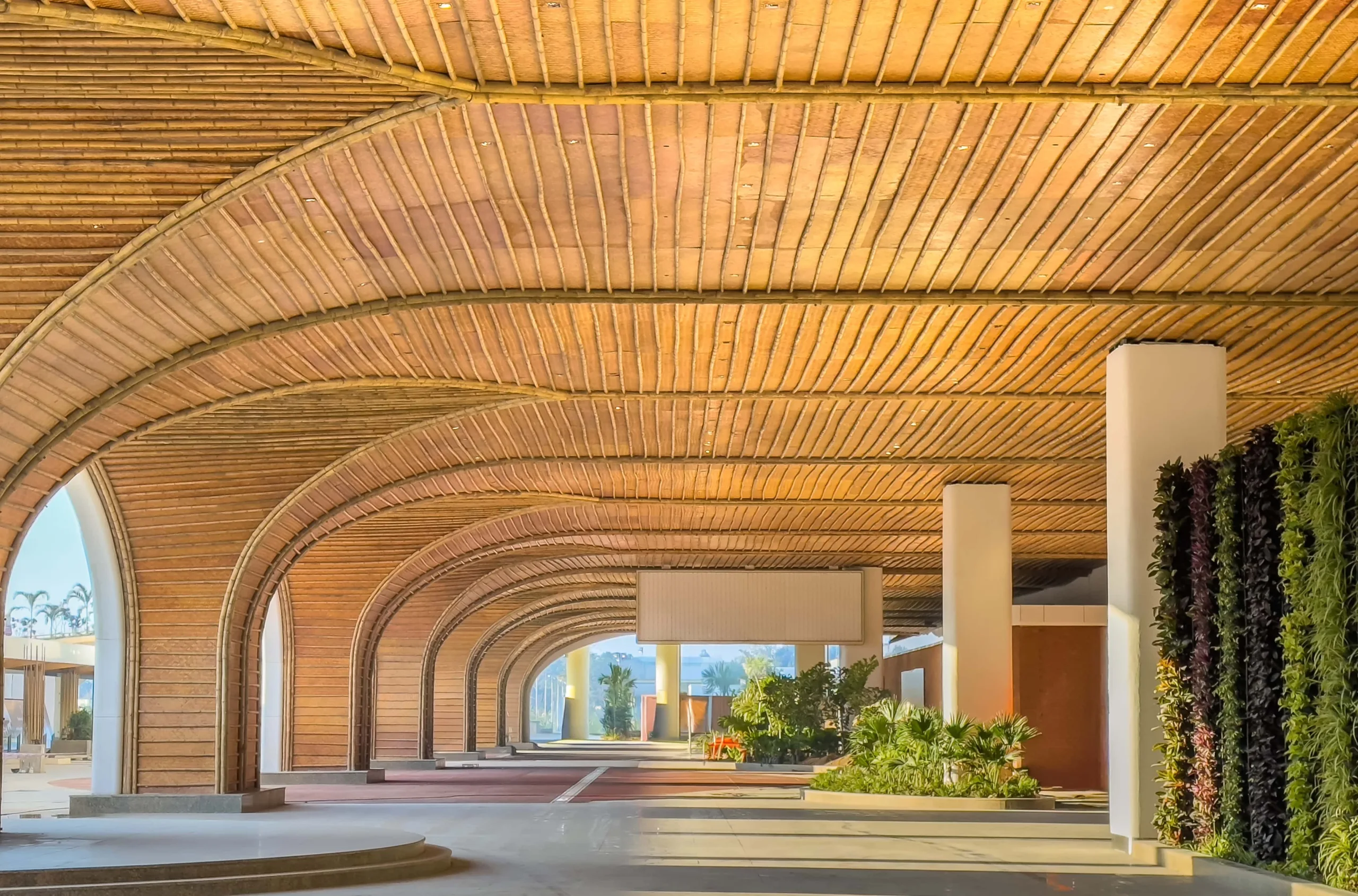
Airports are typically situated in wide, open topography devoid of surrounding windbreaks. Consequently, their sweeping façades are exposed to immense environmental forces, including high-velocity wind pressures, suction forces, and the localised impact of jet blasts.
The structural grid supporting the fenestration must be exceptionally robust. Extruded aluminium mullions and transoms are often reinforced with steel inserts to achieve the necessary moment of inertia to resist deflection. Whether utilising a stick-built system for complex geometries or a unitised system for rapid, high-quality installation, the connections to the primary building structure must allow for thermal expansion and contraction, as well as live-load deflections of the roof and floor slabs.
The Guwahati Project Perspective: Perhaps the most critical structural consideration for the Guwahati International Airport is its location in Seismic Zone V, the highest risk zone for earthquakes in India. The façade cannot be rigidly fixed; it must be designed to accommodate significant inter-storey drift and seismic movement without catastrophic failure.
The façade systems specified for the project feature specialised bracketry and deeply engaged mullion-transom connections designed to flex and slide during a seismic event. The use of structural silicone glazing (SSG) allows the glass panels to adhere flexibly to the aluminium frames, absorbing vibrations rather than shattering. Rigorous Performance Mock-Up (PMU) testing, including dynamic water penetration under wind load and seismic drift simulations, ensures the envelope remains structurally sound and weather-tight even under extreme geological stress, protecting both human life and the infrastructure investment.
Security, Safety, And Blast Resistance
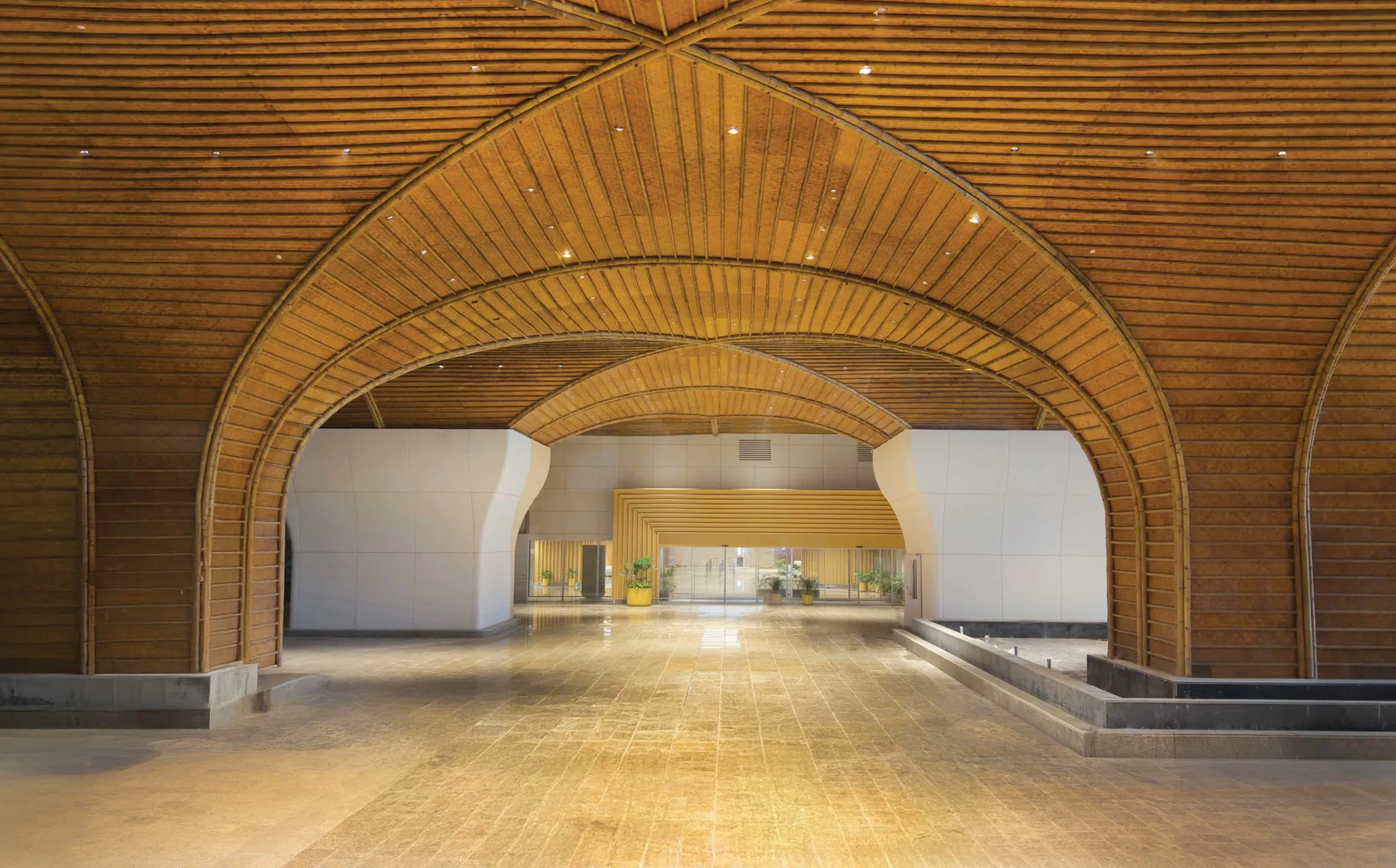
In the realm of aviation infrastructure, security and life safety are the ultimate non-negotiables. The façade is the first line of defence against both environmental hazards and potential human-made threats. It must be designed to mitigate the impact of extraordinary events, including explosions, while ensuring safe egress and preventing secondary injuries.
The strategy relies heavily on toughened (tempered) glass, but the true workhorse of airport security is laminated glass.
The Guwahati Project Perspective: Safety protocols at the Guwahati project dictate the extensive use of heavily laminated and heat-strengthened glass assemblies. The critical advantage here is that, in the event of breakage—whether from extreme impact, seismic activity, or blast pressure—the shattered glass fragments adhere stubbornly to the PVB or SentryGlas® interlayer.
Furthermore, the structural bite of the silicone sealants holding the glass to the aluminium frames is specifically engineered to handle high-stress loads, ensuring that the glass, even if broken, remains within the frame. This “anti-shatter” approach is vital for protecting passengers from flying debris.
Additionally, specific zones of the façade incorporate fire-rated assemblies with specialised intumescent seals to compartmentalise the building and secure escape routes.
Aesthetics, Cultural Context, And Material Innovation
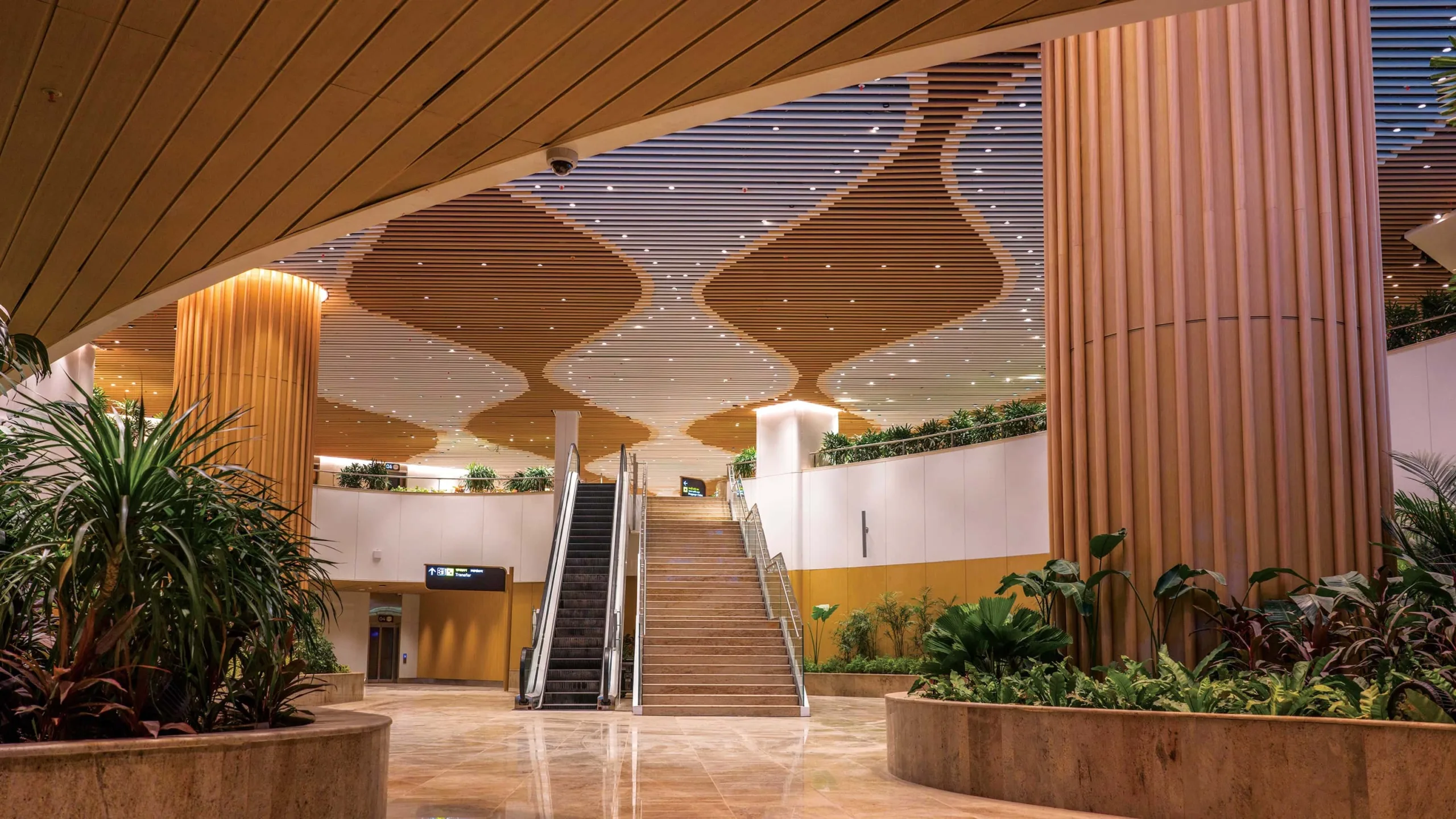
While performance is paramount, a terminal’s envelope is also the visual canvas upon which a region’s identity is projected. Modern materials and computational design are allowing architects to break away from rigid, monolithic glass boxes, enabling fluid, organic forms that tell a story. These materials must not only look striking but also offer long-term durability, colour retention, and ease of maintenance.
The Guwahati Project Perspective: The Guwahati International Airport is designed to be deeply rooted in the cultural and geographical context of Assam, while remaining a state-of-the-art facility. The opaque sections of the envelope utilise high-grade solid aluminium panels finished with Polyvinylidene Fluoride (PVDF) coatings. This specific fluoropolymer finish was selected for its exceptional resistance to chalking, fading, and degradation under the intense UV radiation and high humidity typical of Northeast India, ensuring the façade retains its pristine appearance with minimal maintenance over its lifecycle.
Conclusion
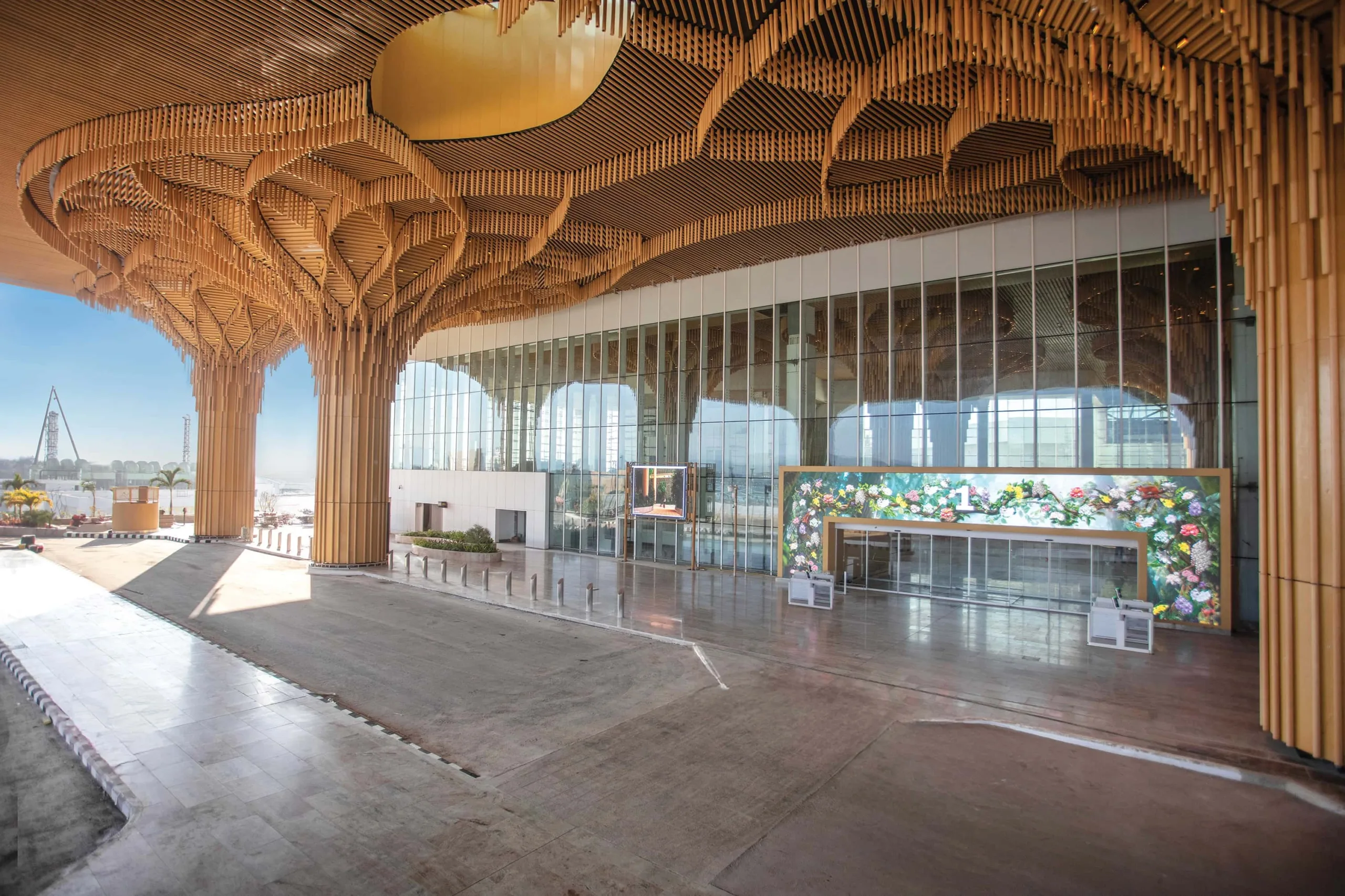
Designing façades for modern airport projects is a masterclass in synthesis and strategic foresight. It demands an uncompromising approach where aesthetic ambition, structural resilience, high-level security, and lifecycle operational costs are woven together into a compelling architectural narrative. The Guwahati International Airport stands as a testament to this rigorous process, demonstrating how advanced material science and context-driven engineering can overcome extreme climatic and seismic challenges. As the aviation industry continues to evolve, the envelopes of our terminals must be viewed not just as architectural features but as high-performance, future-proof assets that ensure safety, efficiency, and a profound sense of place for generations to come.