
Post Date: July 8, 2026 |
Last Edited: July 8, 2026
Key Highlights
|
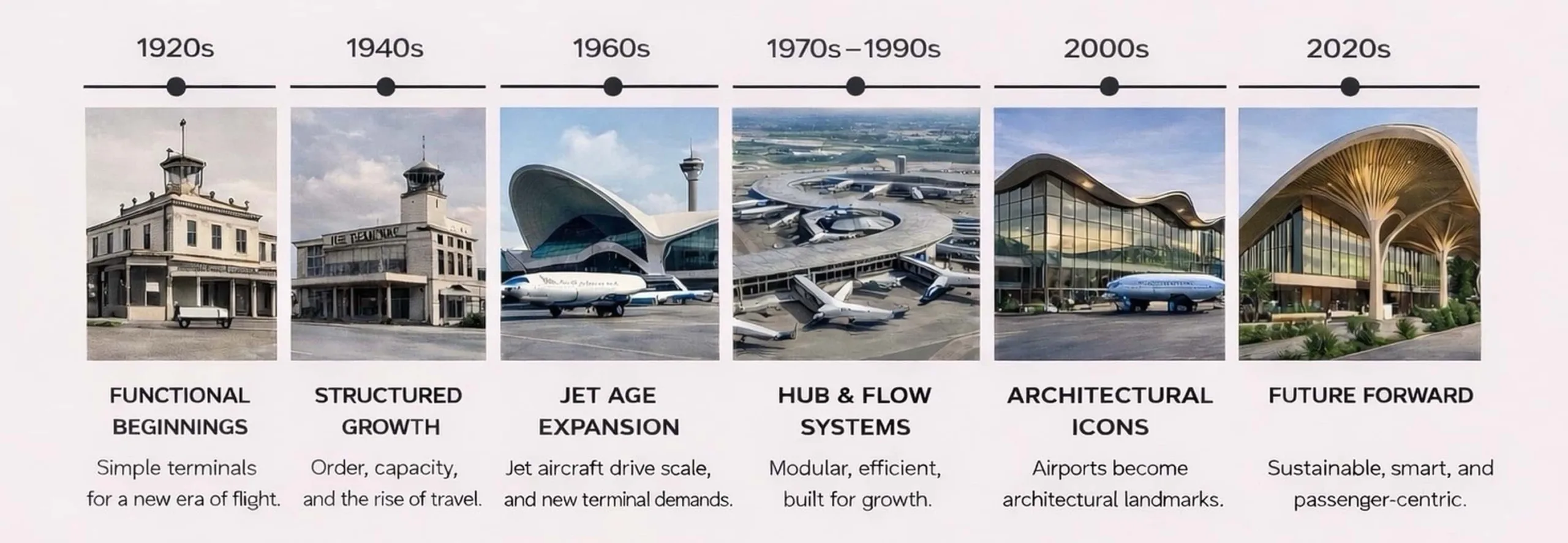
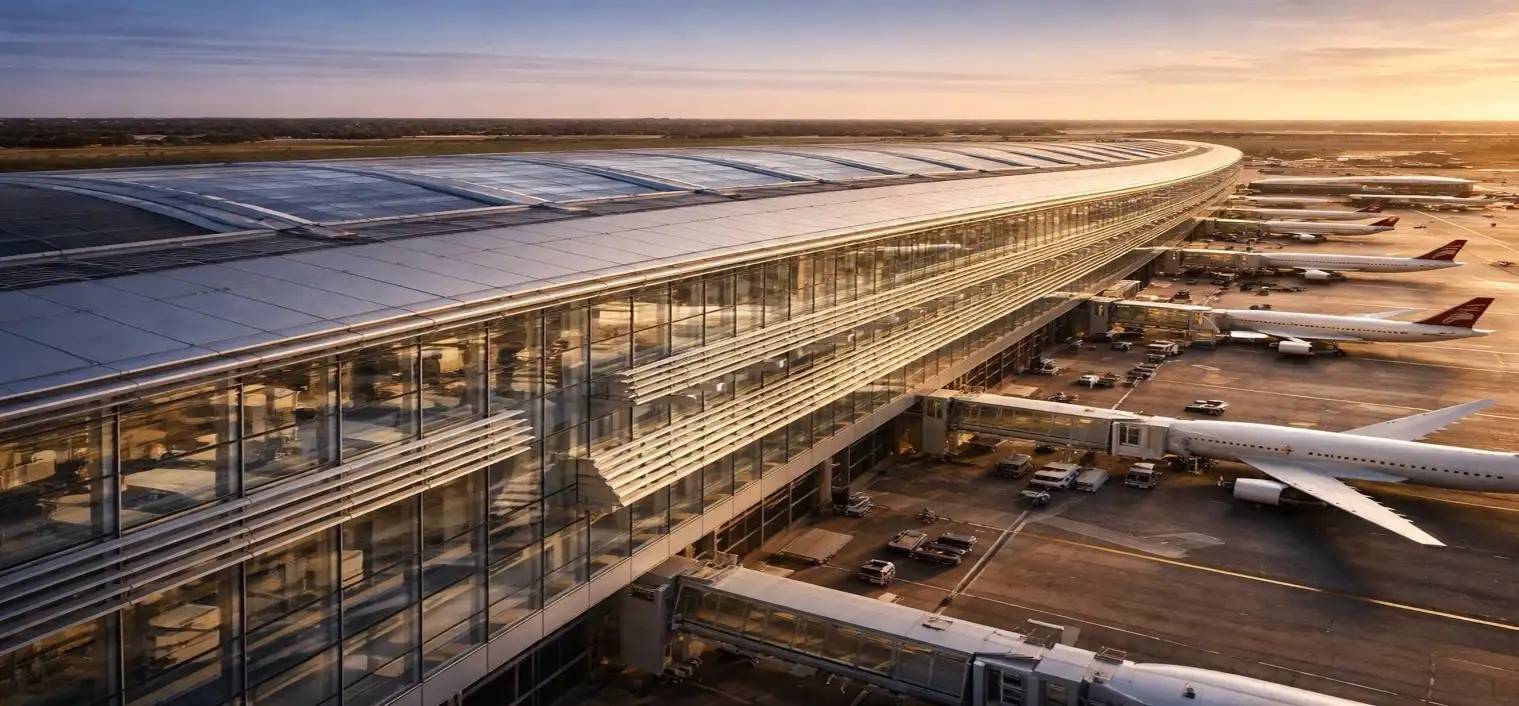
Airport infrastructure has evolved from compact, inward-looking facilities to expansive environments defined by scale, transparency and architectural ambition. What began as purely functional enclosures has now transformed into integrated systems where design, performance and passenger experience converge.
Today, the airport façade is no longer just a boundary – it is a critical interface shaping how airports perform, operate and are experienced.
This shift is not simply about increasing glass or achieving greater visual openness. It reflects a deeper transition in how the airport envelope is understood. Earlier terminals prioritised enclosure and protection, followed by a phase that celebrated transparency and visual connectivity. Today, the expectation is far more complex – the envelope must perform, adapt and respond.
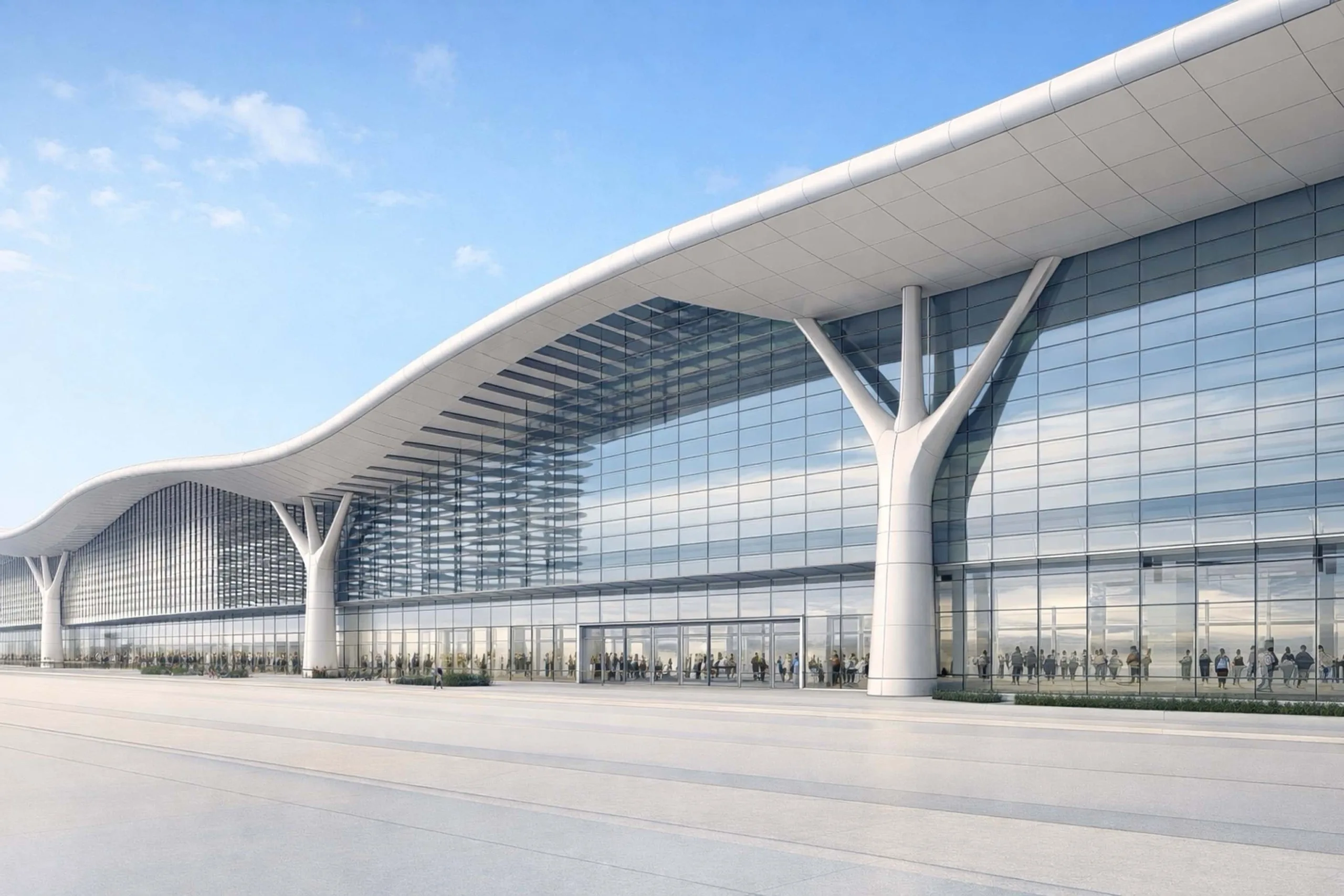
This progression – from enclosure to expression to performance – marks the emergence of what can be described as “smart skins”.
From Uniform Façades To Calibrated Skins
One of the clearest indicators of this shift is the move away from uniform façade systems. Large terminals are often designed as singular architectural objects, but they do not function uniformly. Solar exposure varies across orientations, passenger dwell patterns differ across zones, and operational intensity fluctuates throughout the building. Yet facade systems are frequently standardised for convenience.
This creates a disconnect between how the building performs and how it is actually used. A more evolved approach begins by recognising this variation and designing the envelope accordingly — not as a single system, but as a set of calibrated responses embedded within the same structure. In practice, this often means varying façade performance by orientation, integrating shading strategies selectively and aligning transparency levels with functional zones.
This shift becomes most visible during execution – something I have seen repeatedly in large terminal programmes, where initial façade strategies were uniform across the building. As the design progressed into execution, it became evident that different orientations and zones demanded different performance responses. Introducing calibrated façade variations at that stage significantly improved both thermal performance and passenger comfort.
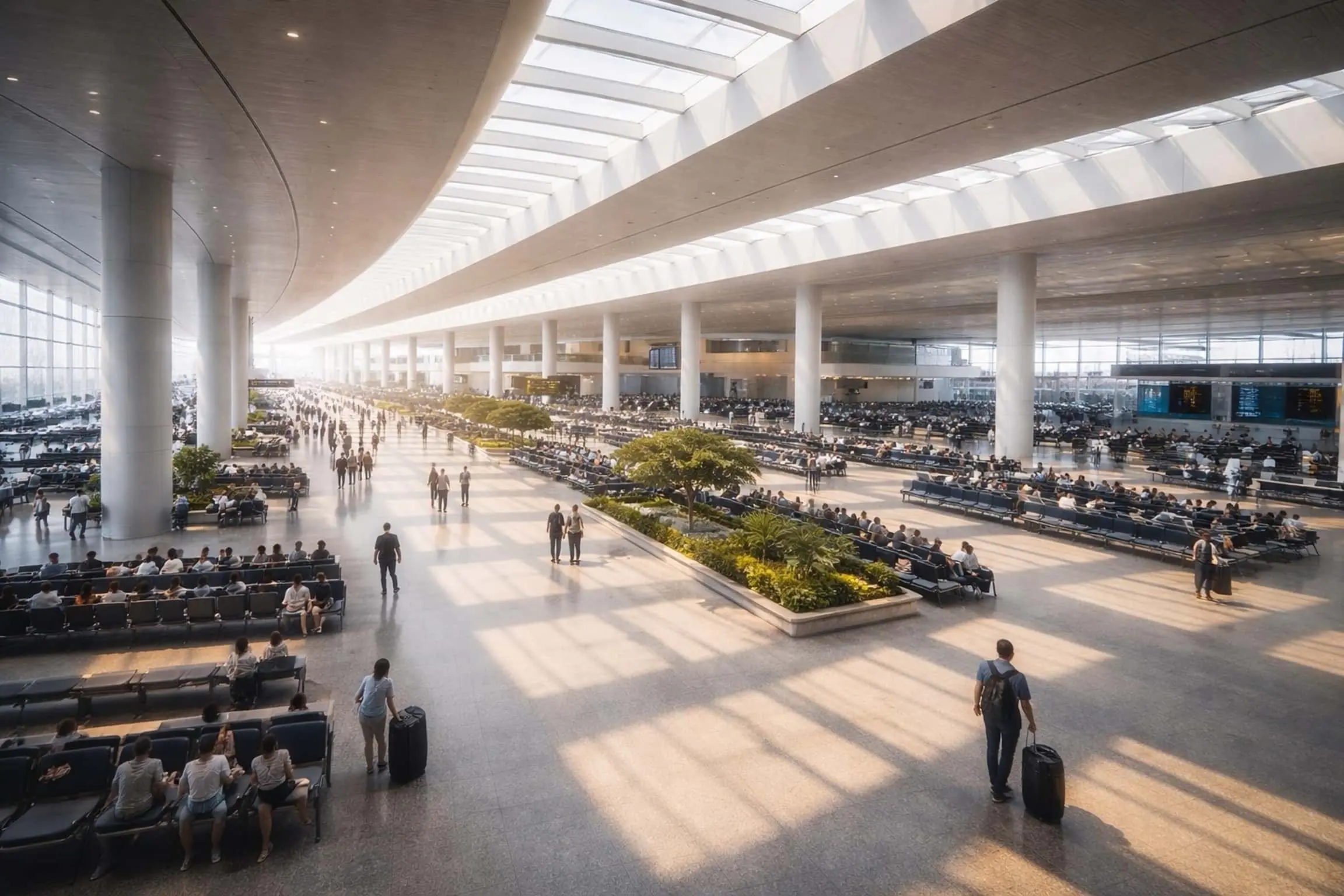
A similar condition becomes even more pronounced in brownfield terminal expansions, where new façade systems must integrate with existing structures and operational environments. In one such instance, variations in structural grids, orientation and legacy systems made it difficult to apply a uniform façade strategy. This required recalibrating façade responses zone by zone, ultimately leading to a more context-responsive and performance-driven solution.
The façade is no longer a fixed solution – it is a set of decisions that must vary across the building. Performance variability is not a constraint – it is a design strategy.
This also leads to a necessary rethinking of transparency itself. For years, transparency has been associated with openness and modernity in airport design. However, as terminals have become more transparent, they have also become more energy intensive. Extensive glazing, when uniformly applied across orientations, introduces uneven heat gain, glare and higher reliance on mechanical systems.
More glass does not necessarily translate to a better experience – in many cases, it delivers the opposite. The result is a paradox where visual openness can undermine environmental performance. Resolving this requires moving beyond maximum transparency towards a more controlled and intentional use of glazing – where visibility, comfort and efficiency are balanced.
Fenestration As A Driver Of Movement And Experience
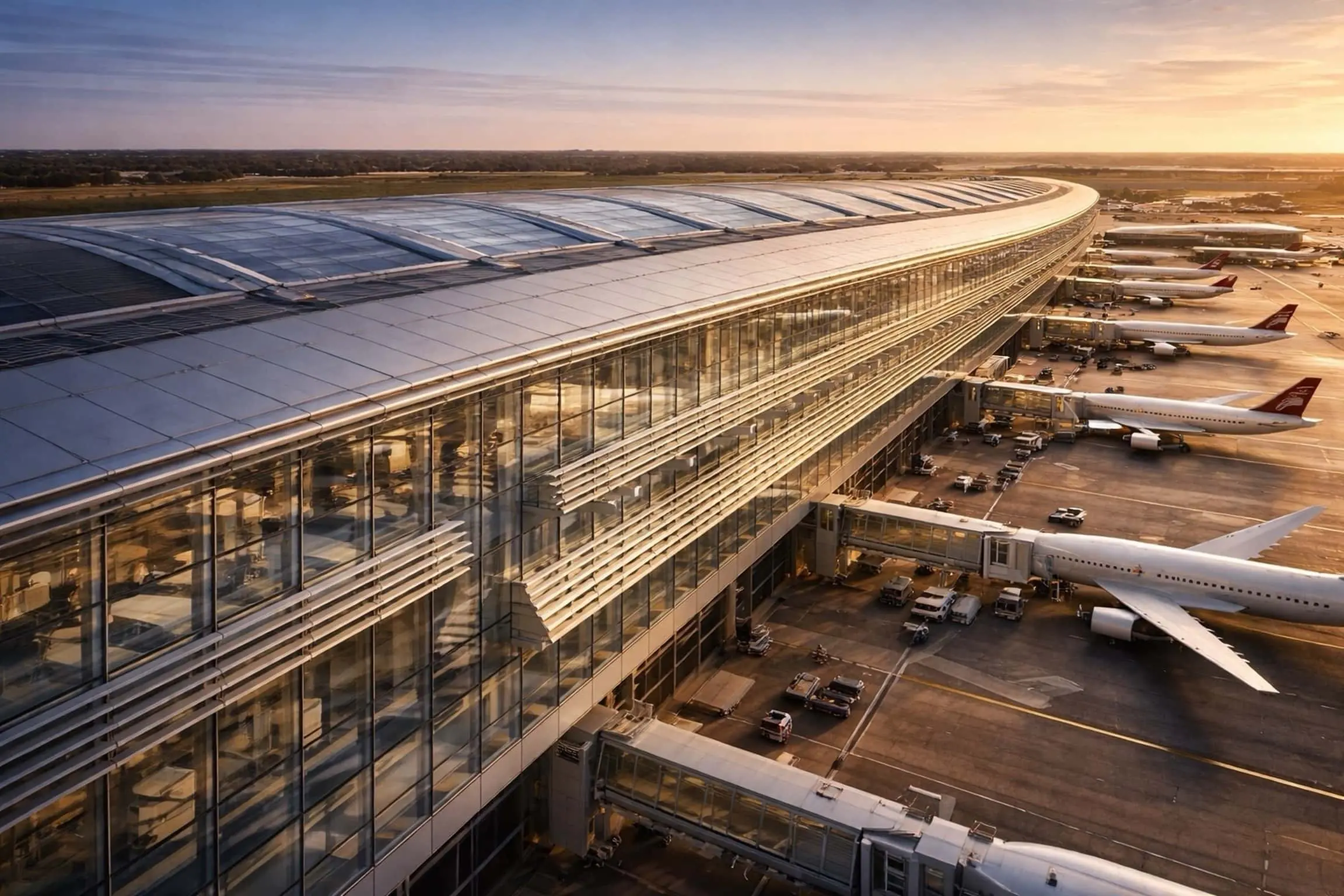
As façade systems become more calibrated, their influence extends beyond environmental performance into how passengers experience and navigate the terminal. In large, complex spaces, movement is not guided by signage alone.
Light, views and visual connections play an equally important role. Subtle variations in daylight intensity, framed external views and controlled transparency can create intuitive directional cues. When aligned with spatial planning, these elements can guide passengers naturally through the terminal, reducing cognitive load and improving flow.
During operational readiness, passenger movement aligned more intuitively with zones offering stronger daylight access and visual connectivity. This reinforces the idea that fenestration can function as a behavioural design tool, shaping how users move through space without explicit direction.
Daylight And Skylights In Large-Span Terminals
The challenge of daylighting becomes more pronounced in large-span terminals, where the depth of space limits the effectiveness of vertical façades. Skylights therefore play a critical role in bringing natural light deeper into the building.
However, their success depends on how they are used. Uniform skylight grids often ignore time of day and seasonal solar variation, resulting in inconsistent quality and thermal imbalance. A more refined approach recognises that daylight must be distributed strategically rather than uniformly.
Varying skylight geometry, orientation and material treatment allows light to be modulated based on spatial function. Diffused light may be prioritised in waiting areas, while more direct light can highlight circulation zones. This layered approach improves both comfort and energy performance while enhancing spatial clarity.
At this stage, the façade stops being a design decision and starts becoming an operational variable.
From Components To Integrated Performance Systems
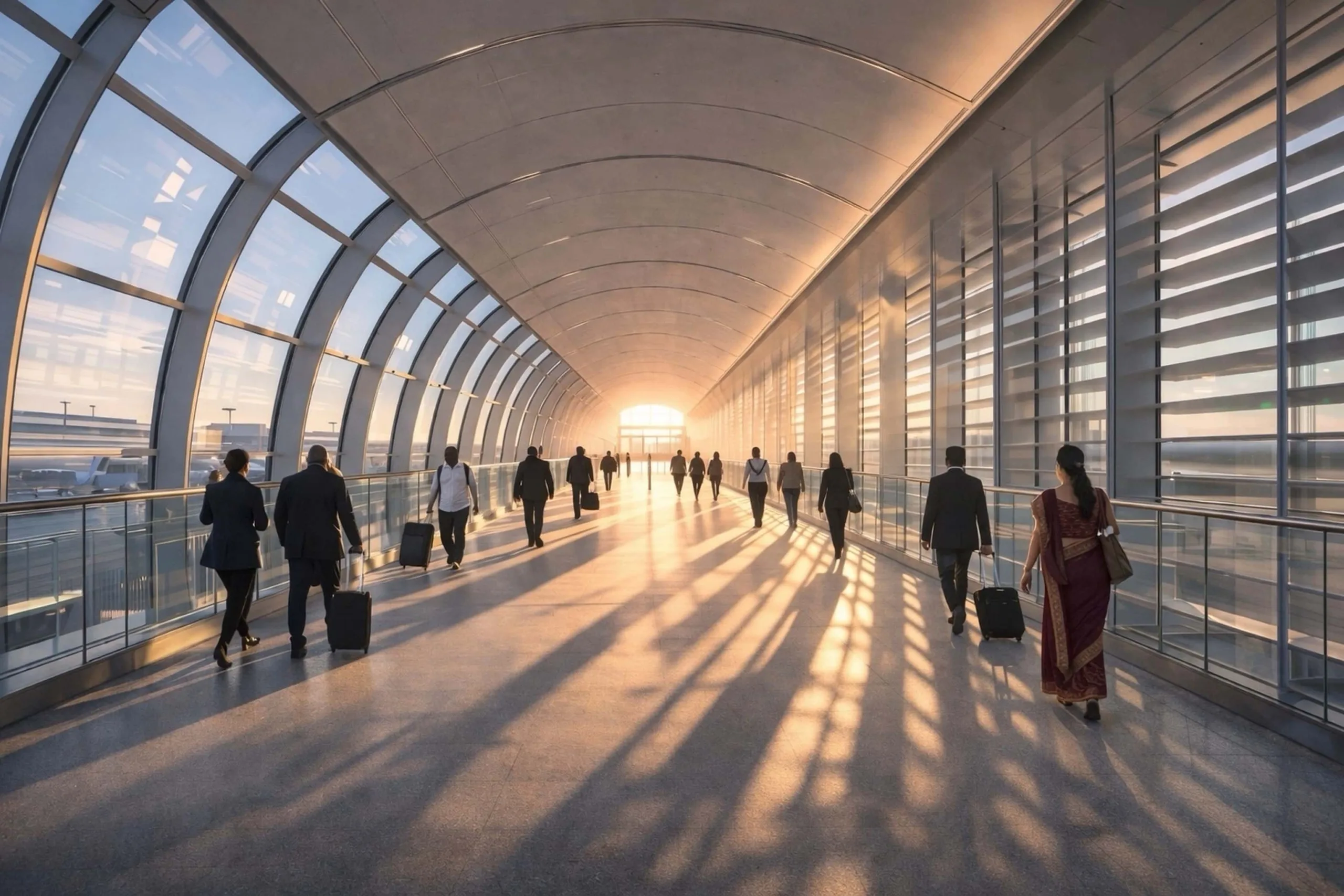
In large airport programmes, this transition becomes most visible during execution – where design intent meets operational reality. What begins as a uniform façade strategy quickly encounters variations in orientation, passenger density and dwell patterns, making calibrated, context-specific responses unavoidable.
As envelope strategies evolve, material systems are also being redefined. The façade is no longer a collection of individual components, but an integrated assembly where multiple performance functions coexist.
Glass, shading devices, structural systems and environmental controls are increasingly being designed as interdependent layers. This integration improves efficiency and reduces redundancy, shifting the focus from selecting materials to designing systems.
At the same time, the role of the façade is expanding into operations. In high-throughput environments such as airports, envelope performance has direct implications on energy demand, passenger comfort and maintenance cycles. Even small inefficiencies, when multiplied across large surface areas and long operating hours, can significantly impact performance. The envelope is no longer assembled – it is orchestrated.
This becomes particularly evident during post-occupancy phases, where façade performance directly influences operational costs and user comfort. Aligning design intent with operational behaviour is therefore critical to achieving long-term efficiency.
Resilience, Maintainability And Intelligent Envelopes
As airports operate continuously, resilience and maintainability become central to façade design. Systems must be capable of withstanding environmental stress while also enabling rapid inspection, repair and replacement.
This requires a shift towards modularity, accessible detailing and durable material selection. Designing for maintainability ensures that façade performance is sustained over time, rather than degrading due to operational constraints.
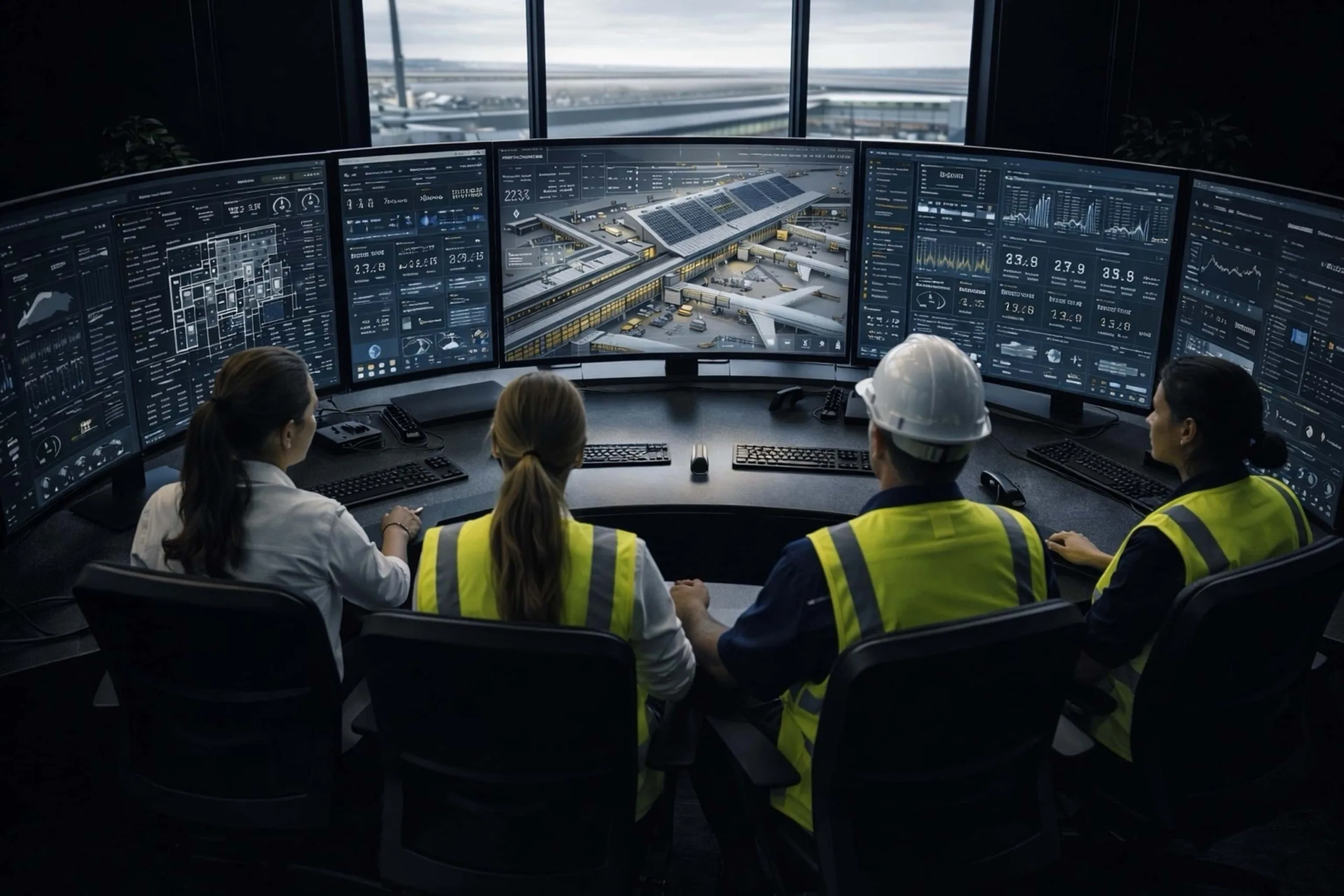
The integration of digital technologies is further transforming façade systems into intelligent layers. Sensor-enabled envelopes can monitor environmental conditions and system performance in real time, allowing for dynamic adjustments and predictive maintenance.
In climates with high solar exposure and diverse environmental conditions, these strategies must also be context-specific. Standardised design approaches often fail to address local challenges effectively. Orientation-sensitive design and climate-responsive strategies play a critical role in achieving long-term performance.
Airport design has long been driven by scale and spectacle. The next phase will be defined by performance and intelligence. As airports scale in complexity and expectations rise, the envelope will increasingly function as a decision-making layer — balancing energy, experience and operations in real time.
The future of airport design will not be defined by how terminals are planned, but by how intelligently they respond.
In many ways, the story of future airports will not be written in plan, but in performance.