
Post Date: June 23, 2026 |
Last Edited: June 23, 2026
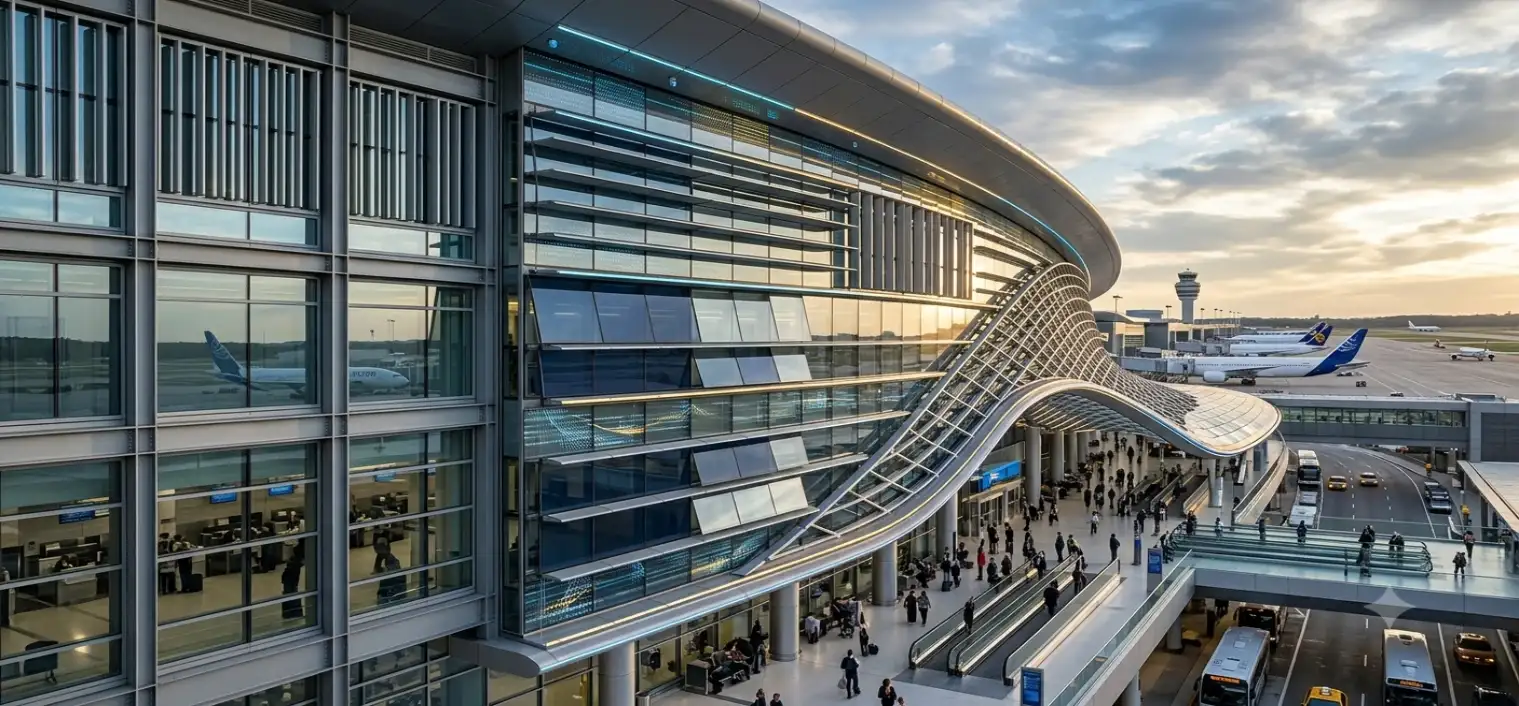
Airports today are more than just transit hubs; they are architectural landmarks that reflect a city’s identity while handling massive passenger volumes with precision and safety. One of the most defining elements of these modern terminals is the façade. Over the past two decades, airport façade systems have undergone a remarkable transformation, evolving from basic functional assemblies to highly engineered, performance-driven envelopes.
This evolution has gone hand in hand with standardisation, technological advancement, and a growing emphasis on safety, efficiency, and sustainability.
Key Highlights
|
A Journey Through Facade Systems
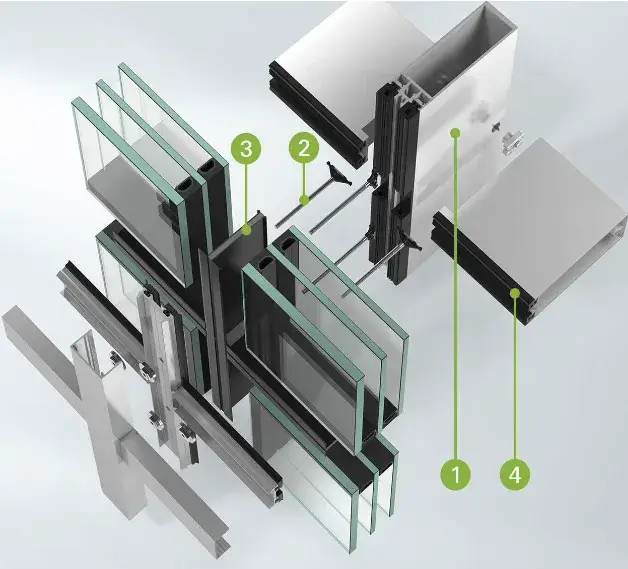
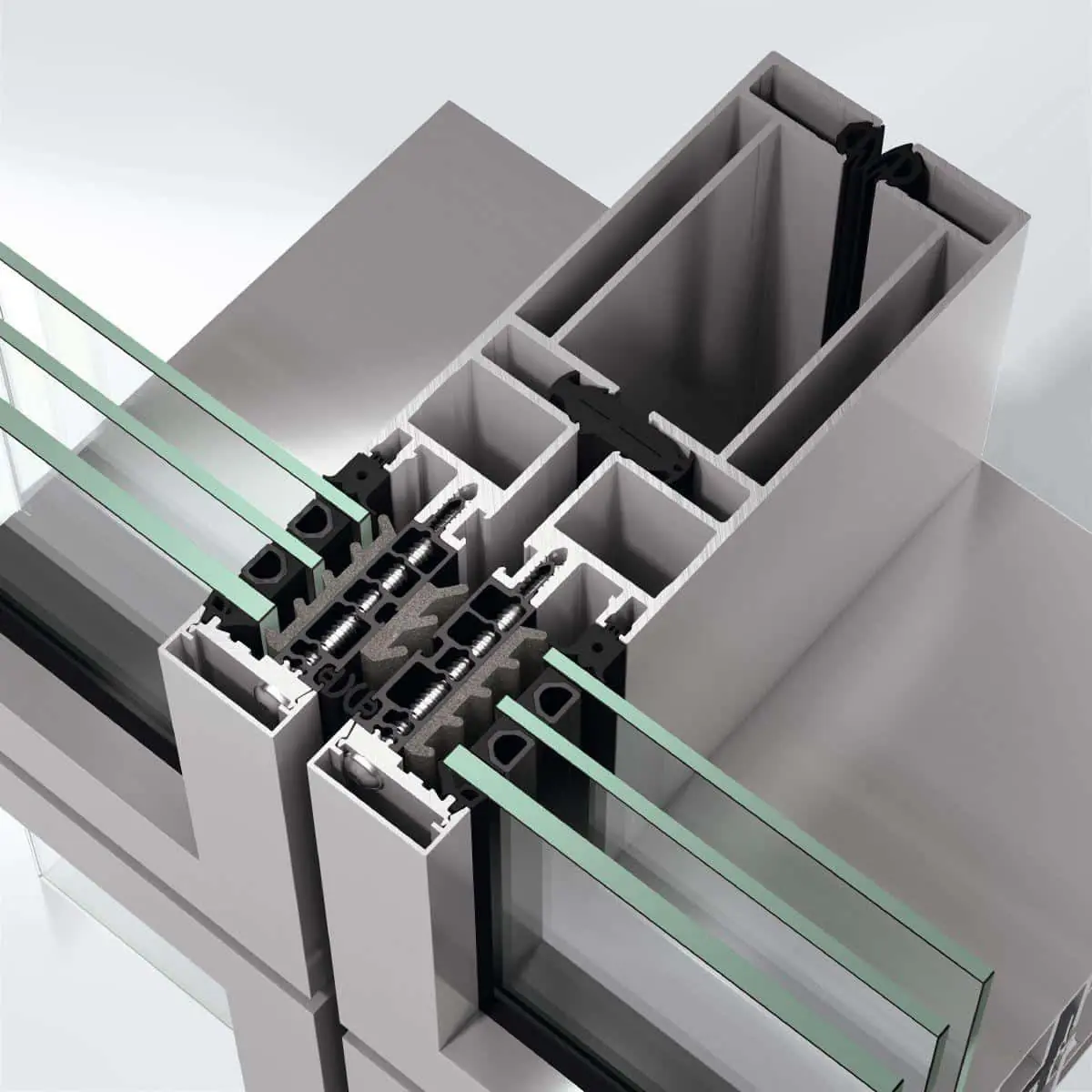
In the early 2000s, the cover and pressure plate system was the go-to choice for airport projects. It was simple, affordable, and not too difficult to assemble on site. But as airport designs grew more ambitious and the bar for performance rose, its shortcomings became harder to ignore. Uneven sealing, poor resistance to air and water infiltration, and a heavy reliance on site workmanship made it increasingly difficult to justify for large, high-performance buildings.
The industry gradually transitioned to semi-unitised systems, and it was a genuine step forward. Pairing factory-made components with on-site assembly brought better quality control into the process while still allowing some flexibility during installation. Performance improved compared to older approaches, but site conditions and workmanship still had a role to play in the outcome.
The real shift came with the adoption of unitised façade systems. These are fully built-in controlled factory settings and arrive on site as complete, ready-to-install panels. For airports, where schedules are tight and there is very little room for error, this was a real turning point. Consistent quality, faster installation, and strong performance across airtightness, water resistance, and structural reliability made unitised systems the preferred choice for major airport projects.
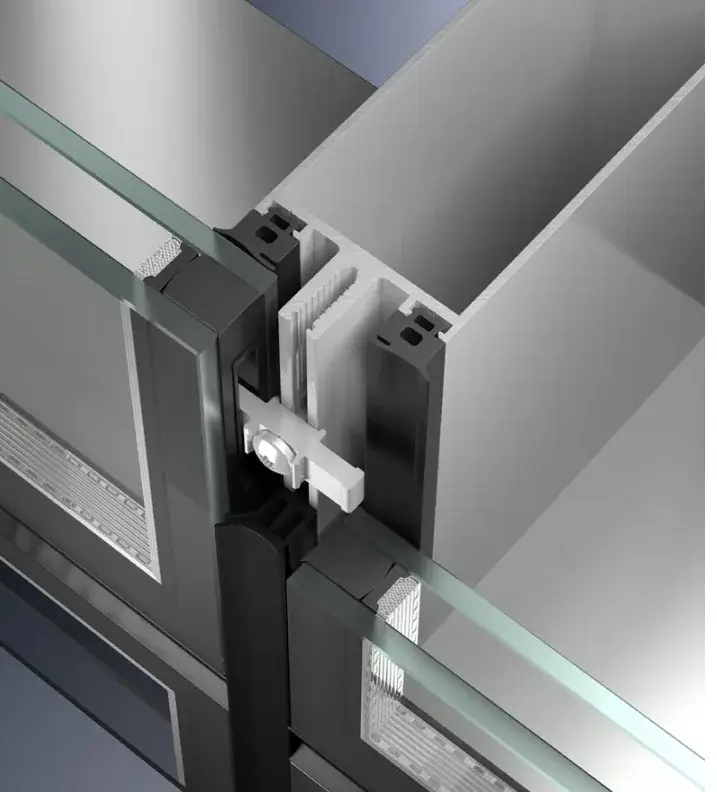
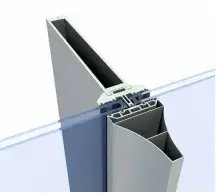
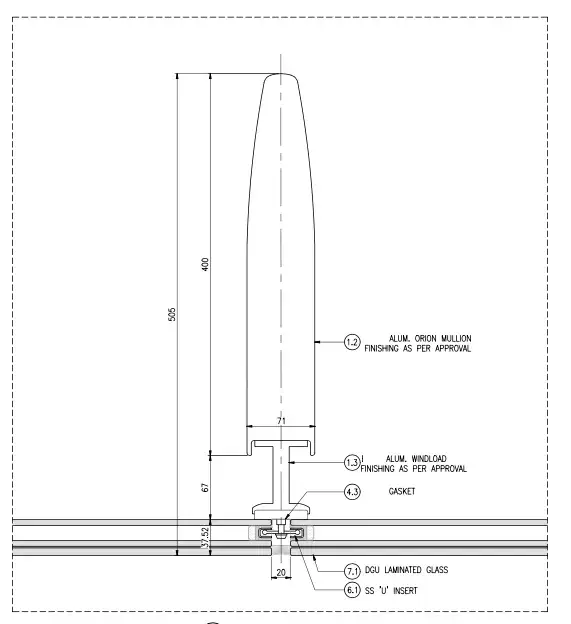
Earlier façade systems depended heavily on steel frames made up of horizontal and vertical members, which meant longer installation times and ongoing challenges arising from steel imperfections. Fin glazing façade systems do away with those conventional steel members entirely, cutting down execution time and improving overall accuracy. Straight vertical glass fins carry the loads across large spans without needing horizontal transoms, which creates a clean, seamless glass surface with no visual interruptions. The result is a façade that looks just as impressive from the inside as it does from the street.
Comparing The Systems
Each façade system reflects a stage in the industry’s evolution:
- Cover and Pressure Plate Systems: Cost-effective but limited in performance and durability.
- Semi-Unitised Systems: A balanced approach with moderate improvements in quality and efficiency.
- Unitised Systems: High-performance, fast-track solutions ideal for large infrastructure projects.
- Fin Systems: A modern, integrated approach combining sustainability, performance, and architectural expression.
Taken together, each step in this journey shows just how much more demanding airport façade design has become, and how well the industry has risen to meet those demands.
Advancements In Glazing Technology
Glazing technology has come a long way alongside façade systems. For a while, Double Glazed Units (DGUs) were the standard option, though they came with their own problems, including seal failures and breakage under stress.
What you find in a modern airport façade today is a far more capable setup. A typical configuration includes laminated Low-E toughened glass as the outer layer, an air gap for insulation, and fully toughened and heat-soaked glass on the inner side. Together, these layers improve thermal performance, reduce energy consumption, and, most importantly, make the façade safer.
When laminated glass breaks, the fragments remain bonded rather than scattering, which makes a real difference in a busy terminal. Toughened and heat-strengthened glass adds further resilience against impacts and temperature changes. In airports, these are not optional extras; they are the baseline.
Fire Safety: A Critical Shift
Fire safety has become a topic that simply cannot be ignored in façade design. For a long time, Aluminium Composite Panels (ACP) used in façades often fell short of fire safety requirements, largely because compliant materials were not widely available at the time.
As regulations have tightened and awareness has grown, the industry now firmly recommends A1-grade (non-combustible) materials for façade applications and A2-grade materials for interiors, depending on project requirements. It is a meaningful shift, one that places passenger safety at the centre and brings airport façades in line with global fire safety expectations.
Understanding Peer Review In Facade Design
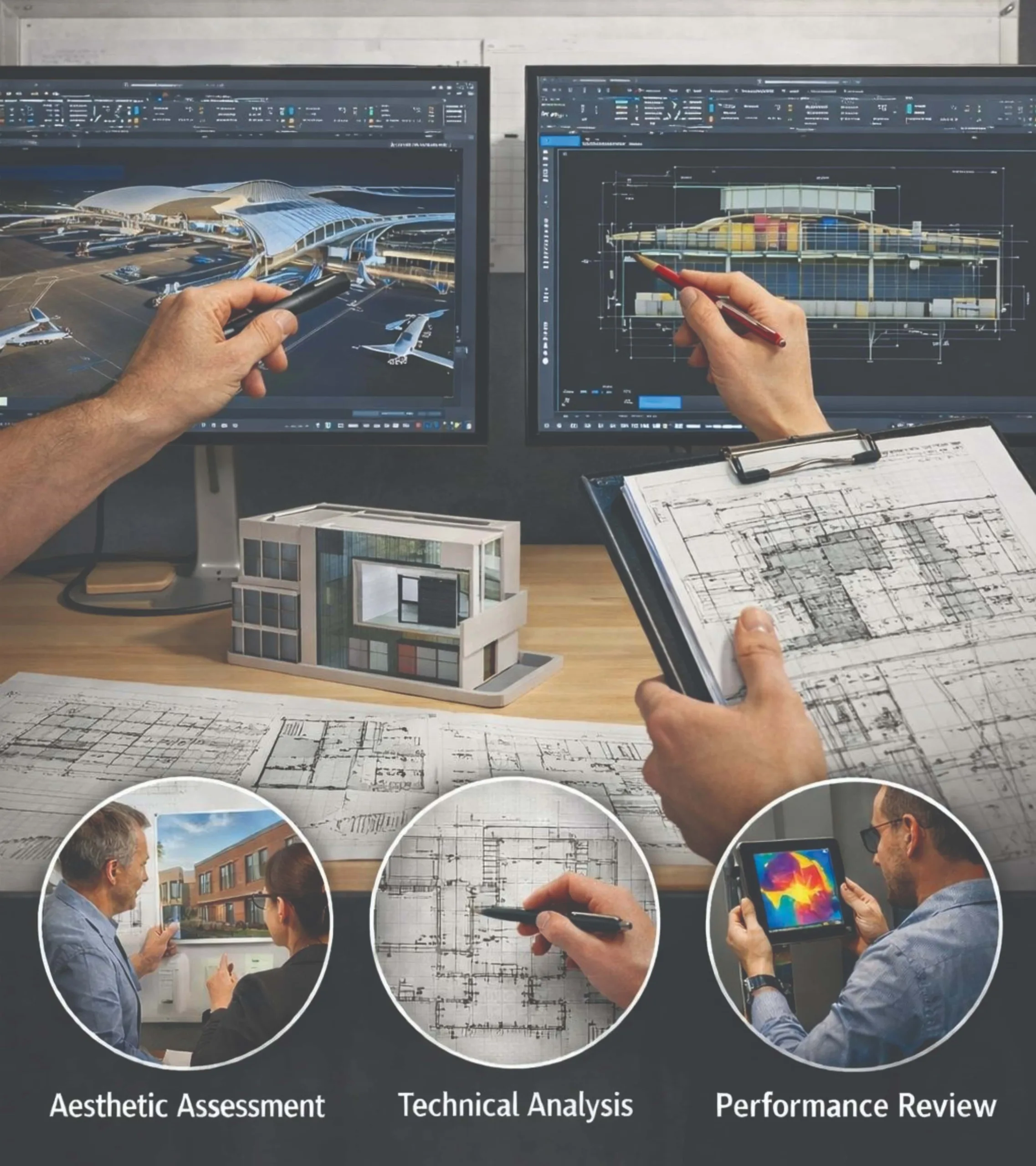
As façade systems have grown more complex, the need for independent verification has grown alongside them. That is where peer review plays a crucial role.
Put simply, peer review means having an independent expert critically assess façade designs, materials, and engineering decisions. It acts as a quality check, confirming that the proposed design meets performance criteria, safety standards, and regulatory requirements before construction begins.
In airport projects, where even a small failure can have far-reaching consequences, peer review is not just a good idea; it is a necessity.
The Role Of Façade Consultants
Facade consultants sit at the heart of the peer review process, acting as both evaluators and enablers. Their role extends well beyond checking drawings. They bring a broader perspective to the project, considering how every element fits together and where potential risks may arise.
On any given project, their work typically covers:
- Design Verification: Confirming that the façade system is structurally sound and aligns with project specifications.
- Performance Evaluation: Assessing how the system performs under wind loads, seismic activity, air and water penetration, and thermal demands.
- Material Assessment: Ensuring that glass, cladding, and other materials are suitable and meet required standards.
- Risk Analysis: Identifying potential issues during construction and over the building’s lifecycle, including maintenance considerations.
- Constructability Review: Addressing the practical question – Can this be efficiently built on site?
- Mock-up and Testing Review: Validating performance through real-world mock-ups and simulations.
- Code Compliance: Ensuring alignment with both local and international standards.
Conclusion
The evolution of airport facade systems reflects a broader shift in the construction industry, from conventional practices to highly specialised, performance-driven solutions. From cover plate systems to advanced unitised and fin-based façades, each step has contributed to improved efficiency, safety, and design excellence.
Coupled with advancements in glazing and fire-safe materials, today’s façades are smarter, stronger, and more reliable than ever before. However, with this creased sophistication comes the responsibility to ensure that every element performs as intended.
Peer review and proactive façade consultancy provide that assurance. They act as critical safeguards, ensuring that airport façades are not only visually impressive but also resilient, safe, and future-ready.
In the end, the true success of an airport façade lies not just in how it looks, but in how well it performs, protects, and endures over time.